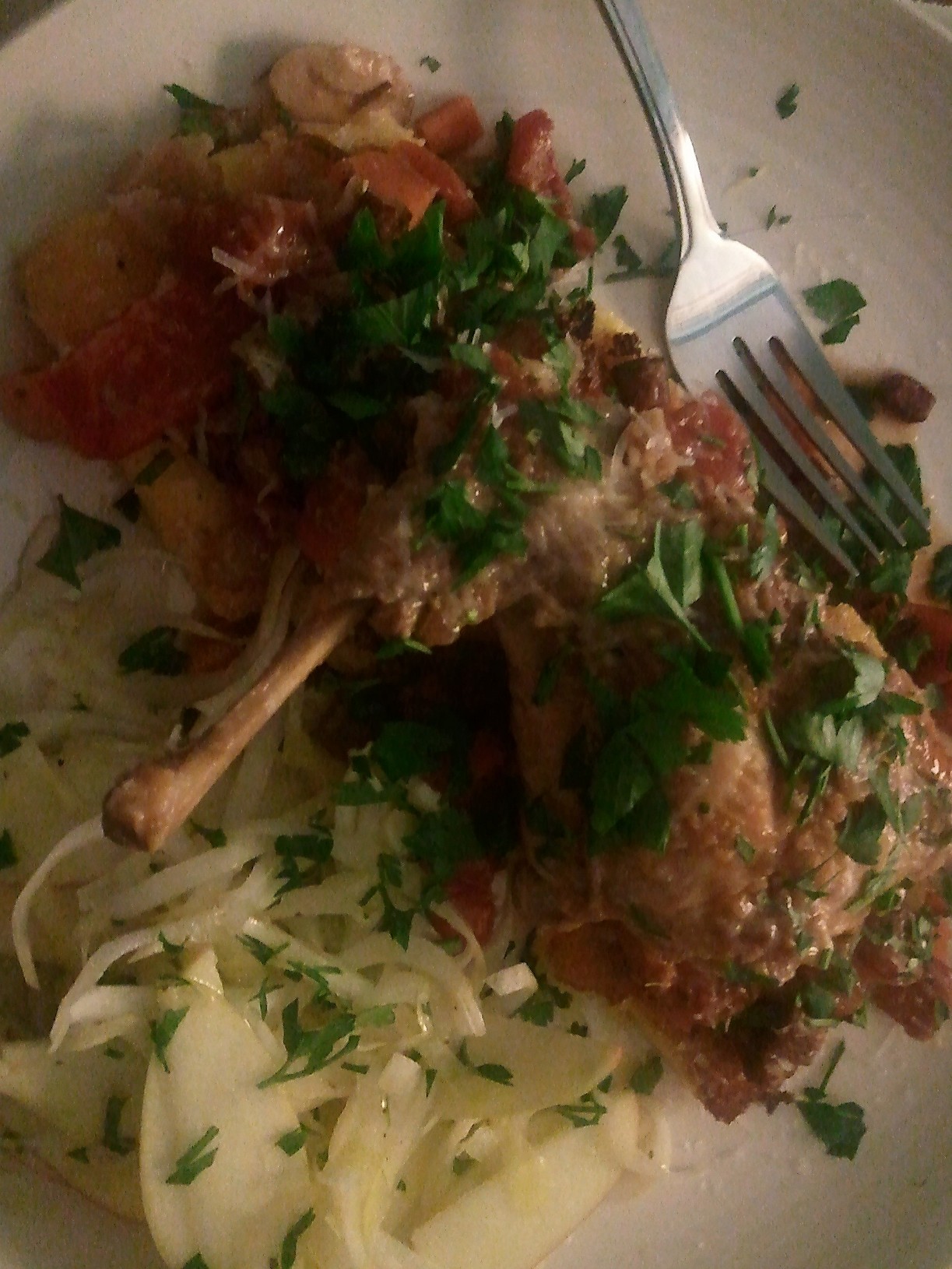
Rabbit cacciatore.

Yesterday Nick and I celebrated our third wedding anniversary. Kind of. I made a nice dinner, and then we zoned out in front of a bunch of cooking shows on the PVR. This year has kind of been a wash, celebration-wise; we haven’t celebrated any of our milestones properly. Nick turned 30 on Friday and we didn’t have plans, and I was all-day morning-sick on my birthday in April. We’re thinking of putting off Christmas until January. It’s been a busy year.
Fortunately I am a bit of a hoarder, and I figured we’d be all out of energy right around now. I have stocked the freezer, fridge, and pantry with everything we’ll need to eat reasonably satisfying and healthy meals until my employment insurance kicks in, so I was able to put together a luscious rabbit cacciatore while the baby dozed and the cat napped.

Rabbit is a very lean meat and a great alternative to the usual chicken or pork. It’s also a sustainable alternative, as rabbits are small, plentiful, reproduce quickly, and do not have the same impact on the environment as larger or more industrially farmed meats. If you can’t find rabbit at your local market, ask your butcher.
I adapted this recipe from Simply Recipes, adding pancetta, more veggies, a spot of wine, and some different herbs and spices, and it was just fancy enough for an anniversary dinner, but easy enough to put together between feedings and phone calls and commercial breaks.

If you don’t have bunnies in your freezer, you could substitute six to eight chicken thighs for the rabbit pieces. Serve over pasta, polenta, or rice.

Rabbit Cacciatore

(Serves six to eight; adapted from Simply Recipes)

  • 2 heads garlic plus 3 cloves
  • 4 tbsp. olive oil
  • 1 2- to 3-pound rabbit, cut into six or eight pieces
  • 1/4 cup all-purpose flour
  • 1/4 lb. pancetta, diced
  • 1 medium onion, diced
  • 2 ribs celery, diced
  • 1 large carrot, diced
  • 1 tbsp. capers, chopped
  • 1 tsp. red chili flakes
  • 1 tsp. dried rosemary
  • 1 tsp. dried oregano
  • 1/2 tsp. dried thyme
  • 1 large red bell pepper, chopped
  • 1/4 lb. mushrooms, sliced
  • 1/2 cup red wine, such as Cabernet-Sauvignon
  • 3 cups chopped tomatoes (or 1 28-oz can diced tomatoes including juice)
  • 2 bay leaves
  • Salt and pepper, to taste
  • Chopped parsley

Roast two cloves of garlic in an oven preheated to 350°F for 30 to 45 minutes until golden and tender.

Heat olive oil over medium-high heat. Pour rabbit pieces, flour, and about a teaspoon each salt and pepper into a sturdy plastic bag. Hold or seal the top of the bag, and shake to coat rabbit.

Brown rabbit pieces in olive oil, then remove to a plate. Set aside.

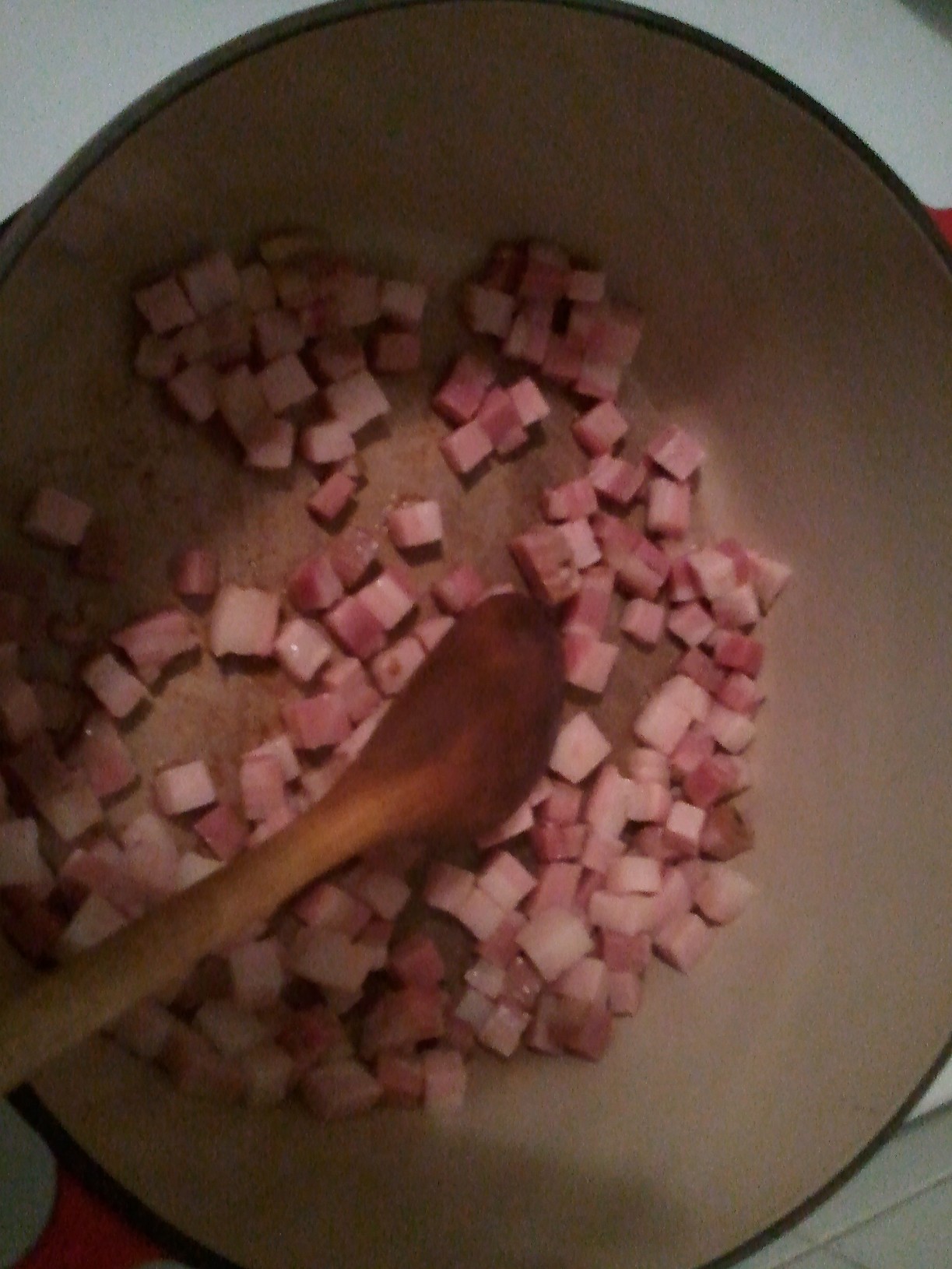
Brown pancetta in same pan. Add onion, three chopped cloves of garlic, celery, and carrot, and cook for three minutes.

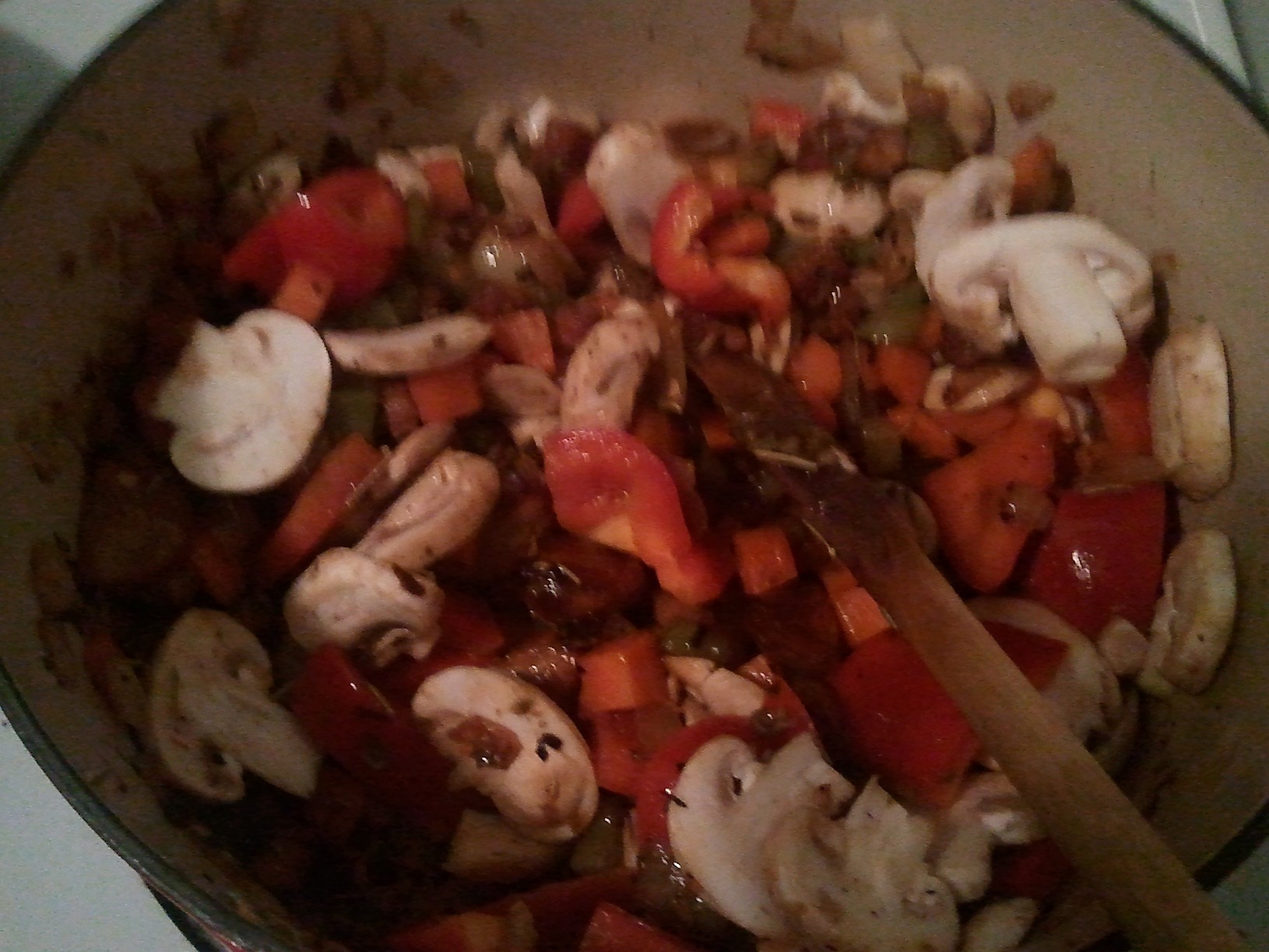
Add capers, chili flakes, rosemary, oregano, and thyme. Stir to coat pancetta and veggies, then add bell pepper and mushrooms. Cook an additional two minutes. Add wine and scrape browned bits off the bottom of the pan, then reduce heat to medium. Add tomatoes and roasted garlic and bay leaves. Taste, adjusting seasonings as needed.

Add rabbit, pushing the pieces into the pot so that they are submerged. Cover, reduce to medium-low, and cook for 35 minutes, until rabbit is cooked and tender. Remove lid and simmer an additional 10 minutes to reduce sauce. Sprinkle with parsley before serving.
Nectarine kuchen.

This week has been my first week off work, and the days are long. Where last week I spent my days in a panic that I wouldn’t get everything done before this kid arrives, now I am beginning to think he’s never coming. The doctor assures me that “we’re close,” but that all I can do now is wait.

Patience is not my virtue, and “any day now” is not enough information to make plans around.

It’s a weird feeling, this lack of a sense of purpose or structure. In the absence of a real to-do list, I don’t do much of anything. I should probably finish addressing the thank-you cards from my shower. I should put the laundry away and do something about the kitchen floor.

I was proud of myself yesterday because I made dinner, a word that if I were being totally honest would be placed in quotation marks. We eat a lot of take-out. During the day, when the light in this place is most oppressive, I wander up and down Granville Street because I am told that walking will help speed things along. At home the cat no longer feigns interest in our conversation, though we do spend long hours napping.
The evenings are much nicer. The light is softer, and people come over. I feel most like myself in the evenings.

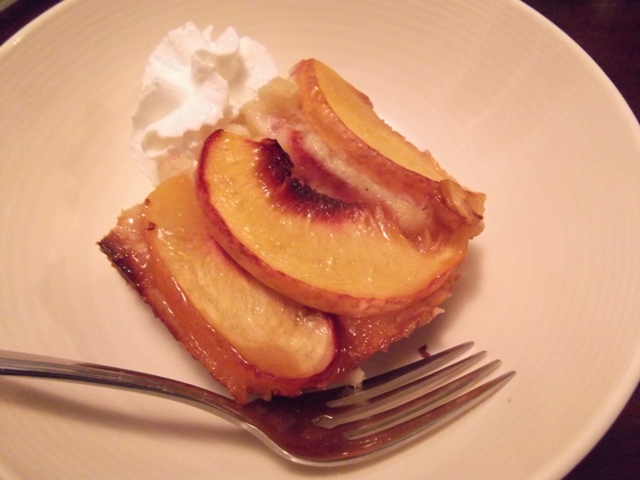
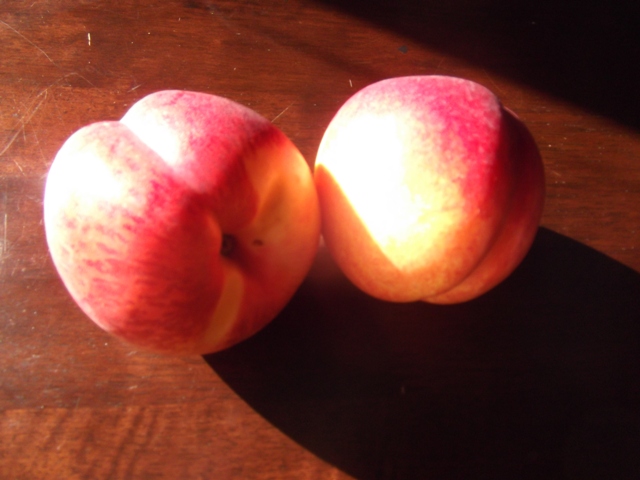
My parents called on Saturday to tell us they were going to come over on Sunday to bring baby things and dinner. There are still local peaches and nectarines at the markets, because the season was late this year, so I grabbed the last few big nectarines in the bin and decided to make dessert, which counts toward my total productivity for the week and also means cake for breakfast until the leftovers run out – double win.

The nice thing about this dessert is that you do it in bursts with long stretches of sitting down in between. You make the batter, and then it rises, and then you put the batter in a pan, and it rises again. You make the topping, and it macerates, and then you bake the thing. Not much standing, at least not for too long.

It’s also fun to say – kuchen, or “kooken,” and oh how I wish I spoke German. And while I wasn’t sure of it as an after-dinner treat, this kuchen would certainly be lovely with tea in the middle of the day if you were going to have company some Sunday afternoon. It’s not too sweet, with a coarse, bread-like crumb and slightly yeasty taste that was nice (but not what I was in the mood for post-pasta). You’ll want to serve it warm, ideally the day it’s made, but it does reheat well.

I’ve made minor adaptations to the Gourmet Today recipe, as I didn’t like the lemon in it and wanted a touch more vanilla. And while the Gourmet recipe calls for those cute little Italian prune plums, I am not ready to bid farewell to sweeter, muskier stone fruit just yet. In winter this would be nice with a whisper of cinnamon and topped with poached pears or thin slices of orange.

Nectarine kuchen

(Based on plum kuchen recipe from Gourmet Today, page 733; serves 8.)

Cake:

  • 1 1/2 tsp. active dry yeast
  • 2 tbsp. lukewarm water
  • 2 cups all-purpose flour
  • 1/3 cup sugar
  • 1/2 tsp. salt
  • 1/2 cup whole milk, warmed to about 110°F
  • 2 eggs
  • 1 1/2 tsp. vanilla extract
  • 1/2 cup butter, cut into tablespoons (room temperature)

Topping:

  • 1 lb. nectarines, pitted and sliced to between 1/4″ and 1/2″ thick
  • Half of one vanilla bean, scraped
  • 3 tbsp. brown sugar

Butter a 9″x13″ baking pan.

In a small bowl, combine yeast and water and let stand until foamy, about five minutes.

In a large bowl, beat 1 3/4 cups flour, sugar, salt, milk, eggs, vanilla, and yeast mixture at medium-low until smooth. Add butter, a tablespoon at a time, and continue to beat until smooth. Scrape down the sides of the bowl, sprinkle dough with remaining 1/4 cup of flour, and cover with a clean kitchen towel. Leave to rise somewhere warm for 45 to 60 minutes (until doubled in bulk).

Stir batter until flour is thoroughly mixed. Pour batter into prepared pan, cover, and let rise until doubled, another 45 to 60 minutes.

Meanwhile, combine nectarine slices with vanilla bean and brown sugar. Toss to coat, and let stand at room temperature, about one hour.

Preheat oven to 375°F. Drain liquid from nectarines, and arrange nectarine slices over top of dough. They can overlap. Bake until cake is golden and fruit is tender, 35 to 40 minutes. Serve warm with whipped cream.

Pepper pot.

A friend and I once took a Caribbean cooking class through the Vancouver School Board’s Continuing Education program. I had taken other classes through the same program and they were all taught by professional chefs and I learned some fabulous things, including recipes I still use on a regular basis, so I thought the Caribbean class would be equally useful.

When we got to the first class, the instructor was wearing a lot of red lipstick, some of it on her lips, and a T-shirt printed with a picture of her face. She was no longer allowed to sell her herbs and spices in class – the school board forbade it – so if you wanted to come out to her car after class, she’d sell you spices in Zip-Loc bags. I can imagine how it would look, buying a baggy of dried thyme from the trunk of someone’s car in a south Vancouver high school parking lot, but I guess that’s how she supplemented her income; she would mention her spices two to three times, every time.

She also ran a catering company and would deliver your Christmas turkey or Hanukkah feast, and taught she taught basic cookery to children (I was once handed a recipe for a spaghetti dessert involving raisins, cottage cheese, and cinnamon – I think it was supposed to be Noodle Kugel, but it missed the mark … a bit). The course was four classes long and basically one giant commercial. And the food was terrible.

What I did get out of the class, aside from a Certificate of Attendance and a desire for my own face on a T-shirt, was an introduction to some of the basic flavour combinations that comprise Caribbean cooking. What follows is a version of Caribbean Pepper Pot, which I was introduced to in that class, but which has evolved into something less complicated but infinitely more complex.

It is mildly sweet, as spicy as you want it, and full of autumn veggies, which makes it a cozy dinner that’s lovely this time of year. I hope you’ll try it. And no need to follow me out to my car afterward.

Pepper pot

(Serves six to eight)

  • 2 tbsp. vegetable oil
  • 8 chicken thighs, bone in, skin removed
  • 1 medium onion, halved lengthwise and sliced
  • 3 cloves garlic, chopped
  • 2 tbsp. dark brown sugar
  • 1 1/2 tsp. dried thyme
  • 1 tsp. ground allspice
  • 1/4 tsp. ground cinnamon
  • 2 bay leaves
  • 1 1/2 lbs. yams or sweet potatoes, peeled and chopped into one-inch pieces
  • 2 cups diced fresh tomatoes
  • 1 to 2 scotch bonnet or habañero peppers, pierced (unless you like it really hot, then chop the peppers finely … but be careful)
  • 2 cups chicken stock
  • 1 14 oz. can coconut milk
  • 1 lime, zest and juice
  • 1/2 lb. okra, chopped into one-inch pieces
  • 1 red bell pepper, chopped
  • 1 cup chopped kale, packed
  • 1/2 cup chopped fresh cilantro
  • Salt and pepper, to taste

Heat the oil in a Dutch oven or other large, heavy-bottomed pan over medium-high heat. Add chicken thighs and brown each side. Remove from pan and set aside.

Add onions and garlic to the pan, scraping up any chicken bits from the bottom. Add bay leaves, brown sugar, thyme, allspice, and cinnamon. Cook until fragrant.

Add tomatoes, sweet potatoes or yams, scotch bonnet or habañero pepper(s), chicken stock, coconut milk, and lime zest and juice. Bring to a gentle boil, then reduce heat to medium, and simmer for 30 minutes.

Add okra, red pepper, and kale and simmer for an additional 10 to 15 minutes, until okra is soft. Stir in cilantro. Taste, adjusting seasonings as needed. Remove pepper and bay leaves. Serve with rice.

Roasted tomato and garlic soup

Tomato soup is one of those things on the list of “Oh, I thought I didn’t like that,” which has gotten shorter and shorter as I’ve gotten older.

For years I despised tomato soup, because I thought it all tasted like Campbell’s Cream of Tomato, which always tasted tinny on my tongue and then itched in my throat going down.

My Dad liked it though, and our little cat at the time, Truffles, would lap it furiously out of her bowl the instant the bowl was put on the floor (she would coat the wall in orange splatter, unable to wait until it cooled even slightly to dive in), so we always had cans of it in the pantry. I preferred Cream of Mushroom, but I was in the minority.

You don’t need beautiful tomatoes for this; the ruddy, ugly, sort of soft or bruised ones are fine. The secret to good tomato soup is to roast the tomatoes first. Though around here that isn’t such a secret – a friend at work pointed out that roasting is my go-to technique for just about every ingredient. It sounds like I might be a bit predictable. But anyway. Roast the tomatoes. And the garlic. Use too much garlic. This is the future, and we’re okay with that now.

Roasted tomato and garlic soup

(Serves six)

  • 5 medium field tomatoes (2 1/2 to 3 pounds)
  • 3 heads of garlic plus three cloves, peeled
  • Olive oil
  • Salt
  • 1 medium onion, diced
  • 2 tsp. ground black pepper
  • 1 tsp. red pepper flakes (or to taste)
  • 1/2 tsp. dried oregano
  • 4 cups vegetable or chicken stock
  • 1/2 cup fresh basil leaves, packed
  • 1/2 cup fresh parsley leaves, packed

Lightly grease a 9×13 pan. Preheat your oven to 300°F.

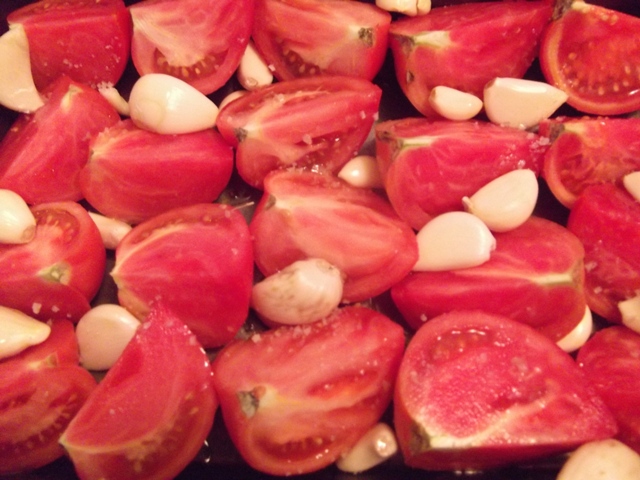
Quarter tomatoes, and line up in the pan. Scatter the peeled cloves from three heads of garlic over top. Drizzle olive oil over the contents of the pan, and sprinkle about a teaspoon of coarse salt over as well. Roast for 90 minutes to two hours, until tomatoes have withered and garlic is deeply golden. (This step you can do in advance; I like to roast a lot of tomatoes and garlic and stick them in freezer bags for easy weeknight dinners during the winter.)

In a large, heavy-bottomed pot, heat two tablespoons of olive oil over medium-high heat. Add three remaining cloves of garlic. Sauté onion until translucent, then add pepper, pepper flakes, and oregano, stirring to coat. Add tomatoes and garlic to the pot, scraping any solids that remain in the pan into the pot. Stir.

Add stock, and reduce heat to medium. Simmer 10 to 15 minutes, until later garlic cloves have softened. Purée using an immersion blender. Taste, adjusting seasonings as needed, then add basil and parsley and purée again. Add water to thin to desired consistency, if needed.

Serve drizzled with olive oil.

Roasted peach sorbet.

It’s chaos in here as our move-in date was bumped up to September 15. Nick wants to paint the new place, because when we moved in here no one had and it has driven him insane for most of two years, so he’s been wandering the hall between our two places for weeks, looking at paint chips and trying to determine how dark is too dark for an accent wall and exhausting me with so many questions about so many shades of blue. He made a monster out of the cat, who had previously not known that there are other apartments (and therefore, grand adventures) to be had in this building, and now she sits most of the time crying by the door, begging to be let out into the world.

We’re all pretty pathetic, and between the cat’s howling and whining and Nick’s puttering and pacing and me we’re not finding the energy to pull ourselves together and get properly sorted and packed. There are stacks of things, “go through it” piles that don’t get gone through, and Nick keeps saying horrible things like “you don’t need all these books, maybe get rid of some?” I’d like if we never have to move again.

So I did what I do whenever I don’t want to do any of the things I’m supposed to. I made a project out of the fruit in the fridge, and sorbet resulted, and it reminded me of desserts I ate in Paris and so I went back there in my mind. Once I had black currant sorbet with cold fresh strawberries dressed with just a whisper of brandy, and it was soft on the tongue and pure fruit – better than ice cream, if you can believe it.

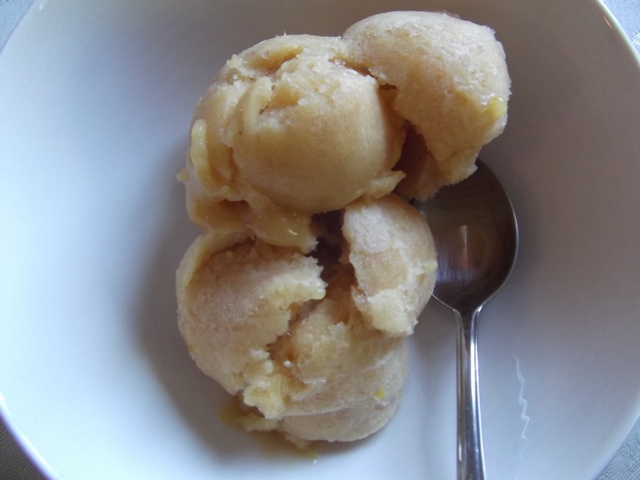
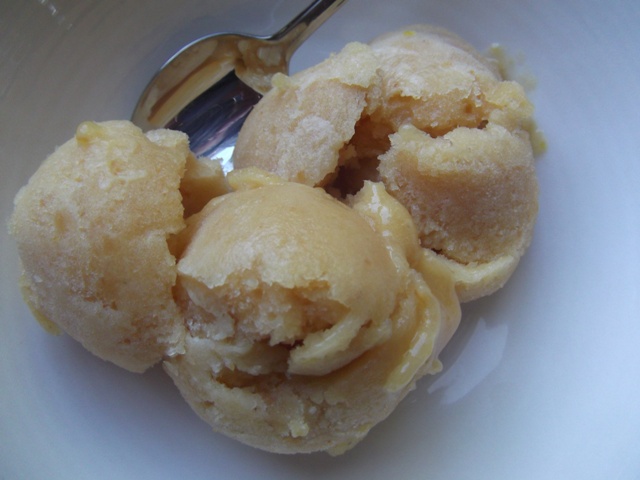
I adapted David Lebovitz’s recipe for nectarine sorbet. It’s peach season now, and because Okanagan peaches are perfect we only ever eat peaches when Okanagan peaches are available. For a few weeks every summer, we have peaches in our oatmeal, on our salads, and sliced over vanilla ice cream. I buy too many, and the peaches at the bottom of the bag turn soft, not good for eating raw but ideal for roasting. So this is a roasted peach sorbet, and it is as fruity and clean as a French sorbet and it will help you enjoy what’s left of the summer or forget about how many things you have to do this fall.

Roasted peach sorbet

  • 2 lbs. fresh peaches, halved, stones removed
  • 3/4 cup sugar
  • 2/3 cup water
  • Zest and juice of one large lemon

Heat oven to 400°F. Grease a 9″x13″ baking dish.

Place peaches cut side down in dish, and bake for 20 to 25 minutes until the fleshy sides have turned golden. Remove from the oven, cover with aluminum foil, and let rest five to 10 minutes.

Remove foil, and peel skins off peaches. Discard skins. Place peaches in a blender with remaining ingredients, pulse until smooth, and then strain into a bowl. Cover with plastic and refrigerate until cool.

Pour mixture into an ice cream maker and process according to manufacturer’s instructions.

Serve on its own, with assorted other fresh fruits, or with a touch of your favourite liqueur.

And then after that, go look at the cutest cat on the Internet.

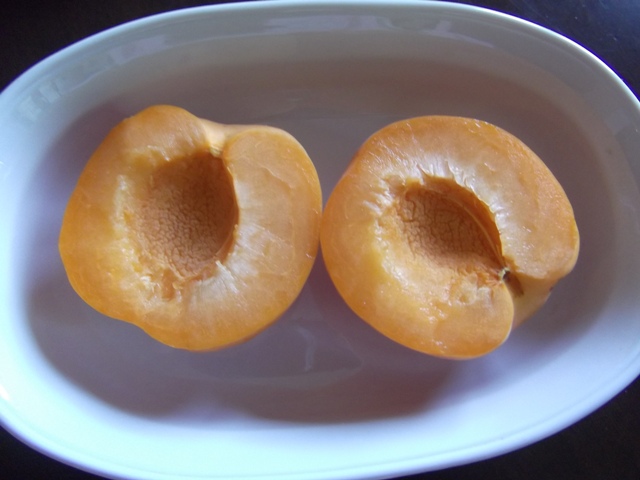
Roasted apricot with cottage cheese

In our early twenties, my friend Theresa and I shared a basement suite east of Commercial Drive and a tendency towards excess. It was a dark, damp little place last renovated in the early eighties by someone with a preference for shades of brown, but it was cheap and close enough to public transit and places we liked to go. The living room wall featured a cutout with a long fluorescent tube light at the top that was probably meant for displaying art, but it had a ledge just wide enough for a single liquor bottle, and long enough for maybe thirty.

We wheeled an old TV stand in next to the bar and stocked it with shakers and shot glasses and swizzle sticks and hula dancer figurines and felt pretty good about our lives. The kitchen had a place to hang stemware, and we filled it with our mismatched collection of cups and glasses. Every evening after work we’d have cocktails, the alcohol equivalent to swamp water, and we’d feel like fancy ladies as we sipped mango Malibu and peach schnapps out of plastic martini glasses.

But fancy cocktails weren’t our only bad habit. We were too similar to survive together for too long – though I suspect that if she’d never moved to Australia we’d still be together making bad choices in basement suites, probably sharing a set of kidneys – and one could easily convince the other that what anyone else would consider a bad idea was actually the best idea ever, like washing the kitchen floor with ammonia AND bleach (double the cleaning power!) or buying six Filet-o-Fish sandwiches with extra tartar sauce and a full slice of cheese at midnight because we were going to eat them anyway and it would save us another (inevitable) trip out and while we were at it maybe we needed apple pies too. We invented fourth meal but never thought to trademark it.

One of the ways we enabled each other to do incredibly self-destructive awesome things was by claiming that whatever we were doing was in the name of health. At the time, Theresa was a vegetarian except for fish and pepperoni, and I was just beginning to get really excited about fibre. Theresa would go on long runs, and I would go to boot camp because I was too lazy to exercise unless I paid for it and would only go out of guilt at having spent the money. Because we had our health in mind intermittently, sometimes we would stock up on healthy things, either at Costco or at our parents’ houses when one of our moms was cleaning out her pantry and wanted us to take crap away. One of our kicks was dried fruit, which made an excellent snack for a vegetarian and a fibre enthusiast.

Somehow we came to possess about a kilogram of dried apricots. One evening, in our pajama pants and holey sweatshirts with nothing to do and no desire to go out, we put on a movie and made the healthy choice to snack on dried fruit instead of Cheetos or Zesty Doritos, probably because one or the other of us had exercised and did not want to derail those efforts right away. Theresa brought out an opened zip-top bag of dried mango slices and a plastic bag of dried cranberries, and I found the apricots. Over the two hours the movie played, we ate the entire bag of dried apricots and most of the other fruit, which seemed like a good idea at the time because all that fruit fibre was bound to do good things for us.

Theresa is a scientist, but somehow she didn’t foresee what it might do to us. Over the next two or three days we both learned a valuable lesson, and that is that fibre is a finicky friend, and that very easily you can take the relationship too far.

I cried.

Years later, I still approach apricots with trepidation. I buy them only a handful at a time (and rarely dried), because there is safety only in a certain number, but all I know is that the number is low. And yet I still love them. I have never been good at knowing when to give up on a thing.

In the years between then and now, I have learned a little bit about balance. Maybe one apricot is okay. Maybe with a bit of protein, and a touch of sweetness. Maybe, like peach schnapps, apricots are not a meal but rather a snack that can be enjoyed in moderation.

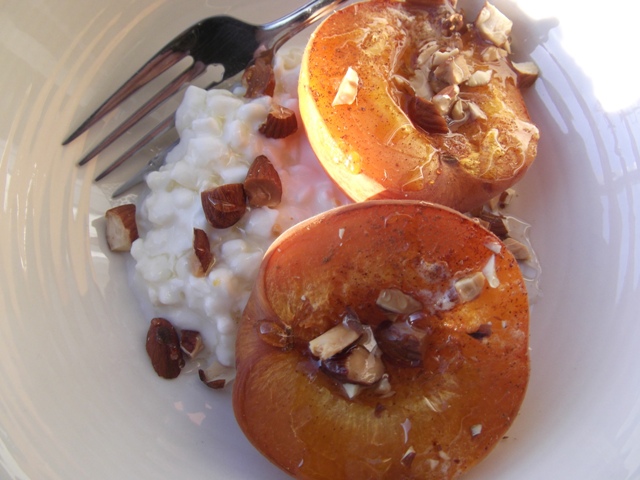
Roasted apricot with cottage cheese

(Serves one.)

  • 1 or 2 apricots, halved
  • Pinch cinnamon
  • Pat of butter, dotted over cut sides
  • 1/2 cup cottage cheese
  • 8 roasted whole almonds, chopped
  • Honey, to taste

Heat oven to 300°F.

Place apricot in a small baking dish, sprinkle with cinnamon, and then dot with butter.

Bake for 40 to 50 minutes, until soft and lightly browned.

Spoon cottage cheese into a bowl. Place roasted apricot halves over top, sprinkle with almonds, and drizzle with honey.

This is great for breakfast or for a snack before bed. If you don’t like cottage cheese, this is also quite pleasant with yogurt.

Peach and raspberry streusel cake

The reality of how little time we have left is starting to hit us now that Month 7 is upon us.

I have not been making much food at home because suddenly there is urgency to experiencing every patio and new restaurant, or to savouring the experience of doing absolutely nothing which mostly involves take-out or huge containers of fresh berries and ice cream and marathon sessions of 30 Rock. The laundry piles up and the bathtub stays grubby. But that seems to be the case regardless of the distraction.

There have been bursts of productivity in spite of us both, and everything seems to be coming up Emily. We were despairing the lack of reasonably priced but not disgusting two-bedroom apartments in the city while the walls in our current apartment began to close in on us when a spacious, many-windowed two-bedroom opened up in our own building, just across the hall. We move in October 1, so for the first time we don’t have to rush to pack, and we even have time to paint the new place to our liking.

At long last, we’re having ourselves a summer, but not a painfully hot one – outside the temperature has seldom exceeded 27 degrees (Celsius). Which has meant long afternoons in the sun, eating cherries and watching the barges in Burrard Inlet or feeding the birds tasty bites of fresh doughnut on the boardwalk at Granville Island, or cool evenings picnicking on Jericho Beach or walking to Cambie Street for the good tacos (and some lecherous staring at the beautiful blue-eyed taco man).

The sun is bright but the breeze is comfortable, and this does not feel like the same city I dream about running away from in the winter after 40 consecutive days of rain.

And, most importantly, still no stretch marks. I am so slick with lotion and cocoa butter that I’d be lethal on a Slip ‘n Slide. You keep your fingers crossed good and tight for me.

All this going and doing and lotion application has kept me out of the kitchen most of the time, and I can’t say that I mind. We eat a lot of 10-minutes-or-less dinners, a lot of berries in cream, and a refreshing number of salads. I like to think that summer’s slacking is an excuse to go out and make the stories we tell all winter, that somewhere in the season’s casual outdoor feasts there is something important, or, at the very least, something to dream on.

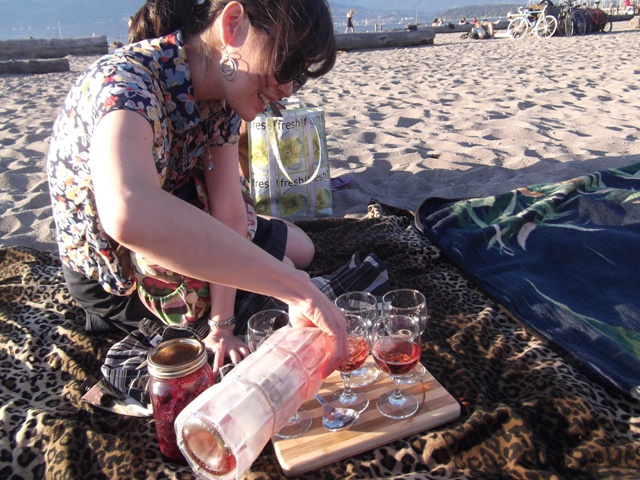
Like pink wine and sunshine in Grace’s wine glasses: important.

The aroma of a trout Paul that caught as it cooks with lemon and dill on the barbecue: important.

The chewy texture of oatmeal sourdough made by Grace from a starter with natural yeast: important.

A simple meal shared on a blanket on the beach: important.

People you are fond of in good moods and summer clothes: important.

Eating dessert outside at sunset: important.

Cake and peaches and raspberries and brown sugar topping: important.

You can make this now, and eat it on the beach as the sweet finale to a picnic, or you can use whatever fruit you’ve frozen and make in the winter when you’re cold and missing the smell of the ocean and that flattering summer evening light. I made this with peaches and raspberries, but it’s based on a recipe that calls for blueberries. It would be beautiful with blackberries.

Peach and raspberry streusel cake

(Adapted from the Fannie Farmer Baking Book)

Cake

  • 1/4 cup butter, softened
  • 1/2 cup sugar
  • 1 egg
  • 1 tsp. vanilla extract
  • 1 lemon, zest and juice (this is wonderful with Meyer lemon if you can get one)
  • 1 cup all-purpose flour
  • 1 tsp. baking powder
  • 1/4 tsp. salt
  • 1/3 cup milk
  • 1 cup diced peaches
  • 1 cup raspberries

Topping:

  • 1/2 cup dark brown sugar
  • 1/3 cup whole-wheat flour
  • 1/4 cup butter, cold
  • 1/2 tsp. vanilla extract

Preheat your oven to 350°F. Grease and flour a 1 1/2-quart baking dish.

Beat butter and sugar until thoroughly combined, then add egg, vanilla, lemon zest and juice. Mix.

In a separate bowl, combine flour, baking powder, and salt. Stir.

Add flour mixture to butter mixture with milk, and beat until smooth. Spread evenly in baking dish.

Top batter with fruit.

In another bowl (so many dishes! Fun!), mix sugar and flour. Add butter and vanilla, and squish between your fingers until a dry, crumbly crumb has formed. Sprinkle over fruit.

Bake for 60 minutes, or until a toothpick inserted into the centre comes out clean. Serve warm.


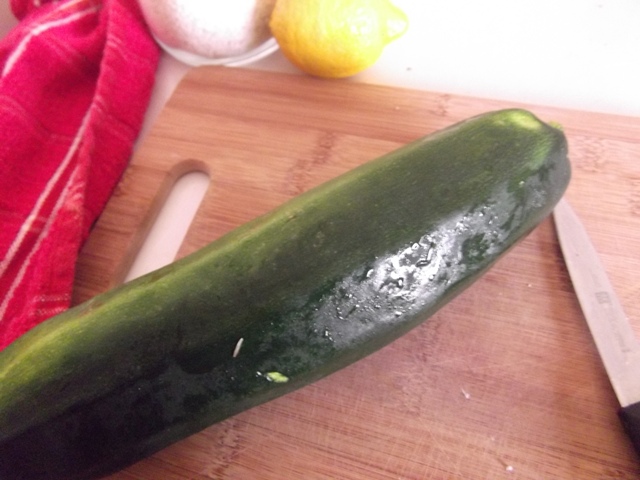
Zucchini parmigiana sandwiches.

Zucchini is back! And early tomatoes, among other things, and my fridge is full of all the edible colours and I am delighted. I’ve started buying large amounts of things to turn into freezer meals for when I no longer have the energy to feed myself or the ability to reach the stove, which should happen right around the end of the harvest season. I am in the process of assembling zucchini parmigiana in foil containers (no dishes!), and had extra bits, and thought they’d be quite excellent in sandwiches.

For the sandwiches, I fried the zucchini instead of roasting it, and used leftover marinara sauce. You can make it fresh, if you like – I quite like this one from Smitten Kitchen with a bit of fresh basil – or you can use whatever you have hanging around in your fridge or pantry. Something simple with onions, garlic, tomatoes, and herbs should do just fine. Any plain sandwich bun will do, and whole wheat would probably be nice.

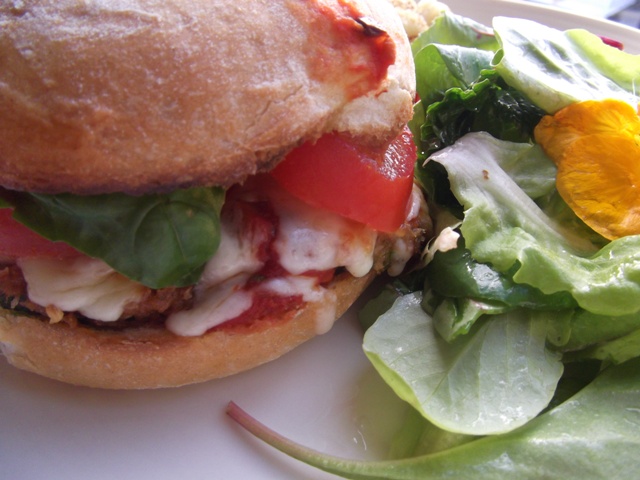
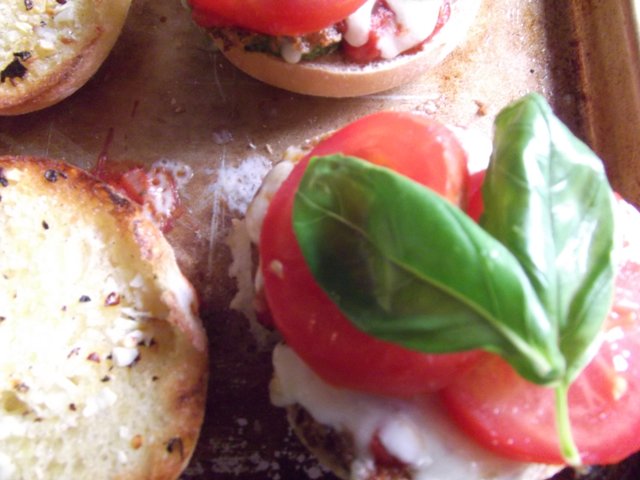
These smell fabulously summery, and in spite of their crispy fried bits and garlic-toasty top half, they’re pretty light. The tomatoes and basil play well with the breaded zucchini, and there is just the tiniest bit of spice from the Tabasco and red pepper flakes. They would be excellent with cold beer or red wine, and beg to be eaten on a patio in the sunshine. Maybe your Meatless Monday is warm and summery? We had to make do with pretend as it’s been damp and grey around here, but these certainly brightened our moods.

Zucchini parmigiana sandwiches

(Serves six to eight.)

  • 8 buns, such as Kaiser or Calabrese
  • 1 lb. zucchini, sliced into 1/2-inch rounds (about 24 pieces)
  • 3 large eggs, beaten
  • 1 tsp. Tabasco or other hot sauce
  • 1 cup panko
  • Zest of one lemon
  • 3 tbsp. butter, at room temperature
  • 3 tbsp. olive oil
  • 2 cloves garlic, finely minced
  • 1 tsp. red pepper flakes
  • 1 cup marinara sauce
  • 1 cup shredded Provolone
  • 2 tomatoes, thinly sliced
  • 16 basil leaves
  • Salt and pepper, to taste

Slice buns in half horizontally and set aside.

Whisk together eggs and Tabasco. Combine panko with lemon zest, and stir to combine. Dredge zucchini slices first in egg, then in bread crumbs. Fry in a large pan over medium-high heat, in grapeseed or olive oil, until golden, 90 seconds to two minutes per side.

Place on a plate lined with paper towel and sprinkle with salt while still hot.

Preheat oven to broil.

In a small bowl, mush together butter, olive oil, garlic, red pepper flakes, and salt and pepper (taste and adjust seasonings as desired). Divide equally between the eight buns, spreading on the top half only. Place on a large baking sheet.

Place zucchini slices, two to three per bun, on the other half of each bun. Top with two tablespoons each marinara sauce and provolone, and place on the same baking sheet as the top halves.

Place under broiler and cook until cheese has melted and the buttered half has turned golden, two to three minutes.

Finish each sandwich with fresh tomato slices and basil leaves. Serve hot, with lightly dressed greens on the side. Enjoy!


Strawberries.

In France when Grace and I were there, it was strawberry season. At the market in Lyon, I could barely choose from three or four different kinds, and eventually settled on a container of tiny fraise du bois, which smell like those sparkly red strawberry marshmallows from the penny candy bin and taste like the concentrated musk of spring, like dew and flower petals and the nectar sucked off clover tips, and like deep, dirty red – if a colour can have a taste, those thumbnail-sized ruddy berries were vermillion.

Before we left, Grace plotted out the best places for us to eat, and I nodded happily along as she prattled off the names of places we would go to in the France that belongs to David Lebovitz, Dorie Greenspan, and Clotilde Dusoulier. We followed them all over Paris and Lyon to markets and bistros and crêperies, devouring as much as we could.

In many of those places, there were strawberries, and wherever there were strawberries a meal felt French, like a postcard picture of how France has always been in some memory you may or may not have but know just the same. I wish my story could begin with some treacly revelation about how “I found myself in Paris,” but myself and I have been familiar far longer than is noteworthy; you might not be impressed, but I’ve been this way all along. It’s truer and far more romantic to say that “I found strawberries in Paris.”

The best place for strawberries was a restaurant called Spring. It’s an expensive little restaurant, and Grace made a reservation online before we left and then never heard back from them, and she worried that we would not have a table for lunch. She attempted to confirm the reservation, in French, which proved inconclusive. We decided to meet there at the scheduled hour after wandering separately in the morning as we had disparate destinations (mine involved the purchase of seeds to one day grow fraise du bois of my own), and though my inability to read a map pulled me the opposite direction a long way down Rue de Rivoli, we were both able to make it in time.

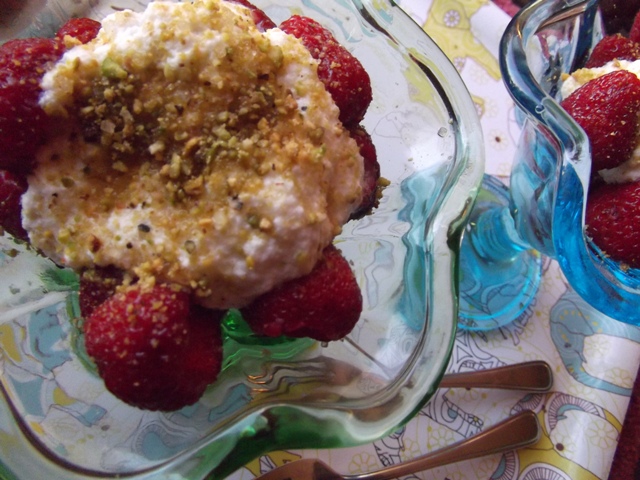
At Spring we had a perfect meal – cool tuna belly with chilled asparagus, sorrel, and tonnato sauce; cold white wine; crisp fried anchovies; masterfully seared filet of acorn-fed, bushy-banged black pork with grilled wild fennel; five cheeses, tiny bites but more than enough to know everything important about – or at least to imagine in detail – five different terroirs; chocolate sorbet with cocoa nibs and white pepper; pistachio cream stuffed between two homemade chocolate wafers. And strawberries, orangey red and topped with a dome of sweetened crème fraîche and dusted with ground pistachios and sugar. They could have served it in a bucket and I still wouldn’t have had enough, and I’ve been dreaming of those berries ever since.

When we returned to Vancouver, almost nothing was in season yet. I’d have to wait a month, at least, for the first berries of summer. More than six weeks have passed since we’ve been back, and finally this past weekend I got my fix. Tracy and I made a date and drove to Westham Island, to Bissett Farms, and picked as many strawberries we could in one afternoon.

It’s been chilly for an unseasonably long time on the coast, so the berries are more tart than I was expecting. This year you may want to sweeten your crème fraîche more than you might otherwise. To recreate my dish, select as many small strawberries as you can fit into four handfuls. Wash and hull the berries, and put them into four ramekins or parfait cups. Stack them jauntily. This is important.

Sweeten one cup of crème fraîche with one to two tablespoons of honey and a drop of orange flower water, if you’ve got it. Grind freshly roasted pistachios, about 1/3 cup, with a heaping tablespoon of sugar in a food processor. Spoon crème fraîche over strawberries, then sprinkle each serving with as much pistachio sugar as you feel like. Imagine Paris.


Corn and asparagus salad

As of about 1:30 p.m. last Friday, it is now summer on the west coast and I am wearing a sundress and remembering my thighs now that they are not prevented by denim or Lycra from rubbing together.

Finally, things I’ve been waiting a year for are in season again, and the sun is warm into the evening so we can garden after work or enjoy a fizzy drink or two and a tomato salad on a patio somewhere and be social. I bought this season’s first zucchini on Sunday. I picked strawberries in the sunshine on Saturday. On Friday I ate corn in a park beside a marina.

My Dad trimmed his garlic plants this weekend and sent me home with a wealth of stinky, curly green stalks with which to make pesto and salads until the garlic oil ekes from our pores and our coworkers beg us to eat anything else. And corn has begun to appear in the markets, just as the last of the frozen stuff has hardened into an iceberg that smells like freezer and deserves to be thrown out.

So for this Meatless Monday, dinner came together in a fifteen-minute frenzy of blanching, chopping, and tossing, and it was cool and bright-tasting, with lemon and tomatoes, and basil, and piquillo peppers from a jar in the fridge and those pungent, fabulous garlic scapes.

There would have been a handful of Parmesan cheese thrown in at the end but I was in such a rush to eat that I forgot. No matter. It’s just fine sprinkled on after, and it’s just fine without if you want to keep things vegan. It would also be wonderful with grilled scallops or spot prawns, or maybe halibut, but you can do that some other night.

Corn and asparagus salad

(Serves four as a main dish, six as a side.)

  • 1 lb. asparagus, trimmed, cut into bite-size pieces
  • 2 large cobs corn (about 1 1/2 cups)
  • 2 cups diced fresh tomatoes
  • 2 diced piquillo peppers (or roasted red bell peppers)
  • 1 large shallot, minced
  • 1/2 cup garlic scapes or scallions, finely chopped
  • 1/2 cup grated Parmesan cheese
  • 1 lemon, zest and juice
  • 1/4 cup extra virgin olive oil
  • 2 tbsp. minced fresh basil
  • 1 tsp. red pepper flakes
  • 1 tsp. Kosher salt
  • 1/2 tsp. ground black pepper

Blanch asparagus in a large pot of boiling water. Cool in an ice water bath until cold.

Scrape corn from cobs into a large bowl. Add tomatoes, peppers, shallot, garlic scapes, Parmesan cheese, and lemon zest. Add asparagus.

Whisk lemon juice, olive oil, basil, pepper flakes, salt, and pepper together. Taste, adjusting balance as needed. Pour over salad. Toss to coat.

Serve immediately.