Kasha varnishkes.

I like clutter. I like my visual field to be jam-packed with stuff that sparkles or is brightly coloured or that I can look at and instantly conjure some memory of some time or place, whether real or fictional – I’m beginning to wonder how many of the things I remember actually happened and how many I invented or just read. In the recklessly unencumbered pre-baby era, Nick and I would spend many of our weekends flitting from brunch to thrift stores and flea markets, picking through piles of junk to find what we believed to be treasures. I once joked to my friend Dan that it wouldn’t be a big deal for us to move cross-country, as everything we own could be replaced in thrift stores when we got there. He agreed, which should probably be kind of insulting. I mean, some of our stuff is from Ikea, so it’s not all junk … right?
Among the beer steins and vintage “art,” one of my favourite things to discover among the rubble was cookbooks, especially the kind from the 70s and 80s with their deliciously terrible food styling and orange-tinged photography. One of my biggest regrets is that I didn’t buy the 1987 edition of Vogue Entertaining when I saw it at the VGH Thrift Shop for $13 – the jellied salads! The all-brown buffet of “Indian food!” The palm fronds in crystal vases! (Side note: That this is one of my biggest regrets speaks either to a total lack of ambition or a history of unapologetically not giving a shit. I can’t decide which is worse.)

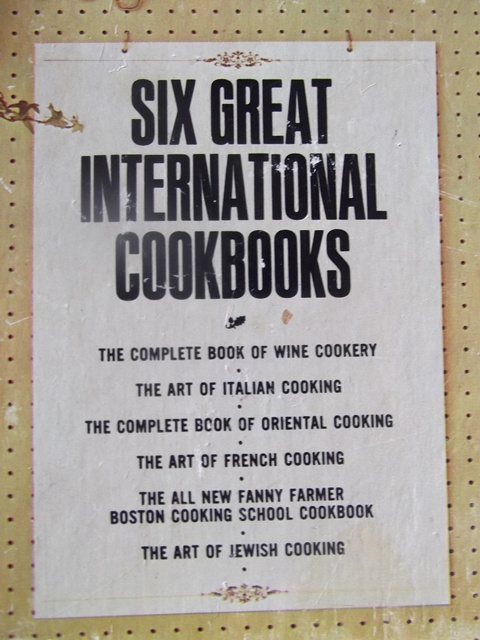
One of my favourite cookbook finds to date came from the Cloverdale Flea Market, where we spent one sunny afternoon searching for more beer steins, kitten art, and light-up statues of Jesus. In a pile in the back of one man’s trailer, I found a collection of six paperback books on “international cuisine,” which continues to delight all these years later. My favourite is the book on Jewish cookery, which does not contain a recipe for matzo ball soup, but which boasts recipes for both Cantonese Chicken and Chicken Chow Mein.
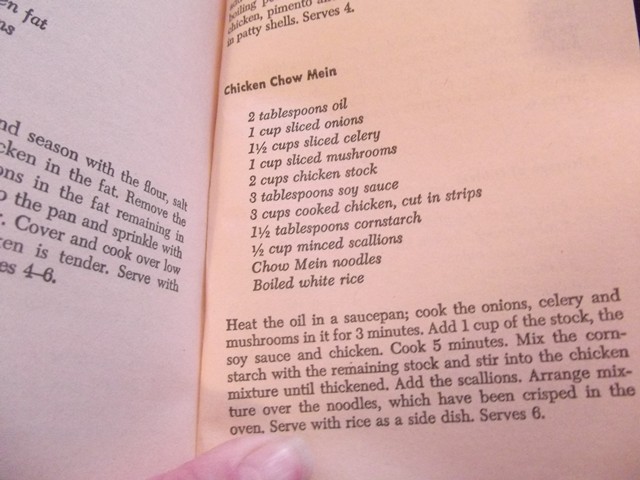
Not knowing a lot about Jewish food, this book has been my introduction to a cuisine that only seems to get airtime in December and April. And while I have yet to follow a recipe to the letter, a few recipes have been jumping-off points. One of these, for kasha varnishkes, is an excellent (if not beautiful) dish (“delicious and nourishing beige noodle mush” is a pretty accurate description) that uses pantry staples for a cheap starch alternative.
Buckwheat is one of those super-healthy things you’re supposed to eat to lower cholesterol. It’s high in fibre, it’s cheap, and it’s quite tasty. And it has diverse applications – Food52 has a compiled a pretty thorough list. You can find roasted buckwheat groats, also known as kasha, at natural foods stores and Eastern European delis and groceries. Kasha varnishkes are lightly sweet, thanks to the onion and apple, and are best served alongside sausages or roast meats and pickles, or with veggies for a full and hearty meal. You can use vegetable stock to make it vegetarian-friendly.

Kasha varnishkes

(Serves four as a side-dish.)

  • 6 tbsp. butter, divided
  • 1/2 cup roasted buckwheat groats
  • 1 egg
  • 2 cloves garlic
  • 2 cups chicken or vegetable stock
  • 1/4 lb. small egg noodles, such as spaetzle
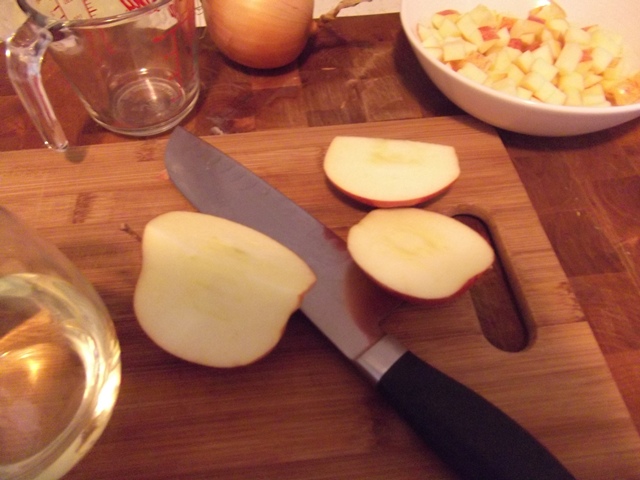
  • 2 cups chopped apple, diced to about 1/2″
  • 1 medium onion, diced
  • 2 tbsp. chopped fresh parsley
  • Salt and pepper, to taste

In a large, heavy-bottomed pot over medium-high heat, melt two tablespoons of butter and stir in apples and onions. Cover, cook ten minutes, then remove lid and reduce heat to medium. Stir frequently for 20 to 30 minutes, until apples and onions have caramelized and shrunk down considerably.

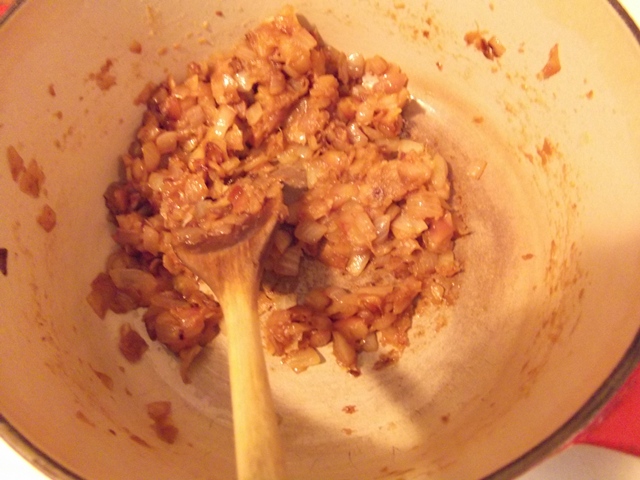
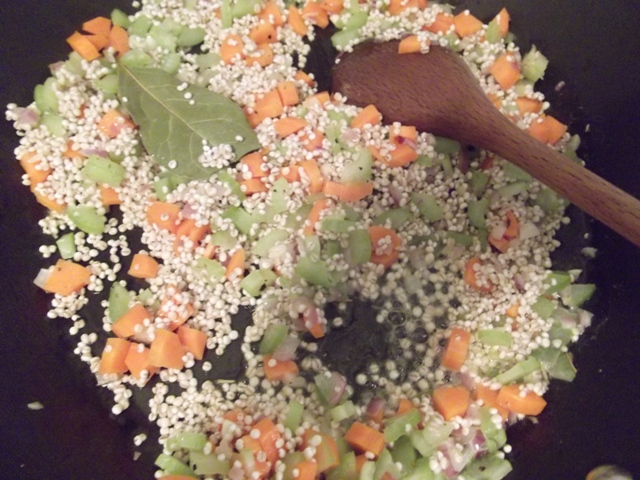
Meanwhile, heat three tablespoons of butter in a pot over medium-high heat. In a bowl, stir buckwheat and egg until thoroughly combined. Pour into pot, stirring to keep groats from sticking together. Keep stirring until egg is cooked and appears dry. Add garlic, then chicken stock. Reduce heat to medium and simmer until liquid is absorbed and groats are fluffy, about 15 minutes.

In another pot, bring 2 1/2 cups of water to a rolling boil. Add noodles, and cook until just al denté (refer to cook time on package). Drain.

Stir cooked groats and drained pasta into the apple and onion mixture, add an additional tablespoon of butter, stirring to coat. Taste, adjusting seasonings as needed. Stir in parsley, and serve immediately.


Mushroom and butter bean ragù

By mid-morning, there was chaos. The baby has been sick and only seems able to comfort himself by wailing, though he will pause briefly for food – but only briefly.
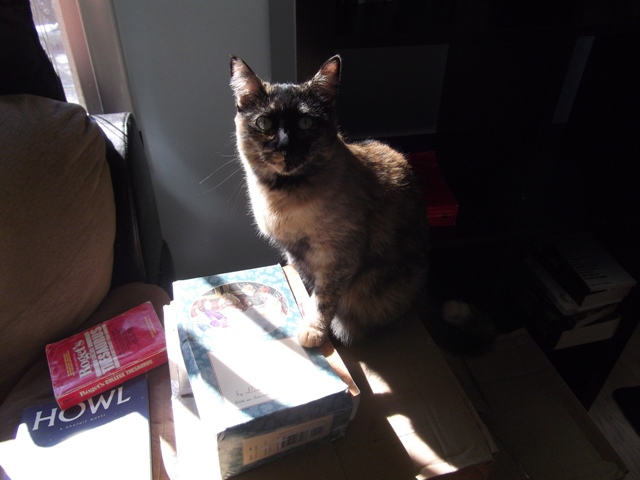
The cat needs her nails done but won’t sit still for it, and if she’s not hanging off the seat of my pants by her claws she’s attempting to bury her wet food under the mat in the hall or scratch holes into the garbage bag that’s waiting to go out to the bin. When I finally got the baby down for a nap I came out to find the cat licking my sandwich.

“You’re all a bunch of jerks!” I yelled at no one in particular, and foraged a lunch of stale Bugles and a glass of white wine that may have been sitting out on the coffee table since last night. I glared at the cat but she has made it clear that apologizing to me is beneath her.

Six weeks ago I joined the Learn to Run clinic at the local Running Room, partly to get back into shape. It was not a great idea because I don’t enjoy running – what’s the point unless you’re being chased? It means rushing out of the house on Monday evenings after Nick gets home from work, and we end up eating dinner late while having to juggle laundry and any mess left over from the weekend. I usually dread it but tonight I couldn’t wait to go. These past few days I have come to understand why someone might go out for a pack of cigarettes and just not come back.

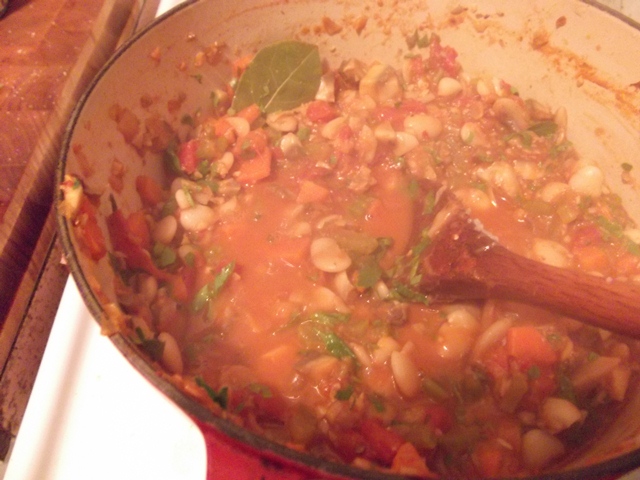
So, you know. There are highs and lows. And sometimes there is enough time in the day to linger over the stove, and some days dinner comes together in a few hasty minutes after the kid goes down for the night. Tonight was one of those hasty nights, and I’m calling the result a ragù even though it contains no meat and did not simmer for very long at all – I loaded it up with the kind of things that make it feel like it simmered long (oaky wine, soy sauce, mushrooms, Parmesan cheese), but it was only 15 minutes, while the pasta cooked. I don’t think anyone’s going to argue with me today.

If you can’t find canned butter beans, use one cup fresh or frozen lima beans or any other canned white bean.

Mushroom and butter bean ragù

(Serves 4.)

  • 3 tbsp. olive oil
  • 1 shallot, minced
  • 2 carrots, finely chopped
  • 2 stalks celery, finely chopped
  • 4 cloves garlic, minced
  • 2 tsp. chopped fresh rosemary
  • 1 tsp. red pepper flakes
  • 1 tsp. smoked paprika
  • 1 tsp. ground black pepper
  • 1 lb. mushrooms, roughly chopped
  • 1/2 cup oaked white wine, such as Chardonnay
  • 1 bay leaf
  • 1 14 oz./398 mL can diced tomatoes
  • 1/2 lemon, zest and juice
  • 1/2 cup grated Parmesan cheese
  • 1 tbsp. soy sauce
  • 1 14 oz./398 mL butter beans, drained and rinsed
  • 1/2 cup chopped fresh parsley
  • Salt to taste
  • 1 lb. fettucine

In a large, heavy-bottomed pan, sauté shallot, carrot, celery, and garlic in olive oil over medium-high heat until vegetables have begun to sweat. Add rosemary, red pepper flakes, smoked paprika, black pepper, and mushrooms, and cook until mushrooms have released their moisture, about two minutes.

Add wine and bay leaf, scraping the bottom of the pot to ensure no bits have stuck to the bottom. Reduce heat to medium, and simmer until liquid has reduced by half, one to two minutes.

Add tomatoes, lemon zest and juice, Parmesan cheese, and soy sauce. Simmer another five minutes, stirring occasionally.

Meanwhile, bring a pot of salted water to a boil. Add fettucine, and cook according to package directions – five to seven minutes – until al denté (or cooked to taste).

Add butter beans to the ragù, and continue to simmer until fetuccine is cooked. Drain pasta, and add to the ragù. Stir well. Taste, adjusting seasonings as needed. Add parsley, and serve.

Green tea and Meyer lemon jelly

When you have a baby in BC, they send a public health nurse to come and make sure you know what you’re doing and that your living room isn’t a meth lab, and with the little pork chop, things were no different. And while the nurses at the hospital were amazing and lovely and I wanted to bring each of them home to live with me, the public health nurse sucked.

I am sure that she meant well. She contradicted everything the hospital nurses said, and then went on to list the things I was doing wrong and the things I shouldn’t do wrong in the future. And then she gave me some pamphlets, and a DVD about purple crying, and told me I should let the baby decide our schedule because wanting to get more than an hour’s sleep in one go is selfish and his needs are sensitive. Did I want him to have abandonment issues? Did I want him to be an emotional eater, a problem drinker, or an Adam Sandler fan? I am sure that she meant well. Or maybe she was just kind of an asshole.

Either way, figuring that she knew best, I tried to follow her instructions so as not to permanently ruin the boy. I was never able to get him off the bottle so he will probably be obese and emotionally distant. One thing you find out pretty quickly is that every nurse, doctor, or person with children is an expert and is happy to offer his or her opinion, and each of those opinions contradicts all of the other opinions you’ve already heard. And that everything you do wrong will eventually be the reason why your child grows up to be a nihilist or a crackhead.

Piece by piece the public health nurse’s advice unravelled. He preferred the bottle, and we preferred sleeping three hours at a time, and then four hours, and now sometimes seven. We run the bath a little warmer and he doesn’t cry, and we let him watch TV sometimes when one of us is making dinner and the other has to go to the bathroom. The last warning she offered was about putting the baby to sleep on his stomach – you’re never supposed to put a baby to sleep on his stomach.

The kid wouldn’t nap. He was tired, and he would cry and cry about it, and it was, quite frankly, tiresome. We both knew that he needed to sleep, but he had to sleep on his back which was the rule. And so every single day, we would battle over naptime, and I would put him down to sleep as he rubbed his eyes and his fat bottom lip quivered. And he would cry and I would give it 25 or 30 minutes and then I would pick him up and the two of us would sit down on the couch and he would complain about how I was mistreating him and I would agree that I don’t know what the hell I’m doing here.

We did the whole nap-on-the-back thing today, and it went the way it always does. But today, after I picked him up and pat his back and told him that we do like him, we just like him better when he’s rested, I put him back in his crib, down on his stomach, and within 30 seconds he was asleep, and though I checked him every five minutes to make sure he wasn’t dead, he slept nearly three hours.

The baby napped today. THE BABY NAPPED TODAY.

So I did what I like to do when I have some time alone. I made a little treat, and read a little bit of book, and had a full sandwich uninterrupted and it was everything I thought it would be.

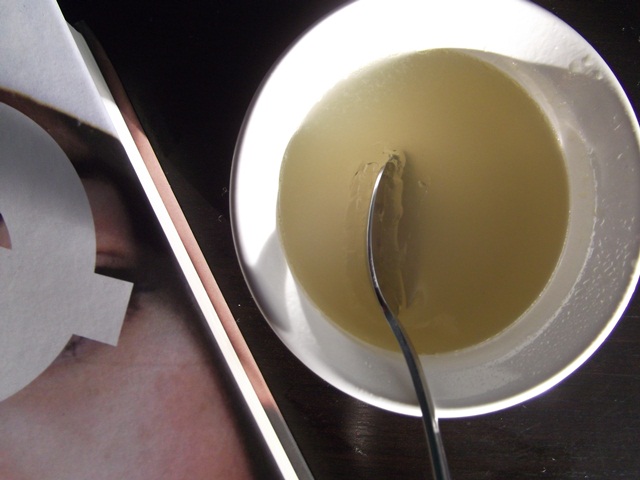
The little treat was a little bit of jelly. The sun has come out the past few days this week, and there are Meyer lemons at the public market, and for the first time in months I felt like something cool and fruity instead of something hot and chocolate. A little lemon juice, some sugar, and a pot of green tea turned into something pleasantly bitter and refreshingly tart – the kind of thing one might enjoy during a few fleeting moments of quiet.

If you can’t find Meyer lemons, use regular lemons but increase the sugar to a full cup.

Green tea and Meyer lemon jelly

  • 2 1/2 cups water
  • 2 packets of unflavoured gelatin
  • 2 teabags of green tea
  • 2/3 cup granulated sugar
  • 1/2 cup Meyer lemon juice (from two or three Meyer lemons)

Bloom gelatin in 1/2 cup of cold water. Scrape into a pot with the rest of the water, the sugar, and the tea bags. Heat until sugar and gelatin have dissolved, but do not allow the liquid to boil.

Remove the pot from the heat, stir in the lemon juice, and let sit for five to ten minutes, so that the tea can steep to taste.

Divide between six ramekins, and refrigerate until set, two to six hours.

And if you have the time, a nap and a treat will brighten your mood right up.

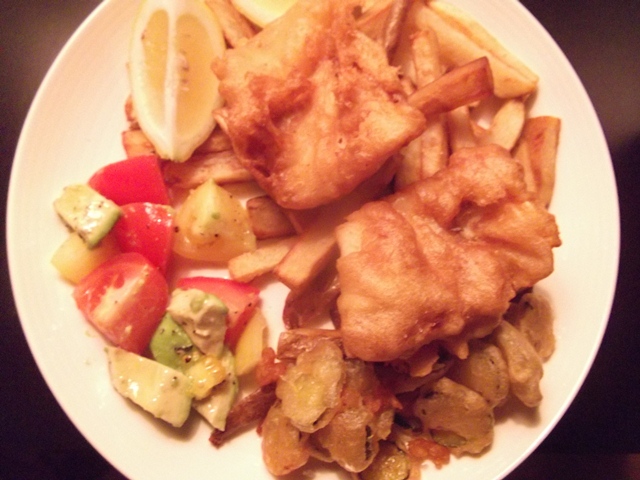
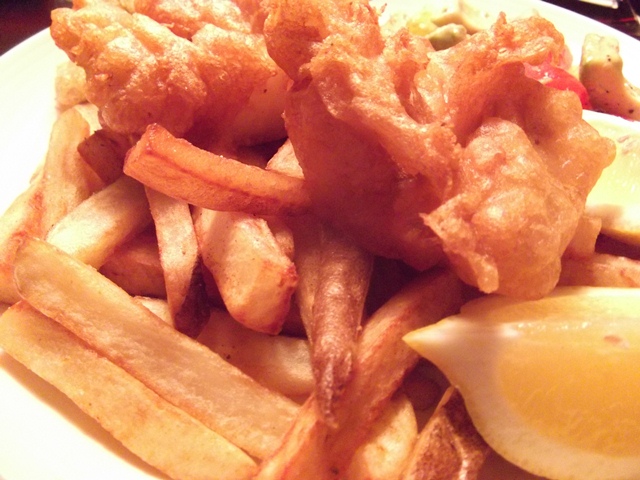
Fish and chips.

Vancouver is the sort of place you kind of want to run away from for about eight months of the year. When the clouds are low and the rain never really lets up, it’s awfully dark and everything is just so … moist. The smell of the city in this weather is distinctive, and in places where a lot of bodies are crammed together, the scent is reminiscent of a herd of damp sheep.

(Either we’re comfortable and we’re the third-worst-dressed city in the world, or we’re stylish and we smell like fusty wet livestock.)

It’s sort of weird then that the place I’ve been fantasizing about lately is London. Rainy London with its fish and chip shops and dark beers and the possibility that one might trip over Clive Owen and somehow get to keep him. If I’m going to have to bundle up for the rain, I’d rather do it someplace with good fried fish to eat when I come in from the cold.

This recipe is based on one from the Billingsgate Market Cookbook, which is an excellent guide to British seafood and seafood cookery. I used a local cod, but you can use whatever white fish you prefer.

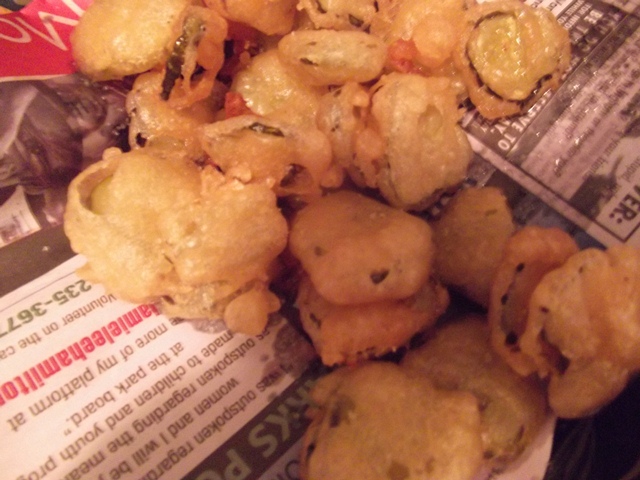
Tip: Use any remaining batter to coat thin slices of dill pickle. Fry in oil heated to 350°F until crisp and golden, about two minutes. Drain on paper towel and sprinkle with sea salt to serve. (Fried pickles are also amazing with hot sauce.)

Fish and Chips

(Adapted from the Billingsgate Market Cookbook. Serves four.)

  • 2 lbs. white fish, cut into eight pieces
  • 1 1/2 lbs. russet potatoes, scrubbed but not peeled
  • 1 1/4 cups all-purpose flour, divided
  • 1 tsp. baking powder
  • 1 tsp. Old Bay Seasoning or curry powder
  • 1/2 tsp. cayenne pepper (optional)
  • 1/2 tsp. salt
  • 1 12 oz./341 mL bottle of your favourite beer

Sprinkle fish pieces with 1/4 cup of flour. Set aside.

Cut potatoes into pieces about 1/2-inch thick, to the length you prefer. Shorter pieces means more fries, and I like more fries. Soak in cold water for five minutes, then remove to a wire rack lined with paper towels and pat thoroughly dry.

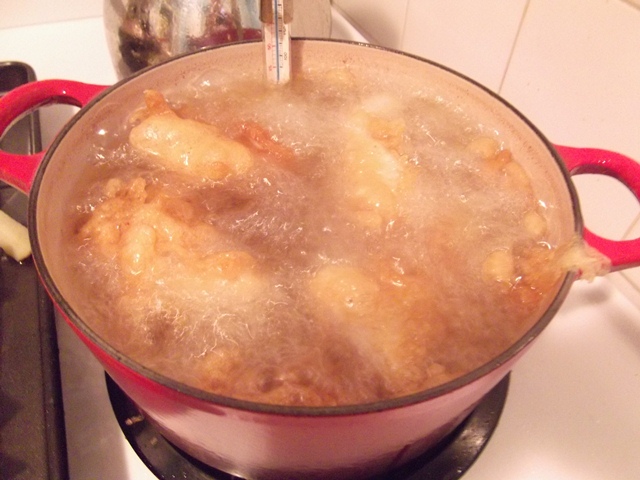
If you have a deep-fryer, heat your oil to 325°F. If you don’t, then pour oil to a depth of two inches into a heavy-bottomed pot such as a Dutch oven. Using a candy thermometer to monitor the heat, bring the oil to 325°F. Blanch potatoes in batches for 3 to 5 minutes each (unless you’re extremely daring/stupid like me, in which case blanch them all at once while wearing oven mitts and instructing whoever’s close by to stay near and hold a large box of baking soda for the scary grease fire that will surely break out when all that oil boils over into the burner). Place blanched potatoes back on wire rack. Pat dry with paper towel.

You’ll spend a lot of time patting stuff dry. I might not have mentioned that.

Combine flour, Old Bay or curry powder, baking powder, cayenne pepper (if using), and salt. Whisk in beer until a thin batter forms; add water to thin as needed. Increase the heat of the oil to 340°F.

Using tongs, dip each piece of fish in batter to coat, then dredge for 10 seconds in the oil before releasing. If you just drop the fish into the pot, it’ll stick to the bottom. Fry for five to seven minutes, or until crispy and golden.

Set fish on paper towel to drain, and sprinkle with sea salt.

Heat oil to 350°F. Return potatoes to the pot in batches, cooking until golden (another five minutes or so). Remove from oil to paper towel, sprinkle with salt, and then serve.

Serve fish and chips hot, with slices of lemon, malt vinegar, and tartar sauce.

Roasted grapes.

Four o’clock in the morning is cold even when all the windows are closed and you’re wearing flannel jammies and slipper socks. 4:00 a.m. used to be different, maybe because anytime I found myself there it was because I had been having too much fun, and my veins were warmed by the coursing of so much rum through them. I remember dancing until my clothes were soaked through with sweat, then packing into the always-busy 24-hour pho place on Broadway for a bowl of rice noodles and beef wontons. It is less fun to be awake now than it used to be.

At four there is no traffic on the street outside. There is little activity on Facebook or Twitter to serve as a distraction. Even the cat will not be coaxed awake.

The baby sleeps long hours through the night now, waking only briefly every now and then – he sighs heavily and his eyes flutter, but his fussiness is mostly gone. He’s a bottle baby, so he gets to sleep while I wake every three hours to pump his meals. I keep a lamp on in the living room at night, so when I wake up I can see Nick’s face and the baby’s in the shadows, both of their mouths wide as they breathe deeply, right arms at ninety-degree angles above their heads, snarfling and snoring in their separate beds.

When I sleep I dream about sleeping.

On the one hand, I am very tired. On the other, these moments alone in the lamplight are mine, and I savour the time on my own. Also, four o’clock is a peckish hour, and I always need a snack.

Roasted grapes

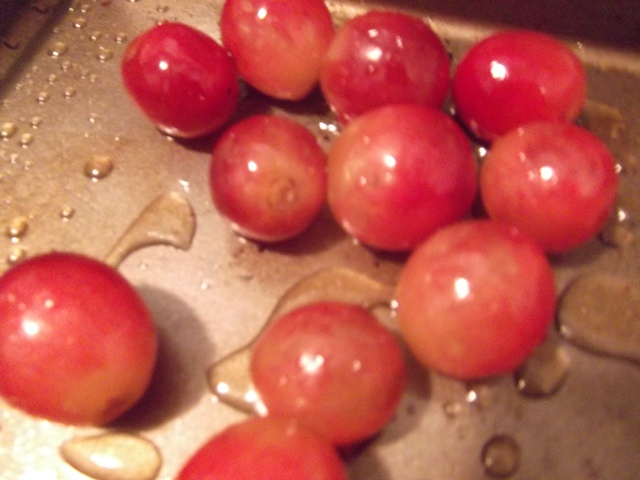
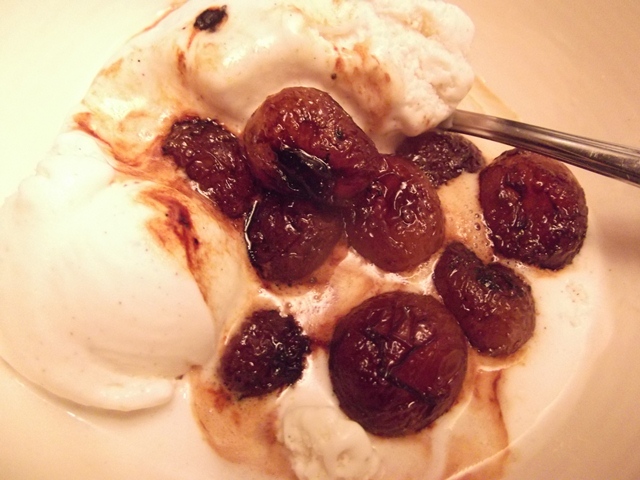
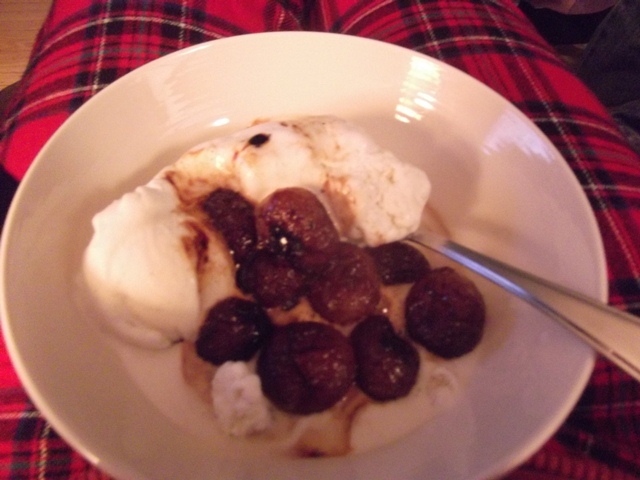
This idea comes from Fine Cooking, with some adaptation. I prefer to use seedless red globe grapes, and to roast them longer than the original recipe calls for. Some olive oil, some maple syrup, and a pinch of salt are all you need. They will take on a jammy, almost molasses taste. Serve these over ice cream.

  • 1 large handful of seedless red globe grapes
  • 1 tbsp. olive oil
  • 1 tbsp. maple syrup
  • Pinch salt

Preheat oven to 425°F.

In a small baking dish, toss grapes with oil, maple syrup, and salt.

Roast 20 to 25 minutes, turning the grapes occasionally, until they are soft and their skins have ruptured.

Serve hot, over ice cream.

These are easy to make ahead and reheat, if you’d prefer. They are great as they are, or as a side for roast pork, or as part of a fancier dessert that you might serve to company. But in those cold hours before dawn when you’re wearing flannel pants, they are at their best.

Sweet potato and pear barlotto.

Around here, risotto is a favoured comfort food. I like its toothsome porridginess (can that be a thing? Or is that redundant? Can porridge be toothsome?), and the way it lends itself to infinite variations. Nick likes carbs and wine and cheese. Who doesn’t, really?

It’s been cold lately, and we’re tired. We’re in need of comfort, especially after spending so much time comforting this ten-pound pork chop at the expense of uninterrupted sleep and personal hygiene.

Too often we seek solace in take-out. So while I crave risotto, it would be wise to make a healthier choice in light of the tempura and pulled pork and fast-food cheeseburgers we’ve consumed this past week. Pearl barley stands in nicely for arborio rice, and loaded with veggies this barlotto makes a meal that’s equal parts soothing and nutrient-rich. Make it as a main course for Meatless Monday, or serve it as a hearty, autumnal side dish with roasted pork or chicken.

Sweet potato and pear barlotto

  • 1 lb. sweet potato, peeled and diced
  • 1 lb. firm-fleshed pears, diced
  • Olive oil
  • Salt
  • Pepper
  • 3 tbsp. butter
  • 4 cups vegetable stock
  • 1 shallot, minced
  • 1 carrot, finely chopped
  • 1 stalk celery, finely chopped
  • 2 cloves garlic, minced
  • 1 tsp. ground black pepper
  • 1/2 tsp. dried rosemary
  • 1/2 tsp. dried thyme
  • 1 cup pearl barley
  • 1 bay leaf
  • 1/2 cup dry white wine
  • 1/2 cup grated Parmesan cheese
  • 1/3 cup chopped fresh parsley, plus additional for garnish

Preheat oven to 400°F.

Toss sweet potato and pears in oil, and sprinkle with half of one teaspoon each salt and pepper. Pour mixture into a 9″x13″ baking pan, and roast 35 to 40 minutes until golden, turning mixture halfway through cooking.

Heat stock in a pot over medium heat. Bring to a simmer, then reduce to low.

Heat two tablespoons butter and one tablespoon olive oil over medium-high heat. Add shallot, carrot, celery, and garlic, and sauté for one minute. Add pepper, rosemary, and thyme. Add barley, stirring to coat in butter and oil, then add bay leaf and wine. Stir frequently until liquid dissipates.

Add stock one cup at a time until absorbed, about 30 minutes, stirring regularly.

Add cheese, then taste. If you use store-bought stock, you likely won’t need to add salt. Adjust seasonings to taste.

Stir in an additional tablespoon of butter, then toss with fresh parsley. Serve immediately, with additional parsley for garnish.

Pepper pot.

A friend and I once took a Caribbean cooking class through the Vancouver School Board’s Continuing Education program. I had taken other classes through the same program and they were all taught by professional chefs and I learned some fabulous things, including recipes I still use on a regular basis, so I thought the Caribbean class would be equally useful.

When we got to the first class, the instructor was wearing a lot of red lipstick, some of it on her lips, and a T-shirt printed with a picture of her face. She was no longer allowed to sell her herbs and spices in class – the school board forbade it – so if you wanted to come out to her car after class, she’d sell you spices in Zip-Loc bags. I can imagine how it would look, buying a baggy of dried thyme from the trunk of someone’s car in a south Vancouver high school parking lot, but I guess that’s how she supplemented her income; she would mention her spices two to three times, every time.

She also ran a catering company and would deliver your Christmas turkey or Hanukkah feast, and taught she taught basic cookery to children (I was once handed a recipe for a spaghetti dessert involving raisins, cottage cheese, and cinnamon – I think it was supposed to be Noodle Kugel, but it missed the mark … a bit). The course was four classes long and basically one giant commercial. And the food was terrible.

What I did get out of the class, aside from a Certificate of Attendance and a desire for my own face on a T-shirt, was an introduction to some of the basic flavour combinations that comprise Caribbean cooking. What follows is a version of Caribbean Pepper Pot, which I was introduced to in that class, but which has evolved into something less complicated but infinitely more complex.

It is mildly sweet, as spicy as you want it, and full of autumn veggies, which makes it a cozy dinner that’s lovely this time of year. I hope you’ll try it. And no need to follow me out to my car afterward.

Pepper pot

(Serves six to eight)

  • 2 tbsp. vegetable oil
  • 8 chicken thighs, bone in, skin removed
  • 1 medium onion, halved lengthwise and sliced
  • 3 cloves garlic, chopped
  • 2 tbsp. dark brown sugar
  • 1 1/2 tsp. dried thyme
  • 1 tsp. ground allspice
  • 1/4 tsp. ground cinnamon
  • 2 bay leaves
  • 1 1/2 lbs. yams or sweet potatoes, peeled and chopped into one-inch pieces
  • 2 cups diced fresh tomatoes
  • 1 to 2 scotch bonnet or habañero peppers, pierced (unless you like it really hot, then chop the peppers finely … but be careful)
  • 2 cups chicken stock
  • 1 14 oz. can coconut milk
  • 1 lime, zest and juice
  • 1/2 lb. okra, chopped into one-inch pieces
  • 1 red bell pepper, chopped
  • 1 cup chopped kale, packed
  • 1/2 cup chopped fresh cilantro
  • Salt and pepper, to taste

Heat the oil in a Dutch oven or other large, heavy-bottomed pan over medium-high heat. Add chicken thighs and brown each side. Remove from pan and set aside.

Add onions and garlic to the pan, scraping up any chicken bits from the bottom. Add bay leaves, brown sugar, thyme, allspice, and cinnamon. Cook until fragrant.

Add tomatoes, sweet potatoes or yams, scotch bonnet or habañero pepper(s), chicken stock, coconut milk, and lime zest and juice. Bring to a gentle boil, then reduce heat to medium, and simmer for 30 minutes.

Add okra, red pepper, and kale and simmer for an additional 10 to 15 minutes, until okra is soft. Stir in cilantro. Taste, adjusting seasonings as needed. Remove pepper and bay leaves. Serve with rice.

Roasted tomato and garlic soup

Tomato soup is one of those things on the list of “Oh, I thought I didn’t like that,” which has gotten shorter and shorter as I’ve gotten older.

For years I despised tomato soup, because I thought it all tasted like Campbell’s Cream of Tomato, which always tasted tinny on my tongue and then itched in my throat going down.

My Dad liked it though, and our little cat at the time, Truffles, would lap it furiously out of her bowl the instant the bowl was put on the floor (she would coat the wall in orange splatter, unable to wait until it cooled even slightly to dive in), so we always had cans of it in the pantry. I preferred Cream of Mushroom, but I was in the minority.

You don’t need beautiful tomatoes for this; the ruddy, ugly, sort of soft or bruised ones are fine. The secret to good tomato soup is to roast the tomatoes first. Though around here that isn’t such a secret – a friend at work pointed out that roasting is my go-to technique for just about every ingredient. It sounds like I might be a bit predictable. But anyway. Roast the tomatoes. And the garlic. Use too much garlic. This is the future, and we’re okay with that now.

Roasted tomato and garlic soup

(Serves six)

  • 5 medium field tomatoes (2 1/2 to 3 pounds)
  • 3 heads of garlic plus three cloves, peeled
  • Olive oil
  • Salt
  • 1 medium onion, diced
  • 2 tsp. ground black pepper
  • 1 tsp. red pepper flakes (or to taste)
  • 1/2 tsp. dried oregano
  • 4 cups vegetable or chicken stock
  • 1/2 cup fresh basil leaves, packed
  • 1/2 cup fresh parsley leaves, packed

Lightly grease a 9×13 pan. Preheat your oven to 300°F.

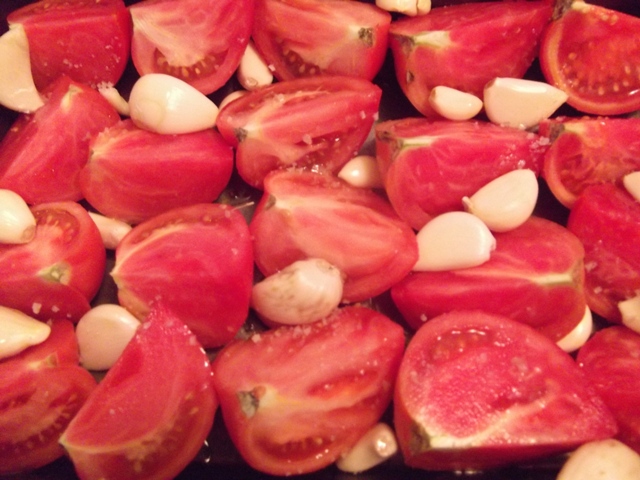
Quarter tomatoes, and line up in the pan. Scatter the peeled cloves from three heads of garlic over top. Drizzle olive oil over the contents of the pan, and sprinkle about a teaspoon of coarse salt over as well. Roast for 90 minutes to two hours, until tomatoes have withered and garlic is deeply golden. (This step you can do in advance; I like to roast a lot of tomatoes and garlic and stick them in freezer bags for easy weeknight dinners during the winter.)

In a large, heavy-bottomed pot, heat two tablespoons of olive oil over medium-high heat. Add three remaining cloves of garlic. Sauté onion until translucent, then add pepper, pepper flakes, and oregano, stirring to coat. Add tomatoes and garlic to the pot, scraping any solids that remain in the pan into the pot. Stir.

Add stock, and reduce heat to medium. Simmer 10 to 15 minutes, until later garlic cloves have softened. Purée using an immersion blender. Taste, adjusting seasonings as needed, then add basil and parsley and purée again. Add water to thin to desired consistency, if needed.

Serve drizzled with olive oil.

On moving apartments and melting cheese.

We have a new apartment. We have the Internet, at last. The landlord has promised that I’ll soon have a new stove. And now that we’ve had our first dinner party in our new apartment, the place feels like home and I can breathe. Nick painted the place before we moved in and it’s very blue, so for the first time ever we’re living together in a place that we can describe the colour of using adjectives that don’t also describe bodily fluids. The cat still blends in with all the furniture, but Nick looks better because the walls match his eyes.

We have more windows and better light, and we’ll have lots of time to enjoy these things as the rent on the place will prohibit us from spending much on anything else. Cat has not settled down since we finished moving in last week because there are so many new rooms and cupboards and hallways to explore, and I hear her little voice from all the corners of the apartment reminding me she’s still here. She checks in once in awhile, but she still has a lot to do. There’s an upstairs to this place, and she has to rub her face on every inch of every step and that takes more energy than a five-pound furball can muster all at once.

My kitchen in this new place is the same size as the old one. The advantage is that here I have a window above the sink, and the drawback is that my fridge is half the size. I am twice the size now, having rounded the corner on my thirty-third week with a belly that’s measuring closer to 35 or 36 weeks, so I have yet to start feeling comfortable in my space. It’s hard to relax when you’ve got a habit of knocking crap off the counters or searing-hot pans off the stove at every turn. All of my shirts have stains on them.

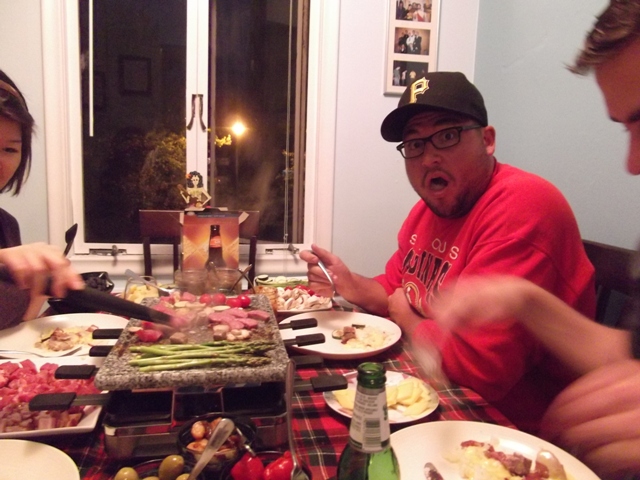
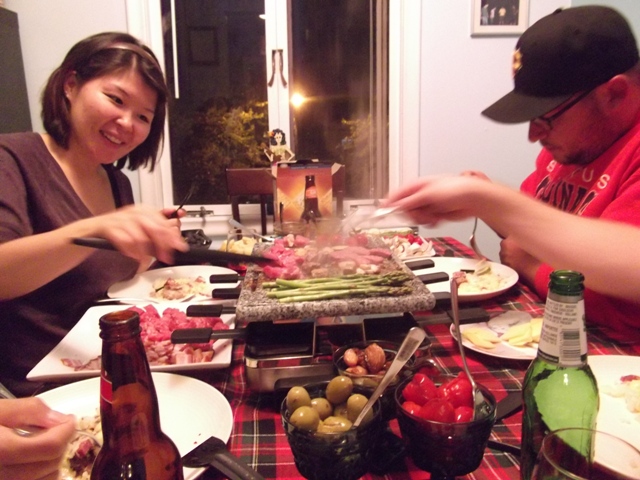
I wanted to have friends over for dinner, because a feast in a new apartment is like a bottle broken on the hull of a boat; it’s how you make things official. The first dinner shared with people in a new apartment (not eaten out of boxes on the floor, but at an actual table) is the thing that makes the place a real home. Ordinarily my effort would reflect the importance of this, but I am irritable and my back hurts and the more things I have to do, the more complaints I am able to muster. Fortunately, we have a raclette.

A raclette is a wonderful thing. It’s like a fondue pot, except instead of dipping things into melted cheese, you pour melted cheese over things. We learned about raclette a few years ago in the home of my friend Chelsea and her then-boyfriend, an accented Swiss-German named Marco who was a Physics professor by day and a drummer in a Celtic punk band by night. Raclette is both the name of the apparatus and the type of cheese, though we used good white cheddar and it was delicious.

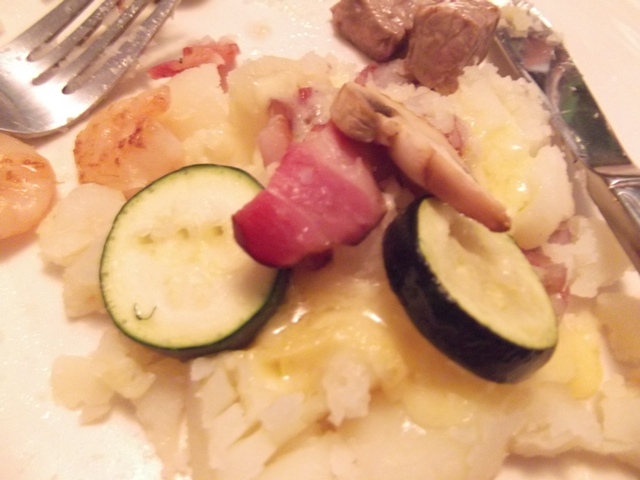
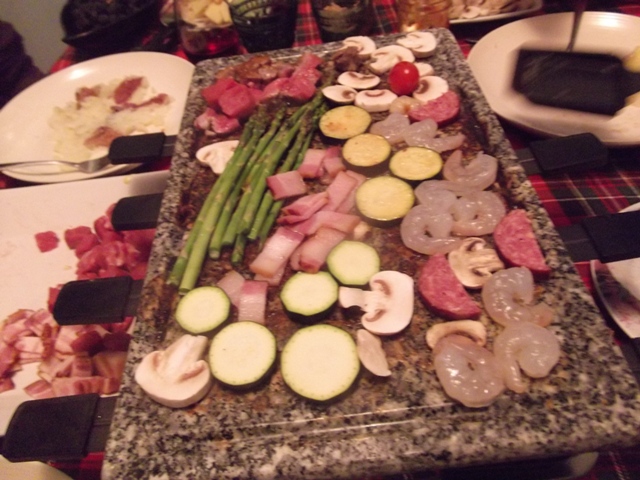
Your guests will cook their meat and veggies to taste on top of the raclette grill while melting cheese under its broiler. They will eat their cooked morsels with potatoes and drizzle the melted cheese over top. They will do this more times than they can count, and at the end of the meal they will be very sleepy.

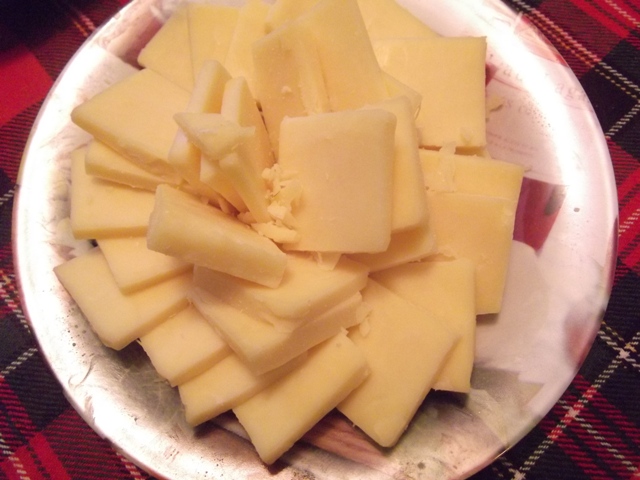
To make a proper raclette meal, you boil more quartered red or white potatoes than you think you’ll need, and slice quite a lot of cheese. I boiled a pound of potatoes per person. There were five of us, so I sliced two pounds of cheese. We had asparagus, mushrooms, zucchini, and grape tomatoes for our veggies, and cubed steak, chopped bacon, shrimp, and rounds of Farmer’s Sausage for our protein. Start with the bacon to lube up the grill a bit before cooking the other things. If you’re a vegetarian, wipe the top down with a bit of olive oil before starting.

Because a meal based on the holy trinity of meat, cheese, and potatoes can be, uh … rich, set the table with little bowls of acidic, pickly things, like olives and beet pickles and peppadews and gherkins and cocktail onions – whatever you have in your pantry will do, but if you have to make a special trip, make use of a store’s olive bar, where you can buy just a few of everything for not very many dollars.

Little ramekins with good salt, freshly ground pepper, and Dijon mustard round the dinner out. The whole thing ends up being an inexpensive, rather European feast, and it is made better with wine or good cold beer. It is a warming treat in the wintertime. You will want to have Beirut playing in the background, and perhaps you and your guests will wear sweaters and it will be snowing.

I have bought raclettes as wedding gifts, and know that you can get a pretty good one for $50, less if there’s a sale. Department stores sell them in their small appliance sections, and better cookware stores sell more expensive versions (up to $250), with heavier-duty grills. We have a fancy one, because my parents bought Nick a raclette for Christmas the year he discovered his obsession with it. Ours serves eight people, but Nick would happily melt cheese every night on his own if cheese in Canada was cheaper and if he didn’t have to clean the raclette every time.

There is little more enjoyable than sitting around a table full of food with people who are genuinely enjoying themselves, though keep in mind that you should take the meal slowly, and if you are planning some after-dinner diversion to start the meal a bit earlier. If dinner ends at 10:00, the night ends at 10:00. Meat and potatoes and cheese are good inspiration for long naps, but not one of your husband’s nerdy board games even if that was the plan at the start

What about you? It’s been awhile. How are you warming up to fall? Are you embracing the idea of sweaters and meals of cheese, or putting it off as long as you can? How are you doing?

Roasted apricot with cottage cheese

In our early twenties, my friend Theresa and I shared a basement suite east of Commercial Drive and a tendency towards excess. It was a dark, damp little place last renovated in the early eighties by someone with a preference for shades of brown, but it was cheap and close enough to public transit and places we liked to go. The living room wall featured a cutout with a long fluorescent tube light at the top that was probably meant for displaying art, but it had a ledge just wide enough for a single liquor bottle, and long enough for maybe thirty.

We wheeled an old TV stand in next to the bar and stocked it with shakers and shot glasses and swizzle sticks and hula dancer figurines and felt pretty good about our lives. The kitchen had a place to hang stemware, and we filled it with our mismatched collection of cups and glasses. Every evening after work we’d have cocktails, the alcohol equivalent to swamp water, and we’d feel like fancy ladies as we sipped mango Malibu and peach schnapps out of plastic martini glasses.

But fancy cocktails weren’t our only bad habit. We were too similar to survive together for too long – though I suspect that if she’d never moved to Australia we’d still be together making bad choices in basement suites, probably sharing a set of kidneys – and one could easily convince the other that what anyone else would consider a bad idea was actually the best idea ever, like washing the kitchen floor with ammonia AND bleach (double the cleaning power!) or buying six Filet-o-Fish sandwiches with extra tartar sauce and a full slice of cheese at midnight because we were going to eat them anyway and it would save us another (inevitable) trip out and while we were at it maybe we needed apple pies too. We invented fourth meal but never thought to trademark it.

One of the ways we enabled each other to do incredibly self-destructive awesome things was by claiming that whatever we were doing was in the name of health. At the time, Theresa was a vegetarian except for fish and pepperoni, and I was just beginning to get really excited about fibre. Theresa would go on long runs, and I would go to boot camp because I was too lazy to exercise unless I paid for it and would only go out of guilt at having spent the money. Because we had our health in mind intermittently, sometimes we would stock up on healthy things, either at Costco or at our parents’ houses when one of our moms was cleaning out her pantry and wanted us to take crap away. One of our kicks was dried fruit, which made an excellent snack for a vegetarian and a fibre enthusiast.

Somehow we came to possess about a kilogram of dried apricots. One evening, in our pajama pants and holey sweatshirts with nothing to do and no desire to go out, we put on a movie and made the healthy choice to snack on dried fruit instead of Cheetos or Zesty Doritos, probably because one or the other of us had exercised and did not want to derail those efforts right away. Theresa brought out an opened zip-top bag of dried mango slices and a plastic bag of dried cranberries, and I found the apricots. Over the two hours the movie played, we ate the entire bag of dried apricots and most of the other fruit, which seemed like a good idea at the time because all that fruit fibre was bound to do good things for us.

Theresa is a scientist, but somehow she didn’t foresee what it might do to us. Over the next two or three days we both learned a valuable lesson, and that is that fibre is a finicky friend, and that very easily you can take the relationship too far.

I cried.

Years later, I still approach apricots with trepidation. I buy them only a handful at a time (and rarely dried), because there is safety only in a certain number, but all I know is that the number is low. And yet I still love them. I have never been good at knowing when to give up on a thing.

In the years between then and now, I have learned a little bit about balance. Maybe one apricot is okay. Maybe with a bit of protein, and a touch of sweetness. Maybe, like peach schnapps, apricots are not a meal but rather a snack that can be enjoyed in moderation.

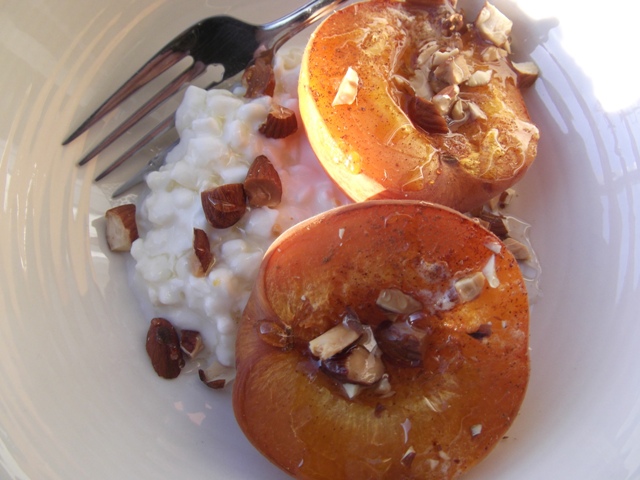
Roasted apricot with cottage cheese

(Serves one.)

  • 1 or 2 apricots, halved
  • Pinch cinnamon
  • Pat of butter, dotted over cut sides
  • 1/2 cup cottage cheese
  • 8 roasted whole almonds, chopped
  • Honey, to taste

Heat oven to 300°F.

Place apricot in a small baking dish, sprinkle with cinnamon, and then dot with butter.

Bake for 40 to 50 minutes, until soft and lightly browned.

Spoon cottage cheese into a bowl. Place roasted apricot halves over top, sprinkle with almonds, and drizzle with honey.

This is great for breakfast or for a snack before bed. If you don’t like cottage cheese, this is also quite pleasant with yogurt.