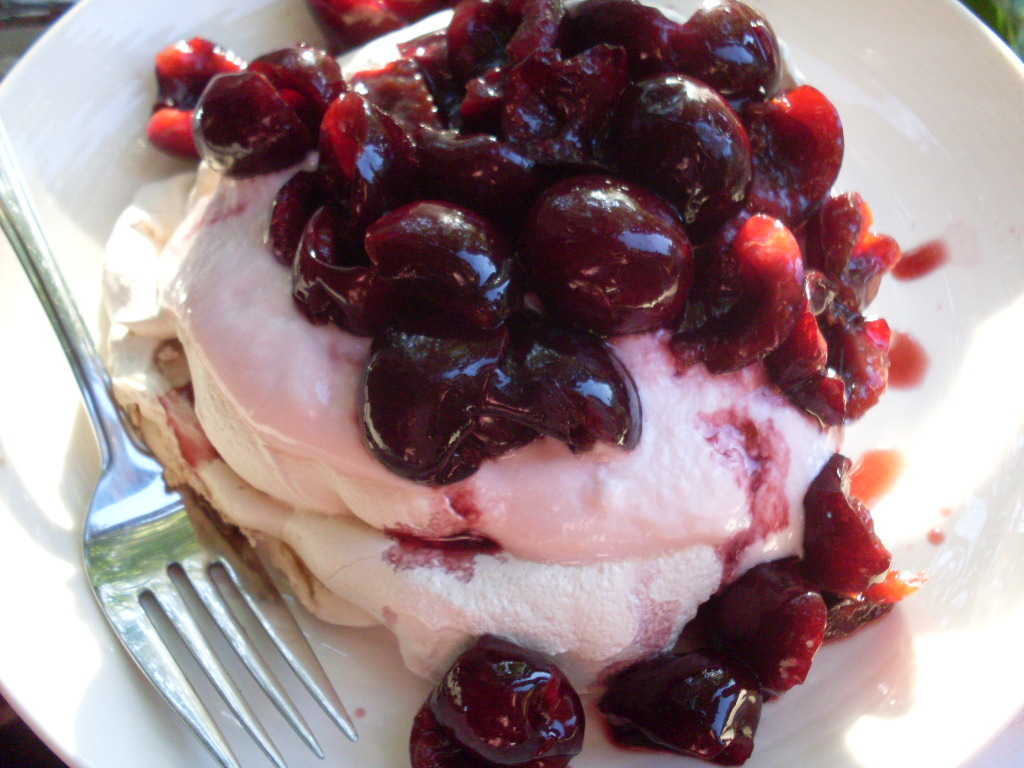
Meringue held up my fruit and yogurt this morning, and thus Tuesday was vastly improved.

After a rather indulgent weekend I felt more than a little hard done by, repentantly enduring my hot whole grain cereal with almond milk on Monday morning. Usually that’s a breakfast I enjoy, but after the delights and feasting of Saturday and Sunday, it felt a little bit like punishment, or like the shakiest part of withdrawal. Sure, it was good for me. But there was no zing, no glorious gluttony high.

So last night, with the dry air suggesting the perfect time to whip egg whites into a glossy frenzy (not a drop of precipitation in all of July so far!), I made six brown sugar meringue shells, and this morning filled them with pink, local yogurt and juicy Okanagan cherries, and felt enough zing to last the week, and all of the high with none of the actual gluttony. One meringue shell is significantly fewer calories than a slice of toast, with none of the kneading and hardly any real effort to prepare.

If you care about that sort of thing.

Calories, I mean.

Which I do not.

The recipe is adapted from a recipe I posted in the fall, from Saveur (such a messily dressed pavlova), with the only difference being that I halved the recipe and used brown sugar instead of white. The recipe assumes you have a stand mixer; if you don’t, the time it takes to whip the whites will be a bit longer. I’ll let you know how you’ll know when the mixture’s done.

Brown sugar meringues

(Makes six)

  • 4 egg whites
  • 1 cup dark brown sugar, packed
  • 4 1/2 tsp. cornstarch
  • 1 1/2 tsp. distilled white vinegar
  • 1 1/2 tsp. vanilla

Preheat your oven to 350°F.

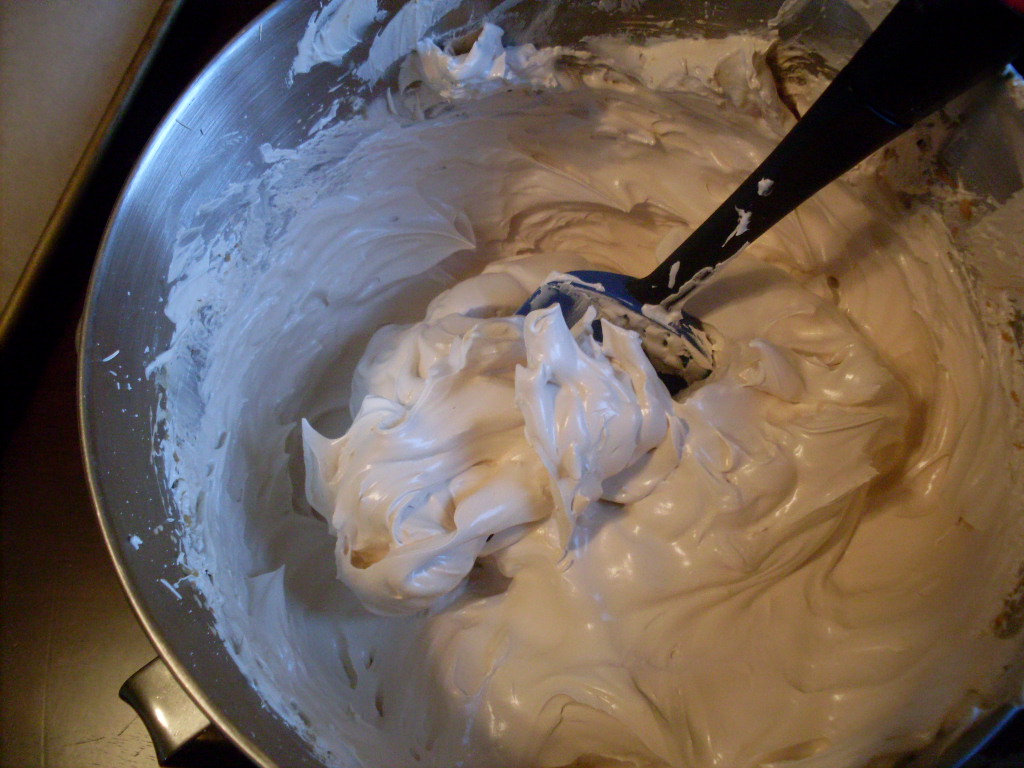
Whip egg whites and sugar until stiff peaks form, about 14 minutes using a stand mixer.

Meanwhile, make a slurry of the cornstarch, vinegar, and vanilla. When egg whites stand up on their own and do not fall when shaken, whisk in the slurry and beat for another five minutes, until peaks are smooth and shiny.
Using the top of a one-cup-size ramekin, trace six circles onto a sheet of parchment paper that is just a bit smaller than a baking sheet, leaving an inch between each circle. Turn the parchment over, and divide the meringue evenly between the six circles. It’s okay if there’s overlap. Gently press a dip into the centre of each one, building up the sides a bit so as to form a shallow bowl.

Place in the oven, and immediately reduce the temperature to 215ºF, and set the timer for 1 hour and 15 minutes. Do not open the door at any time. When the timer goes off, leave the meringues in the oven to cool overnight, or at least three hours. Remove the meringues to a sealed container and store in a warm, dry place. Do not refrigerate.Serve meringues with yogurt and fresh seasonal berries. If you’re using cherries, pit them the night before and stick them in the fridge, covered with plastic wrap. Feel good about breakfast.
I should mention that if you’re used to something heartier, this is not terribly filling – if you’re a bacon/eggs/toast enthusiast, use this one at brunch with lots of other things. But if you’re a fruit and yogurt fan, like I am, this will be plenty sufficient to get you through the morning.

Also, I told you I’d tell you about blueberry crisp. I haven’t forgotten. I just get distracted so easily.
Some talk about cherries.

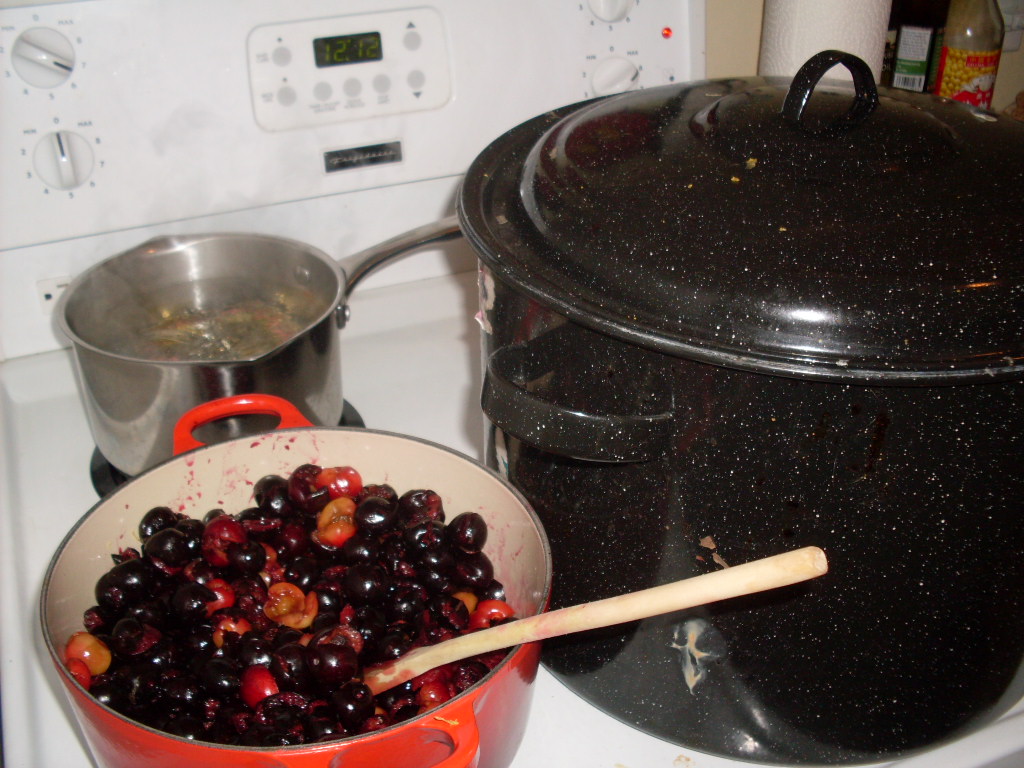
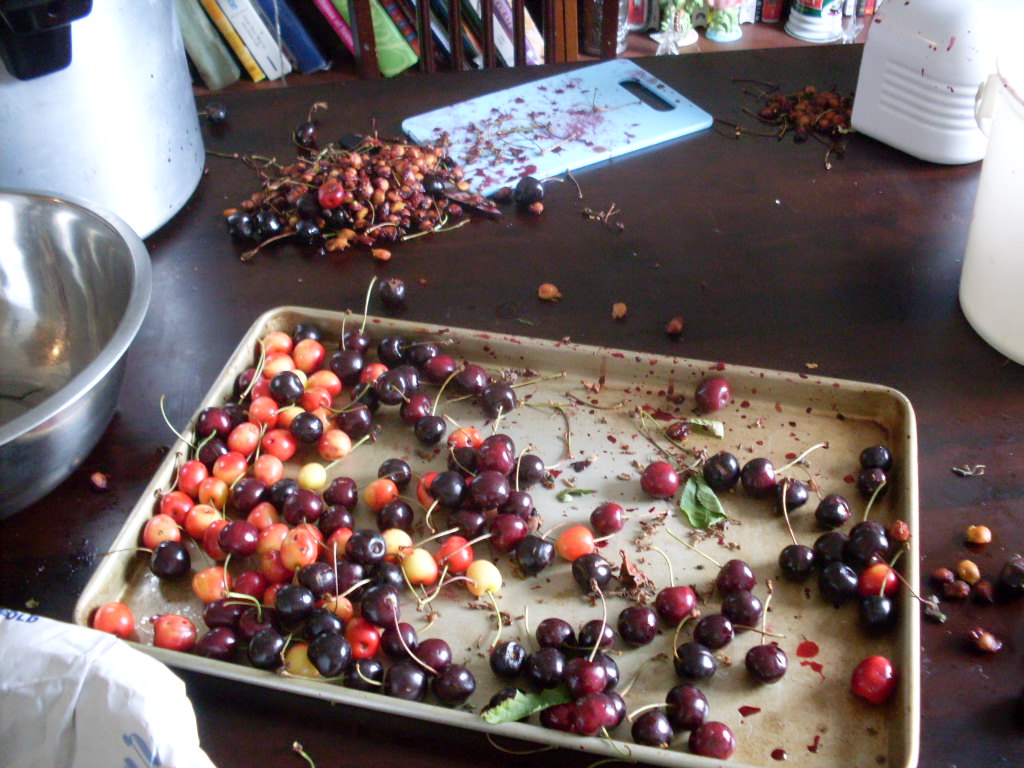
On Friday evening I went with Grace to her mother’s house to pick cherries, which we did quite successfully last year, and which we were determined to do quite successfully once again.

This year, the cherries returned in abundance! I think we must have gotten to them a little later this year, because by the time we arrived the cherries on the main tree had darkened until they were almost black. They had a caramel taste to them, and they begged me to eat so many of them, and I did.

What squishy feelings come from eating too many cherries all at once.

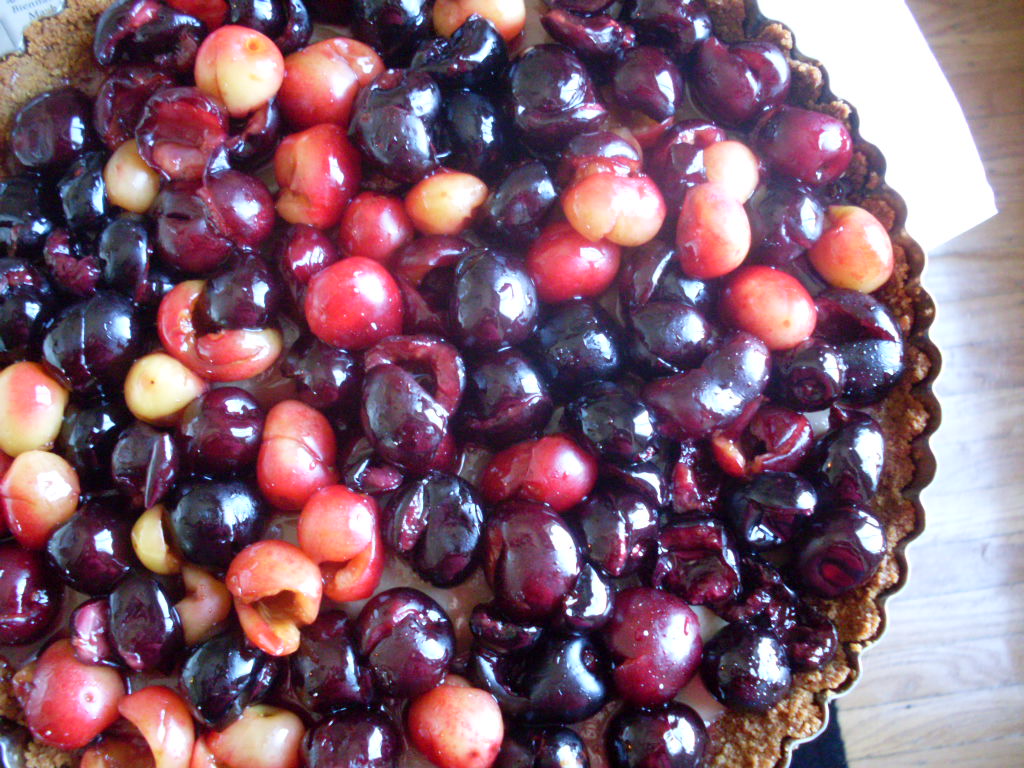
They became jam, sort of, and a lovely dark sauce for steak, and a tart that sparkled like something much more valuable than the sum of graham crackers, cherries, sugar, and rum.

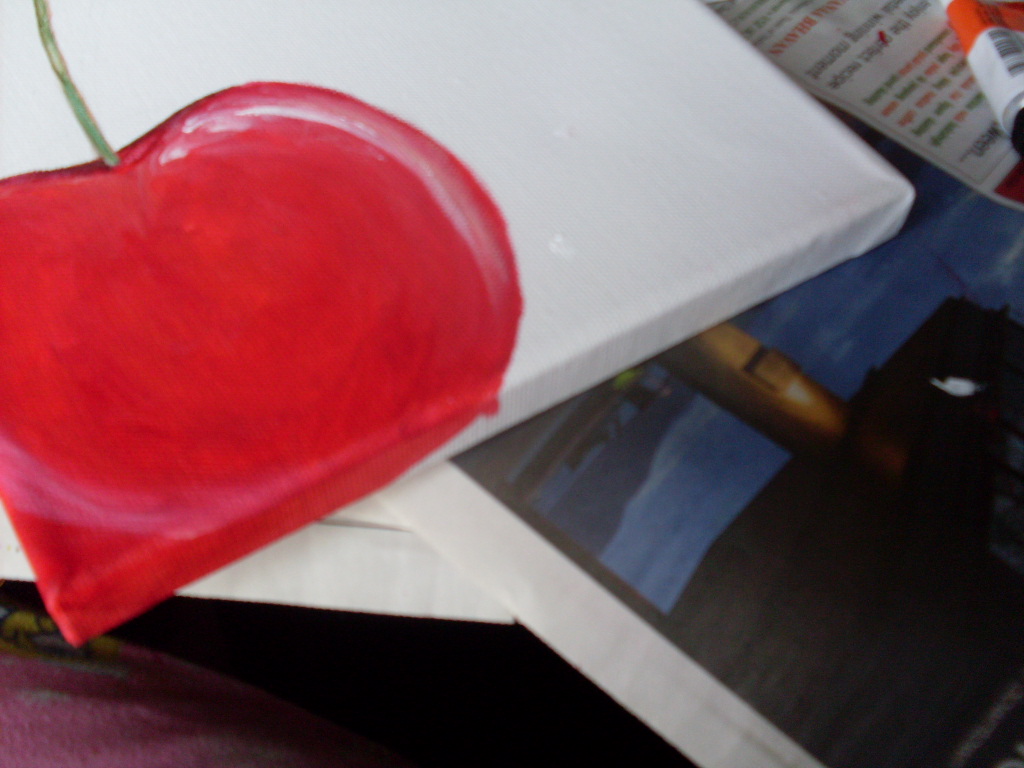
I even tried to paint one of them. Tried being the operative word, and maybe my evil beast of a high school art teacher was right – I don’t apply myself or seem to care, and all I’ll ever have is wasted potential, especially with this attitude.

But what did she know, anyway? I really, really care about cherries.

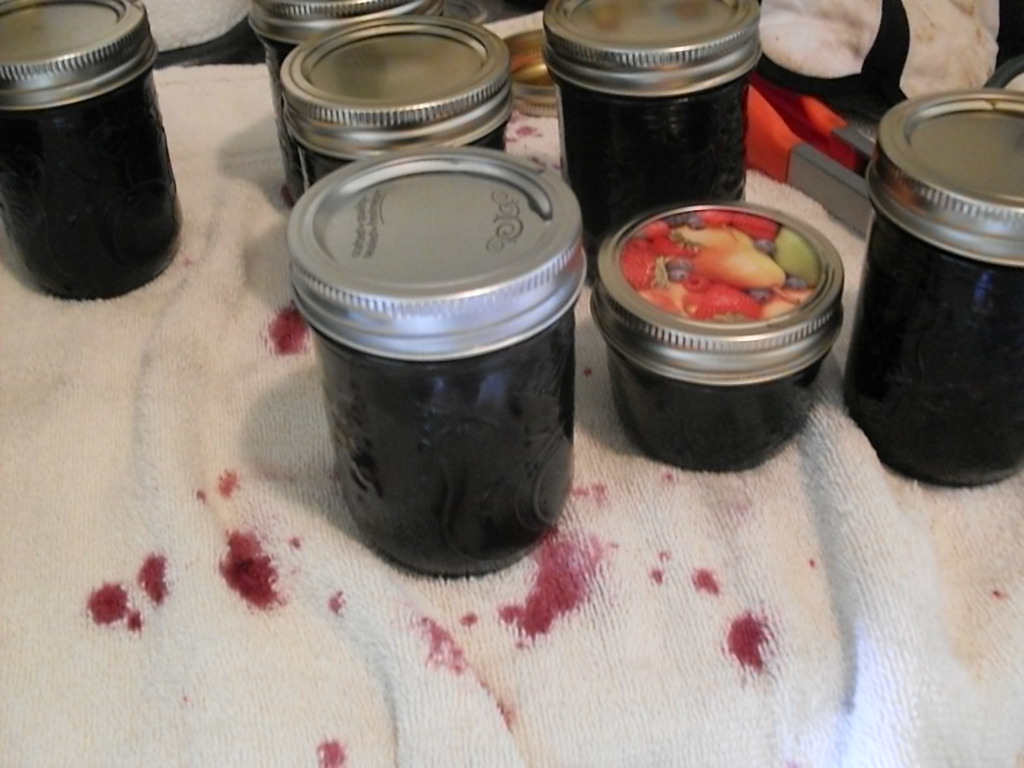
There aren’t really recipes for any of the dishes that wound up – there is for the jam, and it comes from David Liebovitz, and even he claims there’s no real recipe. Mine didn’t set, which is just as well, because now I have six jars of cherries in a rich rummy caramel, and that’s just fine. They will be lovely in ramekin-sized cobblers come Christmas.

And the steak. You ought to know all about this.

When you pan-fry a steak, right after you move it to a foil-covered plate to rest, while the pan’s still hot, dump a cup of cherries per person into it, let them melt into the meat juices, and when the pan looks dry, deglaze with a splash of balsamic vinegar. Add chili flakes if you feel like it. You’ll know when it’s done – the sauce will be sticky, not runny, and will smell fantastic.

And the tart. There’s nothing to the tart.

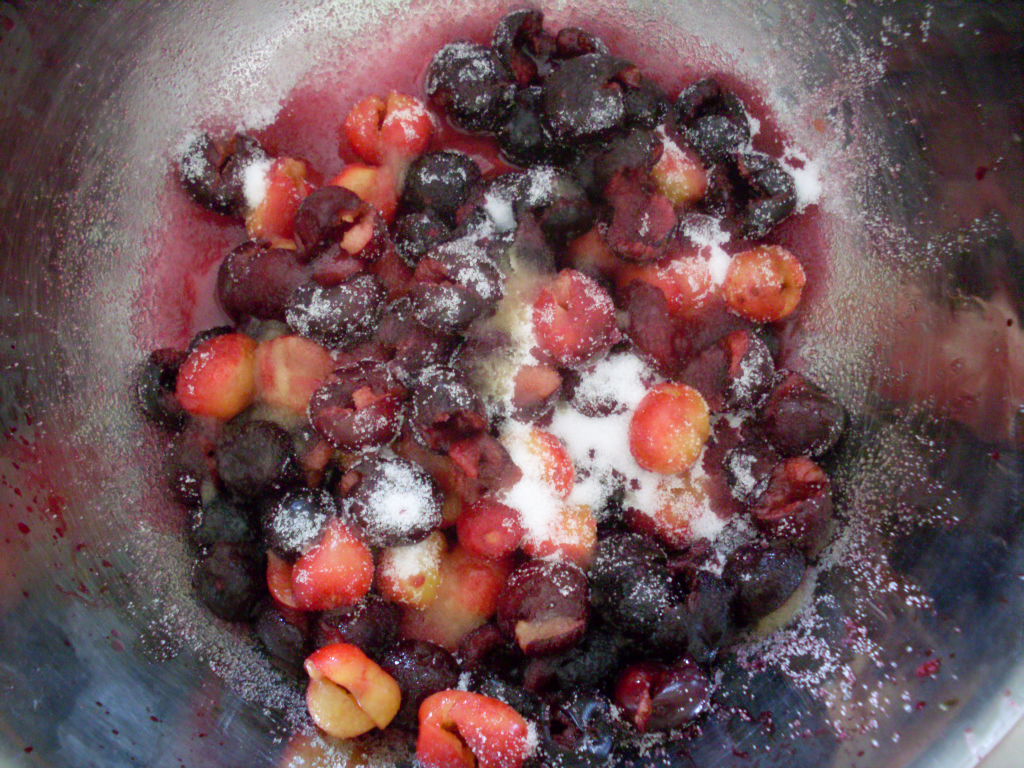
Macerate two pounds or so of cherries in about a half a cup of sugar  and a quarter cup of your favourite rum or bourbon, and give it 30 minutes, or 60 if you’ve got ’em. Bourbon’s better, but sometimes you’re out because it’s hot and you like bourbon and lemonade almost better than anything in the world, and my goodness your liver must be tough. Is it hard around the edges? Fine work. Really well done. What?

Right.

Tart. Take a tart pan. Pack it full of one cup graham cracker crumbs mixed with a quarter cup of melted butter and two tablespoons of brown sugar. Bake at 400°F for ten minutes. Remove from oven, and cool.

Fill with cherries. If you have a lot of liquid, thicken it on the stove with a bit of cornstarch. If you don’t, that’s fine too. I just poured it back over the cherries.

Serve immediately to salivating guests. Pile so much whipped cream on top.

Tomorrow I’m going to a blueberry festival at work and should have a flat or two to do something with, and then Grace and I are going on a pink wine picnic followed by berry picking on Sunday. So much excitement! I can’t wait to tell you all about it. But for now, think about cherries. I still am. If for no other reason than they’ve permanently grubbied my fingernails and I’m painfully self-conscious about it.

Orange granita that tastes like Creamsicles.

I have had three cold showers today.

Outside is lovely, bright and beautiful and exactly what I was hoping for, but inside – my goodness. Everyone is flat. And covered in a sticky, glossy film of the kind of sweat that never dries. There is no air conditioning here, or at work. And yet, I have not adapted. The cat seems to be suffering the most, and looks like a puppet without a hand, just tossed on the floor. And I think she might be losing it. Do cats get the heat crazies and hallucinate? Am I projecting my own neuroses? Should I stop talking about my cat? Okay. I will. After this photo.

So, yeah. We’re a little warm. We haven’t been eating any of the kinds of things that demand high heat or long cooking times. We have been drinking homemade iced tea by the gallon, and eating a lot of fruit. And today, granita. Because I don’t own an ice cream maker (I really have to do something about that) and there is no place to buy Slurpees within walking-without-sweating-distance.

Granita is actually the perfect hot-weather dessert, because it’s completely no-stress. You just haul your sweaty ass off the couch every so often to scrape the ice crystals – no churning required. It takes about three hours, but most of that time can be spent procrastinating over other things. And this granita? It tastes like Creamsicles.

Orange granita

(Serves four to six.)

  • Zest of 1 large navel orange
  • Zest and juice of 1 lemon
  • 1 cup freshly squeezed orange juice
  • 1 cup granulated sugar
  • Pinch salt
  • 1 tsp. vanilla
  • 1/2 cup heavy cream

In a pot over medium-high heat, combine citrus zest, juices, sugar, and salt. Whisk until sugar has completely dissolved – two to three minutes.

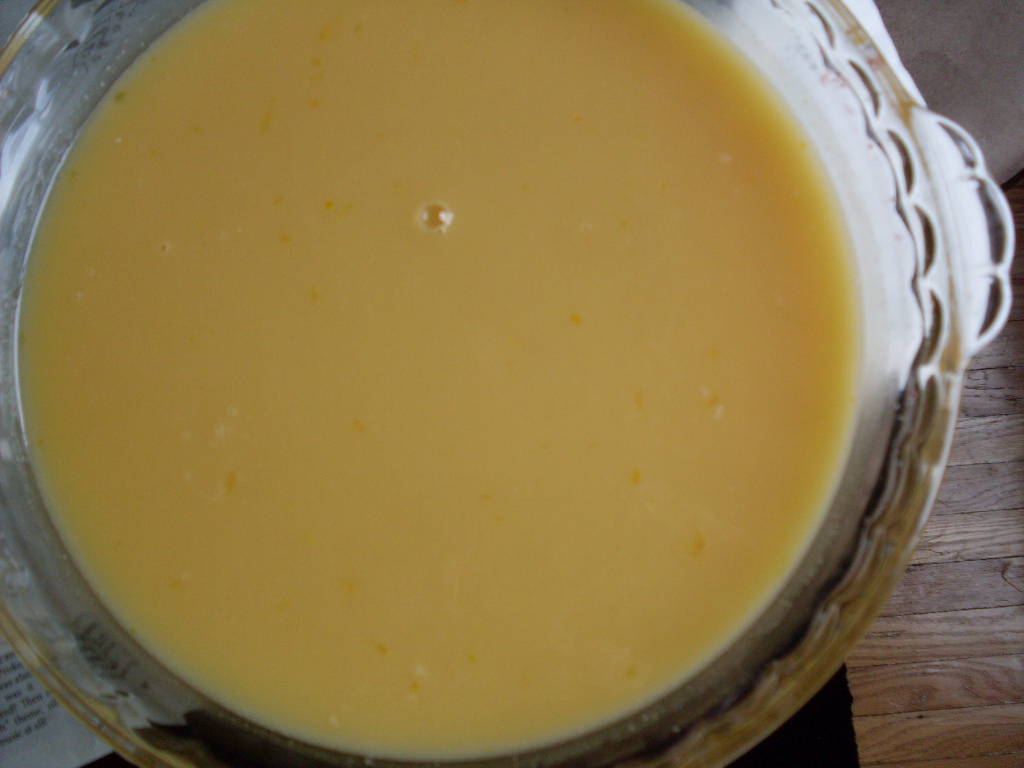
Remove from heat. Whisk in vanilla and cream, and pour the whole thing into a glass pan or pie plate. And then put it in the freezer.

Every hour for the first three hours after that, pull the juice out of the freezer and scrape with a fork to move the ice crystals around, which keeps them from becoming a solid mass. After that, just pop in every once in awhile to be sure that all is well, scraping as needed.

Serve as is, or with whipped cream.

Every hour for the first three hours after that, pull the juice out of the freezer and scrape with a fork to move the ice crystals around, which keeps them from becoming a solid mass. After that, just pop in every once in awhile to be sure that all is well, scraping as needed.

... then you're cold.

Remove from the freezer about ten minutes before serving, and scrape with a spoon into serving dishes. Serve as is, or with whipped cream. Swoon.

Delicious.

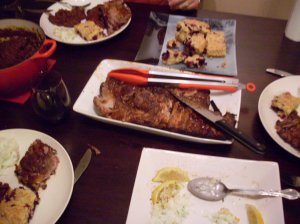
Did I just tell you about dessert first? I guess I did. Come back soon – I have lots to tell you, all about baked beans and ribs and cornbread with blackberries and wonderful things like that.

Preview.

*Note: I originally called the grapes “concord” because until this morning when I read the package, I thought that’s what they were called. No. They’re coronation grapes, and they’re marvellous. But you can make this with concord grapes if that’s what you’ve got. Cheers.

1 Comment


Leave a Reply

Logged in as emvandee. Logout »

<!–XHTML: You can use these tags: <a href="" title=""> <abbr title=""> <acronym title=""> <b> <blockquote cite=""> <cite> <code> <pre> <del datetime=""> <em> <i> <q cite=""> <strike> <strong>

–>

You are the author of this post.


// = 0) {Q=getSelection();}else {if(window.getSelection)Q=window.getSelection().toString();else if(document.selection)Q=document.selection.createRange().text;else Q=document.getSelection().toString();}} else {location.href=’http://emvandee.wordpress.com/wp-admin/post-new.php?text=’+encodeURIComponent(Q.toString())+’&popupurl=’+encodeURIComponent(location.href)+’&popuptitle=’+encodeURIComponent(document.title);}}
function toggle_query_list() {var querylist = document.getElementById( ‘querylist’ );if( querylist.style.display == ‘block’ ) {querylist.style.display=’none’;} else {querylist.style.display=’block’;}}

jQuery( function() { jQuery( ‘#wpcombar li’ ).hover( function() {
var children = jQuery(this).children(‘ul’);
jQuery(children[0]).fadeIn(75);
jQuery(this).addClass(‘hover’);
}, function() {
var children = jQuery(this).children(‘ul’);
jQuery(children[0]).hide();
jQuery(this).removeClass(‘hover’);
});

jQuery( ‘#wpcombar ul ul li a’ ).mouseover( function() {
var par = jQuery(this).parent();
var children = par.children(‘ul’);
jQuery(children[0]).css(‘left’,par.parents(‘ul’).width() +’px’ );
jQuery(children[0]).css(‘top’, ‘0’ );
}); });

jQuery( function() { jQuery(‘#wpcombar’).appendTo(‘body’); });

// ]]> // <![CDATA[
/* //

//

//

Separation anxiety, Paul’s farewell, and avocado pudding.

Paul’s leaving town. I am sad.

He’s headed to Montreal for the summer, to boil bagels, maybe, and to return in September, probably. He departs for sunnier skies than ours on Saturday, so Tuesday night Grace had us all over for snacks from below the equator and a lot of sparkling wine. I have been dreaming about the ceviche ever since, and not only to distract myself from the fact that Paul will not be here to bug for three whole months.

She asked me to bring dessert, and I was thinking pudding, because, let’s be honest, if I am not thinking of wine, meatballs, or pancakes, I’m probably thinking of pudding, even when I should be thinking of other things, like the answers to the questions people ask me at cash registers, bus stops, dinner parties, and work. If my face betrays me and you can tell my mind is wandering, you can bring my attention back simply by mentioning some sweet thing with a creamy mouthfeel. Good to know, right?

So to match Grace’s treats, I thought avocado pudding would be the way to go. And it turns out, I was right, though I had to go back and tweak the recipe because though I was certain it would turn out the first time, it was rather runny, and we ended up turning it into a loose ice cream in order to eat it before 11:00 pm. Still good, but not quite right. I’ve since adjusted the recipe, made it again, and re-tasted, and now I think it’s pretty damn near perfect. Paul agreed, and he doesn’t even like avocado. I knew this, but am (charmingly) passive-aggressive.

So, here you go. Another green pudding. Please don’t you go leaving me too.

Avocado pudding

  • 1 small ripe Hass avocado
  • 3 egg yolks
  • 1 tbsp. lemon juice
  • 1/2 tsp. salt
  • 4 tbsp. cornstarch
  • 1/3 cup granulated sugar
  • 1 tbsp. honey
  • 1 cup heavy cream
  • 1 cup almond milk
  • 1 tsp. vanilla

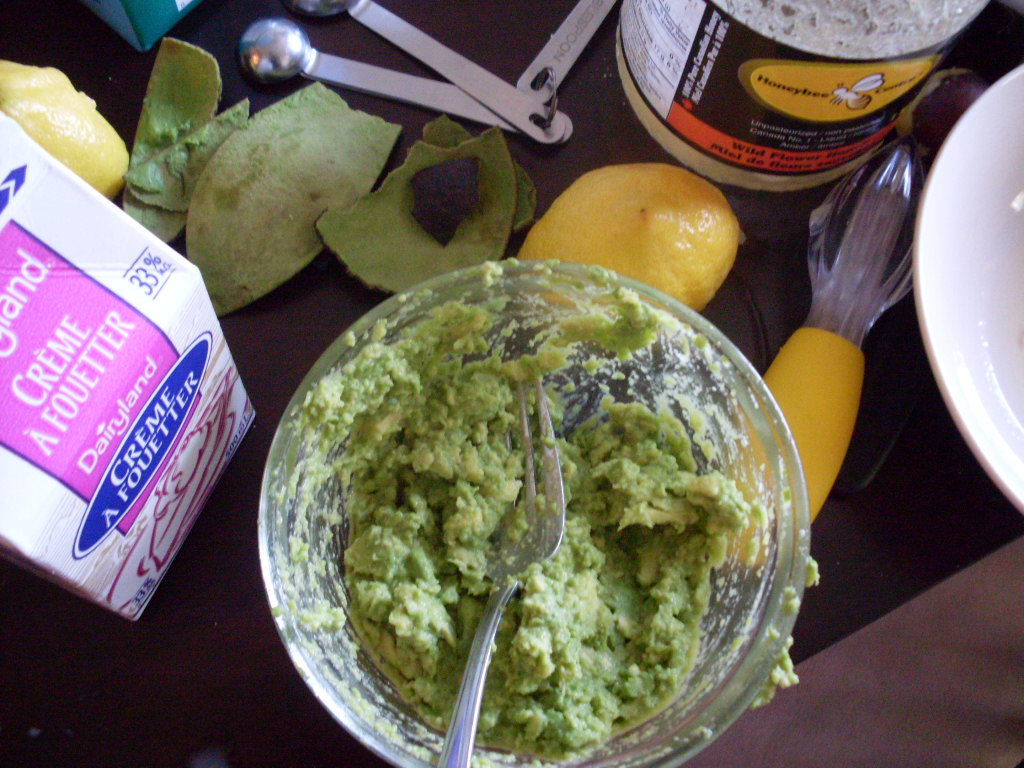
Mash up avocado with egg yolks, lemon juice, and salt. Set aside.

In a heavy-bottomed pot, whisk together cornstarch and sugar, then pour in honey, cream, and almond milk, turning heat to medium, and whisking to thoroughly combine. Stir frequently.

Heat slowly until bubbling. Pour 1/4 cup of the bubbling mixture into the avocado mix, and stir quickly to temper. You want to be quick so the eggs don’t scramble.

Pour avocado mixture into pot, and whisk until mixture has thickened. Remove from heat and stir in vanilla.

Strain through a mesh sieve into a bowl.

Top with plastic wrap (touching the top of the pudding in order to prevent a skin from forming), and refrigerate for three to four hours, until set.

Serve with whipped cream.

Rhubarb cobbler.

My long-lost friend Vanessa came over the other night, long-lost because she has just re-emerged from a self-imposed thesis-writing hermitage, and we had dinner and rhubarb cobbler and talked about books and our mutual love for Lady Gaga. I have been missing women lately, because the ones I know are absurd and hilarious and we’ve all reached that boring age at which “work” and “Costco” all too often rank higher on our lists of priorities than does “witty banter” and “drinking too much on a Monday.” Well, that’s not true. Work and Costco are rarely priorities of mine, but I have so many bills and we always seem to be low on toilet paper. But you know. You know?

It’s hard to justify complaining, though, and there are far worse things happening in the world than my bad mood. And while I am crabby this week, I did find that baking and witty female company made things a little better. Here’s a recipe that you can use if you need to feel better, or to serve the smart, funny someone you’ve been missing, or to the one that’s still around because she has the good sense to not to leave you alone too long. It’s a plain old cobbler recipe made spiffy with a few unexpected flavours – rhubarb and rosemary and lemon zest. All good things, and don’t forget the ice cream.

Rhubarb cobbler

Cobbler:

  • 2 cups all-purpose flour
  • 2 tbsp. granulated sugar
  • 1 tbsp. lemon zest
  • 2 tsp. baking powder
  • 1/4 tsp. salt
  • 1/4 cup butter, at room temperature
  • 1/4 cup milk
  • 1 egg, lightly beaten

Filling:

  • 3 cups chopped rhubarb (slices should be no more than 1/4-inch thick)
  • 2/3 cup granulated sugar
  • 1 tsp. lemon juice
  • 1/2 tsp. finely chopped fresh rosemary
  • 1/4 tsp. salt

Preheat your oven to 350°F.

Grease a 1 1/2-quart casserole dish with butter, and into it toss rhubarb, sugar, lemon juice, rosemary, and salt. Stir to coat rhubarb.

In a bowl, combine flour, sugar, baking powder, lemon zest, and salt. Add butter, mixing until dry ingredients begin to form crumbs, then stir in milk and the egg. Stir until dry ingredients are just moistened.

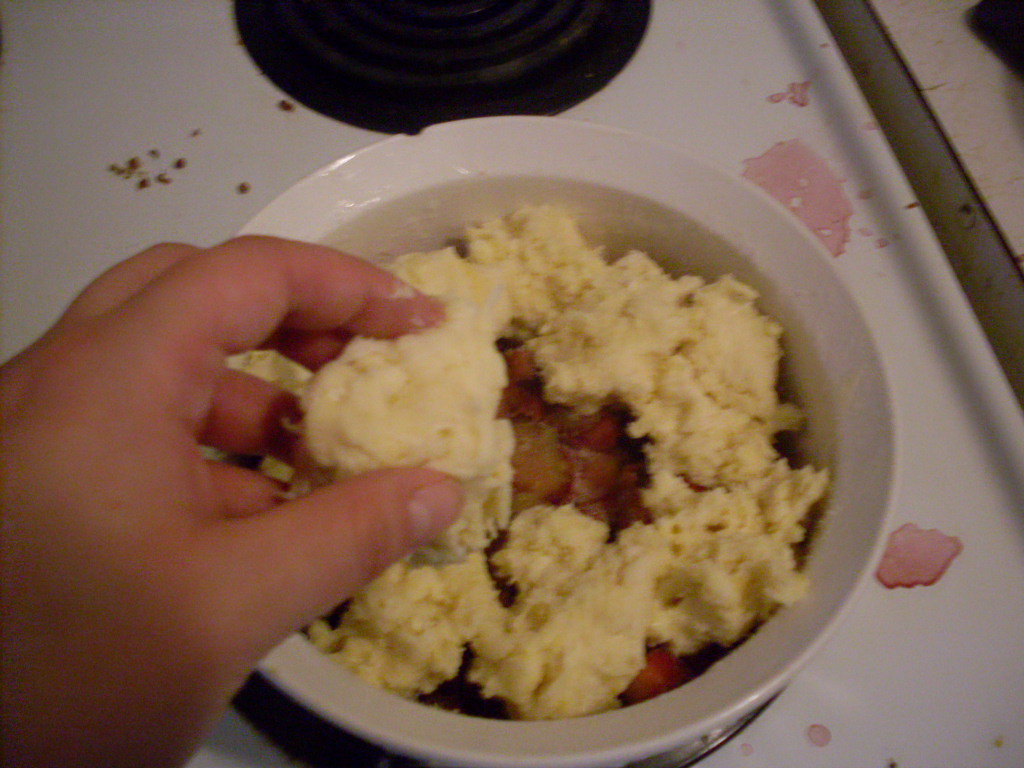
Using a spoon or your fingers, pluck golf-ball-size rounds from the bowl and place on top of rhubarb, one ball at a time, until there is no dough left in the bowl and the rhubarb is mostly covered. You can smooth it down if you want, but I never bother. “Rustic” means that it looks homey and didn’t require fussing.

Bake for about 30 minutes, or until the top is golden and the rhubarb mixture bubbles around the sides. Let cool 10 minutes, then serve warm, with ice cream. I forgot the ice cream, and really noticed the lack of it.

The rosemary in this is what makes the whole thing magic. It might seem bizarre, but it totally works – I learned about it from Grace, and it rates as highly on the list of things I learned as the time I figured out how to multiply nines. Please do try it – there’s still rhubarb growing, as the season got off to a rocky start and it’s just beginning to really thrive. And be sure to demand company – you can ask her to pick up ice cream on the way. French vanilla is preferable.

Homemade salted caramels.

There’s this tiny shop just off Main Street, on 21st Avenue, called Chocolaterie de la Nouvelle France, and they make fleur de sel caramels that I could spend my last dollars on without regret. They’re like sugar butter. Fortunately, I am becoming slightly wiser as I age – I realized that you can make caramels at home! And we always have butter, sugar, and cream here (I don’t know why we’re putting so much weight on either), so to make a batch of caramels required no special shopping trip.

Making caramel is about the easiest thing ever. It doesn’t seem like it, because molten sugar can be a bit daunting, and a candy thermometer is not everyone’s favourite kitchen tool. But a few ingredients and a little bit of science/magic, and it’s amazing what heat can do.

I don’t have fleur de del, but it doesn’t really matter. A little bit of sea salt in the caramel and some smoked salt for finishing, and these are every bit as delightful as something you could go and buy. If you don’t have smoked salt, use kosher salt, or some other coarse, delicious finishing salt.

Homemade caramel candy

  • 1 1/4 cup heavy cream
  • 1/2 cup (1/4 lb.) unsalted butter, cut into pieces
  • 3/4 tsp. salt
  • 1 tsp. vanilla
  • 1 1/2 cups sugar
  • 1/4 cup golden syrup
  • 1/4 cup water
  • 1 tsp. coarse salt

In a medium saucepan, bring cream, butter, and salt to a gentle boil. Remove from heat and stir in vanilla. Set aside.

In a large (three or four quart), heavy-bottomed pot over medium-high heat, combine sugar, golden syrup, and water. You can use corn syrup if that’s what you’ve got, but there’s a little rumor going around that high-fructose corn syrup is bad for you. Of course, butter and sugar and cream are not.

Allow sugar to melt before stirring. Stir occasionally with a wooden spoon, watching the sugar closely to ensure that it doesn’t burn. Nothing is a bigger culinary piss-off than getting excited about candy and then burning it. I let mine cook until it reached a red-amber hue. If you go darker than that, the caramel will take on a smokey, slightly burnt taste, which can be sort of good, but more often than not just tastes like you overcooked the sugar.

When your sugar is bubbly and red-amber, pour in the cream mixture. Don’t freak out. This is going to swell and bubble and threaten to maim you, but it probably won’t. If it didn’t maim me, you’re probably safe – I don’t do anything carefully.

Reduce heat to medium, and clip in your candy thermometer. Stir occasionally. You want the caramel to reach between 245°F and 250°F, which should take between ten and 15 minutes. Don’t rush it.

Pour caramel into a 9″x9″ baking dish that’s been buttered and lined with parchment, which you should have also lightly buttered, for good measure. Tip: when lining the bottom of the pan, cut the parchment too long, so that you end up with pieces sticking up on either side; these will act as handles when you go to take your caramel out of the pan – much easier. Let cool for 30 minutes.

After 30 minutes, sprinkle salt over top of the caramel. Let rest for two hours.

Cut into one-inch squares with a sharp knife dipped in cold water. You should end up with about 50 caramels. You lucky duck.

You can proceed to wrap each one with parchment or wax paper, or put each one into those little candy cups that look like mini cupcake wrappers. I’m sure they have a name, and I bet you can Google it.

Serve. To others, to mom (happy Mother’s Day!), or just to yourself. Enjoy!

Some people use air fresheners, but I prefer spicy cakes.

Sometimes I clean around here, and though that doesn’t happen as often as it should, when it does, I’m always a little OCD about the place smelling like it was cleaned. If I can smell it, it’s right, and so from time to time, the bleachy, VIMy, ammonia smells are a little more prominent than they need to be. It’s momentarily satisfying – it’s the way I let Nick know that I don’t always do almost nothing around here. And then I hate it, so baking happens, because spices and vanilla and sugar cover up the smell of cleaning stink and make an apartment feel like home.

Tonight the evening light was golden, and though we’re well into spring, it doesn’t feel too late for cake. The warm glow through the trees seemed to call for something yellow and spicy, and this cake is it. Well, maybe not yellow. Golden, I guess, but definitely spicy. Perfect for brunch or tea.

Ginger spice cake

  • 2 1/2 cups all-purpose flour
  • 2 cups brown sugar
  • 2 tsp. baking powder
  • 1/2 tsp. baking soda
  • 1/2 tsp. salt
  • 2 tbsp. ground ginger
  • 1 tsp. cinnamon
  • 1/2 tsp. nutmeg
  • 1/2 tsp. finely ground white pepper
  • 1 1/4 cups plain yogurt
  • 2/3 cup vegetable or canola oil
  • 2 eggs, beaten
  • 1 tsp. vanilla

Preheat oven to 375°F.

In a large bowl, combine flour, brown sugar, baking powder, baking soda, salt, ginger, cinnamon, nutmeg, and pepper. Mix well.

In a separate bowl, combine yogurt, oil, eggs, and vanilla.

Pour wet ingredients into dry ingredients, and combine until wet ingredients are just moistened.

Pour mixture into a greased 9″x13″ pan. Bake for 25 to 30 minutes, or until a toothpick inserted into the centre comes out clean.

Serve warm, with whipped cream or ice cream.

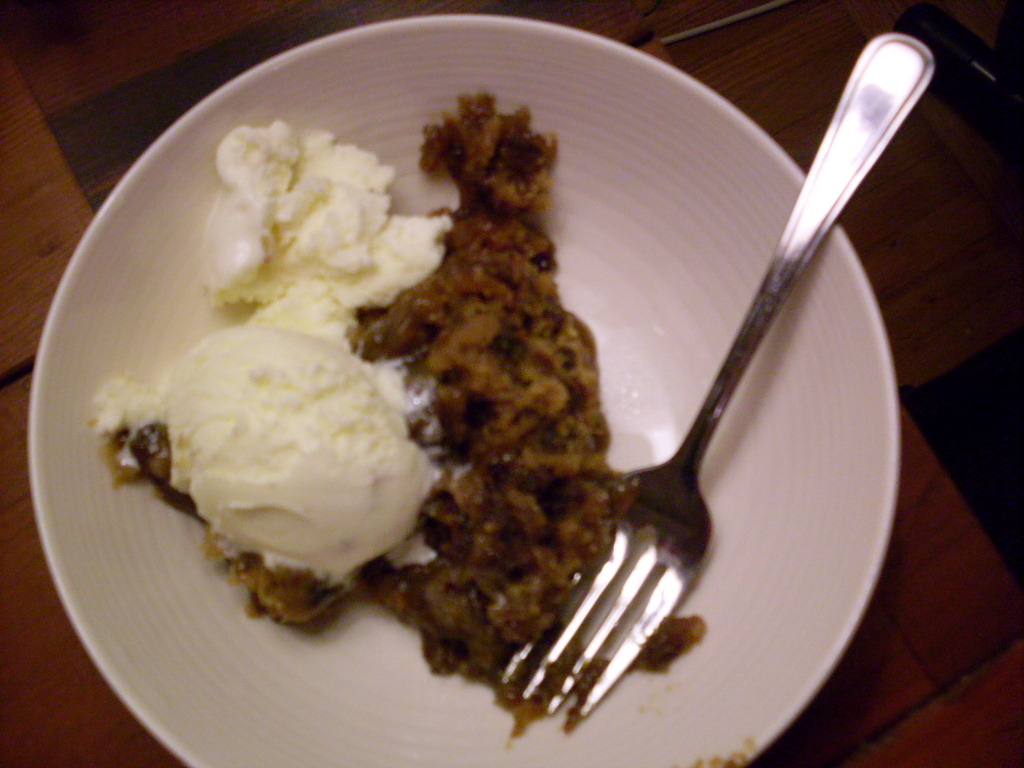
Things to not be messed with: Sticky toffee pudding, and also me. But mostly the pudding, because I probably won’t fight back but we have to defend the food.

Despite its reputation to the contrary, England is actually home to a tradition of really delicious food. In theory, anyway. In practice? I’m not so sure, but it’s possible that when I was there, the good stuff was priced a tad out of my range. They do good fish and chips, and I can’t get enough mushy peas or potted Stilton.

It was much too long ago that I was there. I think it was 2005, which means I am long overdue for a return. I went with my aunt and uncle, Lynn and George, who continue to spoil me rotten despite my advancing years, and though the delicacies were mostly cheese– or chocolate-based (those fresh little croissants and their warm chocolate dip at the coffee shop beside Harrod’s – I dream about them!) and each very special in their own right, there was one extra special treat that tastes and reminds me of England in all its splendour, and it’s impossible to screw up.

Sticky.

Toffee.

Pudding.

Well, actually, I’m wrong. It’s super easy to screw up, and even the English are doing it. The thing about sticky toffee pudding is that it’s a pudding, not a cake with sauce. Semantics are important, and the difference must be appreciated. I noticed a few years after returning home that sticky toffee pudding had made itself known on this side of the world – there’s even a Haagen-Dazs flavour named for it. I got excited, and tried it everywhere. There are a couple of good spots for it locally, but on the whole, it’s gone the way of most other trendy food items: it got all tarted up, and in the process lost the magic that made it what it was.

Sticky toffee pudding is a gooey, sticky pudding that tastes like toffee. Which sounds obvious, but I’ve seen it complicated, dried out, and not even toffee-flavoured. It’s the kind of thing you’d eat after a big roast dinner with all your relatives or Two Fat Ladies. It’s homey, wholesome, and packed full of sugar. Even Nick liked it, and he’s usually not big on dessert. He suggested that he might want the leftovers for breakfast.

So anyway, I have been thinking about this for ages, and tonight, Auntie Lynn and Uncle George came over to see our new place and meet our new cat and have tea and a baked good. I decided that we would have sticky toffee pudding, with ice cream, and I searched the Interwebs for a suitable recipe.

But there wasn’t one.

Because the Interwebs also seem to think that it should be a cake with sauce. Even Jamie Oliver thinks so.

So I had to do it all myself. Here’s the result: sticky toffee pudding, mixed in its baking dish and baked in its own sauce. It’s rustic, and needs no further fussing to bring it any nearer perfection. Your grandmother would have approved, and I think she’d be more right than Mr. Oliver about this.

Sticky toffee pudding

  • 1 cup all-purpose flour
  • 1 1/2 cups dark brown sugar (1/2 cup reserved; please don’t use light brown sugar – it would be all wrong)
  • 1 tsp. baking powder
  • 1/4 tsp. salt
  • 2 cups chopped dates
  • 4 tbsp. butter, melted
  • 1 egg
  • 1/2 cup milk
  • 1 cup boiling water
  • 1/2 cup granulated sugar
  • 1 tbsp. butter

Preheat your oven to 375°F. In a 1 1/2 quart casserole or baking dish (which you don’t have to bother buttering), mix flour, one cup of dark brown sugar, baking powder, salt, and dates. Mix well, so that all ingredients appear to be thoroughly incorporated.

In a measuring cup, whisk together melted butter, milk, and egg. Pour over dry ingredients, and stir until just moistened.

In a separate bowl or measuring cup, mix boiling water, remaining brown sugar, granulated sugar, and additional tablespoon of butter. Pour over the cake-batter-like mixture in the baking dish, but do not stir. Place in the oven as-is, and bake, uncovered, for 45 to 50 minutes, until the sauce bubbles up on the sides and the top resembles a moist cake.

Serve warm, with ice cream.

My aunt confirmed that this is what sticky toffee pudding is supposed to taste like, and my uncle said little but nodded emphatically. I liked it very much – it had the right cakey-pudding to sauce ratio, and tasted exactly how I’d hoped it would. There will definitely need to be another trip to London in my future, but for now, this little recipe will make the meantime more tolerable.

**Also, as far as photo credits, the blurry food ones are mine. The others I swiped from my aunt’s album online.

A little bit of lemon on a weeknight.

I’ll be honest, this one doesn’t come from me. However, it has lived in my head for so long that I’m not sure where it comes from, though more than likely it comes from Fannie Farmer. You probably make something very similar, and if you don’t, your mom or grandmother probably did. Because it’s delicious, I think it bears repeating.

I made Alana’s ricotta again today – I’ve been making it a lot, and have found multiple uses for both the curds and the whey. I’ve been making it with those two-litre containers of homogenized milk, which has meant I’ve had at least a pound of ricotta and quite a lot of whey leftover for somewhere around $2.38, which is easily more than a pound of ricotta costs. And you know, the thing about whey? It subs in very nicely for buttermilk.

I’ve used it today, in my lemon buttermilk pudding cake, and it’s very nice. If you don’t have whey or buttermilk, you can use regular milk, and it will just be lemon pudding cake, which is plenty delicious and probably where the whole thing started.

This pudding cake is part of a long family tradition of pudding cakes, which includes stewed fruit and dumplings and my grandpa’s Radio Pudding. It’s magic, because it starts off as a very runny batter, which transforms into a pudding with a delicate sponge cake top once baked. Sound familiar? It’s the perfect dessert for company on a weeknight, its purpose this evening, because it’s easy, and uses just a handful of ingredients that you probably already have in your pantry and fridge. You can substitute limes, or oranges, if that’s what you have, and it will be different but also lovely. I bet it would look very pretty if you made it with blood oranges.

Lemon buttermilk pudding cake

  • 1 cup granulated sugar (1/4 cup reserved)
  • 1/4 cup all-purpose flour
  • Zest of one lemon
  • 1/4 cup butter, melted
  • 1/3 cup lemon juice (fresh-squeezed is best)
  • 1/2 tsp. vanilla
  • 3 eggs, separated
  • 1 1/2 cups buttermilk (or whey, or regular old milk)

Preheat oven to 350°F. Butter or grease a 1 1/2 quart casserole or baking dish, such as a soufflé dish or that Corningware dish that looks like a giant ramekin, or a 8-inch square baking pan. (Keep in mind that the deeper your baking pan, the runnier your result. Not that that’s necessarily a bad thing, but deeper means more to have to set up, you know?)

Combine three-quarters of the sugar, flour, and lemon zest in a mixing bowl, and whisk well. Add the melted butter, lemon juice, and egg yolks, and whisk to form a batter. Slowly add in buttermilk (or whatehaveyou), whisking as you go.

In a separate bowl, whisk remaining sugar with the egg whites until the egg whites form soft peaks. You want them to be sturdy but malleable – if you overdo it, they get to a point where you can almost “chunk” pieces off. It won’t be the end of the world if that happens, but try not to get to there.

Fold egg whites into sugar-flour-buttermilk mixture. Pour into your prepared dish.

Place the dish into a larger baking pan, and fill the outside pan with water until the water comes to halfway up the side of the dish.

Place carefully into the oven, and bake for 40 to 45 minutes, until the top is cake-like and lightly browned. Cool for at least 30 minutes before diving in.

Serve warm, with whipped cream. Possibly be transported back to your grandmother’s messy kitchen table, as many years ago as that was. This tastes like lemon slice, lemon meringue pie (sans meringue), and all those treats most of us rarely make anymore.

Tangelo Tart: Not just an amazing stripper name.

Okay, so, I’ve been trying to mostly eat locally and sustainably and good crap like that, at least as far as meat and produce are concerned, but sometimes the city kicks my ass and the clouds are so dark and dense that I’m all, “ALL I WANT IS AN ORANGE IN MY MOUTH!” Already the Olympics are starting to make my neighbourhood really annoying, and no one has seen the sun for days. Wouldn’t you want a tangelo? Me too, and so I tumble off my high horse and tear savagely into as many tangelos as I can get my hands on at once.

And it’s worth it.

In addition to juicing them, and gnashing at their flesh with my menacing fruit fangs, I also turned them into a gooey orange tart, which was shared with Nick and Paul and Grace at Grace’s dinner party last night. I am literally still full after Grace’s succulent roast leg of lamb, buttery lemon potatoes, and creamy spinach and gailan gratin. But since my only contribution to the night was a bottle of Riesling and the tart, I am going to tell you about that. One day perhaps Grace will guest post. I will work on that.

So here you are: Tangelo Tart.

Tangelo tart

Crust

  • 1/2 cup packed brown sugar
  • 1/2 cup ground almonds
  • 1/2 cup butter
  • 1 egg
  • 1 cup flour

Custard

  • 3 large eggs, plus 3 additional egg yolks
  • 1 cup granulated sugar
  • 1 tbsp. tangelo zest
  • 1/2 cup fresh tangelo juice
  • 2 tsp. lemon juice
  • 1/2 cup butter, cubed and chilled

Preheat your oven to 350°F.

In a large bowl, cream together butter, almonds, and sugar until light and fluffy. Add egg, and beat until thoroughly combined.

Add flour, and stir until a crumbly dough forms. Press dough into a 9″ tart pan. Line the crust with a piece of parchment weighted with pie weights or dried beans.

Bake for 15 to 20 minutes, or until golden brown around the edges. Remove from heat to a wire rack to cool.

Check your large bowls against your pot tops. Find one that fits nicely.

Into that fitting bowl, whisk eggs, yolks, sugar, zest, and juice. Place bowl over a pot of simmering water, and whisk, almost continuously, until mixture has thickened. At first, the mix will seem frothy, as if there is a layer of foam atop a layer of juice, but don’t worry. Your constant attention will ensure that the bottom layer joins the top layer in yellow creaminess. You’ll know it’s done when the mix is of a uniform thickness and texture, and when it coats the back of a spoon.

Remove the bowl from the heat, and whisk in butter, one cube at a time, until the butter has melted into the mix. Pour into a different bowl, cover with plastic wrap (make sure the wrap covers the surface of the custard or else a skin will form and it will look gross). Refrigerate until cooled.

Pour cooled custard into cooled pie crust. At this point, you will notice that you might have made too much custard, and you may find this annoying. But there’s a reason. Turn oven to broil.

You see? This is where it gets tricky, especially if you are easily distracted.

Place tart in oven under broiler, and allow top to brown slightly.

Operative word: SLIGHTLY. You want it to be a marbley kind of goldenness, not unlike creme brulée. If you get distracted and singe the top of the tart, the extra filling will come in handy as you scrape off the ugly bits and try again. It did for me. If you’re not a broiler failure, save the extra custard and either drizzle it over the whipped cream you’ll serve with the tart, or store it in a ramekin and eat it on your own later. There should be about one cup extra.

Chill tart for four hours before serving. Serve with whipped cream. Sigh heavily over its punchy fruitiness, its ooey-gooeyness, its “I can’t believe it’s not August” splendor.