Paneer with greens and chickpeas.

If you’ve recently returned home from Paris to find your diabetic husband has eaten nothing but brisket sandwiches from the BBQ place down the street since you’ve been gone, your home full of needy pets and their molted winter fur, and your own digestive system in distress, you’ll relate to this sudden need for the nourishing simplicity of stewed greens. While they simmer, you can toss out all those little containers he left behind that contain just a strand or two of coleslaw and maybe run a vacuum over the floors or the cat. If your jaw is still sore from all that ravenous mastication of so much perfect French meat, this dish will ease your suffering – you don’t have to chew too hard.

Also it includes cheese. Which, if you are harbouring some variety of Space Dinosaur, means that you are addressing all of your needs in one dish and will not have to run out to the market later in the evening for a hunk of medium orange cheddar and some saltines to quell any mad cravings you might be experiencing. In your absence, he ate all the cheese.

Sometimes there’s a lot going on, you know?

Anyway.

This dish is an adaptation of Palak Paneer, one of my favourite things in the whole world which requires only the effort of finding paneer, which in Vancouver is no effort at all, or of making it. The recipe is loosely based on one I’ve made a few times from India Cookbook by Pushpesh Pant, which is a resource that I insist you get if you like to make Indian food – it’s worth it’s (dense) weight and (slightly pricey) price, even if all you do is read it and look at the gorgeous photos. The dish is generally made with spinach, but I like to throw it together with whatever’s on hand; a mix of greens is lovely and also very healthy.

Paneer with greens and chickpeas

(Serves four to six.)

  • 2 lbs. greens, such as chard, spinach, kale, or collards
  • 2 tbsp. mustard oil (or olive oil)
  • 1 tsp. fenugreek seeds
  • 1 medium onion, diced
  • 4 garlic cloves, minced
  • 1 tbsp. minced fresh ginger
  • 2 jalapeño peppers, finely chopped
  • 2 tsp. ground cumin
  • 2 tsp. salt
  • 1 tsp. ground black pepper
  • 1/2 tsp. cayenne pepper
  • 1 14 oz. can diced tomatoes, including juice
  • 1 cup chopped fresh cilantro
  • 1 14 oz. can chickpeas
  • 1 lb. paneer, cubed
  • 1/2 cup chopped cashews, toasted

There are two ways you can start the greens, and I like both ways. You can either blanch them in boiling salted water and then purée them in a blender or food processor, or you can put them dry into the blender or food processor. If you use the blanching method, you will end up with creamy greens; if you go dry, the final product will have a bit more texture. Both ways are good, so I’ll leave that part up to you. Process greens and then set aside.

In a large, heavy-bottomed pot over medium-high heat, sauté fenugreek seeds for about 30 seconds, or until fragrant. Add onion and cook until translucent. Add garlic, ginger, jalapeño peppers, cumin, salt, black pepper, and cayenne pepper, and cook for two minutes, stirring frequently.

Add greens and diced tomatoes, and reduce heat to medium. Let simmer for ten minutes, adding water as needed (if you processed your greens without blanching, you may need somewhere around a cup of water) to soften the greens. Add cilantro.Taste, adjusting seasonings as required.

Add chickpeas, paneer, and cashews, cook until paneer is warmed through, about two more minutes. Serve over rice with a dollop of plain yogurt.

And stay tuned – more on Paris later! Get super excited for strawberry season.

Mexican minestrone.

If there seem to be a lot of soup recipes on this site, it’s because we seem to have more bouts than we ought to of not taking good care of ourselves. Nick’s belly aches and his glucose levels are all over the place and I am eating grapes and Cheerios as if either is sufficient nourishment all on its own. So we have soup to feel good when we have been bad, and generally, it works.

Of course, as I write this I am snarfing down a bowl of bunny-shaped pasta and cheese that came from a box and that is organic, and I believe I am meant to pretend that it being organic somehow makes it less bad for me than conventional boxed macaroni and cheese. I don’t call this eating because I am ingesting it in a manner that more closely resembles inhalation.

There is shame in this, and I am grateful that few can see me. I am tucked into a corner of the couch while I write, ignoring the incessant groaning and play-by-play analysis of the hockey game by a team of grown-up boys in my living room as they in turn ignore me. If this game is anything like the last one, it will last four hours and emotionally devastate them. But I digress, as that is not important, at least to me. What matters here is that yesterday I had a nourishing bowl of soup, and it contained vegetables and I was better for it. I hope the effects are lasting.

The soup is something like minestrone, or maybe pozole, and it tastes sort of like salsa and Mexico. It’s best if you chop all your veggies to about the same size. It’s an easy vegan recipe, though I’ve made it with chicken and chicken stock and it was not harmed by the addition of meat. It is very hearty. Serve with avocado or a dollop of sour cream.

Mexican minestrone

(Serves four to six.)

  • 2 tbsp. olive oil
  • 1 medium onion, diced
  • 1 cup diced carrot
  • 1 cup diced celery
  • 1 cup diced sweet potato
  • 5 cloves garlic, minced
  • 1 jalapeño pepper, minced
  • 2 tsp. ground cumin
  • 1 1/2 tsp. chipotle powder
  • 1/2 tsp. dried oregano
  • 1/2 tsp. ground black pepper
  • 4 cups vegetable stock
  • 1 5.5 oz. can tomato paste
  • 1 28 oz. can hominy, rinsed
  • 1 14 oz. can diced tomatoes, including juice
  • 1 14 oz. can black beans, rinsed
  • 1 cup diced red bell pepper
  • 1 lime, zest and juice
  • Salt to taste
  • Cilantro

In a large pot over medium-high heat, sweat onion, carrot, celery, sweet potato, and garlic until the colours have brightened, two to three minutes. Add jalapeño, cumin, chipotle powder, oregano, and pepper, and stir to coat.

Add vegetable stock and tomato paste, and bring to a gentle boil; reduce heat to medium. Simmer for ten to fifteen minutes, until sweet potatoes have softened.

Add hominy, diced tomatoes, black beans, and red bell pepper. Stir in lime zest and juice, and then taste. Adjust seasonings and add salt as needed. At the last moment, stir in a handful or two of cilantro; chop additional cilantro for serving.

And, because it makes me so happy, here’s my favourite photo of the week.

Guest post: Vegetable pulao and fruit lassi.

Today’s guest post comes to us from Sandy of mango on an apple. Sandy and I were a year apart at the same high school, and somehow reconnected after ten years, despite a distance of 3,400 kilometers, via the Internet. She’s now travelling India and having grand adventures, and graciously offered a recipe from a cooking class she took along the way. I’m making this tonight for Meatless Monday.

***

On our year off to find the cure for quarter-life crisis, we began in India where in addition to sightseeing and avoiding cow poop, we took a cooking class in Udaipur at Shashi’s Cooking Classes. We learned lots of Indian cooking methods for rice, naan, and curries, plus how to make a delicious cup of masala chai. Check out mango on an apple to see more of our trip so far!

DSC_4769In keeping with the theme of cooking healthy and staying low-GI, I thought the vegetable pulao would be great here, along with a nice fruit lassi to finish off the meal.

Pulao means more vegetables, less rice. Biryani, on the other hand, means more rice, less vegetables. The vegetables used in this recipe are flexible – use what’s in season, but make sure to include something crunchier in texture, like cabbage, to give the dish more personality.

Vegetable pulao

  • 2 tbsp. oil
  • 2 shallots, sliced*
  • 2 tsp. dry anise/fennel seeds
  • 3 green onions, chopped
  • 1 bell pepper, sliced julienne
  • 1/2 cauliflower, sliced into long strips
  • 1/4 small cabbage, sliced julienne
  • 1 carrot, sliced julienne
  • 1/2 tsp. – 1 tsp. chili powder, to taste
  • 1 tsp. coriander powder
  • 1 generous pinch of turmeric
  • 1 generous pinch of garam masala
  • 1/4 cup – 1/2 cup water, depending on the vegetables you choose
  • 3 small firm tomatoes
  • 2 cups cooked basmati rice
  • 2 tbsp. cashews, roughly chopped
  • 2 tbsp. sultana raisins, soaked in water for about 5 minutes before using so they’re nice and plump
  • Salt to taste

*Shashi used red onions, but they were really small and flavourful, so I’d suggest using shallots if cooking this in North America

DSC_4721  DSC_4725
DSC_4726  DSC_4728

  1. Heat the oil in a large pan until hot, and then add anise seeds and onion. Cook until onions become translucent and start to caramelize.
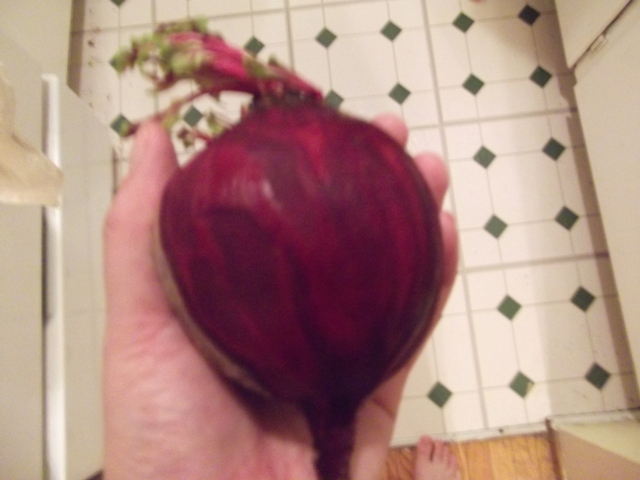
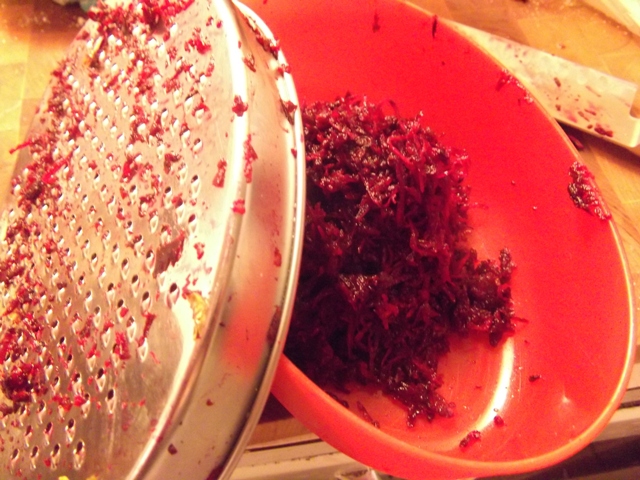
  2. Add in the sliced vegetables and green onions, chilli powder, coriander powder, turmeric, and garam masala. Correct with salt to taste.
  3. Add the water, stir, and then cover and let simmer for about five minutes.
  4. Add in the chopped tomatoes, stir well, and simmer for another five minutes.
  5. Once the vegetables are cooked through (not necessarily mushy, but if you like softer vegetables, give it a little longer), add in rice and combine.
  6. Add in the cashews and raisins, toss together, and correct again with salt.
  7. Serve with freshly chopped cilantro and perhaps a bit of grated cheese if you have some on hand.

DSC_4729After a meal in India, with all the spicy tastes lingering in your mouth, the best dessert is often a lassi. Lassi in India is a milky drink, although depending on the fruit used, sometimes it is a bit more like a smoothie. The best kind of lassi we found was plain, sweetened, and sold in terra cotta cups that you throw out when you’re done!

Fruit Lassi

  • 1 cup pureed fruit (banana and mango are typical choices in India, and I think peach, when in season, would be delicious as well)
  • 1 cup Greek yogurt
  • Pinch of cardamom powder, or open up two cardamom pods and crush the seeds between your fingers and a little bit of granulated sugar
  • 2 – 4 tbsp. of milk or water, depending on the thickness you’d like, the thickness of the yogurt you use, and the fruit in question

Whisk everything together, and serve. If you’re feeling extravagant, top with one tablespoon of finely shredded coconut.

Asparagus.

We’re getting to that glorious time of year when one does not need a recipe, because the ingredients speak for themselves, and they insist upon little more than olive oil, garlic, a sprinkle of chilies, the smallest squish of lemon, and a poached egg. Asparagus has just begun to appear; soon, fiddleheads will beg for the same treatment, and then later on, so will green beans. A pound of asparagus, or one large bunch, will make enough for dinner for two.

There are no drawbacks to allowing your vegetables to insist in this way, because it is an almost instant meal – 15 minutes, maybe, depending on how long it takes your water to boil. You will boil your asparagus in salted water for three minutes, and then you will pull them out of the water and drop them into a hot pan already sizzling with olive oil, garlic, chili peppers, and the zest of half a lemon. Toss your asparagus in the hot oil, 30 seconds, and then squish half a lemon over the whole thing. Serve with polenta and a poached egg. Chewy, crusty bread on the side with a generous smear of butter will tie the whole thing together beautifully.

And you will feel at ease upon sitting down to this, because it is the unfussy food of spring, and it is time for it at last.

Curried apple and Cheddar soup.

Every so often circumstances force us to face unpleasant truths about ourselves. I am fortunate in that I am quite delusional, but over the course of the past week I have come to the stunning realization that I might be just as annoying as anyone else when faced with even the suggestion of illness, and that my dramatics are lost on everyone I’m married to.

As the weight in my sinuses drags me down, I’ve realized that I must feed us real food if we are to survive this thing, even if the idea of cooking in that kitchen that is piled with an unnavigable stack of dirty dishes is so repellent that all I can do is fall into the couch to marathon Glee and slurp kimchi ramen out of a Styrofoam bowl and whine about how no one really loves me or he’d throw out everything we own and go to the store to buy new, clean stuff so we could start over and maybe also give the floor a wash and fold that pile of laundry that’s lived a week on the sofa that gets wrinklier and covered in more and more cat hair every day. Also it would be good if someone would make me a pot of tea and find me my lip balm.

Cheese soup might not be the healthiest thing we could do for ourselves at this tissue-littered time, but it’s restorative in that it contains all of the calories I have not been getting by only consuming bowls of cereal, instant ramen, and juice since my face decided to protest health. It’s an easy meatless meal, and despite its half-pound of delicious aged Cheddar and its scandalous amount of cream, there are good things in it. The carrots aren’t just for colour.

Curried apple and Cheddar soup

(Serves four to six.)

  • 2 tbsp. butter
  • 1 medium onion, chopped
  • 2 cups diced carrot (about four)
  • 2 cups diced apple (such as Granny Smith, about two large)
  • 3 cloves garlic, chopped
  • 1 tbsp. Madras curry powder
  • 2 tsp. salt
  • 1/2 tsp. turmeric
  • 1/2 tsp. ground black pepper
  • 1/4 tsp. cayenne pepper
  • 5 cups water or vegetable stock, or a combination
  • 1/2 lb. sharp Cheddar cheese, grated
  • 1 tbsp. lemon juice
  • 1 cup cream

In a large, heavy-bottomed pot over medium-high heat, melt butter. Sauté onion, carrot, apples, and garlic until golden, three to five minutes. Add curry powder, salt, turmeric, and black and cayenne peppers. Stir to coat.

Add water or stock, and bring to a boil. Reduce heat to medium, and simmer until carrots have softened, 10 to 12 minutes.

Remove from heat and purée using a blender or immersion blender. Return to heat and stir in cheese and lemon juice. Taste, adjust seasonings as needed. Stir in cream, and serve hot, with a sprinkling of additional cayenne pepper, as desired.

Also because it’s been awhile here’s a photo of the cat in the laundry basket that we emptied onto the sofa and then just left in the middle of the living room.


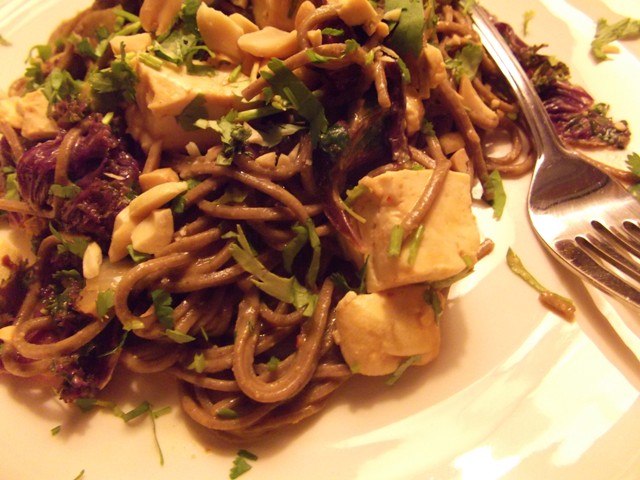
Peanutty soba noodles with kale.

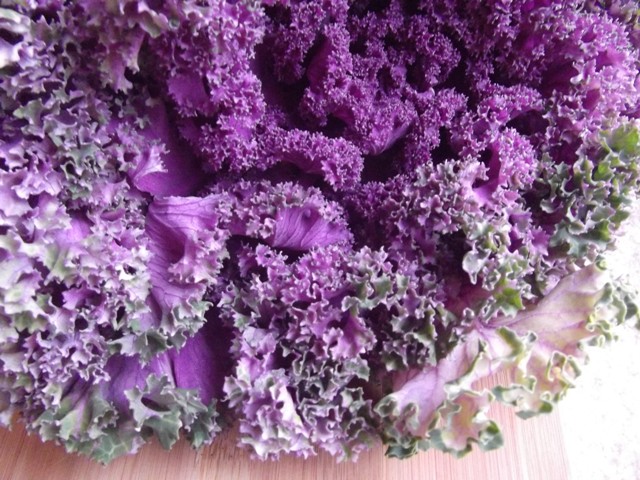
This past week, I have been inexplicably drawn to purple vegetables. I’ve bought turnips rimmed with a violet blush, potatoes dark as over-dyed denim, two kinds of purple yams, and that jewel-hued bunch of kale. Maybe it’s that purple suggests nutrients I’ve been lacking – it’s been a long winter of dark leafy greens and sweet potatoes and chickpeas – or maybe it’s that I am so very tired of winter and am ready to just get on with spring already. Maybe it’s that everything seems so grey and cold and apocalyptic right now, and purple suggests whimsy, a decadence we couldn’t afford if it came in any other form. Whatever the reason, if it’s purple it’s getting stuffed into my shopping bag.

You don’t have to use purple kale here; green would be perfectly lovely and probably more aesthetically pleasing – the purple with the soba and the peanut butter got a little lost. Purple desire aside, I was willing to overlook a sub-par presentation because this came together in under 15 minutes; the longest part was waiting for the water to boil. Perfect for this Meatless Monday, or anytime it feels like March or the end of the world.

Peanutty soba noodles with kale

(Serves four)

  • 2 tbsp. peanut or vegetable oil
  • 1 small onion, chopped
  • 4 garlic cloves, minced
  • 1 tbsp. minced fresh ginger
  • 1 block medium-firm tofu
  • 1/2 lb. soba noodles
  • 1/2 lb. chopped fresh kale
  • 1/2 cup peanut butter (natural peanut butter is best because it’s runnier)
  • 1/4 cup soy sauce
  • 1/4 cup sriracha
  • 2 tbsp. rice vinegar
  • 1 tbsp. sesame oil
  • 2 tsp. honey
  • Salt and pepper, to taste
  • 1 cup chopped fresh cilantro
  • 1/2 cup chopped roasted peanuts

In a large pan, over medium-high heat, heat oil and add onion, garlic, and ginger. Cook until fragrant, about two minutes.

Pat tofu dry with a kitchen towel and cut into cubes. Add to the pan, tossing occasionally.

Meanwhile, bring a large pot of water to a boil. Add soba noodles, and cook for three minutes.

Meanwhile, combine peanut butter, soy sauce, sriracha, rice vinegar, sesame oil, and honey in a bowl. Mix well, taste, and adjust seasonings as needed.

After three minutes, add kale to the pot. Cook an additional three minutes, then drain. Rinse with cold water and drain again.

Add noodles and kale to onion mixture, and pour sauce over top. Toss with 1/2 cup of the fresh cilantro. Divide between four plates, and garnish with remaining cilantro and chopped peanuts.

This would also be good with chopped scallions and fresh bean sprouts. We might have had those things if I wasn’t only buying purple stuff.

Something like mujadara, only French, kind of.

Oh, Meatless Monday. If you fell on any other day, I would have a much easier time. Around 2:00 this afternoon, I was pretty sure we were pretty much going to have grilled cheese sandwiches for dinner. But the thing about having a food blog is that at least a couple of times each week one must make an effort to eat something interesting, or, at the very least, to pretend that she hasn’t been eating an inordinate number of sandwiches, because eating only sandwiches won’t help anyone out of any rut.

And I am in a rut.

This happens every so often, usually during the longest-feeling part of a season when I really just don’t feel like eating whatever’s in season any longer. At the start of winter I cannot get enough root vegetables; by the end of February, the rose in my cheeks isn’t the brisk arctic air but too goddamn many beets. There will be radishes soon, and asparagus, and pea shoots, and peppery little leaves of watercress. I have never been particularly patient.Also I don’t like the cold, and I am bored with my puffy jacket, and all my boots need to be resoled. Whine, whine, whine. It’s possible that I am laying blame for my rut on the weather and the root vegetables when the problem is me. Nick has indicated that’s likely the case, and that I am a malcontent at my worst, and contrary much of the time. I maintain that I’m charming and delightful, but he did not nod in agreement.

So because we cannot live off of grilled cheese alone, winter vegetables will have to do for now. And why not coax the best out of them?

I first heard about mujadara from Orangette. For the uninitiated, mujadara is a simple dish of rice and lentils bound by the rich sweetness of deeply caramelized onions. Made from pantry staples, it’s comfort food for a dark grey day, and the constant sizzle of onions for close to an hour is soothing, and you can eat it with a side of greens dressed in a squish of lemon and it’s really very nice.

But why stop there? Why not pull out that celery and those carrots that have been languishing in the crisper? Why not add a touch of smoke, a pinch of vigour? Yes. Pinçage. Let’s do that. Here’s a variation on the mujadara theme, a twist that will placate those dull feelings until the first tips of asparagus finally grace your plate.

Rice and lentils with pinçage

(Serves four, or six as a side dish.)

  • 1 1/2 cup basmati rice
  • 1/2 cup French green lentils
  • 1 bay leaf
  • 4 tbsp. olive oil, divided
  • 1 1/2 tsp. salt, divided
  • 2 cups diced onion
  • 1 cup diced carrot
  • 1 cup diced celery
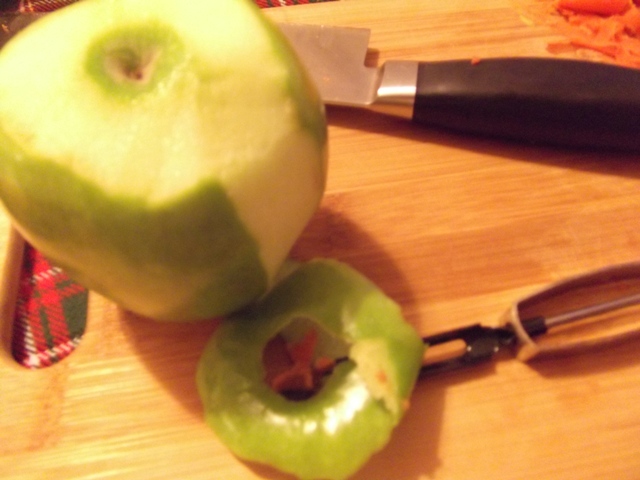
  • 1 Granny Smith apple, peeled, cored, and diced
  • 2 cloves garlic, minced
  • 3 tbsp. tomato paste
  • Salt and pepper, to taste

In a medium pot, combine rice, lentils, bay leaf, one tablespoon of olive oil, and one teaspoon of salt with four cups cold water. Bring to a boil over medium-high heat, then reduce heat to low, cover, and cook for 20 minutes. Remove from heat and keep covered.

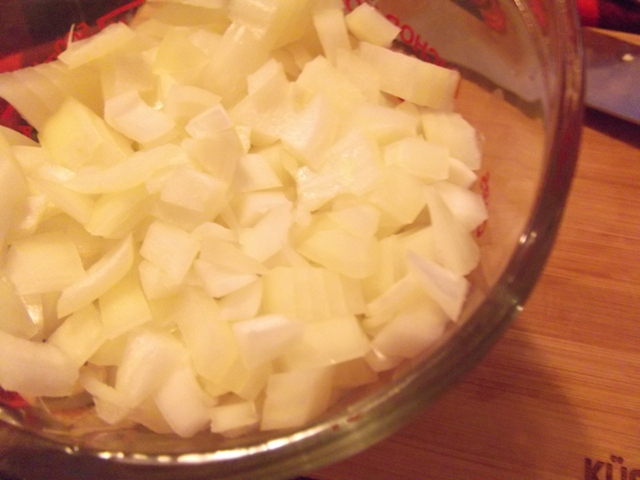
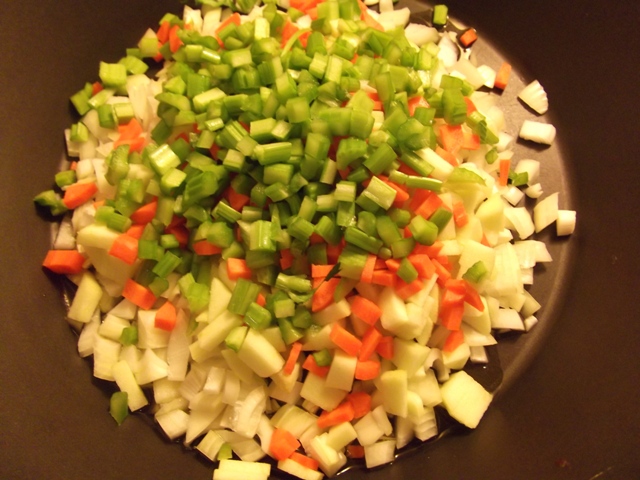
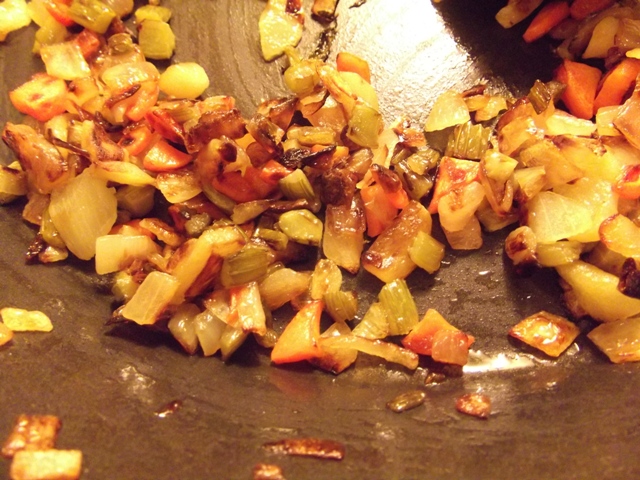
Meanwhile, heat three tablespoons of olive oil in a large pan over medium high heat. Add onion, carrot, celery, and apple, and cook until onions turn translucent. Turn heat down to medium, and cook slowly, stirring occasionally for 30 minutes to an hour, however long it takes your ingredients to turn golden and soft. Add salt once veggies begin to brown. I let mine go until they’re barely recognizable as their former selves, until they are dark and black in bits and they smell sweet and faintly smokey.

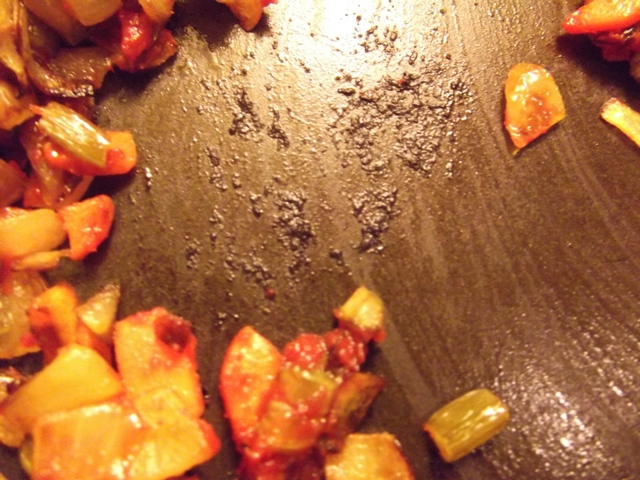
Add the garlic and the tomato paste, allowing it to dry to the bottom of the pan but not to burn. Keep it moving, tossing the veggies to coat in the sauce. When you’ve reached this point, you’ve got a pinçage (although technically a real pinçage wouldn’t have apples in it … technically, shmechnically).

When the bottom of the pan looks pretty dry, add rice and lentil mixture (removing bay leaf). Pour about a cup of water into the pan to deglaze. Doing this will release the flavour of your pinçage into the rice, coating it saucily.

Serve sprinkled with fresh parsley.

Beet risotto.

Last year we didn’t do much about Valentine’s Day because we’d just gotten Molly the Cat and felt an urgency to be home with our cute little ball of fur. I don’t think we’ve ever done much about Valentine’s Day; the sentiment is nice but I feel sort of silly about it. It’s just the two of us all the time, you know?

We’ll go out later this week, when the restaurants are quiet and we’re not surrounded by moon-eyed couples sitting on the same side of the booth, which makes me irrationally angry, which is the opposite of how you’re supposed to feel on February 14. Seriously – can’t they hear each other chew when they sit like that, and doesn’t that just shoot the romance right in the foot?

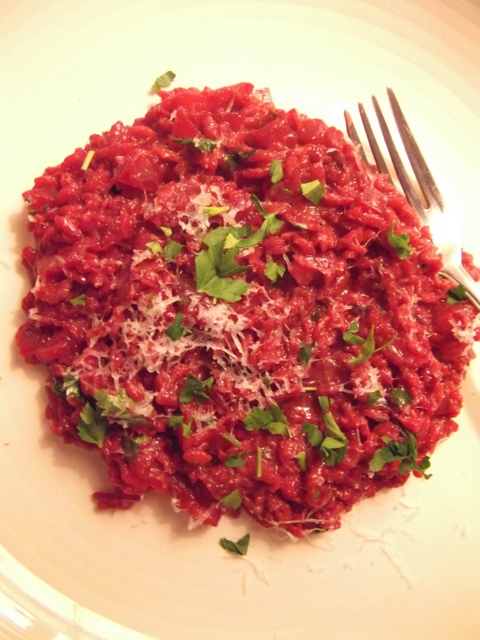
But I do like a good theme. So tonight, even if we weren’t celebrating, we did recognize the day, and Meatless Monday, with a plate of lusty, blood-red risotto. It was both virtuous and decadent, with its vegetable stock and beets and butter and Manchego cheese, and it came together in the 30 minutes Nick spent tidying the kitchen. Add a little red wine on the side, and there’s no better way I can think of to spend a Monday Valentine’s Day.

Beet risotto with Manchego

  • 1 tbsp. olive oil
  • 2 tbsp. butter, divided
  • 1/2 tsp. red chili flakes
  • 1 medium onion, chopped
  • 3 cloves garlic, minced
  • 1 cup arborio rice
  • 1 tsp. smoked paprika
  • 1/2 cup dry red wine
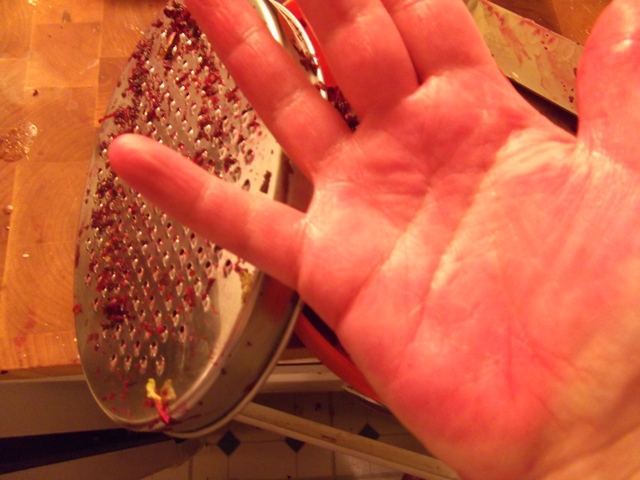
  • 1 medium beet, peeled and finely shredded
  • 3 to 4 cups warm vegetable stock
  • 1/2 cup shredded Manchego cheese
  • Salt and pepper, to taste
  • Handful chopped fresh parsley

Heat stock until boiling, then reduce heat and maintain a gentle simmer.

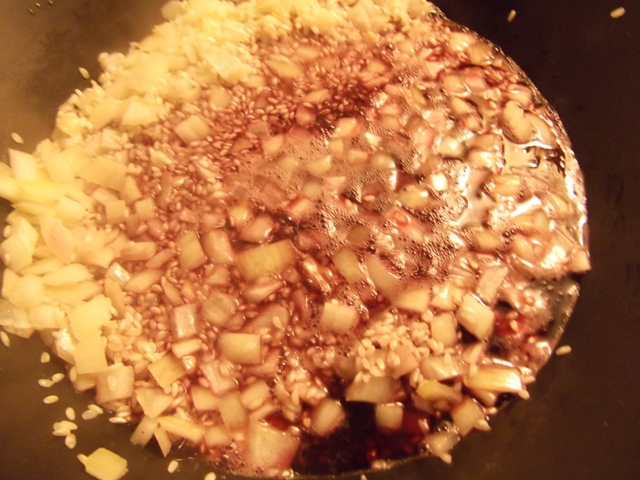
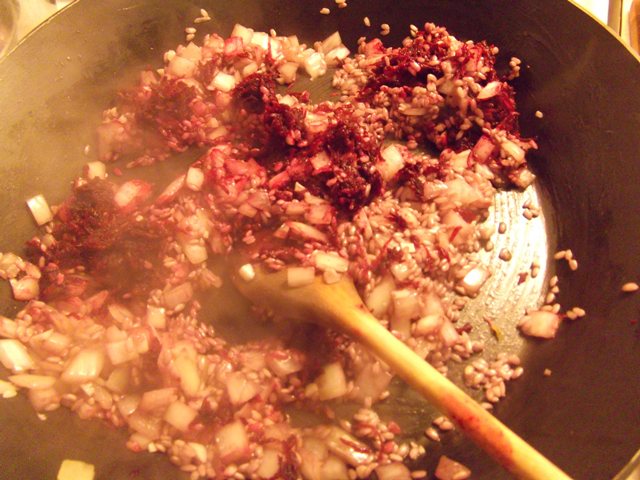
In a heavy-bottomed pan over medium-high heat, heat oil and melt the first tablespoon of butter with the red chili flakes. Add onions and garlic, and cook for two to three minutes, until onions are translucent. Add paprika and rice to pan, stirring for about a minute, or until rice grains turn opaque. Add the wine.

Add shredded beets, and cook until wine has been completely absorbed.

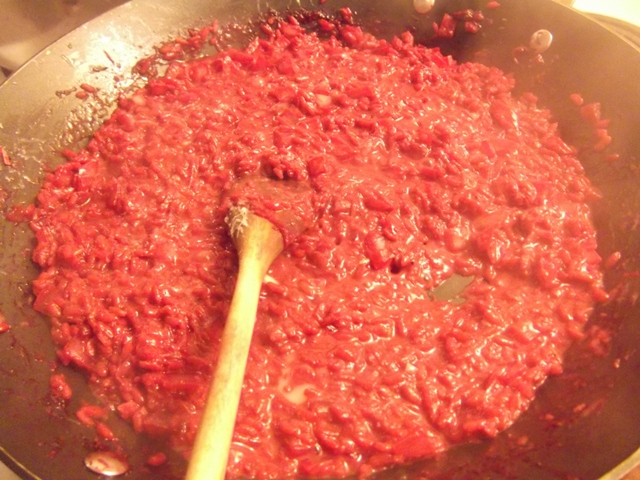
Add one cup of the warm vegetable stock, stirring frequently until liquid is mostly absorbed. Repeat with an additional cup of stock, and then repeat again with one to two more cups as needed. Test your rice for tenderness – if it is al denté, great. If it isn’t, just pour in a little bit more stock, as needed, and let it absorb into the rice. I almost always need the full four cups of stock.

When rice is ready, stir in butter and Manchego cheese. Taste, and adjust seasonings quickly, as needed. Stir in parsley, and serve hot, with additional Parmesan cheese and a light sprinkling of chopped fresh parsley.

And Happy Valentine’s Day. However you did or did not celebrate it, I hope you had a lovely evening and ate something you really liked, in the company of someone you really like, whether it was you alone or with someone else.


Meatless hot and sour soup.

In the aftermath of yesterday’s chaos, Nick spent today on the couch, fielding phone calls from everyone in the world and suggesting today was the day I take charge of his correspondence. No luck with that, so every 30 minutes he’s telling the same story. The cat seems to sense something is wrong, and has been his constant companion. I am helping by drinking all the wine.

We still had yesterday’s groceries in bags as I’d just shoved them into the fridge before running out to the ER, and since my only outing all day was  to get Nick’s prescription, I figured we might as well do Meatless Monday over.

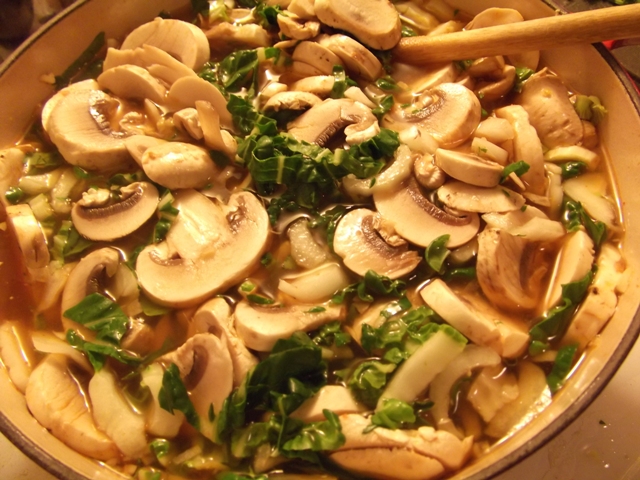
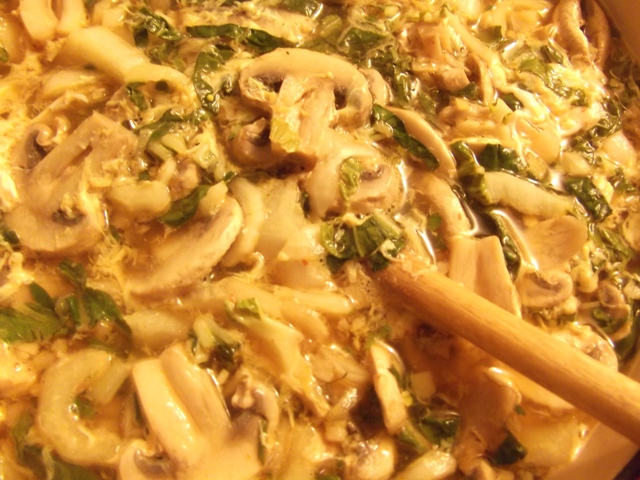
We’ve been battling colds (it’s starting to feel like like we’ve always been battling colds), so soup was what we wanted yesterday, specifically hot and sour soup, and to be able to eat within fifteen minutes of arriving home after a long day. I picked up some fat white mushrooms and some crisp-looking bok choy, and couldn’t wait to eat.

You could use cabbage, if that’s what you’ve got, or any leafy green thing you have on hand. The point here is ease while still making a dinner that’s somewhat interesting. This is a short-cut version of the kind of hot and sour soup I’d have delivered if it didn’t take so little time to make, a soup that captures the gist of what I’m after when I’m after salt and spice and tang, and it makes enough for four to six people. This is the basic recipe, but if you like it hotter, or sourer, or if you prefer a bit of lemongrass, or chicken or pork instead of tofu, there’s room for creativity and adaptation.

Meatless hot and sour soup

  • 1 tbsp. sesame oil
  • 1 tbsp. minced fresh garlic (heaping)
  • 1 tbsp. minced fresh ginger (heaping)
  • 1/2 cup soy sauce
  • 1/3 cup rice vinegar
  • 2 to 3 tbsp. sriracha, or to taste
  • 2 tsp. honey
  • 8 cups vegetable stock
  • 1 block tofu, cubed
  • 3 cups thinly sliced bok choy
  • 2 cups sliced mushrooms
  • Salt and pepper to taste
  • 1 egg, beaten
  • Bean sprouts and chopped scallions and cilantro for garnish

In a large, heavy-bottomed pot over medium-high heat, cook garlic and ginger in sesame oil until fragrant. Add soy sauce, vinegar, sriracha, and honey, and stir to combine. Let simmer one to two minutes, until reduced by a third. Add stock.

Bring to a boil, then reduce heat slightly so that liquid comes to a simmer. Add tofu, bok choy, and mushrooms, and let cook three to five minutes, until bok choy has wilted. Taste, adjusting seasonings as needed. I used homemade stock, so I had to add a little bit of salt. If you’re fighting sniffles, a little more hot sauce might be a good idea.

Stirring the liquid in the pot, pour the egg in a steady stream, swirling the liquid so that the egg forms many strands. If you don’t keep the liquid moving, the egg will form an unappetizing-looking glob.

Serve immediately, garnished with bean sprouts, scallions, and cilantro as desired. I bring out the bottle of sesame oil and the sriracha as well.

Lentils with bacon.

Nick is a pretty, pretty boy, with bright blue eyes and dimples, and he’s tall and I met him in poetry class in 2006. He was literate and a looker, and that’s all I thought I needed. We started dating in 2007, and shortly thereafter I learned that he fished. And then I learned that he hunted. We were engaged almost immediately, and I’m still surprised I wasn’t the one who asked.

For the past couple of years, we’ve had our freezer stocked with wild local venison, and I can’t think of a bigger thing to brag about. Last year Nathan, my brother-in-law, brought the deer home and we got a portion – a few pounds of ground meat and some backstrap. This year, he and Nick got the deer together a little north of Princeton, BC, and so we have half a deer to call our own, portioned into roasts, chops, stew meat, and ground, and it is some of the most flavourful meat I’ve ever had. Once you try the meat of an animal that’s lived a happy life and that’s been fed its natural diet, there’s no going back to that cruelly treated but cheaper feedlot stuff. This is beautiful meat, dark and lean, wild-tasting but not gamey. If it’s possible, I am more into Nick now that he’s bringing home wild game than I was when our teacher was comparing him to John Thompson and Ezra Pound. The good meat more than makes up for Nick’s faults, which I would later discover include teeth-grinding, wrong-part-of-the-toothpaste-squeezing, and drinking the last of anything I might have wanted in the fridge, among other things.

I’ve deviated a fair bit from what I wanted to tell you, and I hope you’re not disappointed that the thing I sat down to write about here was lentils. I made a venison sirloin tip roast tonight, and it was flawless, cooked perfectly and seasoned with black pepper and rosemary, but to be honest I didn’t write the recipe down and now I’ve forgotten it. I was intent on telling you about the lentils, which Nick groaned about when I suggested them, but which he later helped himself to seconds of, and even though I planned for there to be four servings of the stuff, there ended up only being two.

If you’re going to make these as your side dish, maybe make a salad as well, so there’s enough to go around. These lentils are spicy, warming, a little tart, and taste of bacon, so don’t underestimate their appeal.

Lentils with bacon

(Serves four as a side-dish.)

  • 4 strips bacon, chopped
  • 2 tbsp. olive oil
  • 1/2 onion, finely chopped
  • 1/2 tsp. red chili pepper flakes
  • 3 cloves garlic, minced
  • Zest and juice of 1 lemon
  • 1 19 oz. can lentils
  • 1/2 tsp. kosher salt (or to taste)
  • 1/2 cup chopped fresh parsley

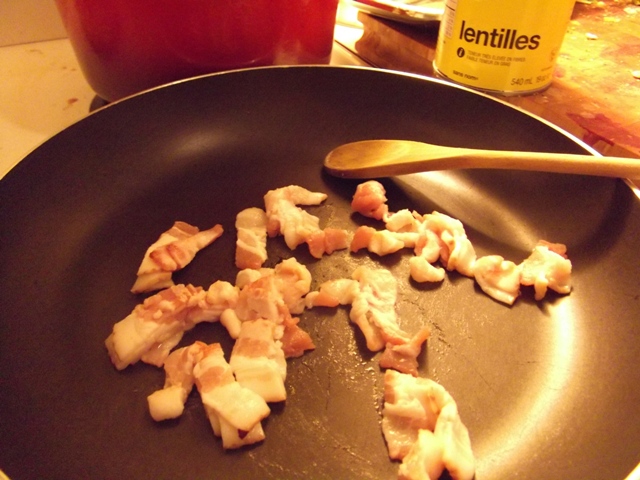
In a large pan over medium-high heat, cook bacon until crisp. Remove bacon to a plate lined with paper towel, and drain all but one tablespoon of fat from the pan.

Add olive oil to pan.

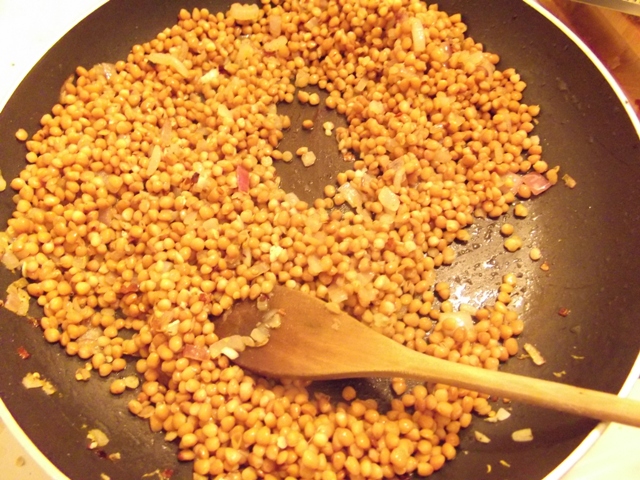
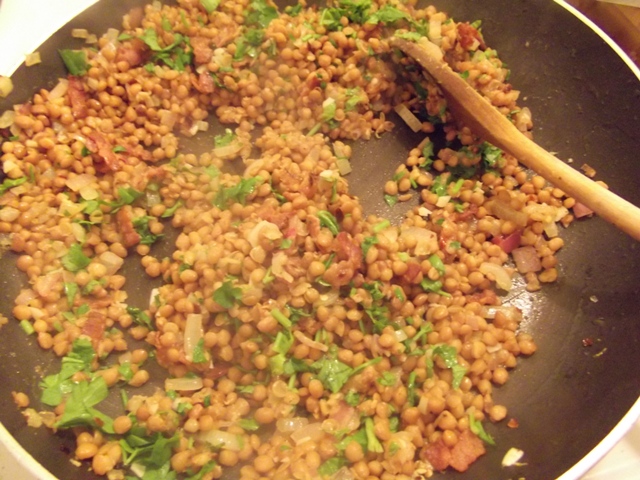
Add onions to pan, and fry until translucent. Add chili flakes, garlic, and lemon zest, and cook until fragrant, about a minute. Add lentils, and then squish lemon juice over top. Add salt, and cook until lentils are warmed through and beginning to brown, about two minutes. Taste, adjust seasonings, and then add bacon back to the pan. Add parsley, and cook until leaves have brightened, 30 seconds to a minute, and then serve.

These are excellent alongside roasted meat, but they’d also be pretty fabulous on their own with some buttered crusty bread, or with some roasted winter vegetables for a mostly wholesome weeknight meal. The recipe is easily doubled, but if you do double it, taste as you go before doubling the lemon; the zest and juice of two lemons might be a lot more than you’ll need.