Scallion spaetzle: It’s like spring or summer or something.

We went camping this weekend, and our (triumphant) return to the city was marred by bickering and the west coast being unsure about getting around to summer already. Remember how completely not annoying I was in February? Yeah. June has been my payback.

We barely made our boat home, as we were in the last handful of cars onto the ferry from the island, which did little to ease my stress over returning home in time for a shower, healthy dinner, playtime with the cat, and an early bedtime, and Nick was behaving like a pimple under the underwear elastic of my life.

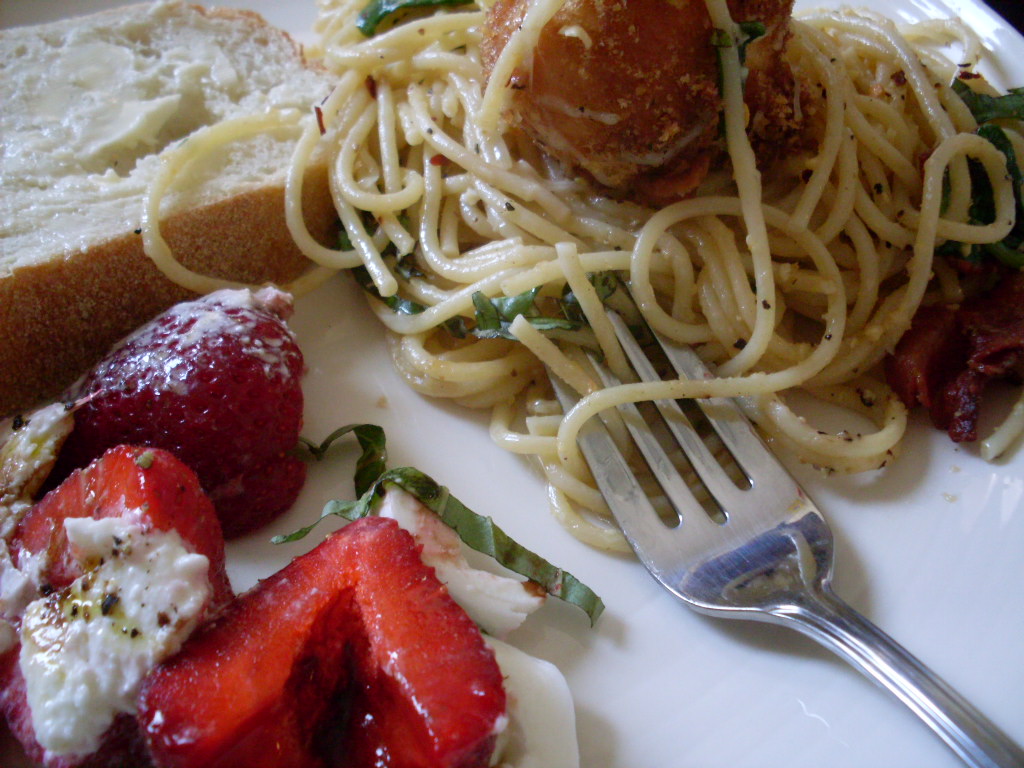
And so, with all of that and my crankypants apparently devoid of stretch fibres, it felt like a day for spaetzle, with bacon. And for frying meat in lard. In the spirit of optimism, the spaetzle is springy and green. It WILL be summer here soon. It has to be. I can barely stand the wait. In the meantime, and screw the consequences: comfort food. I never looked all that great in a bikini to begin with.

Scallion spaetzle

  • 2 bunches scallions (reserve 1/2 cup chopped)
  • 2 small cloves garlic
  • 1/4 cup milk
  • 3 eggs
  • 2 cups all-purpose flour
  • 1 tsp. salt
  • 3 strips bacon, finely chopped
  • 1 tbsp. butter
  • Salt and pepper, to taste

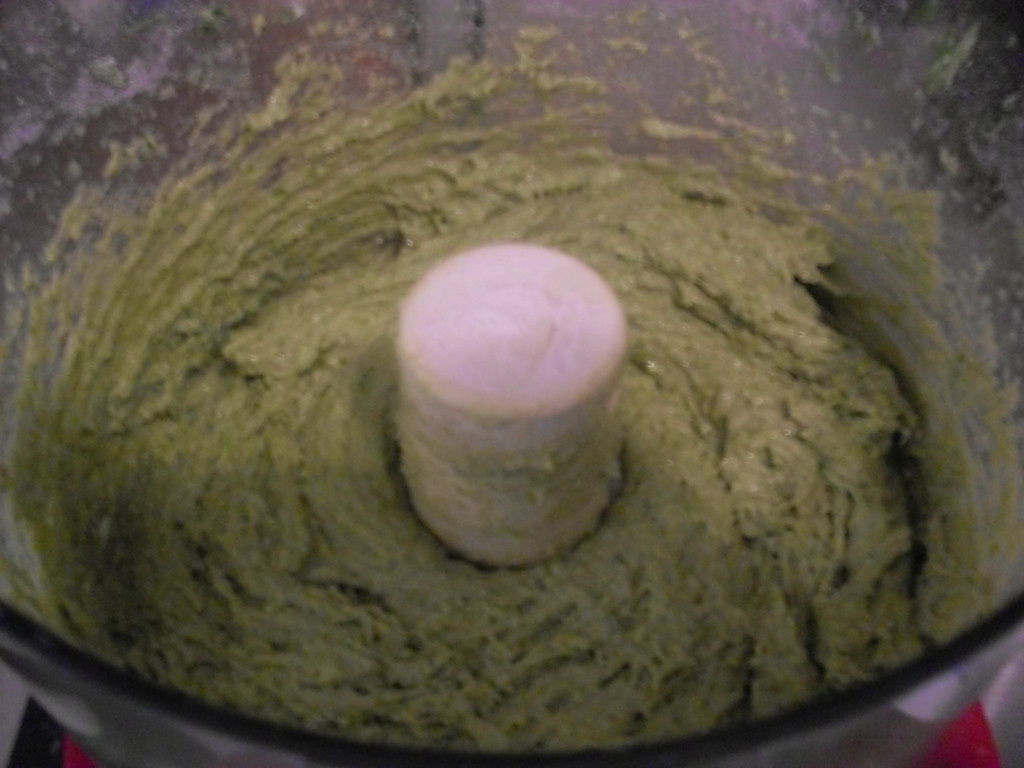
In a blender or food processor, reduce the scallions and garlic to a green onion purée.

Beat eggs and milk and salt into the mix, then gradually add flour until a green paste/batter has formed.

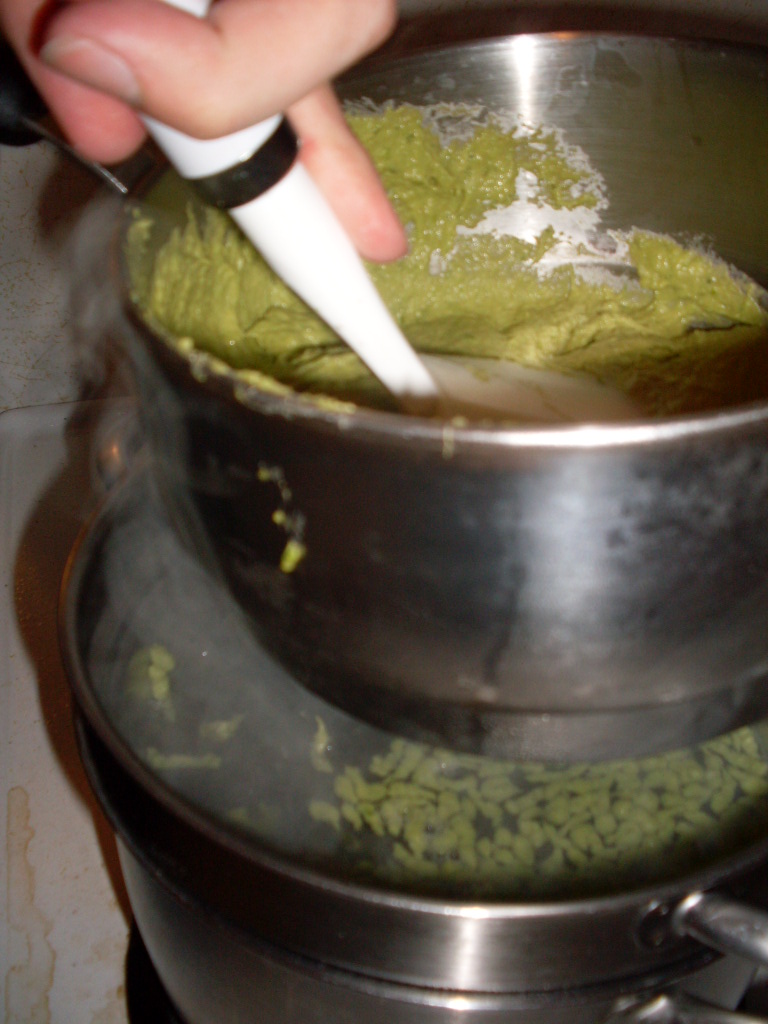
Bring a large pot of water to a boil. If you own a spaetzle-maker, I am impressed. If, like me, you do not, you can push the batter through the holes of a colander. Using a rubber spatula, scrape the batter in bits into the boiling water. Boil for two to three minutes, stirring to prevent clumping.

In the meantime, heat bacon in a large saute pan over medium-high heat. When bacon has cooked, remove it from the pan to drain, reserving about a tablespoon of the fat.

Return the pan to the heat and pour drained spaetzle in, and add the butter and reserved scallions, tossing to coat. Add bacon and pepper, and serve piping hot.

This makes for a delightful alternative to regular old pasta, and can easily be turned into a cold summer salad. It would be great with a squish of lemon, and some herbs. Comforting and relatively convenient. So you can focus on other things. Like your mood. And drinking.

Savoury strawberry salad: More awesome than alliteration!

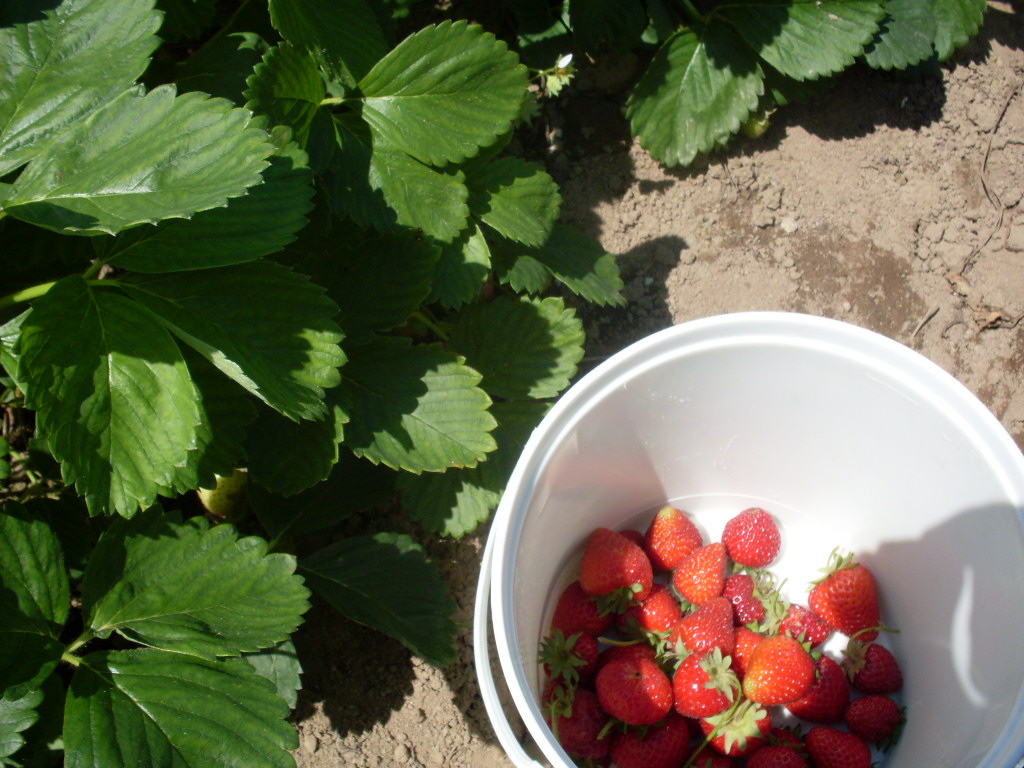
I could not get out of bed fast enough on Saturday – it was strawberry day! And maybe I was a little too excited, because it was only the first day of the u-pick season, and there were frustrating turns of events. It all worked out in the end but the berry farm we meant to go to, Krause Berry Farms? Apparently that’s where everyone goes because they have pie and there were more cars parked there than I’d seen in a long time and three people told us we probably wouldn’t get any berries because all the ripe ones were gone. But just across the street, there was a berry farm and almost no cars, and lots and lots of berries. You win, other berry farm.

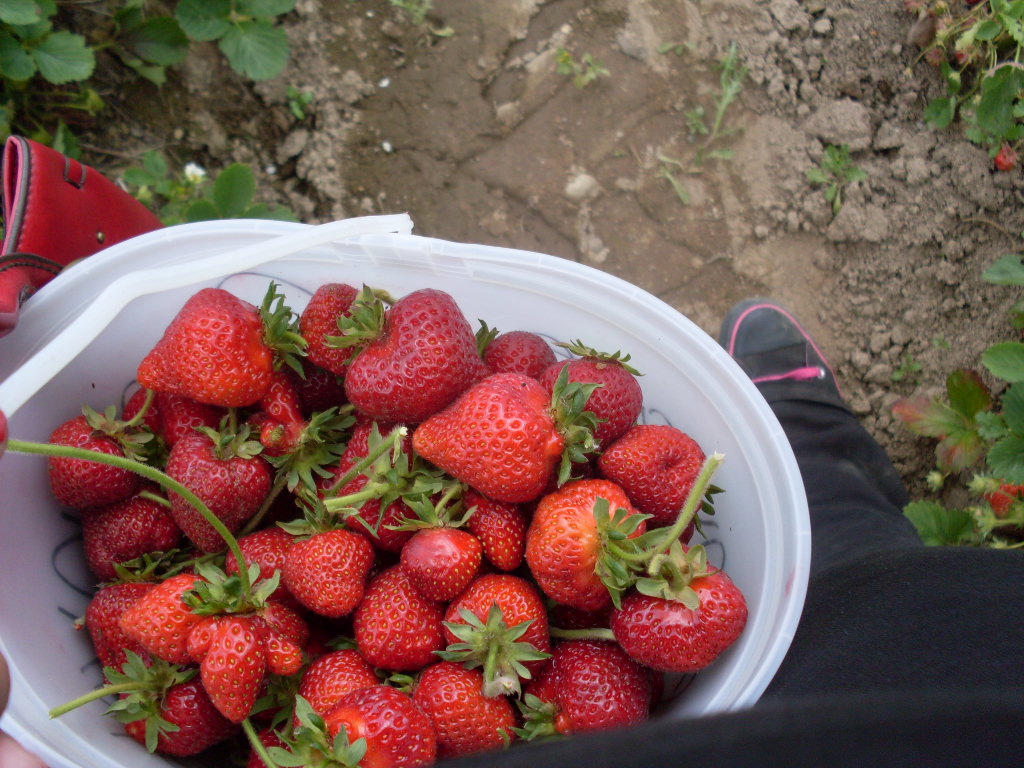
Grace, Corinne, and I set out among the rows to pluck berries, only mildly irritated that we’d have been wiser to wait a week, and collected as many berries as we could.

I ended up buying some, because we got whole buckets but decided to quit there because the day had not met our expectations of magic and grandeur, which actually happens less than you’d think. It’s possible that we’re easily pleased.

And then we went home, because some of us had jams and ice creams to make.

But before that, I desperately wanted a salad. Caprese-inspired, I wanted a heap of strawberries and burrata and basil and pepper and oil, and a splash of balsamic vinegar. Use burrata cheese if you can find it, or if you’ve got the time and inclination to make it. If not, use the freshest softest mozzarella you can find. This is another case where I don’t have a recipe for you, but a list of ingredients, and you can play with it until it’s to your liking, or until you have enough to serve everyone who’s eating with you.

Strawberry salad

  • Fresh, local strawberries (room temperature)
  • Burrata or fresh mozzarella
  • Basil, cut into thin strips (chiffonade)
  • Fresh ground black pepper
  • Extra-virgin olive oil
  • Balsamic vinegar (a splash)
  • Salt, if needed, and to taste

Chop everything choppable. Assemble on a plate. Sprinkle with pepper, and drizzle oil and vinegar to taste. Serve.

I love using fruit in savoury applications, because it’s not as desserty as you’d think. Strawberries can substitute nicely for sweet summer tomatoes, especially since they mimic the meaty texture of tomatoes, and because they’re as tart as they are sweet and play so nicely with the creamy cheese and citrusy basil. Try this dish with peaches, or nectarines, or plums later in the season. I promise, it will not be weird, and you will love it forever. I wouldn’t raise and then dash your expectations of magic and grandeur on purpose.

Cucumber salad.

I always worry that one day you’re going to realize that we drink an almost unacceptable amount of wine, more than we need to, and that your response is not going to be “I should come over!” See above for exhibit A, and the equivalent of four bottles for four people. Summer is for laughter and sharing.

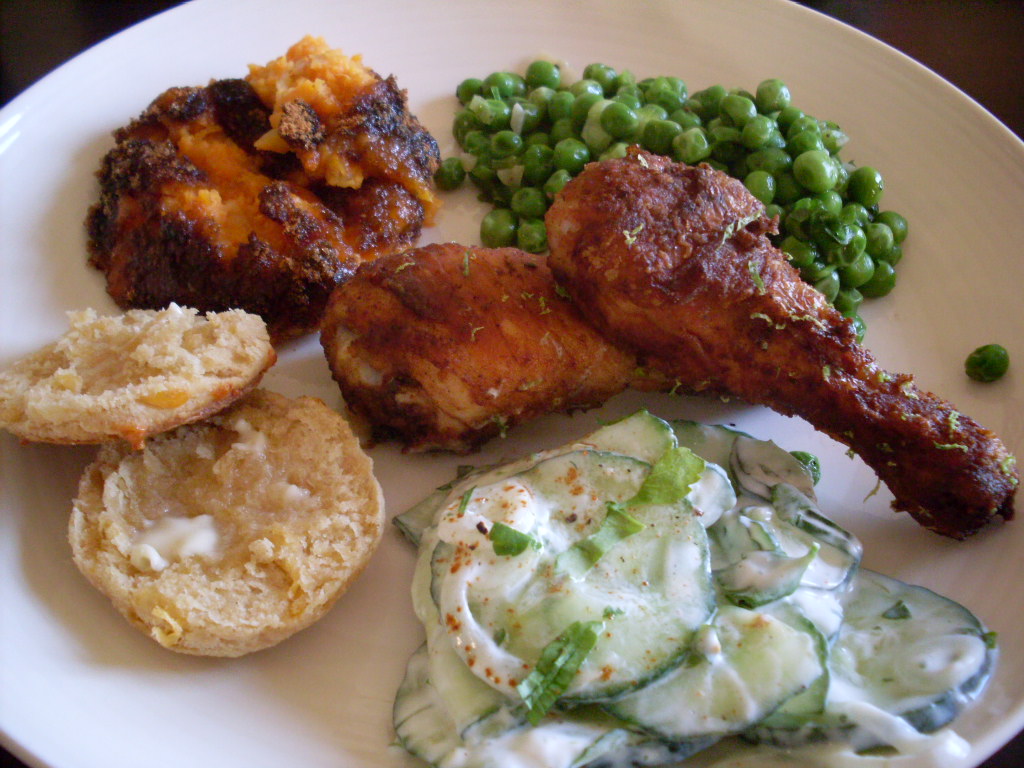
To be fair, there was enough food for eight people, and once I got going on a simple meal of fried chicken and cucumber salad, the menu somehow spiralled until it included candied sweet potato and apples, whole-wheat baking powder biscuits, peas in butter with scallions, and macaroni and cheese with chipotles for Jaz, Tracy’s boyfriend, who is a vegetarian. Somehow, it all got eaten. The night ended earlier than usual because we all needed to head to our respective beds to sleep it all off.

This is the point at which I want you to think you’re invited over, because you are. Anytime, so long as you’re not planning an intervention. Wear elastic-waist pants. If you think of it, try to call the night before.

We almost never issue invitations, because there are always friends passing through, either to play games or watch games on TV, or to share wine and gossip, or to catch up because somehow we all got very busy and the constant togetherness sort of died off. The latter has been the case with Tracy, who runs a fantastic arts and lit magazine and works four-thousand jobs and still finds time to win awards and go to Toronto and get into grad school to study publishing, and I have got to stop whining about being tired from my one job and my no other things. Tracy has been away and returned, and the night before she came over, she sent me a message to indicate that it’s been too long/forever, and let’s eat.

So we did.

A lot.

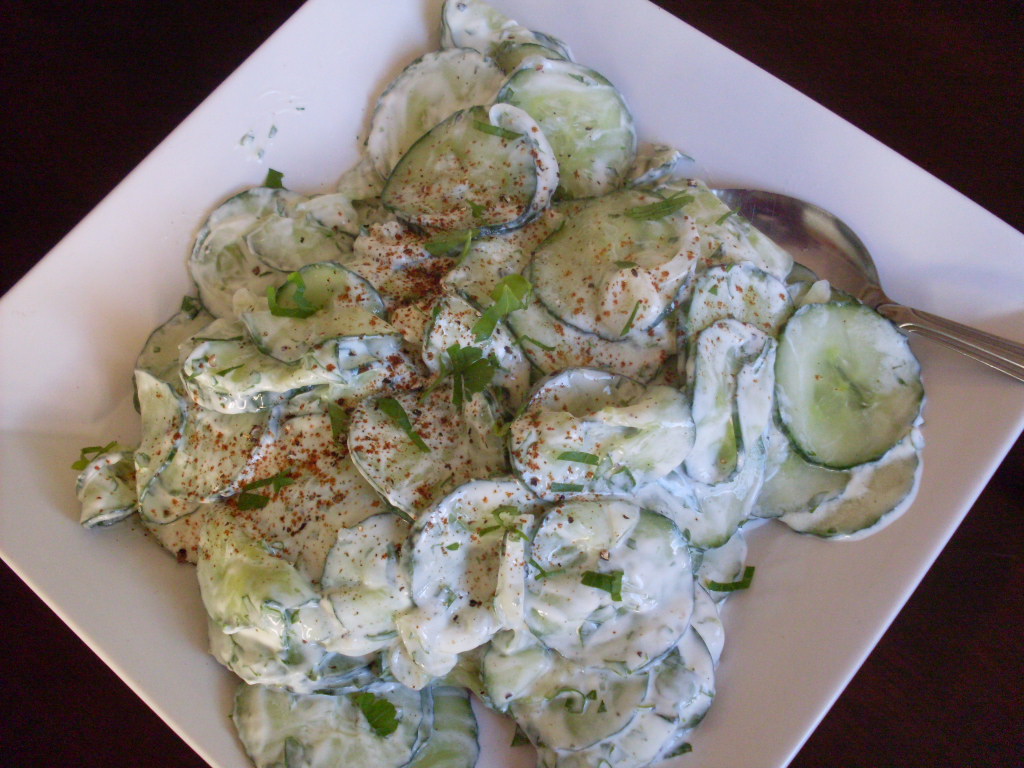
And I didn’t realize it, but I make a lot of cucumber salad come summer. It goes with everything – fried chicken and biscuits, with spicy Indian food, with delicate pieces of fish or with big hunks of grilled meat. It’s the easiest thing in the world, and I have been eating it at summer meals since I was approximately an infant. Here’s my spin on it, which you can easily adapt to your own summer table.

Cucumber salad

  • 1 long English cucumber, sliced into very thin rounds
  • 1 small onion, sliced paper-thin
  • 1 tsp. salt
  • 1/2 cup Greek-style yogurt
  • 1/2 cup chopped herbs (your choice, and depending completely on what you want to serve – I like parsley, mint, dill, or cilantro)
  • 1 lime, zest and juice
  • Pepper, to taste

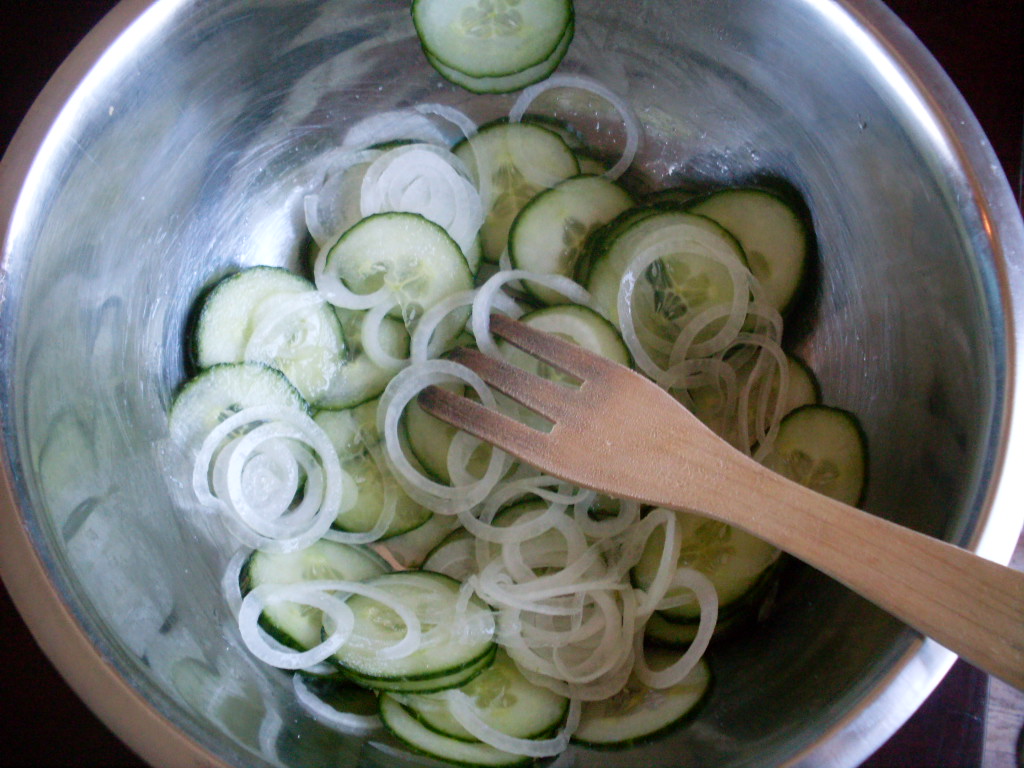
Place cucumber and onion slices in a large bowl, and sprinkle with salt. Toss to coat. Cover, and place in the refrigerator for two hours.

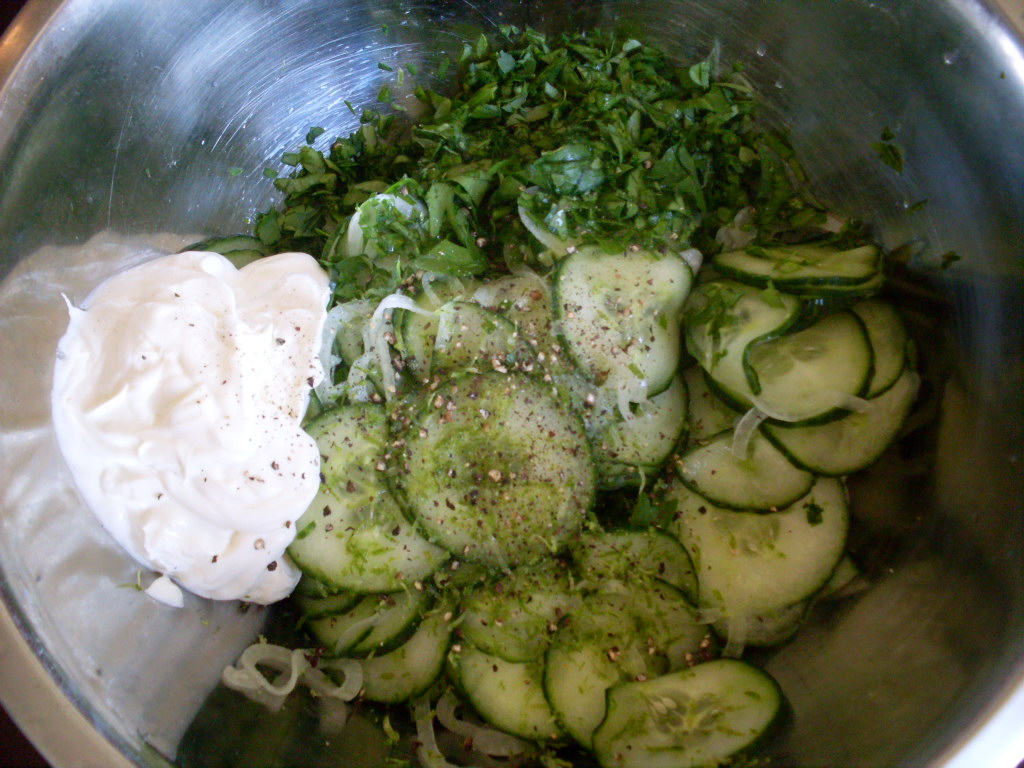
Drain liquid from veggies, and toss with yogurt, lime juice and zest, and pepper.

Serve immediately, garnished with more chopped herbs. I also like a sprinkle of paprika, sometimes, or a little bit of ground coriander.

See? So easy. So cooling, and so practical. So totally enough for way more than four people.

We’ll be back to much smaller dinners tomorrow, and a weeknight’s ration of wine. Both dinner and wine will be more than enough for more of us if you think you’ll feel like stopping by.

Tuna tartare, and a repressed yuppie sort-of howl.

This morning I woke up late and was panic-stricken that it was Thursday already and I had so much to do and it was never going to get done and to top it all off there was no time for a shower and there is a hole in the sole of my boot and when I walked to the bus stop in the rain water leaked in and it made my foot stink and all I could think of was holy crap, why?! But then – great news! – it turned out to only be Wednesday and the sun came out and not only did I cross a whole bunch of stuff off of my to-do list, I may not have smelled as bad as I thought.

I blame society for the fact that I stress like this two or three times a week, and civilization, and pretty much everything that contributed to me having to wake up to an alarm every morning and question my commitment to hygiene every single day. And sometimes I get rebellious. But since I constantly teeter so precariously on the line between “communications professional” and “moron,” I had to make the difficult choice to only be rebellious in non-career-limiting bursts, at least whenever possible. I like to think that this is the result of maturity.

So today my rebellious, animal urges compelled me to eat a big pile of raw red meat, with a raw egg yolk perched on top and long shards of sharp Grana Padano balanced threateningly over the whole thing, and capers, I don’t know where, but capers. I thought about it, imagined it even, and set out to The Butcher on 10th Avenue on my way home today to demand my cut of beef, and was politely lectured about that pesky hygiene issue, and how tomorrow I would have to call ahead for a special cut of beef, one that had been kept in isolation and not touched the other, dirtier meats and knives and cutting boards. And I wanted to growl, “Give me the dirty meats! I AM MAN!” But The Butcher is in Point Grey where people are respectable and old, and that sort of outburst would have been frowned upon, and that’s the only place I’ve ever successfully acquired mutton.

Disheartened and subdued, I turned and skulked out, determined that I would eat something raw and animal before the evening turned to bedtime. Fortunately, there is a fish shop a few doors down where they sell local seafood, including sushi-grade frozen albacore tuna. I bought a small, very reasonably priced hunk of fish, and an overpriced avocado from a basket beside the cash register, and not an hour later had a mouth full of something raw after all.

For a taste of virility fresh from your own kitchen, here’s a recipe for tuna tartare. Use sushi-grade fish if you do, because I would hate for you to food-poison yourself or whatever happens if you use non-sushi-grade fish. I’ve food-poisoned myself lots of times, and it’s no fun, even if you get paid sick-days where you work too.

Tuna Tartare

(Serves two as a small meal or four as a small appetizer.)

  • 1/4 lb. frozen sushi-grade albacore tuna
  • 1 avocado, halved
  • 2 tbsp. chopped scallion, light green and dark green parts only
  • 1 tbsp. minced radish
  • 1/2 tsp. lime zest
  • 1 tbsp. lime juice
  • 1 1/2 tsp. rice vinegar
  • 1 tsp. sesame oil
  • 1 tsp. mirin
  • 1 tsp. light soy sauce
  • 1 egg yolk
  • Pinch sugar

The tuna should be frozen but workable. Mince it. Mince the hell out of it.

Dice half of the avocado. Place in a bowl, with the scallion, and the minced tuna.

In a small bowl, mix remaining ingredients.

Thinly slice the remaining half of the avocado and lay it down on chilled plates as the foundation for the tartare.

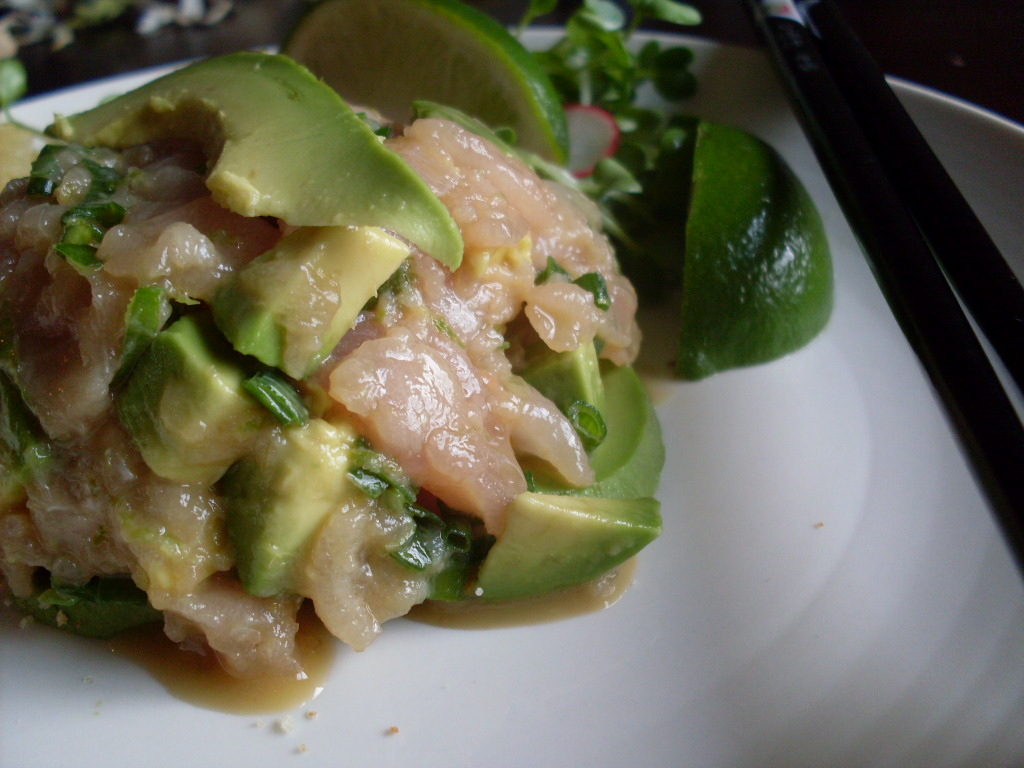
Pour sauce over fish mixture, toss to coat, and press it into small ramekins lined with plastic wrap, as many as you’ll need. I used two of the small Pyrex custard cups.

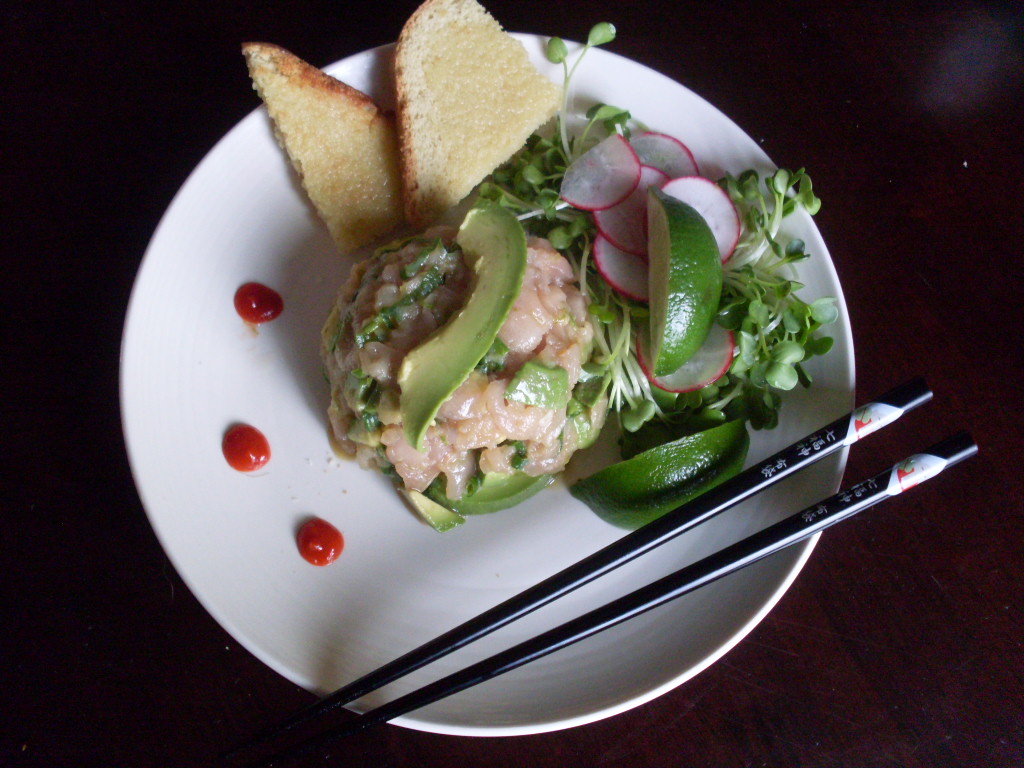
Turn mixture out onto the plates, pulling the ramekin away, and peeling off the plastic. Garnish with remaining avocado, if any, and serve with a small, light salad. Or nothing, if it’s to be an appetizer. I like this with toast points, a single slice of homemade bread quartered.

It’s a nice, bright, cool dish, and one I think we’ll enjoy throughout the summer. I wanted to keep things light, so the flavours were rather subdued. You could punch this up with a bit of grapefruit juice, or add heat with a dash of sriracha. Be creative. And then feel as if your balance has returned, and have a shower, and try not to be manic again until at least the weekend.

Also? Thank you, Gerald, for your camera advice. Look! No blur!

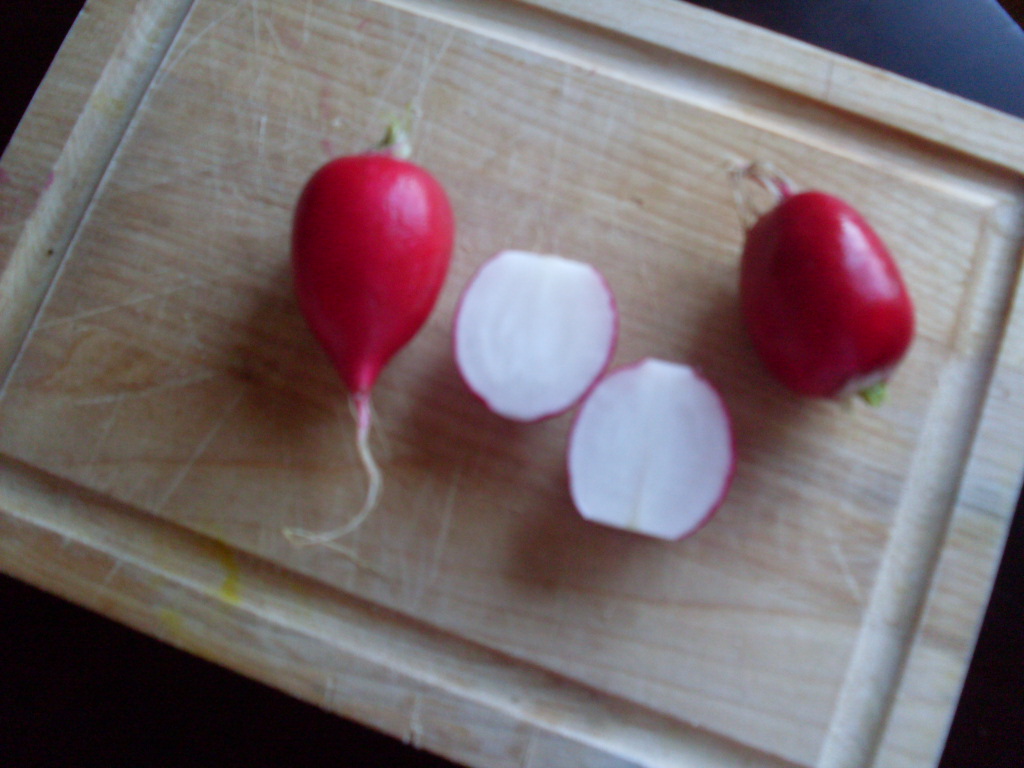
Roasting radishes brings out all the best adjectives.

I don’t know about you, but I love radishes. LOVE them. I like them raw, sliced over baguette with fresh, homemade butter and fresh-ground black pepper; I like them quickly pickled in a little bit of rice vinegar with sugar and hot red pepper flakes. I like them in salads, in egg salad and tuna salad sandwiches, and whole, eaten like miniature apples, each bite dipped in sea salt. I like them in bruschetta. There is no way that I won’t eat radishes. I love their peppery blitz on my tongue, the way they are so bright and crisp and wet, such a perfect red byproduct of water and earth.

Nick is more reluctant, and doesn’t love them like I do. He’s okay with my radishy urges, but doesn’t embrace them significantly, or even properly. I’ve never seen him pick radishes up when shopping. I’ve never caught him popping them into his mouth, as if secretly, in those quiet minutes before tooth-brushing, cat-feeding, and bedtime. I doubt he even dreams about them.

But this is not about Nick’s shortcomings as an eater. I am certain that one day, I’ll find him crouched over the crisper, teary-eyed at the way the radishes look beside the lettuces and lemons. One day, he will look at food the way he looks at video games.

Tonight we got a little closer to that day, and it was radishes that pushed him. He asked for seconds.

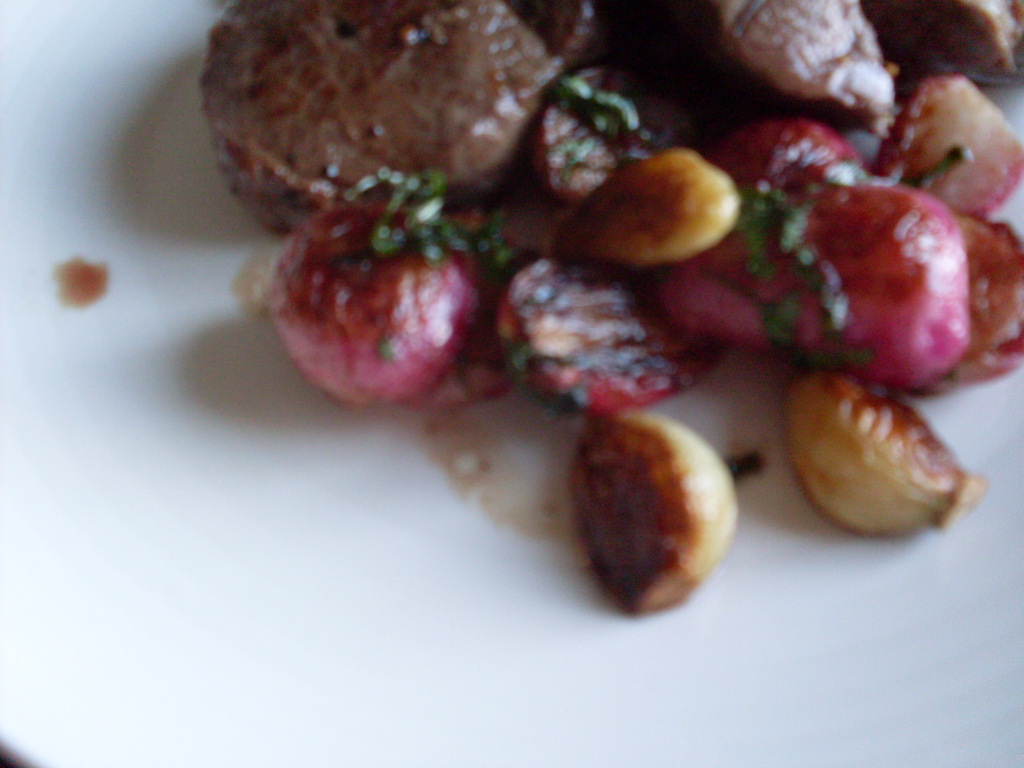
We had a couple of small pieces of venison for dinner (the second last package of venison remaining in my freezer from last fall’s hunt), but the main event was radishes, roasted with whole cloves of garlic and tossed with a pinch of fresh parsley and the gentlest squish of lemon to ever occur in my kitchen. The radish greens were tossed in with browned onions during the last minutes of their fast caramelization in the meat juices and cooking fat. There was so much black pepper! Nothing went to waste. And it was efficient – dinner was on the table within twenty minutes.

If you’ve never roasted radishes, once you do this will probably be the way you’ll come to love them most, if you don’t already adore them irrationally. Just a quick sear in a dash of oil in a pan over high heat, then into the oven for 15 minutes, and that’s it. Toss with herbs and pepper and lemon and salt, if you feel like it. That’s it, really, but here’s the recipe anyway. Make them tonight?

Roasted radishes and garlic

(Serves two as a generous side dish.)

  • 1 bunch radishes, greens removed
  • 6 cloves garlic (or more if you feel like it)
  • 2 tbsp. olive oil
  • 1 tsp. chopped fresh herbs, such as mint, basil, or parsley
  • 1 tsp. fresh lemon juice
  • Pinch of salt

Preheat your oven to 425°F.

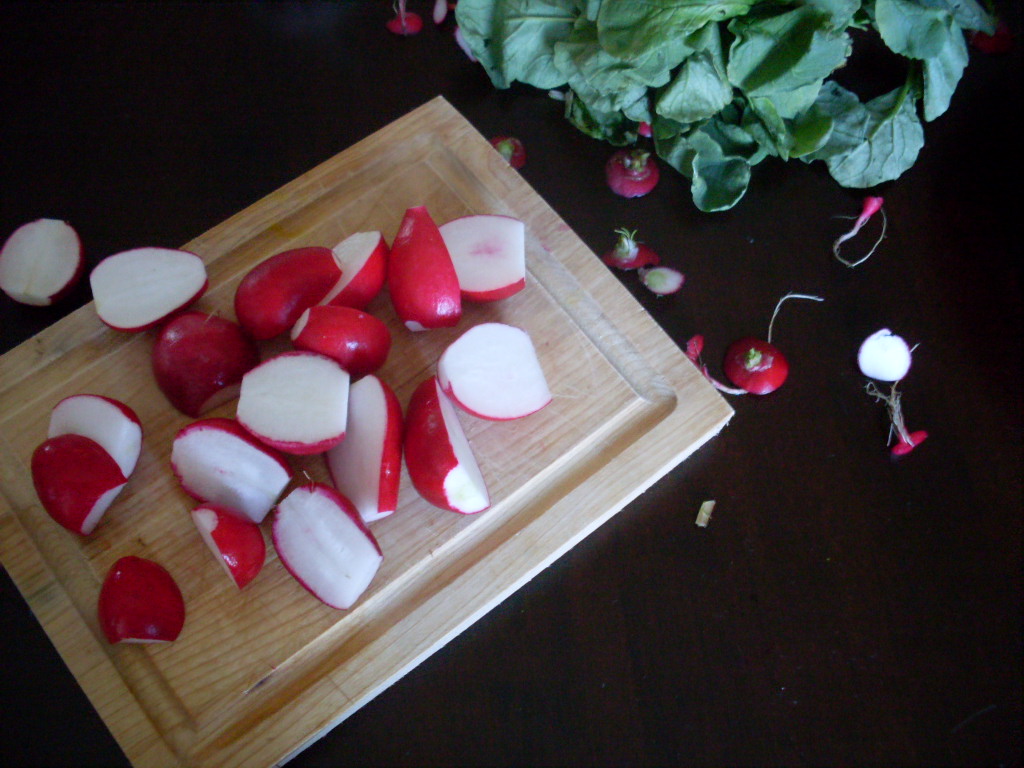
Trim each radish, top and bottom, removing the root and top. Slice in half lengthwise, if your radishes are of average radish size, or in quarters if they are very large. Peel garlic, and trim the tough ends off if necessary.

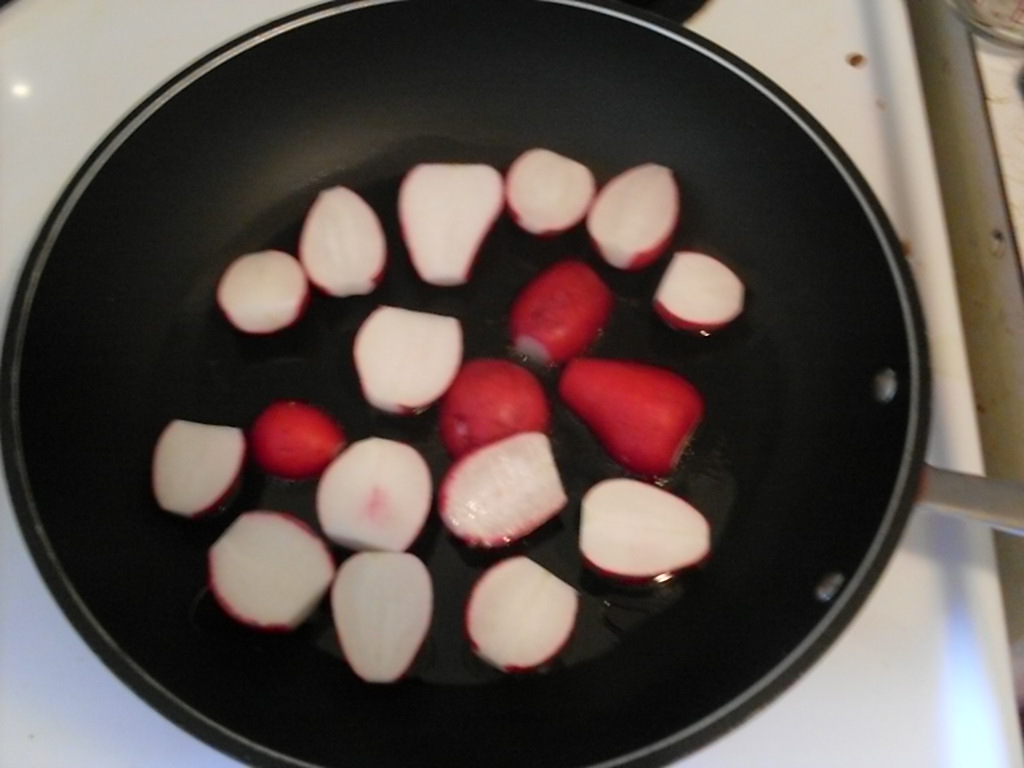
In a sauté pan that you can use on the stove-top and in the oven, over high heat, heat olive oil. Add radishes and cook quickly, no more than a minute per side. Add whole cloves of garlic, and put into the oven, uncovered.

Cook for 15 to 18 minutes, turning radishes and garlic each once halfway through cooking. Both sides should turn a deep golden brown.

Toss radishes and garlic with herbs, lemon juice, and salt, and serve immediately. Take a blurry picture, then eat.

They turn sweet, almost buttery. They lose their peppery taste, but take on something different – still bright and springy, but a little more subtle, and silky on the tongue. They are very good as they are (with meat and their sautéed greens), or mushed up with soft cheese on fresh bread. Like cooking cucumbers, this is the kind of thing that everyone should know about by now but for some reason doesn’t. But you do now! Now there’s no excuse. Enjoy!

Beurre blanc: A tasty conclusion to a very good day.

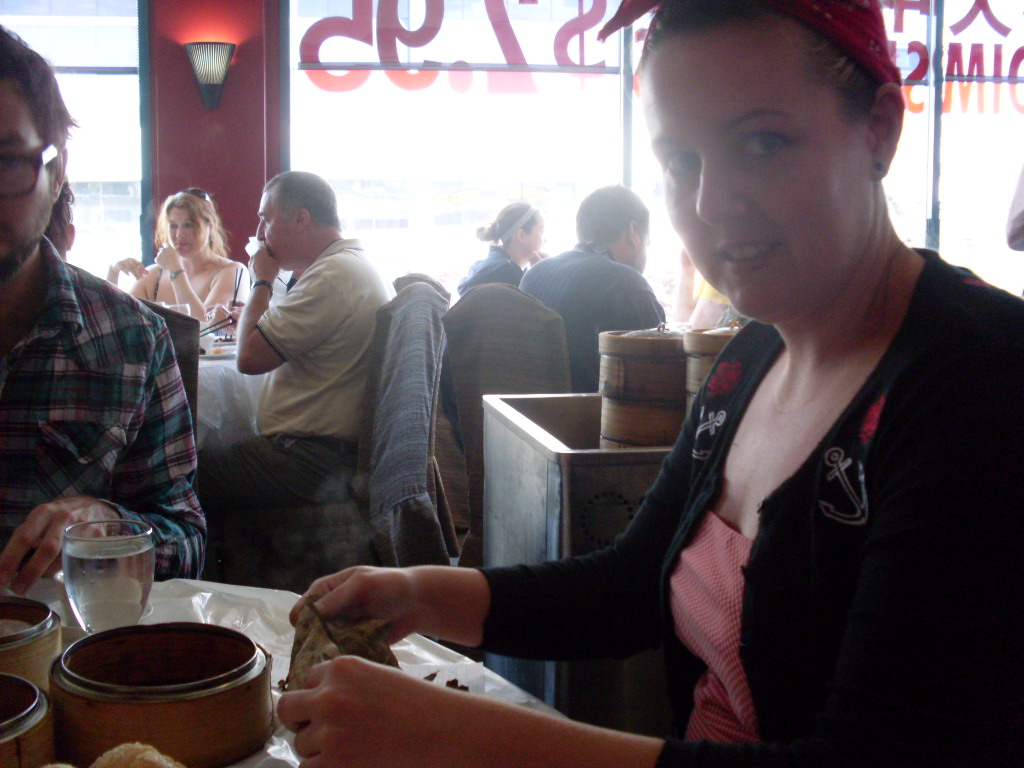
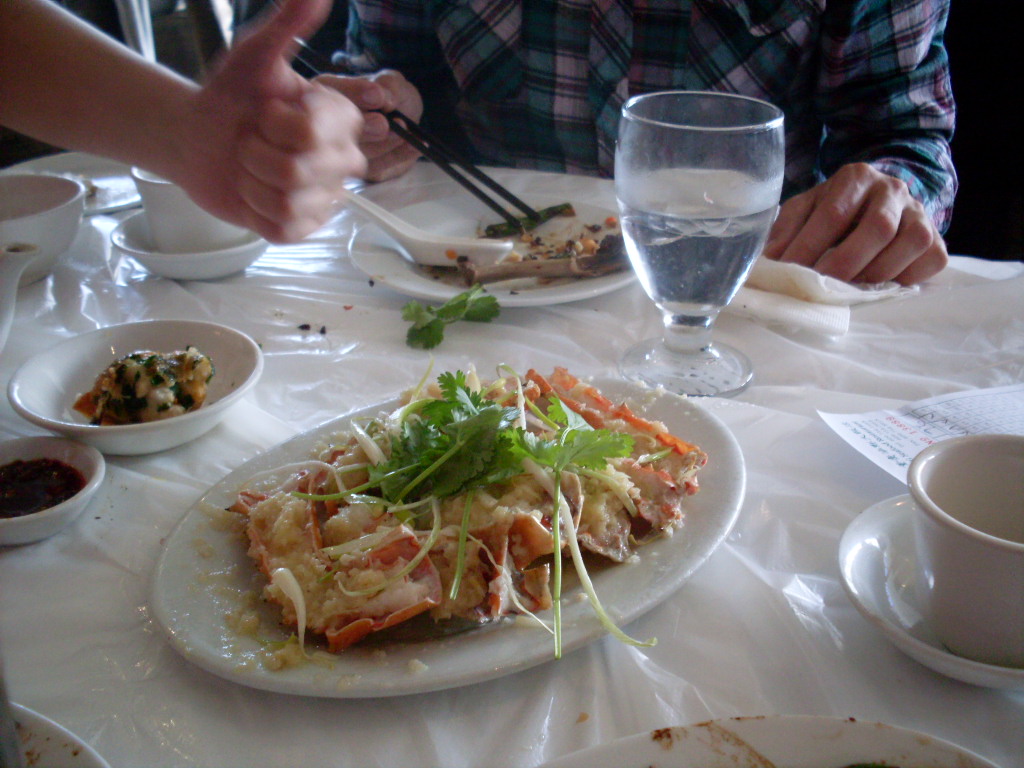
Yesterday was one of those very good days that required no vehicle and no long trips away from home. The day started groggily, and with starvation, so we walked over to Szechuan Chongqing for spicy green beans and siu mai and king crab with garlic, among other things, and to meet up with Theresa, Mick, and Corinne.

We ate until we were sure we were sure we’d explode, which is how you’re supposed to do dim sum, and then waddled our separate ways, with Nick and I headed for Granville Island and patio beer.

While there, we grabbed spices and vegetables, and two thin pieces of fish, and wine. Always wine, because if you’re going to eat white fish you need white wine to go with. Everyone in the entire market was smiling, Nick noted, and why wouldn’t they be? The sun was trying harder than it has in a long time, and there was a man with an accordion, and everything smelled fresh and all together the fragrance of ocean and roses and bread and fudge and smoked meats and maple and fruit musk was invigorating. In this city that’s smelled like wet pavement for a week, things were looking up. With the late afternoon to spare, we headed home, intent on writing and napping and that wine.

And dinner was just as easy and low-key. Nick chose the ingredients at the market – the fish and some asparagus, and in the time it took to roast the asparagus in the oven – twelve minutes – I made Julia Child’s beurre blanc, two poached eggs, and the fish, pan-fried very gently in a film of melted butter. It was the kind of meal you could eat any night of the week, easy and fast, but also so delicate and elegant that you could serve it to good-quality company. The secret, of course, is the beurre blanc, which is basically an emulsion of butter and acids, lemon and/or vinegar (or wine!), some shallots, a little bit of salt, and, if you’ve got it, white pepper.

You can make up to a cup of this by using a bit more butter, but since it’s just the two of us, I use 3/4 cup. You’ll have enough for four people with the recipe below.

Beurre blanc

(From Julia Child’s My Life in France)

  • 3/4 to 1 cup cold butter, cut into pieces about 1 tbsp. each
  • 1/4 tsp. salt
  • 1/4 tsp. white pepper
  • 3 tbsp. white wine vinegar
  • 2 tbsp. lemon juice
  • 1 tbsp. finely minced shallot

In a heavy bottomed sauce-pan, place salt, pepper, vinegar, lemon juice, and shallot over high heat, and reduce quickly until only about a tablespoon of the liquid remains.

Remove from heat, and turn heat down to low. Whisk in the first cube of cold butter, and then the second, until a cream forms. Return the pot to low heat, and continue whisking in cubes of butter, adding a new pat just as the last piece has melted into the sauce. Serve immediately, spooned over fish or vegetables. All in all, this takes about five minutes. Less, maybe, and you can do it as your fish cooks and your asparagus roasts and it will all be done together.

Serve with dry white wine. On a patio, if you’ve got one.

The acidity combined with the butter makes this a bright, surprising sauce that works well over a thin slip of fish, sole or trout, or even salmon or halibut. Also, it’s fun to say. Beurre blanc. It’s even more fun to eat.

Rhubarb cobbler.

My long-lost friend Vanessa came over the other night, long-lost because she has just re-emerged from a self-imposed thesis-writing hermitage, and we had dinner and rhubarb cobbler and talked about books and our mutual love for Lady Gaga. I have been missing women lately, because the ones I know are absurd and hilarious and we’ve all reached that boring age at which “work” and “Costco” all too often rank higher on our lists of priorities than does “witty banter” and “drinking too much on a Monday.” Well, that’s not true. Work and Costco are rarely priorities of mine, but I have so many bills and we always seem to be low on toilet paper. But you know. You know?

It’s hard to justify complaining, though, and there are far worse things happening in the world than my bad mood. And while I am crabby this week, I did find that baking and witty female company made things a little better. Here’s a recipe that you can use if you need to feel better, or to serve the smart, funny someone you’ve been missing, or to the one that’s still around because she has the good sense to not to leave you alone too long. It’s a plain old cobbler recipe made spiffy with a few unexpected flavours – rhubarb and rosemary and lemon zest. All good things, and don’t forget the ice cream.

Rhubarb cobbler

Cobbler:

  • 2 cups all-purpose flour
  • 2 tbsp. granulated sugar
  • 1 tbsp. lemon zest
  • 2 tsp. baking powder
  • 1/4 tsp. salt
  • 1/4 cup butter, at room temperature
  • 1/4 cup milk
  • 1 egg, lightly beaten

Filling:

  • 3 cups chopped rhubarb (slices should be no more than 1/4-inch thick)
  • 2/3 cup granulated sugar
  • 1 tsp. lemon juice
  • 1/2 tsp. finely chopped fresh rosemary
  • 1/4 tsp. salt

Preheat your oven to 350°F.

Grease a 1 1/2-quart casserole dish with butter, and into it toss rhubarb, sugar, lemon juice, rosemary, and salt. Stir to coat rhubarb.

In a bowl, combine flour, sugar, baking powder, lemon zest, and salt. Add butter, mixing until dry ingredients begin to form crumbs, then stir in milk and the egg. Stir until dry ingredients are just moistened.

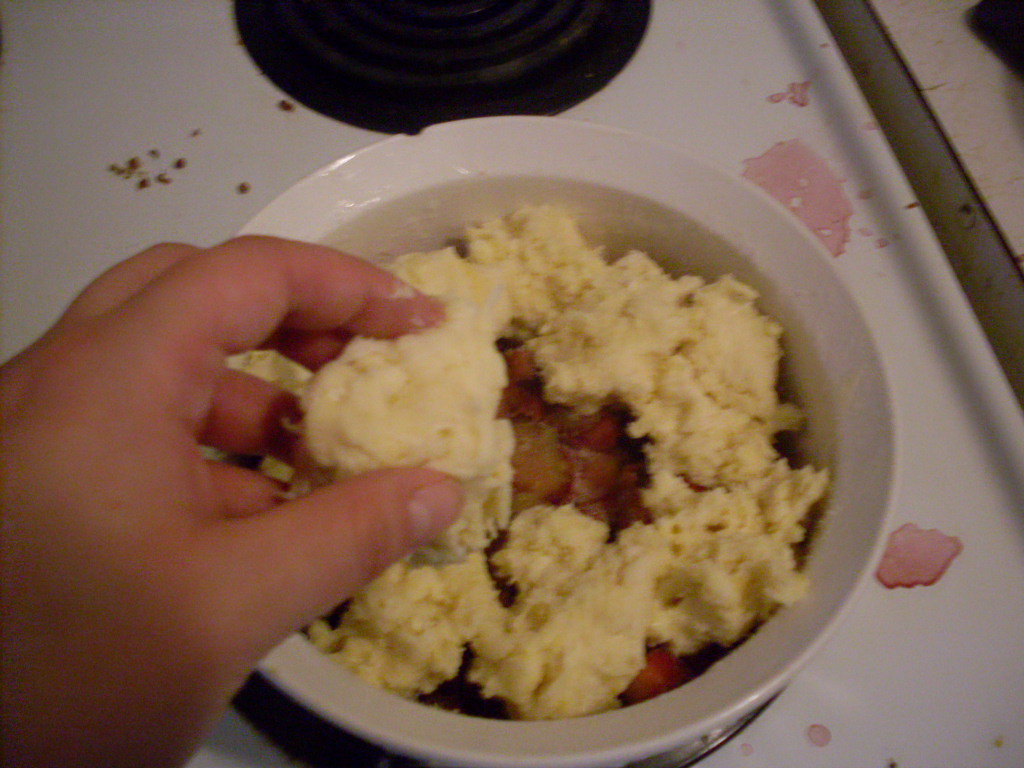
Using a spoon or your fingers, pluck golf-ball-size rounds from the bowl and place on top of rhubarb, one ball at a time, until there is no dough left in the bowl and the rhubarb is mostly covered. You can smooth it down if you want, but I never bother. “Rustic” means that it looks homey and didn’t require fussing.

Bake for about 30 minutes, or until the top is golden and the rhubarb mixture bubbles around the sides. Let cool 10 minutes, then serve warm, with ice cream. I forgot the ice cream, and really noticed the lack of it.

The rosemary in this is what makes the whole thing magic. It might seem bizarre, but it totally works – I learned about it from Grace, and it rates as highly on the list of things I learned as the time I figured out how to multiply nines. Please do try it – there’s still rhubarb growing, as the season got off to a rocky start and it’s just beginning to really thrive. And be sure to demand company – you can ask her to pick up ice cream on the way. French vanilla is preferable.

Cinnamon breakfast bread.

Amazing what one’s draft folder sometimes contains! I went to clean it out today because I start a lot of things and never finish and I don’t need reminders that I am flaky and noncommittal, and discovered that I went to all the trouble of typing out the recipe for my lazy breakfast bread, and then discovered that all the blurry pictures were saved to a folder on my desktop. So, it’s like the post wrote itself, really, and I am just relaying it to you now, after the fact.

But I’ll tell you about the bread anyway, because this is the kind of thing you can make for brunch when you forget until that morning that you had invited people to your apartment for brunch and you have nothing but canned tomatoes and a bag of frozen peas to feed them. The bread only requires one rise, and is essentially cinnamon buns in loaf form. By using fresh-made cornmeal mush, you get the advantage of heat in the dough, which speeds up the yeast proofing and dough rising, and it also lends a nice texture. You could also use cream of wheat or oat bran – whatever fine-textured hot cereal you have on hand will do.

This not a bread with a lot of complex, yeasty nuances, but that’s not the point. The cinnamon and sugar are the point, and when you’re short on time or just don’t feel like waiting, this is a good go-to loaf. You can fill it with things other than cinnamon and sugar if you prefer – cheese and bacon are always favourites, and sundried tomatoes and herbs are also nice. You could use raisins, but I hate raisins, so I’ll never be able to tell you whether that variation is good or not, but other dried fruits (with butter!) might be interesting. Play with it. And if you have time, give it a little bit longer to rise – it’ll puff up more, giving you more loaf to enjoy later.

Cinnamon breakfast bread

Bread:

  • 1/4 cup cornmeal
  • 1/2 cup water
  • 1/2 cup milk
  • 1 tbsp. butter
  • 1 tsp. granulated sugar
  • 1 package yeast (2 1/4 tsp.)
  • 2 cups all-purpose flour, plus extra for kneading

Filling:

  • 1 tbsp. butter
  • 1/2 cup brown sugar
  • 1 tsp. cinnamon

In a small pan, cook cornmeal in 1/2 cup of water. When water has been full absorbed by cornmeal, stir in milk, butter, sugar, and yeast. Let stand five minutes.

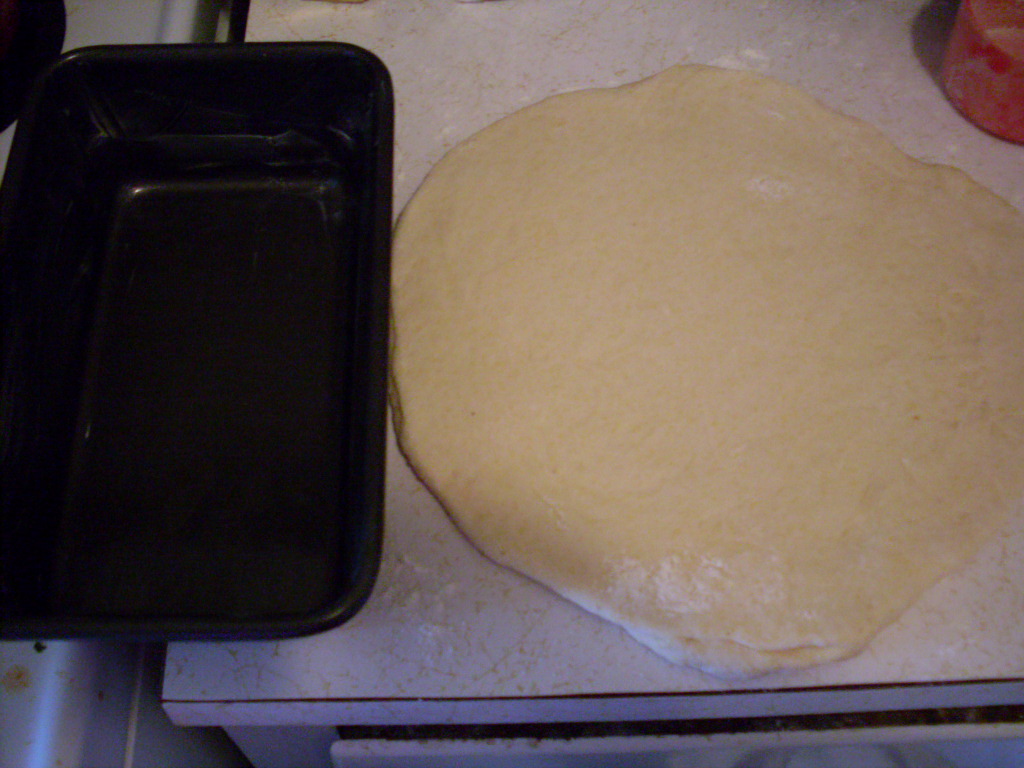
Measure flour into a bowl and pour warm corn/yeast mixture over top. Mix well, and then turn out onto a floured surface to knead. Knead 10 times. Cover and let rest, 10 minutes.

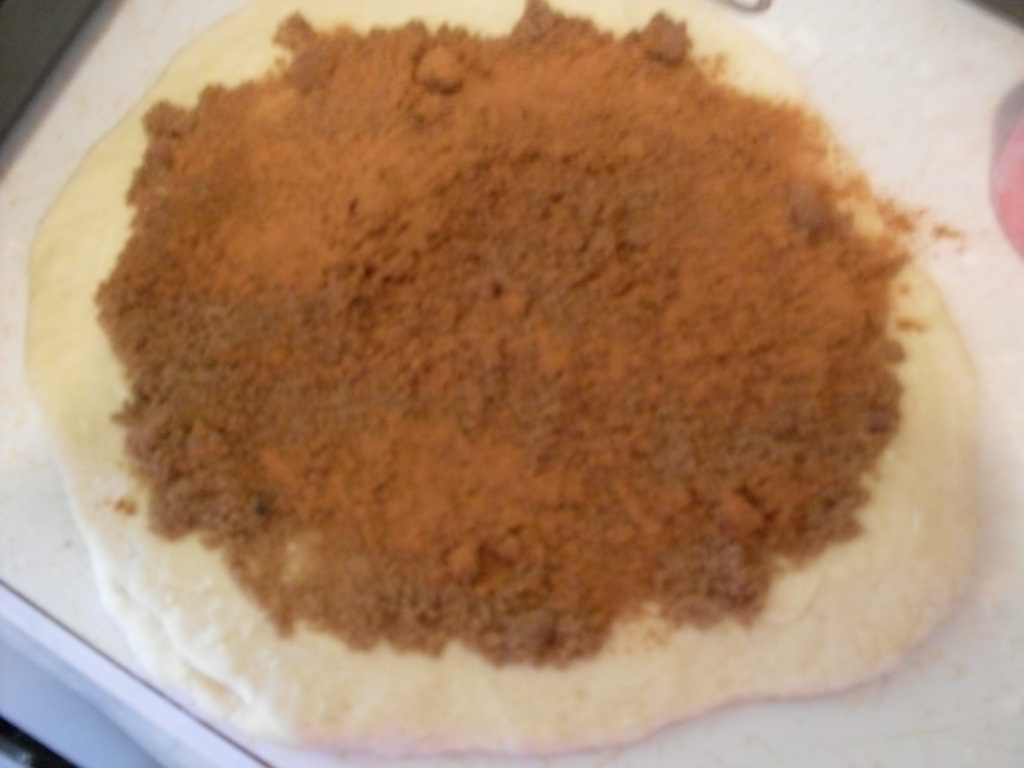
Grease a 9″x5″ loaf pan with butter. Set aside. Roll dough out until it is 9″ wide and about 13″ long. Spread with butter, leaving an inch on the outside on all sides. Sprinkle with evenly with brown sugar, pressing down on sugar with your hands to flatten it. Sprinkle with cinnamon.

Roll width-wise, tucking the edges of the dough in as you go. You should end up with a log that will fit quite nicely into your pan.

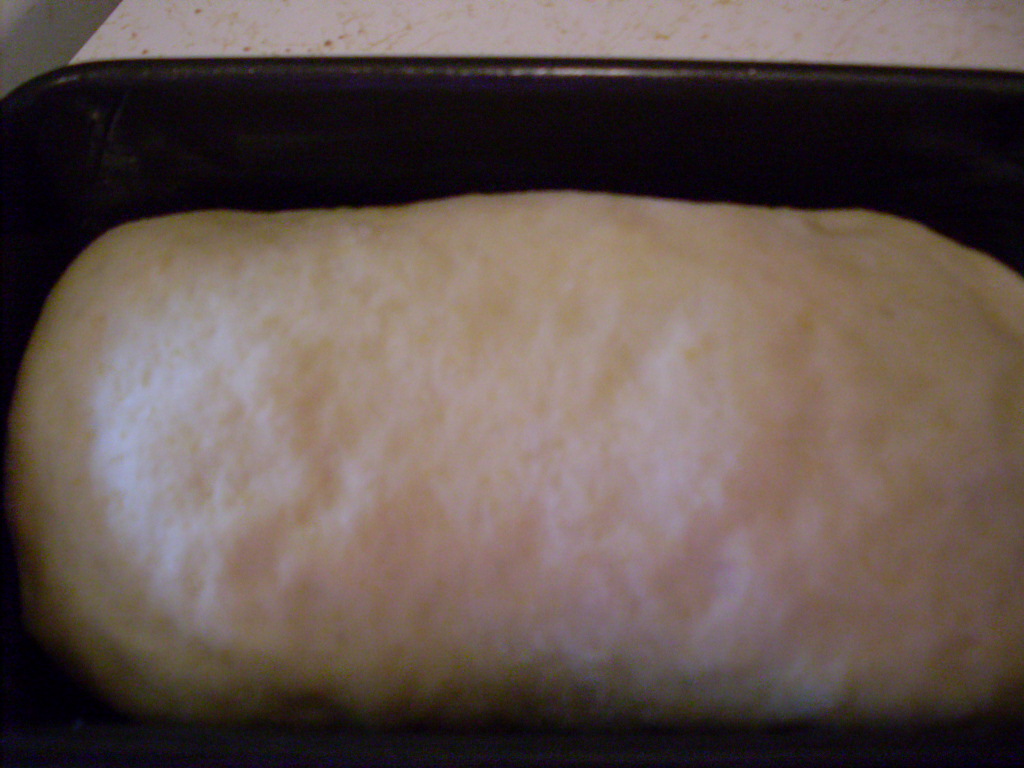
Cover with plastic and let rise, 30 to 60 minutes.

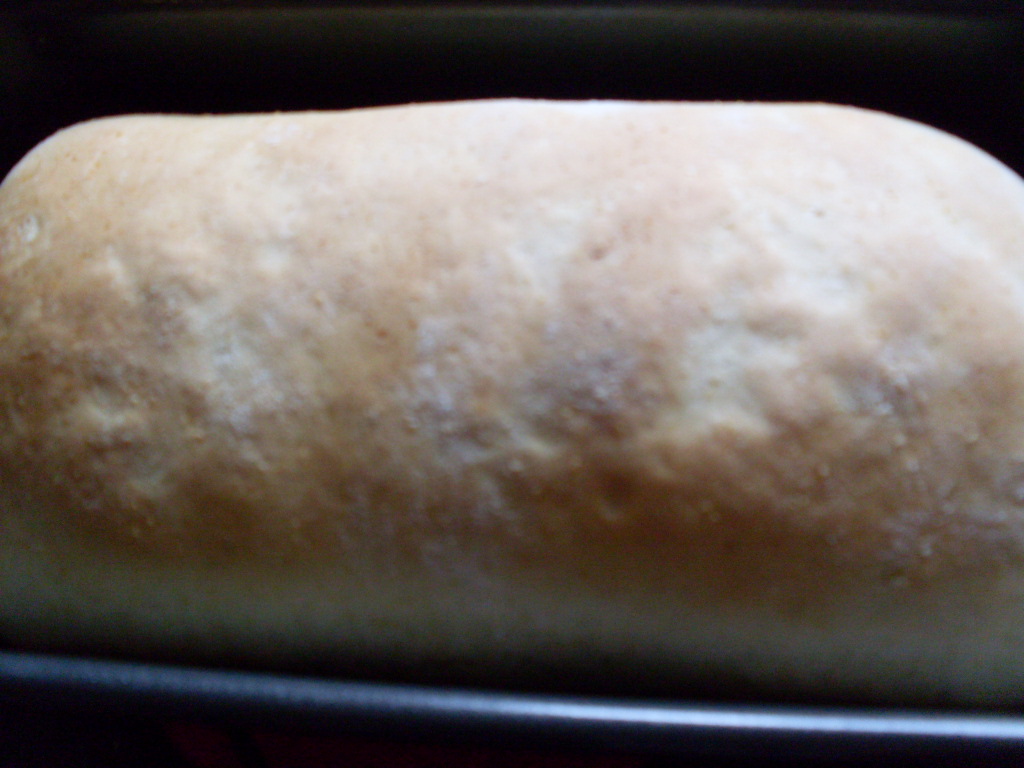
Bake at 375°F for 20 to 25 minutes.

Let cool for five minutes in the pan, and then turn out onto a wire rack. Slice and serve warm, with butter. What you’ll end up with is a delicious cinnamon-bun-type loaf that, if you’re lucky and there’s leftovers, makes a fantastic French toast for breakfast the following day.

There. That was easy! And with the little effort I put into this one, I feel that the next thing should be a little premeditated, a bit more effort.

Oh! And thank you to Linda for her kind words on her blog! I feel like I should respond with a list of my own favourite food sites, so I will do so later this week. I will do that, and maybe something with radishes, because they are so in season and so lovely right now. So, stay tuned. Something good will happen here, I promise.

A delicious thing to do with sardines.

Kitten and I are alone this weekend, as Nick is off to a rainy lake four hours away to fish for trout/drink on a boat. And so I will stay in this rainy city, with tinned fish and my pajama pants, and drink on my couch. At least tonight. Though this work-week was only three days, they were three busy, non-stop days that required focus and effort – neither are strengths of mine.

So I’m staying in, alone. And instead of cooking, I’ve opted instead to “assemble” a meal, and have put together a grazing platter that should carry me through the evening, if I am able to stay awake. The centre of the meal is a thing with sardines, and it’s based on this anchovy thing I really like called anchoïade.

Anchoïade is a French thing, and at its most basic, it’s a potent mix of anchovies, olive oil, lemon, and garlic. It’s delicious, but I can’t quite justify a large dish of the stuff because anchovies are not a particularly sustainable ingredient these days. Good news though, sardines are. They’re plentiful, and they’re from close-by – there’s a cannery in California in Monterey and when I eat them I think of John Steinbeck because I love that book and because I literally hemorrhage bliss when an item of food tickles my book fancy, if you know what I mean.

I hope you enjoy this little adaptation. It’s for Linda, who asked for a sardine recipe; she’s expecting a baby, and sardines are all kinds of good for moms-to-be. Wander over to her place and say hello!

Sardinoïade

  • 1/2 cup whole almonds (skins on), toasted
  • 2 cloves garlic
  • 1 tin sardines packed in olive oil (smoked, if possible)
  • 1 tsp. lemon zest
  • 1 tbsp. lemon juice
  • 1 tsp. grainy dijon mustard
  • 1/2 tsp. salt
  • 1 tsp. pepper
  • 1/4 cup good olive oil

Okay. You can do this two ways.

The easy, smooth-textured way to do this is to grind almonds and garlic in a food processor, then add remaining ingredients (add the oil from the sardines too, don’t forget!) and pulse until the mixture achieves the texture you prefer. I like this way for parties and things where you can just put it out without having to explain too much about it. It will resemble pate, and it will work as either a spread or a dip.

The other way, which is also easy but has more steps, is to chop the almonds as finely as possible (or as you like), mince the garlic, and mix them both together. Dump the tin of sardines into the mix, oil included, and mash it all up together until it’s a texture you like. Stir in remaining ingredients until well combined. This is better as a spread. It’s much less attractive, but just as, if not MORE tasty.

Scoop either variation into a ramekin, and drizzle the top with good oil. Serve either on a plate with pickles, slices of hard-boiled eggs, and slices of baguette. You must also have wine or sparkling water. Pajamas optional, but always implied.

If you have any left over the next day, it’s nice to thin it out with a bit more olive oil and toss pasta with it, topped with fresh herbs and grated Parmesan cheese.

Enjoy!

Good olive oil, run-on sentences, and bread soup.

I have long felt hard done by for the lack of a large Italian grandmother in my life. My grandmothers have all been quite fantastic, of course, but we’re so Canadian that one not-too-distant relative was mentioned briefly in a Farley Mowat book, which I am pretty sure is the Canadian equivalent of boasting ancestors arriving on the Mayflower. Which is not to say that Canadian is a milquetoast heritage – it’s got more than its share of culinary ooh-la-la, and not just what Americans call Canadian Bacon (which is actually just ham). But what it doesn’t have is olive oil.

You know where does have fantastic olive oil, though? San Francisco. So maybe an Italian grandmother is not entirely what I need – maybe I need an American BFF instead.

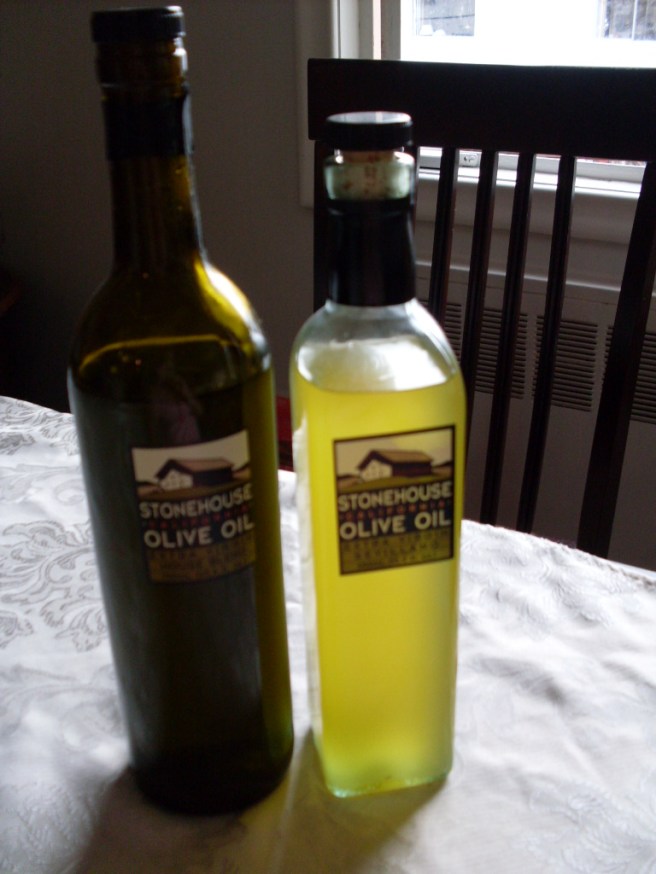
Years ago I discovered the good olive oil, and it comes from a shop in the Ferry Building on the Embarcadero. It’s made from organically grown California olives, and I would do some very morally questionable things to have access to a lifetime’s supply. Unfortunately, they don’t ship to Canada. It’s like being in love with someone who doesn’t return your calls.

So when we went back recently, I had but two orders of business: get myself to City Lights Bookstore which is the kind of place I nearly fall down weeping at the entrance to which means that I chose the right major in spite of the long-term earning potential I sacrificed; and, get to the Ferry Building for the good olive oil. I misjudged the distance from Fisherman’s Warf to our oily destination, causing my party of five to have to hike nearly thirty minutes in bad footwear, but it was totally worth it. For me.

What I love about the good olive oil – Stonehouse Olive Oil, if you’re too lazy or captivated by my elegant prose to click the link above – is that it tastes how I imagine fresh olive oil in Italy would. They sell each batch the same year it’s harvested, so it’s as fresh as you can get without actually sticking your face under the olive press.

Oh, San Francisco – what scandalous, depraved, excellent things I would do to be able to live with you forever.

Anyway, I got the oil, and I’m hoarding it. Except I used some tonight, a good amount of it for someone who is unsure when they’ll be back to the States to get more. We had soup – an enormous pot of it, because it’s the week before payday and we’re just back from vacation and OMG-broke, like, so much so that I jammed the vending machine at work with foreign money this morning trying to get an orange juice. I make big pots of soup when I’d prefer to stretch a meal into three to avoid starvation, and this, made of pantry staples, will take us handsomely through lunch and all the way to dinner tomorrow. For regular households, that means eight to ten servings. It’s easily adapted to smaller feedlots, however, so fiddle with it until it’s to your liking.

Bread Soup

(Serves 8 to 10.)

  • 1/4 cup good olive oil (I don’t believe I ever specify extra-virgin, but it’s what I mean by good olive oil)
  • 5 cloves garlic, roughly chopped
  • 1/2 lb. stale bread, cubed and toasted (about four thick slices)
  • 2 28 oz. cans whole tomatoes, plus juice
  • 1/2 cup red wine
  • 4 cups vegetable or chicken stock
  • 1 19 oz. can cannelini or white kidney beans
  • 1/2 cup grated Parmesan cheese
  • 1/2 cup chopped fresh parsley (flat-leaf is better, but the curly stuff is okay if that’s all you can get)
  • 1 tbsp. lemon zest
  • As much pepper as you feel you need

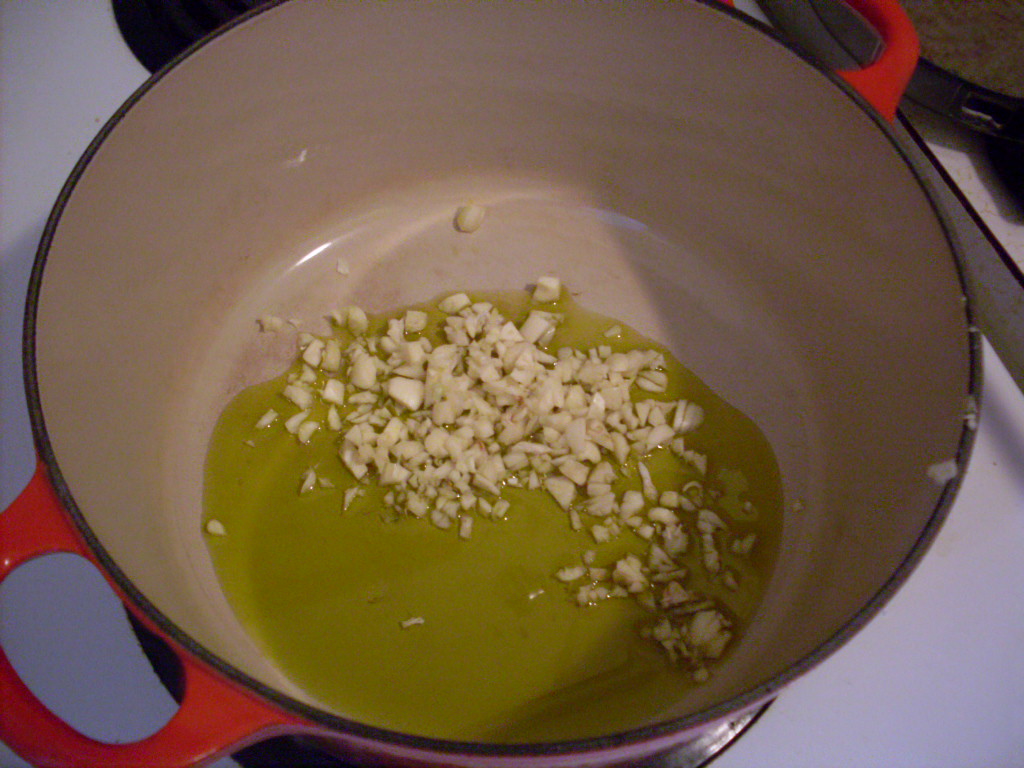
In a large pot over medium-high heat, warm olive oil. When olive oil is hot, add garlic, and sauté until fragrant and lightly golden, about two minutes.

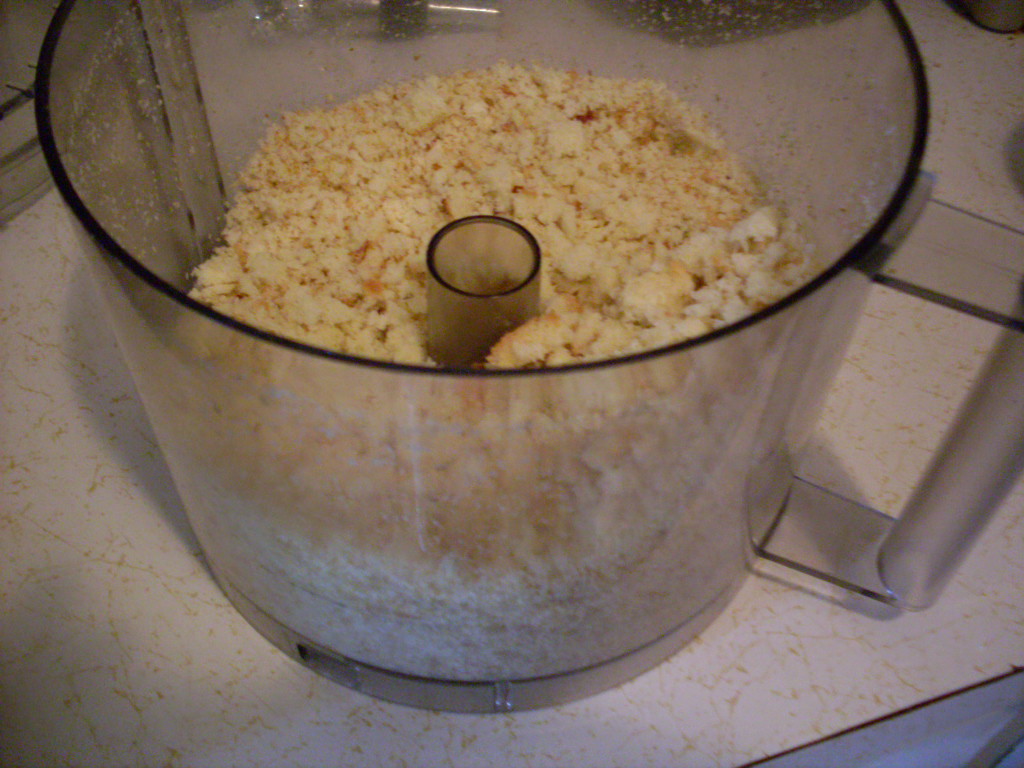
Meanwhile, whizz bread cubes in a food processor or blender until you end up with coarse crumbs. You don’t want to grind the bread too finely, or you will end up with a soup with boring texture, and no one wants that.

Add bread crumbs to the oil, and stir to coat. Immediately begin squishing tomatoes into the mix, adding juice quickly and scraping the bottom of the pot to ensure nothing burns to it. Add the wine. Stir again. Add the broth.
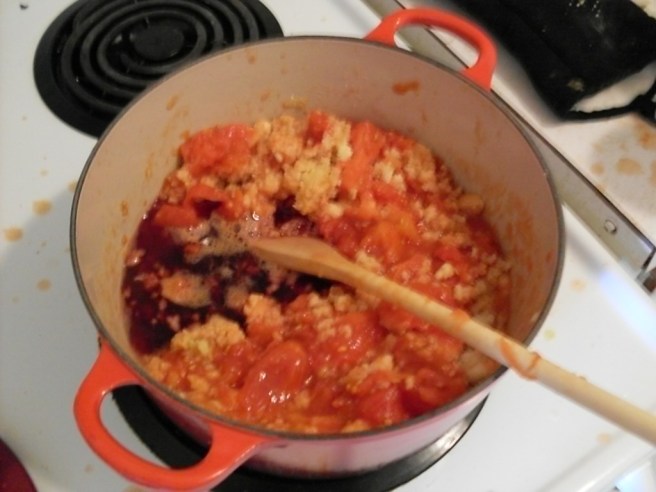
Reduce heat to medium, and simmer, uncovered, for 30 minutes.
After a half-hour, add beans, cheese, parsley, lemon zest, and pepper. Simmer an additional five minutes, until parsley has wilted and the whole thing smells magnificent.

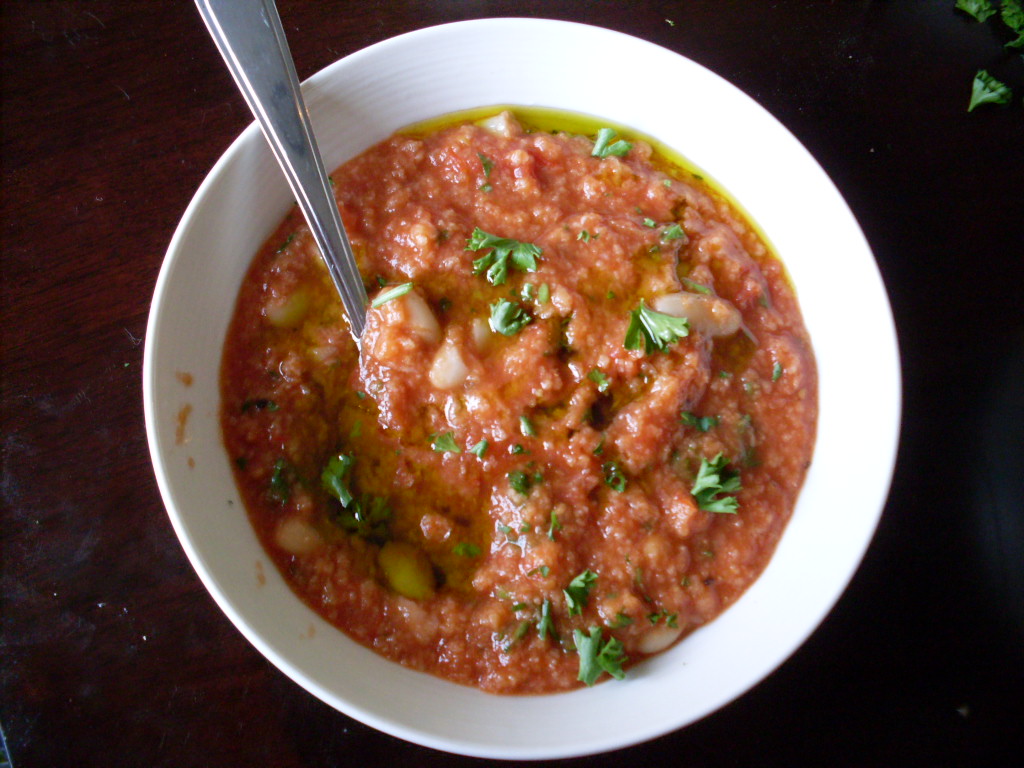
If it’s a dark and stormy night and the water runs down the window so fast your cat can’t keep up with the drops, serve piping hot, with a swirl of your favourite olive oil, a lemon wedge, and a fat hunk of crusty fresh bread. And wine. Red wine. If it’s not, this is pretty nice chilled, like a hearty gazpacho, but serve with a charming white wine, a Pinot Grigio or a Sauvignon Blanc instead.

It’s delicious on the first round, like a bread and bean stew, but even better the second day. The hallmark of a quality meal, if you ask me and my imaginary Italian grandmother.