Toddler muffins.

Never eats.

I read the books about French babies and how they eat everything, and I assumed that mine would be an enthusiastic omnivore – how could he not be?! And in the beginning, he was – he ate his purees, grains and yogurts happily, lapping up anything I put in front of him and smacking his lips with great delight. Around the time we began to introduce textures, though, something went horribly awry.

The kid doesn’t eat.

Well, he doesn’t eat much, I should say. He’ll eat oatmeal, and applesauce, and yogurt, and peanut butter toast, and all the crackers. He likes cookies, and will eat just about anything I blend into a mush, except for purple things. He likes watermelon in slices, but won’t eat a sliced strawberry. Blueberries and grapes are untouchable, potatoes and pasta an insult. He was handed a hot dog at a birthday party and abhorred it. He tasted a bite of hummus off a cracker at Costco and burst into tears.

Needless to say, he is not an adventurous eater, though he did taste a snow pea the other day and took two bites before throwing it on the ground, which I think was progress. One day he might eat a green bean! One can hope. I keep handing him things, and putting food in front of him, which is about the best I can do, right? I don’t know.

His daycare requires us to send him meals, and I am told that he eats brilliantly when he’s there, so I send him nutrient-dense soups and things to make up for what he doesn’t eat at home. For breakfast, I send him muffins.

He gets all kinds – I made some pink ones for him last week that used up a pound of strawberries and the rest of my rolled oats. He’s had peach muffins, and subtly cheesy corn muffins, and gluten-free coconut flour muffins for something a little different; he likes a meal he can cart around, and a handful of carbs meets his almost all of his needs. My peanut butter-banana-chocolate muffins though, those are his favourite. And even though they aren’t a seasonal thing – I make them whenever the bananas at the little natural foods store on the corner are brown and sad-looking (and cheap).

Gross bananas.

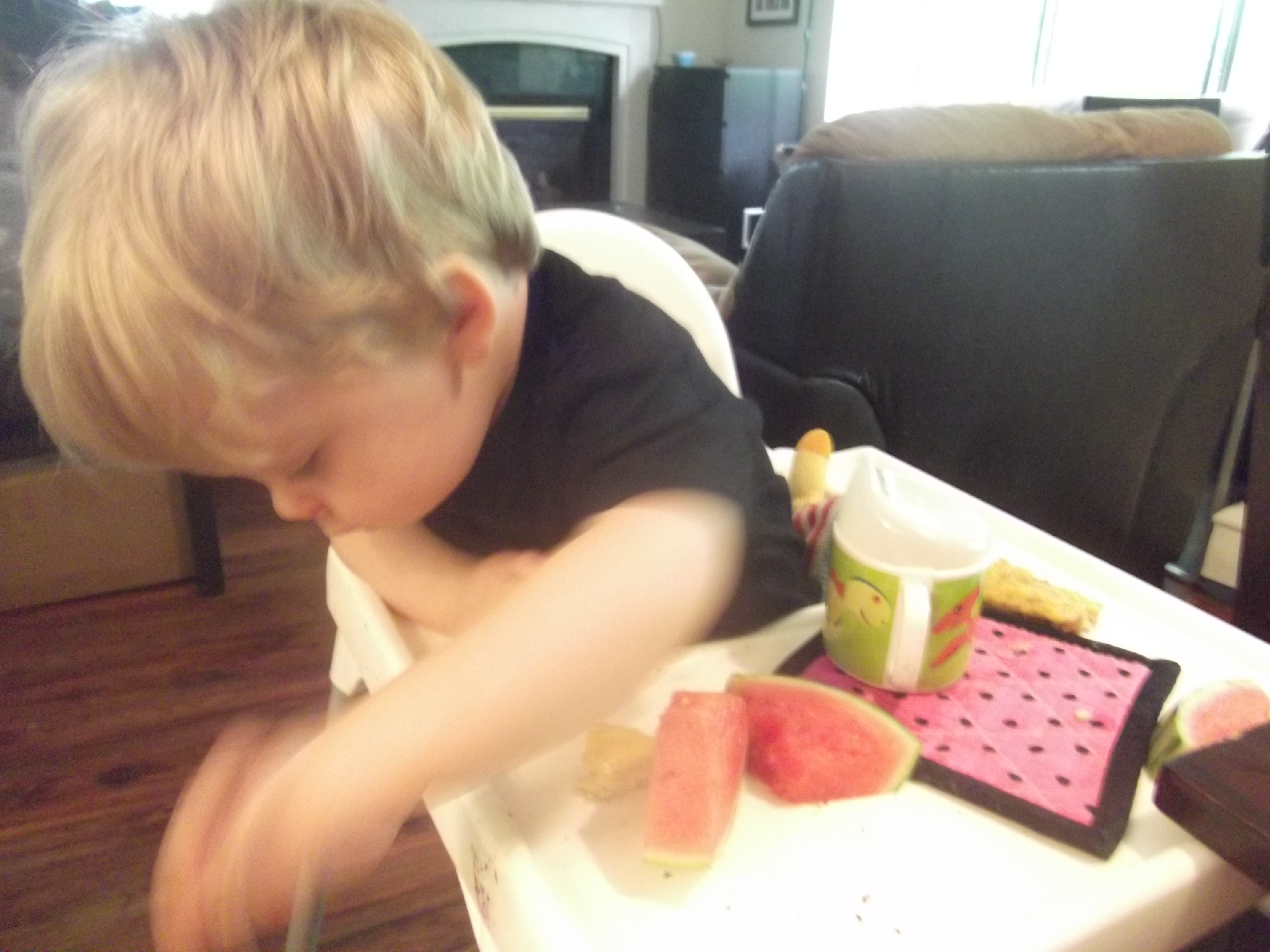
I finally got a photo of him eating one today (after posting on Facebook that I figured it would be impossible). So here’s the recipe. I like to think these are reasonably healthy.

Any of the weird ingredients can be subbed for stuff you have; I bought a lifetime supply of coconut sugar when Nick was diagnosed with diabetes because it’s a low-GI sweetener, even though it later turned out that all sugar acts like refined white sugar in the blood for a diabetic no matter how pure my intentions. You can use brown sugar. Any other oil will work fine in place of the grapeseed. You can omit the ground flax if you don’t have it, but I find that by using entirely whole wheat flour in these, the recipe benefits from the bit of leavening the flax provides; if don’t have flax and like a lighter muffin, use half whole-wheat and half white all-purpose flour.

Toddler_MuffinToddler muffins (or: Peanut butter banana muffins)
Makes 12.

  • 1 1/2 cups whole wheat flour
  • 1 tsp. baking soda
  • 1 tsp. baking powder
  • 1/2 tsp. salt
  • 2 or 3 ripe – brown – bananas (if you have smaller bananas, use 3; if you only have those giant monster ones that are like a foot long, two will suffice), mashed
  • 1/2 cup peanut butter (chunky or smooth, whatever you prefer)
  • 1/2 cup coconut sugar
  • 3 tbsp. cocoa powder
  • 1 tsp. vanilla extract
  • 1 egg
  • 1/4 cup grapeseed oil
  • 1 cup semi-sweet chocolate chips
  • 1/2 cup sunflower seeds
  • 1 tbsp. ground flaxseed

Preheat your oven to 375°F. Grease a muffin tin, or fill the tin with 12 paper liners. I am cheap, so I just grease.

Combine flour, baking soda, baking powder, and salt in a bowl. Set aside.

In another larger bowl, mix bananas, peanut butter, coconut sugar, cocoa powder, egg, and oil until thoroughly combined. Stir in chocolate chips, sunflower seeds, and flaxseed – mix well.

Stir the dry ingredients into the wet ingredients and mix until just combined.

Spoon into your prepared muffin tin. Bake for 15-20 minutes, until a toothpick inserted into the centre of one of the middle ones comes out clean.

Remove from the oven and cool in the pan for five minutes before turning the muffins out onto a wire rack to cool. If you are going to freeze these for daycare, let them cool all the way before putting them into a large freezer bag. If you like bananas and are just going to eat these yourself, go nuts.

Peanut butter chocolate banana muffins

Here are the B-sides – a handful of this morning’s attempts to catch the toddler in action.

Bok choi with mushrooms.

bokchoi

I always think I am going to have so much time, and then I commit to a million things and am surprised when I can’t do any of them well. Well, no more! (That is probably untrue – just ask me to do something.) This summer has seen a shift in my priorities; I want to do a lot of things better, and, I hope, a few things pretty well. I want to make pickles and play outside and write books and blog posts and can homemade baby food for my friend who isn’t doing so well at the moment, and I want to do all of this without feeling like I’m letting anyone/everyone down.

So, with no small amount of despair, I let go of our community garden plot – we simply weren’t able to keep up with it. To be honest, I’m sure that we would have been kicked out eventually anyway – we hadn’t been showing up anywhere near often enough.

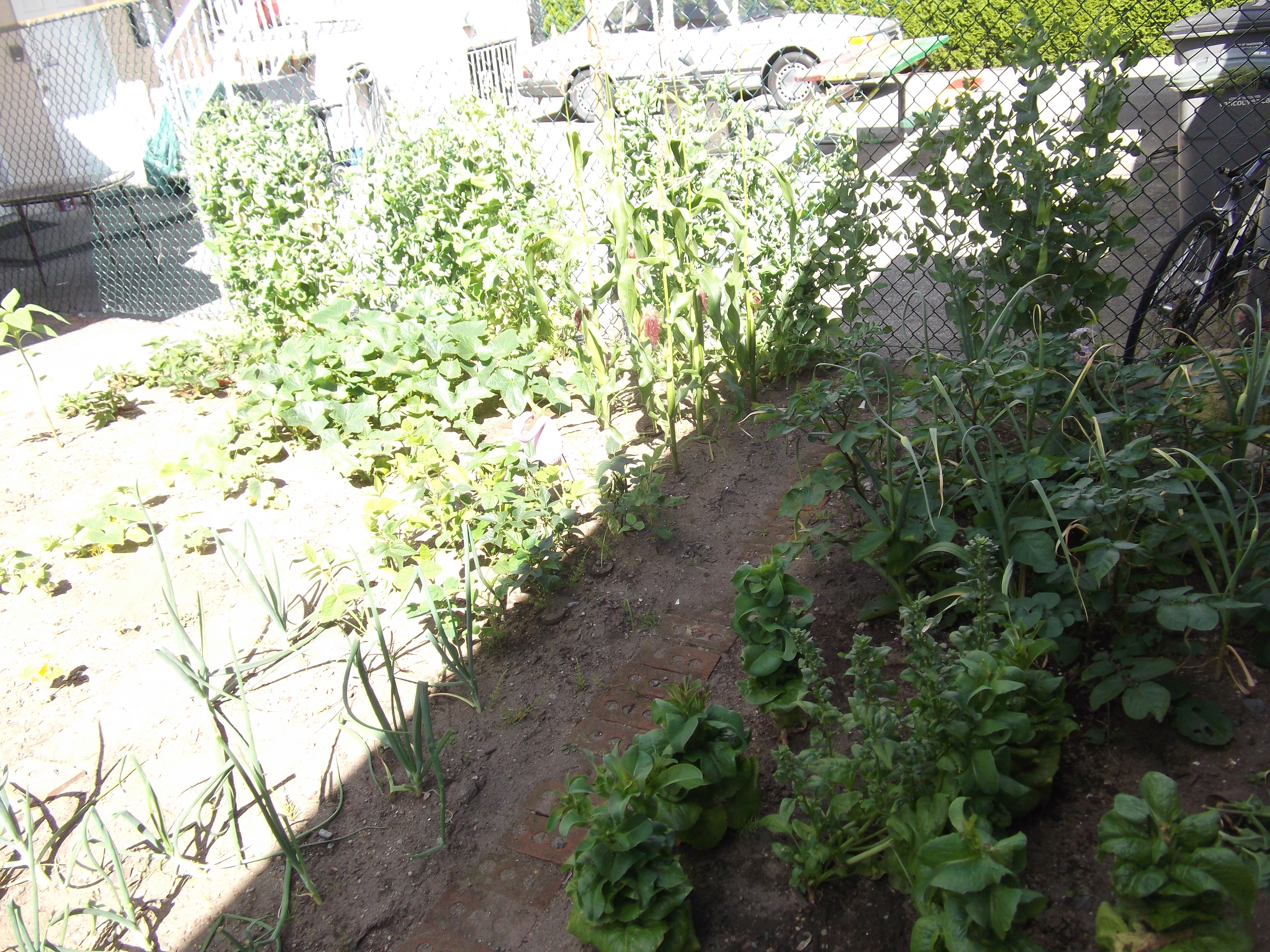
The community garden is a 15-minute drive to a spot we used to be able to walk to, and when we moved in December it was to a place across the street from a friend who has abundant garden space that she let us have access to. This new spot isn’t as pretty as our last place, though it is a lot bigger. Last night to make a salad I just hopped the fence across the street and thinned some of the beets, pulled a couple of radishes, and snipped some leaves off one of the heads of lettuce. We were no longer a part of the community in our other spot; here, we are neighbours.

The back part of the garden

The nice thing about our new space being so close is that I can walk by and plan dinner around what’s currently thriving; recently, it was the bok choi. Whenever I buy bok choi, it’s in heads like thick leaf lettuce, or tiny little bunches of the baby variety. I guess we’re growing a different kind, because ours is growing in the way chard does – long stalks off a middle stem with big, soft, droopy leaves. Whatever variety it is, it’s delicious.

In the spirit of saving time (because who even has any?!), here’s a quick dish of greens and mushrooms; you can use chard, or kale, or bok choi or whatever you’re growing or have bought. It makes enough for two large side dishes, or four small ones. It takes ten minutes if you’re a fast chopper.

I hope you like – and have the time – for this one.

Bok choi and mushrooms with trout

Bok Choi with Mushrooms

  • 1 tbsp. sesame oil
  • 1 tbsp. butter
  • 1 onion, halved and sliced
  • 3 cloves garlic, minced
  • 2 tsp. minced fresh ginger
  • 1/2 tsp. dried red pepper flakes
  • 1/2 tsp. ground black pepper
  • 1/2 lb. mushrooms, sliced
  • 1/2 lb. bok choi, chopped
  • 2 tbsp. soy sauce

In a skillet, heat sesame oil and butter over medium-high heat until the butter begins to sizzle.

Add onion, and cook for one minute.

Add ginger and garlic, and both kinds of pepper.

Cook for two minutes, until everything is soft and translucent and fragrant. Add mushrooms, then bok choi, then the soy sauce, and toss the whole thing together. Cover, drop heat to medium, and cook for three minutes.

Serve with fish or barbecued meats; it would also be good with fried tofu.

DSCF5175

Roasted strawberry ice cream.

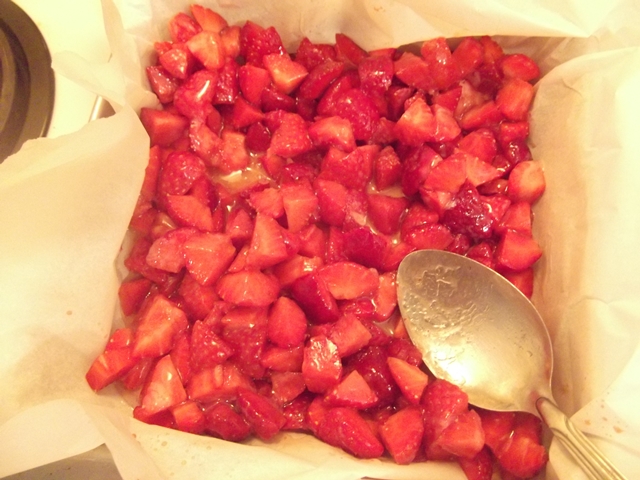
Roasted berries.

I dated someone once who didn’t care about restaurants or going out to dinner, who just didn’t get it. “Food is just fuel,” he’d say, and he wasn’t attractive or funny enough for me to overlook his dim worldview so it didn’t last long. I suppose that food really is fuel, but in my case it also doubles as therapy; my mood depends on a few good meals, and my optimism wavers if I haven’t eaten well. And anyway, sleep is just recharging but aren’t we nonetheless very particular about the softness of our pillows and the colour of our sheets? How can there be people for whom these constant, vital acts aren’t anything but to-dos to be checked off a list? Or maybe I’m just a hedonist?

I’m also a chaos muppet:

“Chaos Muppets are out-of-control, emotional, volatile. They tend toward the blue and fuzzy. They make their way through life in a swirling maelstrom of food crumbs, small flaming objects, and the letter C. Cookie Monster, Ernie, Grover, Gonzo, Dr. Bunsen Honeydew and—paradigmatically—Animal, are all Chaos Muppets. Zelda Fitzgerald was a Chaos Muppet. So, I must tell you, is Justice Stephen Breyer.” – Dahlia Lithwick, Slate (2012)

Roasted.

Swirling maelstroms are the status quo around here; adding a toddler to the mix has not brought any order to our daily proceedings. As a grounding exercise, just before everything becomes completely unhinged (and someone innocent gets hit in the eye with the  nuts and bolts), I sometimes must do something stabilizing – usually that’s some fancy food thing that requires patience and presence of mind. On Sunday, that stabilizing thing was the slow work of transforming eggs and the strawberries that had gone ruddy and cream into ice cream, a process that began with custard-making.

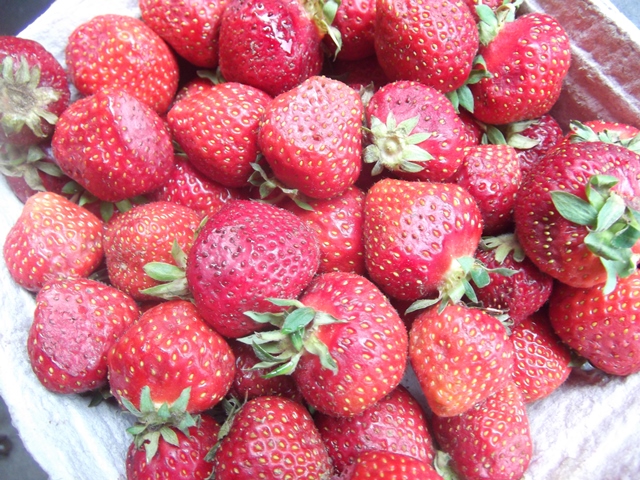
Ruddy strawberries.

Custard requires focus; failing to pay attention can turn your emulsion into sweet scrambled eggs and this recipe calls for eight egg yolks, so spoiling your custard means quite a lot of waste and probably another trip to the store and I was not wearing outside-pants because it was the weekend. You have to monitor the heat, and you have to keep stirring until the mixture thickens to the point where it coats the back of a spoon and hangs on. It is not complicated, but it does require you to fixate on the task at hand.

The custard formed the base for a bit of strawberry ice cream. When I started making ice cream I played with a few different recipes, but the one I ended up sticking with is David Lebovitz’s perfect vanilla ice cream. It is endlessly adaptable, and even if you don’t really know what you’re doing at first, you’ll get the hang of it pretty quickly.

To make this ice cream, I tweaked his recipe; I used eight egg yolks instead of five, and I used a teaspoon of vanilla bean paste instead of a vanilla bean pod plus extract. If you just have a vanilla bean, or just extract, that’s fine; my vanilla bean paste is a splurge that my aunt got me hooked on when she brought a jar of it back for me from London; I found it at Gourmet Warehouse in Vancouver ($12), but you can also find it online. I will never not have it in my cupboard.

Vanilla bean paste.

To make this strawberry ice cream and not just plain old vanilla, I roasted strawberries drizzled with honey, and poured the whole mess into the ice cream machine as it churned. This is not the simplest of recipes, though it is not hard. But you have to pay attention.

Roasted Strawberry Ice Cream

(Makes just a bit more than a quart.)

  • 1 lb. strawberries, hulled and roughly chopped
  • 3 tbsp. honey
  • 1 cup whole milk
  • 1/4 tsp. coarse sea salt
  • 3/4 cup granulated sugar
  • 2 cups heavy (whipping) cream
  • 8 large egg yolks
  • 1 tsp. vanilla bean paste or pure vanilla extract

Put a large glass or stainless steel bowl into the freezer. Preheat your oven to 350°F.

Line an 8″x8″ baking pan with parchment. Put the strawberries into the pan, drizzle with honey, toss with a spoon to coat, then stick the pan into the oven and roast the berries for 25 to 30 minutes, until they have melted down and their juices are sticky and bubbling. Cool the berries at room temperature until you can handle the pan comfortably with bare hands, then stick them in the fridge to chill.

In a saucepan over low heat, dissolve the sugar and salt in the milk.

Take the bowl out of the freezer, pour the cream into it, and set a fine mesh strainer over top. Unfortunately, Nick threw my fine mesh strainer out in a fit over how annoying it was to clean before we had a dishwasher, so I only have a very small one; its diameter is just slightly shorter than that of the mug I drink my tea out of. It’s slow going, but worthwhile.

In a separate bowl, whisk your egg yolks together with the vanilla. Slowly and gently pour the warm milk mixture – in a thin stream – into your bowl of egg yolks. Whisk constantly. Once you’ve poured your whole pot of milk into the egg bowl, pour the mixture back into the pot, scraping the sides of the bowl with a spatula so you get all the good stuff, and return the pot to the heat (should still be low). Whisk constantly until the mixture has thickened to the point where it coats the back of a spoon and stays put, which should take somewhere between ten and twelve minutes (if you’re meticulous, that’s 170°F).

Remove the custard from the heat and strain it into the bowl of cream, stirring to combine. Cover with plastic wrap, and then stick it in the fridge, minimum four hours but ideally overnight.

Pour the custard into your ice cream maker, add the strawberries, and churn according to the manufacturer’s instructions. Freeze until set.

Serve with fresh strawberries.

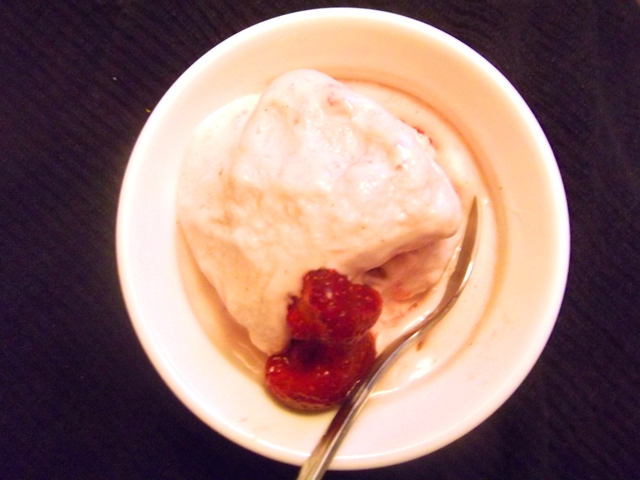
Bad lighting, good ice cream.

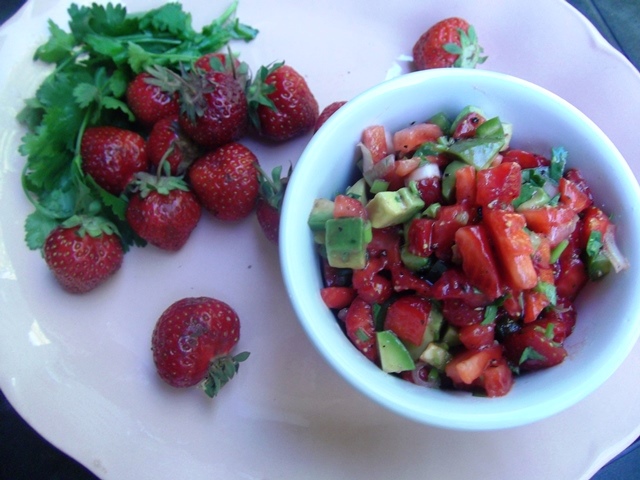
Strawberry Salsa.

Berry salsa


My kitchen is sticky with berry mess, and it is wonderful. I have blended them into smoothies for breakfast, pureed and diced them for muffins for the toddler, and fantasized about weather reliable enough for a pavlova that drips with lemon curd and macerated berries. Strawberries are back! I am not cranky about anything today.

But we have a lot of them, because I never know how much is enough until I have too many. No math skills, this one. I still have frozen strawberries in the freezer from last year’s picking/buying binge. Who could say no to summer fruit after too many months of last autumn’s apples?! Impossible.

So, we do what we can with them, and we do everything with them, and tonight because we were having fried white fish, I decided to make a salsa of them; I am very happy to report that my total inability to calculate even the simplest thing has left me with an abundance of salsa – I will get to eat it later, while watching TV, with a big bowl of tortilla chips. Success, no matter how you do the math. Especially if you can wrangle someone else to scrub the sticky off the kitchen floor and counters.

If you don’t like cilantro, I’ve made this with basil and it’s equally good. Also I take the seeds out of the jalapeno peppers but leave the membrane, because I like this salsa just a little bit spicy.

Strawberry Salsa

  • 2 cups diced strawberries, in cubes of about 1/4″
  • 1 large avocado, diced the same
  • 1 large or 2 medium jalapeno peppers, seeded and finely chopped
  • 3 scallions, finely chopped
  • 1/4 cup packed fresh cilantro, roughly chopped
  • Zest and juice of one lime
  • 2 tbsp. extra virgin olive oil
  • 1 tsp. freshly ground black pepper
  • 1/2 tsp. sea salt

Combine all ingredients in a large bowl. Toss to combine, and let sit for 30 minutes in the fridge before serving. Serve over chicken, fish, grilled halloumi, or in a bowl on its own with all the chips you can eat.

More salsa

Picnic season.

DSCF4897

There comes a point in May where it is no longer possible to wait to eat watermelon outside, and that point came today. Having been confined to our quarters for too long, we decided last week that we would spend our holiday Monday in a park with bocce balls and picnic foods and blankets laid out on the grass no matter what the sky looked like, even if there was a hint of rain.

DSCF4866

And though it was cloudy, the rain held off. There was a breeze but it wasn’t chilly, and it was warm enough for cold drinks and salads. So we sat on our blankets, and played bocce ball and badminton and chased bunnies, and some people grilled chicken wings and skewers and it was exactly how a picnic ought to be – makeshift, haphazardly planned, with the kind of foods that do not require a lot of packaging or waste to be left behind. Hours passed and we barely noticed, except toward the end when the light began to fade.

Trying to rejoin the sea.

Small boys ruin bocce ball.

Bocce.

Friends on blankets.

Eating outside is messy and important. There is something very freeing about your toddler pouring a liter of pineapple juice all over himself and the ground and it not mattering. There is something very lovely about eating while not wearing shoes. And the first picnic you take delineates the grey and the green parts of the year; a picnic is a celebration of the few glorious months when the rain falls a little less and the nights get long. It is important to celebrate.

Watermelon.

Potato salad.

Picnicky.

So gather up some fresh fruit, some sandwiches, a blanket, and some people you like and celebrate. The winter is over, the light is back, and badminton is more fun than you remember. Some time outside will restore you, and it will tucker you out. Go. Eat watermelon outside.

Tuckered.You will sleep so well.

What’s in your picnic basket?

It’s not so dark.

I take back what I said about these being dark times.

Overrun.

A perfect picnic spot.

We found our way back to the garden yesterday and this evening, and were surprised to find it bursting with life and weeds and chard.

Chard.

We came by in February, and everything was looking brown and dead, but the chard limped on. I didn’t plan to plant chard this year, because we had so much of it last year that I got kind of tired of it, but this is a plant with determination and I have to respect that. It lives. Its centre stalks are the thickness of table legs, and its leaves at the bottom look almost prehistoric in their size and curious colouring. But it lives, and we let it live on.

Garden cat. There is a cat now. This pleases us all.

Garden cat, sunlit.

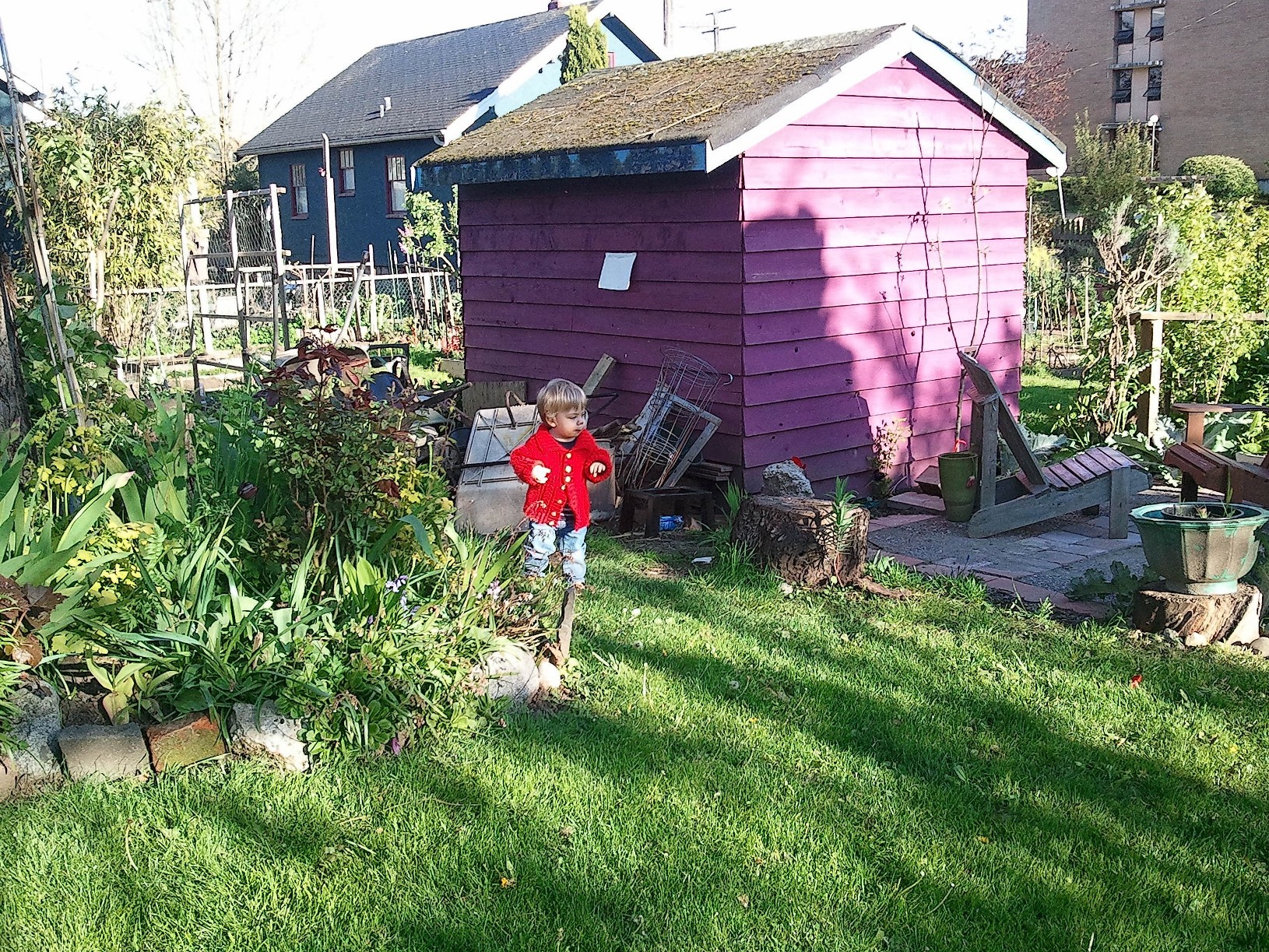
Purple shed.

Toddler and purple shed.

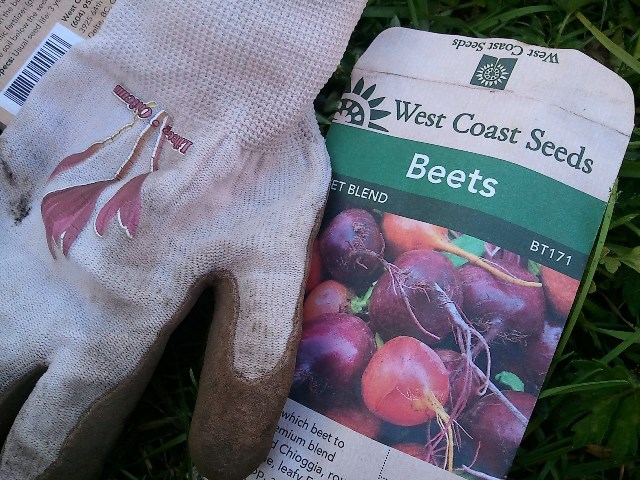
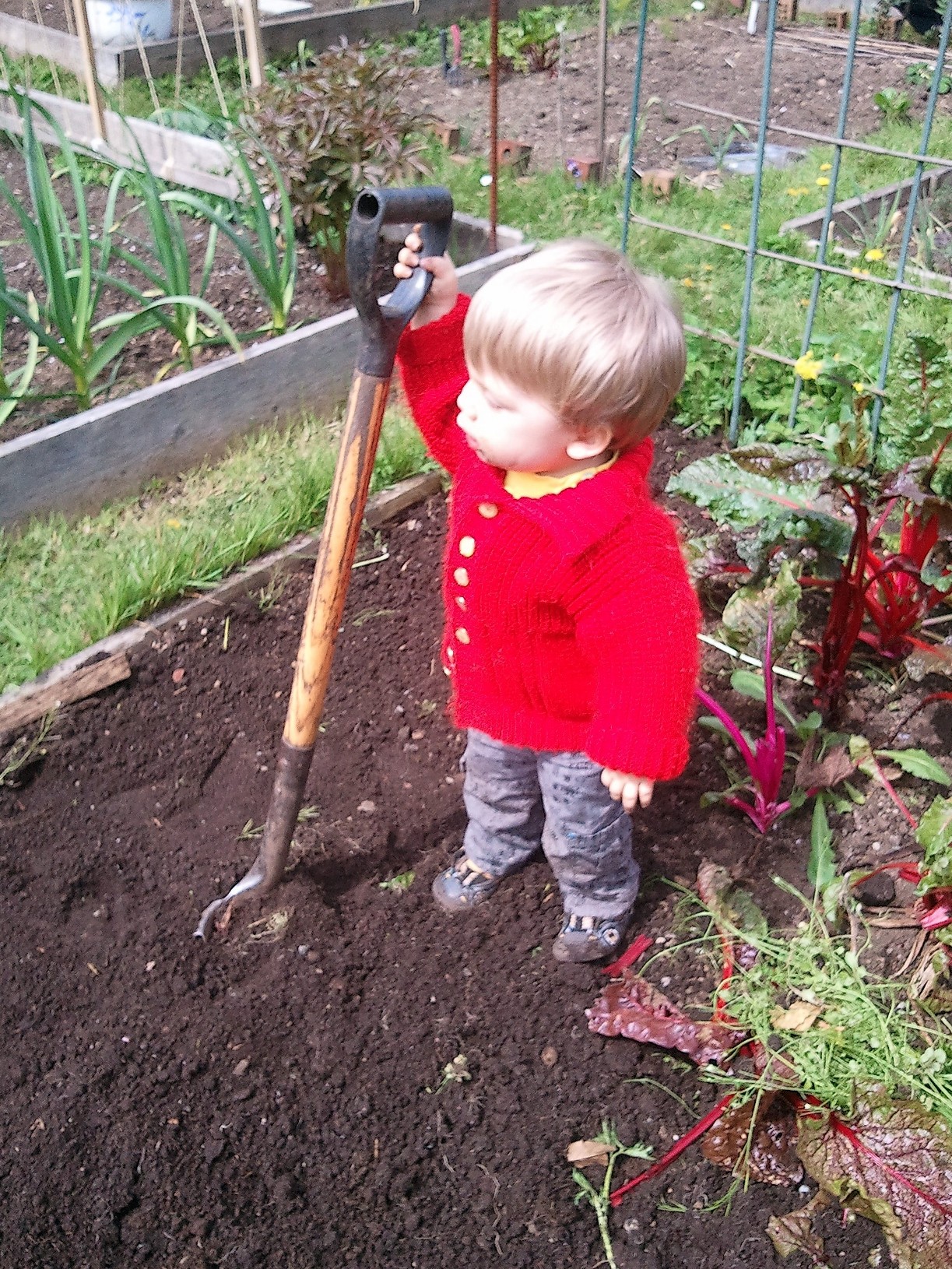
A friend of mine lives across the street from us now, and she’s got a lot of garden space for us in addition to our community garden plot, so in this spot I’m focusing on growing things I can pickle. Plus chard. But mostly things that pickle, like beets, and hopefully some pickling cucumbers – from this point in the gardening season, I don’t think you can ever have too many of those. (Remind me of this when I am complaining in August.)

Digging it.

Beets.

What have you planted, and what are you looking forward to?

Purple sprouting broccoli.

One of the things we pulled out of the garden was some purple sprouting broccoli, which grew where the regular broccoli we planted was supposed to be. It was ripe and ready, and it is so pretty it deserves a special dish. What would you do with it?

Dirty boy.

I am really looking forward to the gardening season, you guys.

Pot roast weather.

Pot roast ingredients

We were supposed to spend Saturday afternoon turning the soil in our garden plot and planting the cucumbers and beets I’m hoping to be overrun with at the end of the summer – possibly the hardest part about coping with this time of year is that nothing new has grown to the point of being edible yet, and I’ve eaten all my pickles from last year. It’s a dark time.

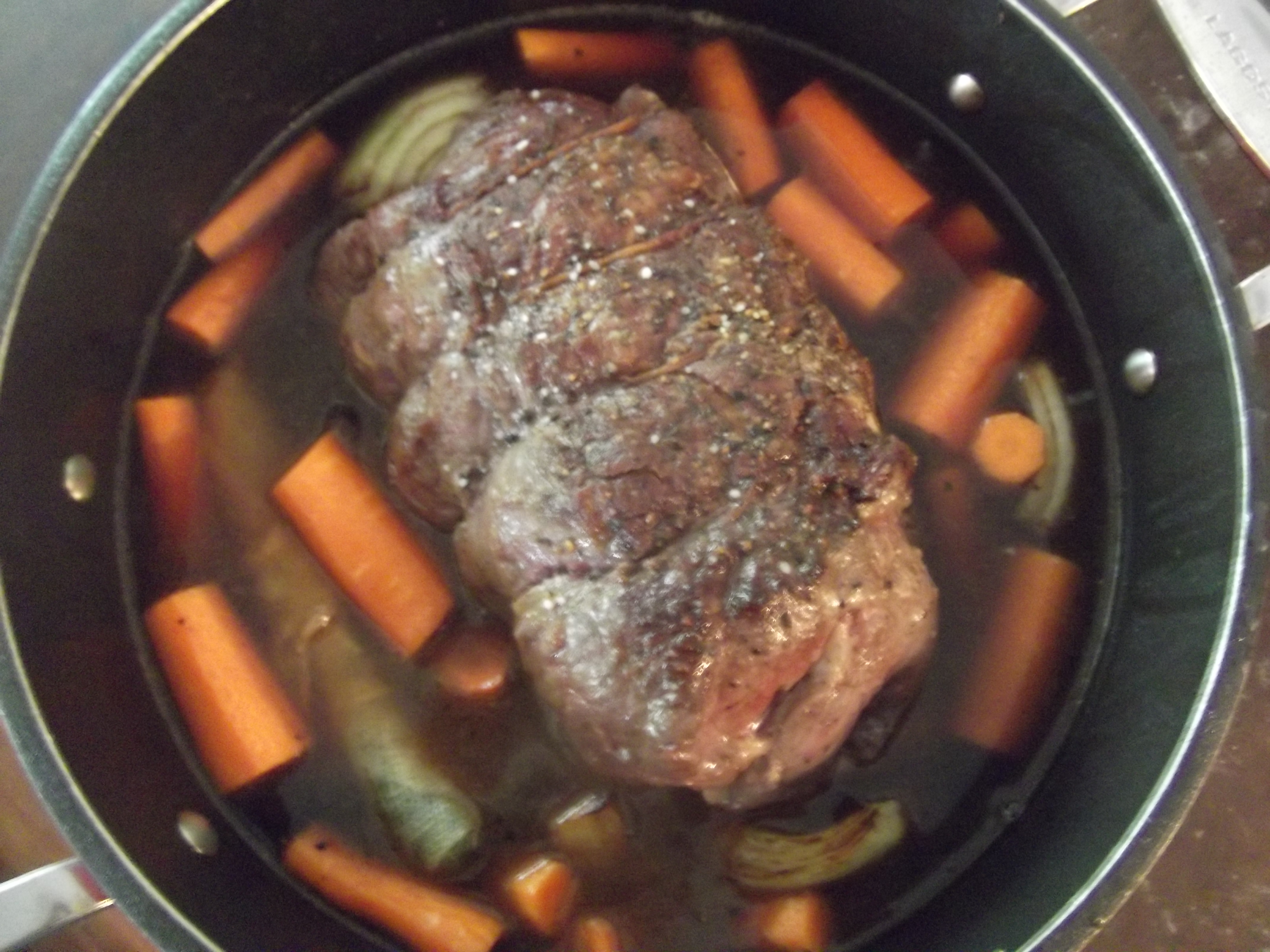
Carrots, mostly.

But it rained, and we had no other plans. And in these dark times the best thing you can do for your mood and your health is to brown a large piece of meat in bacon fat and roast it low and so slow in a broth that just gets richer and tastier by the hour.

I spent the afternoon wearing an apron and cooking a pot roast. (I did burn my fingertips and swear like a wounded sailor though, so don’t worry – nothing’s really changed.) I don’t make many pot roasts, but we got quite a few chuck roasts with a half-cow we bought and the Googles don’t suggest much in the way of alternative uses for this particular roast. We’ve been making the most of it.

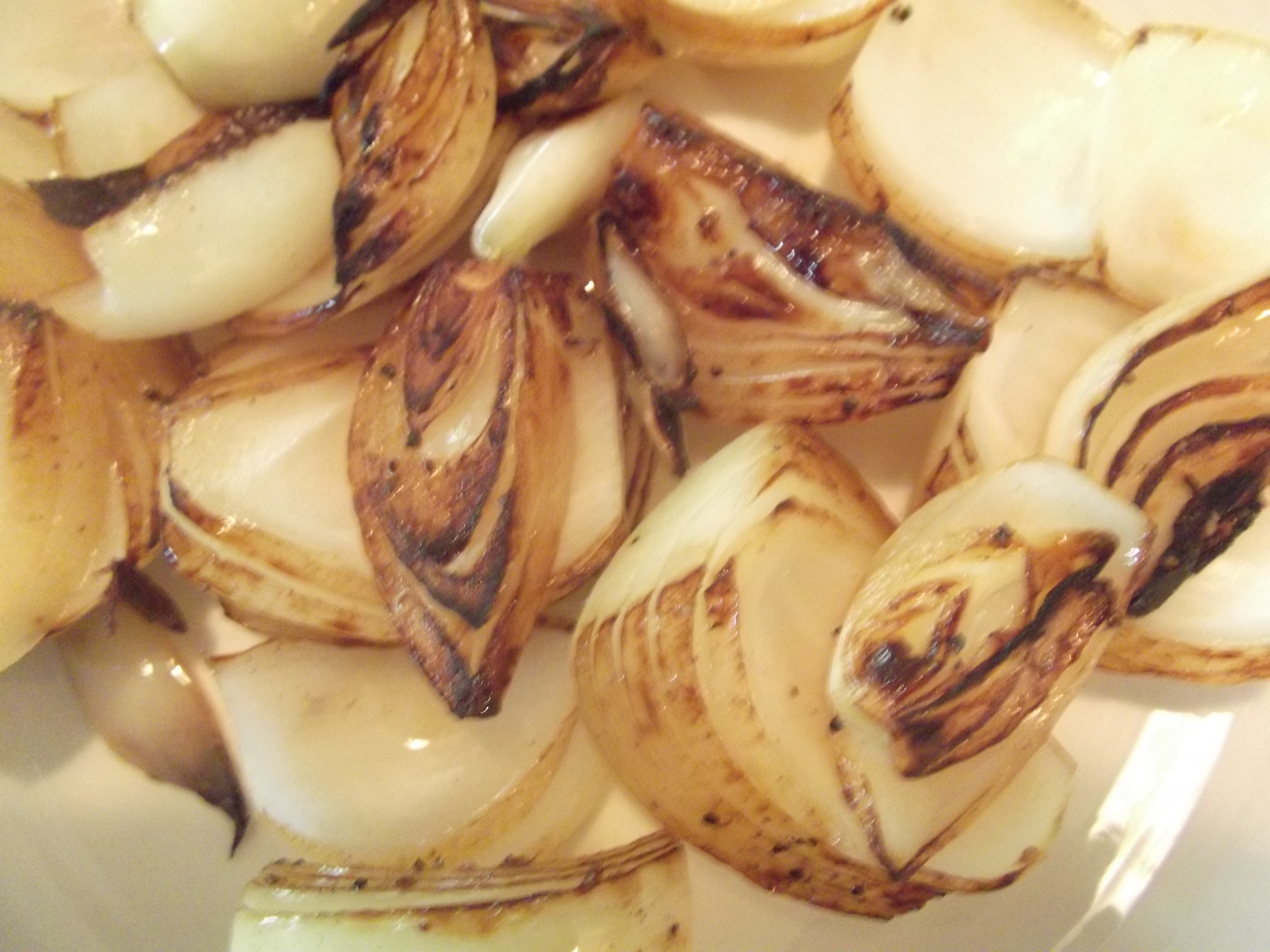
Onions.

And pot roast can be such an inedible thing. Why are they so often so dry? What cooking process could possibly render a cut of meat so grey? Even in restaurants, where pot roast finds its way onto menus under the guise of comfort food, I’ve had the kind of stringy meat that turns to cotton wads in your throat, the kind where you are asking a lot of your esophagus just to get it down.

The bouquet.

My grandmother made a good pot roast, though, so I knew that there was hope. She’d simmer hers in a small stock pot on the stove for hours, and the meat that emerged from the weird hodge-podge of ingredients she threw into the pot would emerge fragrant and tender. The texture was like pulled pork when you cut into it, and the meat was no trouble to chew or swallow.

Pre-cooked pot roast.

Her secret ingredient was coffee, and I remember thinking “oh, I’m not going to like that” when I saw her add it to the roast. But hours passed and the meat simmered and the flavours in the pot melded and turned themselves into something else, and when she spooned the gravy over the meat at the dinner table, I marveled at how rich and delicious it was, and how I couldn’t even taste the coffee. But I could taste that something was distinct, and if I hadn’t seen her put the ingredients into the pot I’d never have guessed at what it was.

My version is a little different, but the ingredients are similar. It’s laziness more than anything that makes mine different – throwing something in the oven for hours and hours just feels like less work than monitoring something on the stove top. There’s not a lot to this recipe, and it can be assembled in minutes; it just cooks for about four hours, which is the perfect amount of time for whiling away a rainy afternoon. And if there’s still cold wind and snow where you are, this will warm your home right through.

For cooking, it will be ideal if you have a pot that can transition from stove to oven. If you don’t, that’s okay. Just make sure the vessel you cook your beef in has a lid and is deep enough that the cooking liquid comes halfway up the sides of the meat.

Cooked pot roast.

One last thing – I mention that you should bundle your herbs in cheesecloth and tie them into a bundle – a bouquet garni! – but if you don’t have cheesecloth or string, just throw the herbs in whole and individually and then fish them out at the end. Also, I know I’ve shown rosemary in the photo above, but it’s really better if you use fresh thyme. Rosemary, when cooked for a very long time, tends to impart a bitter flavour that I am not fond of. Thyme stalks are not woody, and do not impart that same bitterness.

Slices.

Pot roast

(Serves four.)

  • 3 tbsp. olive oil or (ideally) bacon fat
  • 1 x 4-5 lb. beef chuck roast
  • 3 sprigs parsley
  • 1 sprig thyme
  • 2 bay leaves
  • 2 large onions, quartered
  • 1 head of garlic, cloves separated, peeled and chopped
  • 2-4 cups beef stock (or chicken, if that’s all you have)
  • 1 355mL/12 oz. can of cola
  • 1 tbsp. Worcestershire sauce
  • 1 tbsp. instant coffee granules
  • 1 lb. carrots, peeled and chopped into 2-inch chunks
  • Salt and pepper

Preheat your oven to 275°F.

Generously season your beef with salt and pepper. Set aside.

Using a piece of cheesecloth, bundle your parsley, thyme, and bay leaves. Roll tightly, then tie with string to secure. Set aside.

Heat fat in your large pot over medium-high heat. Brown your onions on each side, then remove to a plate.

Add your beef to the pot, and sear each side of the meat. You want to achieve a deep brown on all sides of the meat. Remove the meat to a plate and set aside.

Add the garlic to the pot, and cook for about one minute, stirring frequently. Add the cola to deglaze – make sure to scrape the browned bits off the bottom of the pot using a wooden spoon. Add the Worcestershire sauce and coffee granules.

Add onions back to the pot, spreading so that they cover the whole bottom. Add the meat back to the pot, placing it on top of the onions. Add the herb bundle, then the carrots, and pour enough stock to come halfway up the meat.

Give it a quick taste – is it delicious? Yay! Is it not salty enough? Add more salt.

Cover and cook for 4 hours. Serve with noodles – we had knopfle – or mashed potatoes.

Roasted cauliflower soup.

Gloom.

This is the hardest part of the year to get through. I have no patience left – please, no more squash! I’m done with potatoes. And I have no kindness left in my heart for kale. Let’s have some asparagus, already!

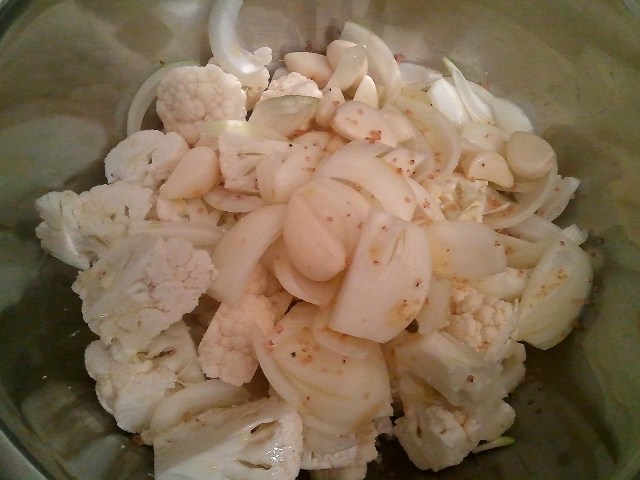
Tossed.

Spring gave us a sneak preview last weekend, a single day of sunshine and warmth where I ran around with bare arms and ate a bahn mi sandwich in a park while the baby learned the pleasures of sliding and swing-sets. And then things went back to normal, and the sky turned grey, and it has been that way ever since.

This time of year feels like purgatory. Molly Waffles has been pacing the apartment and pressing her paws to the window, scratching at the glass. She is desperate to go outside, but there is a family of raccoons out there, and city raccoons are the size of adolescent black bears and she would be little more than an appetizer. I am similarly desperate for something new and different. Maybe that’s strawberries and pink wine in the sunshine, or maybe it’s something bigger? I will be 30 in 30 days, and I am starting to feel like I’ve been pacing around and scratching at windows, like it’s time to make a mad dash for whatever’s beyond here, whether that means outrunning city raccoons or something even scarier.

Roasted.

Or maybe the wet that seeps in through the holes in my boots has found its way into my bones and now there’s mildew in my bloodstream. Maybe this itch for something fresh is just impatience, because something really good – like peach season – is on its way. And maybe what I need isn’t so much an escape as a way to bide time. If that’s the case, then soup will drag us all through these last dark days before the sun brings back all the green things that make us feel alive.

Soup.

Fingers crossed, anyway. We’ll know better what’s out there for us once the sky clears.

Roasted cauliflower soup

(Serves 4.)

  • 1 small head of cauliflower (1 1/2 lbs)
  • 1 onion
  • 1 bulb of garlic, cloves separated and peeled
  • 1/4 cup olive oil
  • 1 tsp. coarse salt
  • 4 cups chicken or vegetable stock
  • 1/2 cup slivered almonds, toasted
  • Zest and juice of half a lemon
  • 1/2 tsp. Worcestershire sauce
  • 1 cup shredded aged white cheddar cheese (between 1/4 and 1/2 lb.)
  • 1 cup milk

Preheat your oven to 325°F. Chop cauliflower and onion, and place in a large bowl with garlic cloves. Pour olive oil over top, mixing thoroughly with your hands so that all the pieces and bits are coated. Sprinkle with salt, and pour into an oven-safe pot – ideally one that will transfer from your oven to your stove-top.

Roast for 45 to 60 minutes, or until golden and fragrant. Stir halfway through cooking for even browning.

Remove from the oven to the stove-top, and add almonds, stock, lemon zest and juice, and Worcestershire sauce. Simmer over medium heat for ten to 15 minutes, until the almonds have softened. Remove from heat and blend with an immersion blender or regular blender, then return to heat. Add cheese, stir, then add milk. Taste, adjusting seasoning as needed and thinning to your desired consistency with more stock or water.


Kiwi sorbet.

kiwi

The reason I find bananas so abhorrent is mainly because a banana in a lunch bag crammed into a steamy coat closet in an elementary school classroom will not only infect every other piece of food in the bag with its noxious banananess, but it will permeate your insulated plastic lunch bag as well, making every meal you ever eat out of it taste like aged overripe banana. Forever. If it happens enough, that kind of thing can scar you for life. Even now, when I give the baby a banana the smell of it on his cheeks and his breath repels me.

Until recently, I couldn’t think of anything more offensive than perfectly good peanut butter cookies destroyed by banana-stink. And then, after she complained about pantry moths in one of those water-cooler conversations, someone left the person I share an office with a big bag of mothballs. My office-mate was out sick, so the mothballs sat in our office for a full 24 hours before I thought to hang them out the window until she could take them home.

I taste mothballs in the back of my throat when I swallow. I can smell them in my sinuses when I breathe through my nose. It’s been five days.

Bananas, you are demoted. Mothballs are the new very worst.

Almost all of the very best things are delicate and perishable. Almost nothing wonderful will leave its mark forever on your tongue or in your lunchbag. A peach bruises and turns to mush when you’re not looking; a bottle of wine smashes on the sidewalk when the bottom of your piece-of-crap reusable shopping bag gives out. Asparagus wrinkles and turns into slime if forgotten in the crisper. If you are lucky you will never know the feel of a rotten potato squishing through your fingers. Cheese gets moldy, bread goes stale and grapes become raisins, which is possibly the cruelest fate of all. Somehow, though, kiwis are hardy.

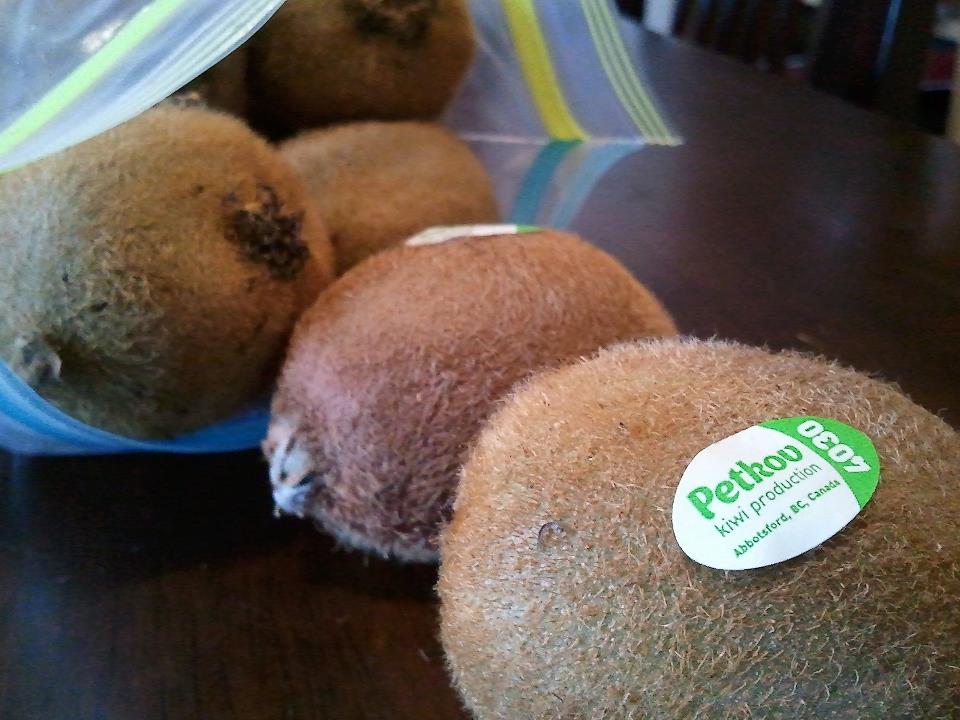
Kiwis, if stored somewhere cool and dark, will last for months. I didn’t know this until recently, when I happened upon a kiwi farmer at our local Farmer’s Market one rainy Saturday. I also didn’t know until recently that kiwi fruit grows quite happily here on the wet west coast. And apparently, kiwi fruit makes excellent jam.

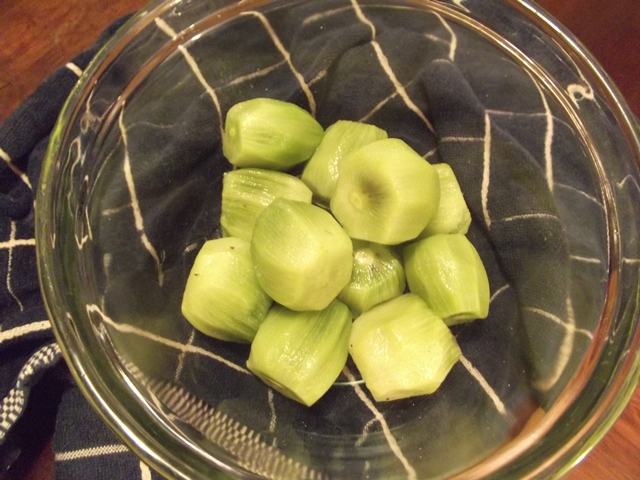
Skinned kiwis.

So I bought an inordinate amount of kiwi fruit, as you do. And then I didn’t know what to do with it, and the baby likes bananas so what does he know about anything, so it sat in my crisper for three weeks as I waited for an epiphany and an opportunity and then it happened. Brunch! And friends! So I made the best thing you can make out of kiwi fruit after just cutting it in half and eating it with a spoon.

Friends plus babies plus sorbet.


All I need now is to know how to clean the taste of mothballs out of my inner face. I’ll take any suggestion.

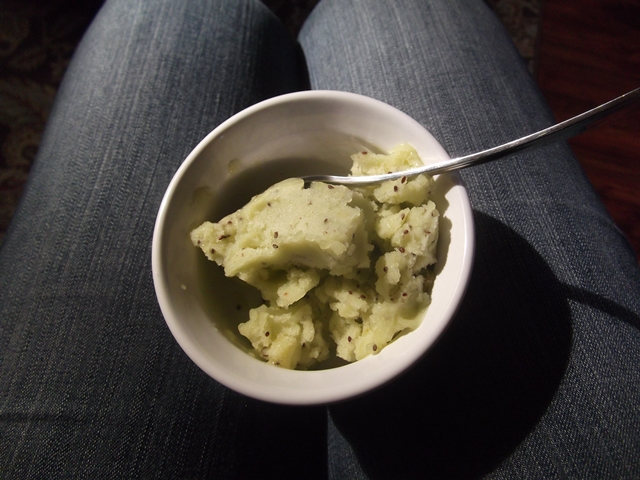
Kiwi sorbet

(Serves 6)

  • 1 lb. peeled, chopped kiwi fruit (10 or 12 medium-sized kiwis)
  • Pinch salt
  • 1/2 cup sugar
  • 1/2 cup water
  • Zest and juice of one lime (about 1 tbsp. juice)

Whiz kiwi fruit in a blender or food processor until smooth. Pour into a bowl and set aside.

Combine salt, sugar, water, zest and juice in a pot and bring to a gentle boil, stirring to dissolve the sugar. When the sugar has completely dissolved, pour into the bowl with your kiwi purée, and chill in the fridge for at least six hours, or overnight.

Freeze the mixture in an ice cream maker according to manufacturer’s instructions, then pour into a bowl, cover with plastic, and freeze until you’re ready to serve it.

If you don’t have an ice cream maker, you can turn this into a granita by pouring it into a 9″x13″ pan and scraping it every 30 to 60 minutes with a fork until frozen and fluffy. Or, you can mostly freeze it in a 9″x13″ pan, chip it out into a food processor, and blend until it resembles sorbet.

Serve cold, obviously.

Green treat: Kiwi sorbet.