Peanut butter marshmallow bars.

Sploosh.

Last week, or maybe the week before, it rained and rained and rained one night (I can’t remember which night because that sort of thing happens a lot here), and it was dark out and nearly bedtime, and I had a lot to do, book-wise, and I was dead tired after work and we all could have just endured a few more episodes of Octonauts, but there were big puddles outside. In Vancouver, if you don’t look at a puddle as an opportunity, the time between summers can be pretty bleak. So I had Nick shove Toddler’s feet into his boots and button his raincoat while I shoved my own feet into my own boots, and we clomped outside to splash around in the water under the orange glow of our street lamps. We rounded the block twice, and on the second go-round, Toddler announced that he’d like hot chocolate, “with march-mellos.” Who am I to refuse such a request? I can never say no to a marshmallow.

So we splashed our way to the grocery store just down the street, and we marched to the back of the store where the marshmallows are kept beside the ice cream freezers and sundae toppings, bought a big bag of white mini marshmallows, then came home to make hot chocolate. By the time Toddler was in his jammies, I had his hot chocolate in his dinosaur mug, heaping with marshmallows. We drank our drinks and read some books and we all went to bed pretty pleased with ourselves and our sound decision-making.

Fast forward a few days or weeks, and I still have a huge bag of mini marshmallows. And Nick, with his diabetes, has gone off to the woods outside of Princeton to shoot our year’s supply of meat. So Toddler and I are alone, free to raise our blood sugar and rot our teeth unencumbered. I’m using up the marshmallows. Toddler’s pretty pumped.

This is a spin on a bake-sale classic, improved by substituting white chocolate chips for butterscotch chips. The result is kind of like tiger butter, only with marshmallows. I used the microwave for this because it somehow felt wrong not to. Toddler and I are going to spend our weekend together eating these in a blanket fort while watching the whale shark episode of Octonauts over and over and over until the sugar knocks us out. You should definitely lick the spoon.

peanutbutterbars

Peanut butter marshmallow bars

  • 1/2 cup butter, cut into about eight equal pieces
  • 12 oz. white chocolate chips
  • 1 cup smooth peanut butter
  • 1/2 tsp. salt
  • 1/2 tsp. vanilla extract
  • 3 cups white mini marshmallows

Put the butter and the chocolate chips in a large glass bowl. Microwave the whole thing for 30 seconds. Remove the bowl from the microwave, stirring the mixture well, then return it to the microwave and repeat this process.

Add the peanut butter, stirring well. Microwave for another 30 seconds, before removing the bowl stirring well, and repeating the process once more.

When the chocolate chips have melted and the mixture is smooth and creamy, add the salt and vanilla, stir again, then set the bowl aside and let it rest for a minute.

Lightly grease a 9″x9″ baking dish and line it with parchment paper.

Stir the marshmallows into the peanut butter mixture, and then pour the whole thing into your prepared pan. Refrigerate the mixture until it’s firm enough to slice, at least two hours.

Cut into small squares and serve. This is great for bake-sales, treat tables at holiday events, and on plastic Buzz Lightyear plates under a fort made of blankets.


Sleepy tea.

sleepy tea

“You need my help,” he shouts, sans pants and full of fury as his purple marker is out of ink and he needs a “very big whale” drawn right now, please. Where any of this comes from, I hardly know. As Toddler’s language develops, his phrases are increasingly amusing – he’s an accidental and illiterate riddler. “You need my help,” he says, because he mixes up his subjects and his objects, and because he will not stand to be corrected, not by me, because what do I know.

Despite the fact that I’m now very near my manuscript deadline (October 1! It looms!), Toddler continues to insist that he be the centre of attention at all times. He is two, nearly three, and frankly doesn’t give a shit about my timelines. YOU NEED MY HELP. So, despite the pile of work I still have to do, I’m still spending an inordinate amount of time pushing Thomas and his railway friends off “bumpy” bridges to their deaths, and reading books about “very scary” animals (and mimicking their sounds, because of course I know what sound a sloth makes?), and drawing whales and rainbows and whole families of monsters (this way, not that way, not blue, not green).

CONSTANT MOTION.

If this is having it all, then out of necessity I am doing it on very little sleep. I think that is the secret to having it all: you just have it all all the time, with no breaks.

I’ve never been much of a sleeper anyway, but I have heard about rest and think I might like to try it someday. I wonder what I could achieve if I had a full night’s sleep? Maybe I’d remember to turn on the dishwasher before the smell of old food and dirty dishes takes over the apartment; maybe I’d stop buying so many cans of red kidney beans – I needed one can to test a recipe one last time and somehow, over the course of a week, I ended up with five. I hope I remember to use them.

But still, we’re getting there, if “there” is a finished book and a happy toddler and dinner on the table eventually; I’m still going to work every day, and functioning as an adult most of the time. We have not yet run out of toilet paper. I did finally remember to pay the hydro bill.

Most of my work gets done after dark, and so I approach bedtime with eyes stinging from the glare of a back-lit screen. Sleep experts advise that this is not a great way to ease into bedtime, but sleep experts are probably not much fun. You are supposed to avoid screens for at least an hour before bedtime, I’ve read, or else the light tricks your brain into believing it is daytime. I like to think my brain is smarter than that; in truth, it’s probably much dumber, because it’s never not tired and if it was really clever, it would knock me out from time to time to catch itself up on some rest. YOU NEED MY HELP, Brain.

So, to sort of limp towards unconsciousness, I’ve devised a beverage that calms me down the way my morning latte picks me up. Tea lattes have become bookends to my day, and it’s kind of nice. It’s soothing, and sweet, and if you drink it in bed while you read a few pages of whatever David Sedaris book you have on your bedside table, you’ll drift happily off to sleep, with little to no fretting about all the things you still have to do before dawn.

tea and honey

Chamomile latte

  • 1 mug full of milk
  • 1/2 tsp. honey
  • 1 chamomile tea bag

Measure a full mug of milk, then dump it into a small sauce pan. Add the honey, and whisk to mix the honey into the milk. Add the teabag.

Gently warm the milk to the point where it just begins to bubble, somewhere between 170°F and 180°F. When it reaches this point, remove the pot from the heat and set your timer for five minutes.

After five minutes, pour the milk back into your mug, discard the teabag, and go to bed.

Shameful sangria.

sangria-ishHello! How are you? How has your summer been? I hope it’s warm and dry where you are, and that you’re finding the time to read books in the sunshine with cold beverages. Please tell me you’ve been enjoying long, warmly lit evenings of leisure because I need to live vicariously through you. I have been spending most of my time in front of screens, stress-eating simple carbs and not-fitting into my clothes. Writing a book is fattening, and sooner or later I am going to have to stop testing my fried chicken recipe. Or I guess I could buy a whole bunch of colourful caftans? I think waistbands are why I am so curmudgeonly in real life.

This has been an intense summer, and I am very tired. There was a long stretch of 2012 where I was very unsure of myself, as I was suddenly unemployed and had a hard time finding work while we ran out of money but still had to pay for daycare, lest we lose our spot. (Daycare in Vancouver is a pretty big issue, where the cost of daycare over four years generally costs more than a university education. There also aren’t a lot of spots.) It didn’t seem like there were any opportunities, and I felt very much like a failure as I was passed over for job after job after job. I am trying to remember that now, as just two years later I’ve recently been offered more than my share of great opportunities, and in addition to this book, which has been my goal for as long as I’ve had a kitchen and a computer, I’ve just accepted a shiny new job.

Things are going better than I could have imagined during those worried months in 2012, and though the weight of it all is sometimes unwieldy, I feel tremendously grateful for all the supportive people I’ve got to whine at and
have reassure me. Nick isn’t saying anything about the number of doughnuts I’ve eaten (I can’t say the same for the cashiers at Safeway, where I buy my deep-fried maple-bacon feelings-vehicles), which makes me think it might work out with him long-term.

It’s safe to say at this point that, if I felt shame about the usual shameful things, I would be ashamed of myself. There are many reasons why, and recently I’ve been enjoying a new one: shameful sangria. Or, “red wine pop thing oh my goodness what is wrong with me why is this so good.”

According to Nick: “That’s surprisingly good. I’m actually really surprised.” I add a lot of value to this relationship.

It’s a mix of orange pop and cheap red wine, and you drink it cold and it’s enough like sangria to pass on a hot summer day when the store seems so far away and dressing your lower half seems like an impossibility. If you are fancy and have that good San Pellegrino Aranciata on hand, or a bottle of Orangina, this would be an inch shy of amazing; with Orange Crush or C-Plus, it’ll do, but in a good way. You could drink this with a bowl of Miss Vickie’s salt and vinegar chips and it would be a pretty great afternoon.

None of this was actually my idea – I don’t really know where it came from but I went to a friend’s house a couple of weeks ago to sit in the sun and watch our kids run through the sprinkler in her back yard, and she said “I heard in Spain they mix red wine and pop,” and I was like “yes, I know of this. They mix it with Coke.” “BUT NOT JUST THAT!” she declared, and soon her husband was sent off to the supermarket for a couple of two-litre bottles of pop so we could do some science.

photo 4We went with the red wine and orange pop, because of course and/or why not? And it was, as Nick says, surprisingly good. Would it be as good in December, indoors while wearing pants? Probably not. But who cares about then, we must live in the now and the now is about refreshment and simple alternatives to effort and going out. I looked it up after, and she was right – this is a real thing, in Spain, which is a place neither of us has been to. It’s called tinto de verano, and I don’t care if only teenagers drink it.

So what’s the recipe? There isn’t one, really; just pour equal parts red wine and orange pop into a cup with ice. How much? That’s up to you; I use a short glass so I feel like a responsible parent (even if I refill it six or ten times). What kind of wine? Whatever kind – a shiraz is nice, and so is whatever’s on sale or left over in your fridge from some other evening. Pour your drink, then take off your pants. Sit down outside. Put your sunglasses on your face. And just go with it. Go with it all afternoon, until the light fades and you get that wistful “forever summer” feeling and start posting heavily filtered photos of each drink to Instagram. As one does.

Relax. You’ve earned it. We all have. What are you drinking? I need recipes that don’t require a trip to the store.

Smoked fish cakes.

img_5846

I work at a health research institute where I regularly get access to some pretty brilliant people, and often my job is to translate their complicated science-speak into regular-person language. So I’m pretty lucky, as these are pretty high-profile scientists and because of the nature of my work, it’s often up to them to try and help me understand stuff. I tell myself that one day, one of them is going want to inquire about my expertise; until then, I’ll be figuring out just what that is.

One of the researchers I speak to studies human nutrition, specifically children and pregnant and nursing women. She is one of my favourite people to talk to, because she’s just so sensible. Did you know that feeding yourself and your family is nowhere near as complicated as so many articles, blog posts and news segments would have you believe? Just eat food. Choose variety, whenever possible. There no such thing as “super foods.” Fad diets are stupid and potentially harmful. Try to avoid really fatty and really sugary junk. No need to over-think it. Take a multi-vitamin if you think you need to. This is very empowering when you’re bombarded with so much misinformation and pseudo-science. It’s a huge relief when you’re always half-thinking the worst about your picky eater.

We were talking one day about some of her research around omega-3 fatty acids, which are essential fats (which means our bodies don’t make them – we have to get them elsewhere). Omega-3s are important for brain health. The North American diet is not always rich in omega-3s; good sources of omega-3s include anchovies, sardines, herring, and mackerel – things we don’t necessarily eat a lot of. It’s also in salmon, lake trout, and other fatty fish (including fresh tuna), but your best bets are small, oily fish. The good news is that adding more of these to your diet is easy, and they taste good, and they are a lot more sustainable. They’re also cheap.

Side note: Alton Brown lost something like 50 pounds eating his Sardine-Avocado Sandwiches. I’ve tried them – they are delicious – but I am still heavier than I’d like. I wish it was possible to just eat one magic thing that would counteract all the other things I eat with no additional exercise. Come on, science – get on it.

One thing we eat a lot of is fish cakes; it’s a dish that’ll feed the two of us for dinner and then breakfast or lunch the next day; you can also double your batch and freeze them. They reheat pretty well in one of those office-kitchen toaster ovens, though you may want to heat them on a piece of foil or the person who toasts her lunch after you will be a little off-put.

My recipe uses tinned smoked herring, but you can use any smoked fish you like. I just spent my morning smoking the rest of last year’s lake trout, so I’ll be subbing trout for herring for the next little while. Smoked salmon or cod make these pretty fancy; smoked sardines and mackerel work pretty well too.

Smoked Fish Cakes

(Serves 2 to 4 people.)

  • 4 cups mashed potatoes* (approximately two large or three medium Russets)
  • 2 scallions, finely chopped
  • 1 garlic clove, finely chopped
  • 2 eggs, beaten
  • 2 tsp. grainy mustard
  • 1 tsp. sambal oelek or other hot sauce
  • 1 180g to 190g tin of smoked fish (drained), or about a cup of chunked smoked fish
  • Salt and pepper to taste
  • Oil, for frying

*You can use leftover mashed potatoes to make this even easier. Or, if you’re making them fresh, let them cool until you can handle them comfortably with your bare hands.

Put your potatoes, scallions, and garlic into a bowl.

In a separate bowl, whisk together your eggs, mustard, sambal/other hot sauce, and a dash each of salt and pepper.

Crumble your fish into the bowl with the potatoes, give them a bit of a mush, then pour the egg mixture over top and mix thoroughly.

Form into six or eight cakes, about three inches in diameter and about an inch thick.

Fry each batch in a pan with about two tablespoons of a neutral oil, such as canola. You will want the pan to be hot when you put these in, so they form a nice crust; they should sizzle when they hit the pan. Cook for about two minutes per side.

Serve with ketchup, more hot sauce, or fancy mustard.

fish cakes

Potato salad.

img_5900-e1402173537126

It’s officially summer here in Vancouver, and all I wanna do is eat cold food outside on a hot day. I’m looking forward to a pretty much endless feast of watermelon and pink wine from now until October, and I will not be deterred.

Now is not the time for dainty salads or leafy greens.

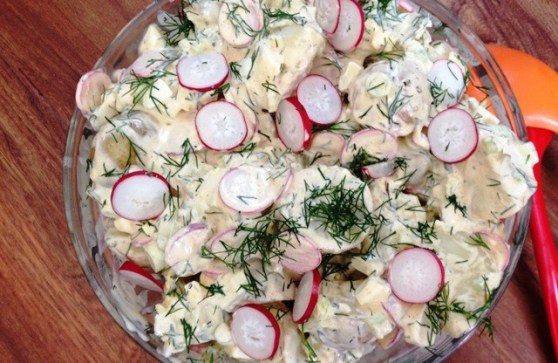
Now is the time for cold potatoes and mayonnaise and hard boiled eggs and pickles and all those radishes that just exploded in the garden. Potato salad. You can make it ahead, stick it in a container, and tote it to the beach and it never wilts or weeps or sucks to eat. Potato salad is one of the greatest culinary inventions of our time, because it is simultaneously a salad and a vegetable side dish, and nobody dislikes it, and it’s got pickles in it.

Who doesn’t want a hot dog and some potato salad? Nobody, that’s who.

This is a pretty straightforward potato salad, the version my mom and everyone else’s mom and grandma makes. It makes a big bowl, enough to serve eight or so as a side dish, and it’s even better the second day. Make sure you make it while the potatoes are still a bit warm; there is a lot of sauce, and when the potatoes are warm they suck the dressing into them as they cool.

I make this with homemade mayonnaise because I’m too cheap to buy it in a jar considering how much we go through, so if you’re using store-bought mayo you may find you need to adjust the salt or acidity a bit to taste; keep in mind though that the dressing should be a bit saltier and a bit more acidic than you’d normally prefer as those flavours will tone down once the dressing is on the salad and it’s served cold. Please, please do not use Miracle Whip for this. I will know somehow that you’ve done it and feel really sad.

Potato Salad

  • 3 lb. white or red waxy potatoes (not Russets), cubed and boiled until tender and cooled slightly
  • 6 scallions, white and light green part only, sliced
  • 4 to 6 radishes, sliced
  • 2 stalks celery, finely chopped
  • 4 hard-boiled eggs, chopped
  • 1/2 cup finely chopped dill pickles
  • 1 cup mayonnaise
  • 1/2 cup sour cream
  • 2 tbsp. dill pickle brine
  • Zest and juice of one lemon
  • 2 tsp. Dijon mustard
  • 1/2 tsp. granulated sugar
  • 1 tsp. yellow curry powder
  • 1/2 tsp. smoked paprika
  • 1/2 tsp. ground black pepper
  • 1/4 tsp. cayenne pepper
  • Salt, to taste
  • Fresh dill, chopped

In a large bowl, combine potatoes, scallions, radishes, celery, eggs, and pickle bits. Set aside.

In another bowl, combine mayonnaise, sour cream, pickle brine, lemon juice and zest, mustard, sugar, curry powder, paprika, pepper, cayenne pepper, and dill. Whisk together. Taste, adjusting salt and acidity as needed.

Pour the dressing over the potato mixture and toss to coat. I use my hands to gently mix the dressing into the potatoes – you should too. Clean hands are the best kitchen tool there is.

Top with a sprinkle of additional dill, and some more radishes and green onion, if desired. Chill, and serve cold.

Something to Read: Between Meals

30days

I bought Between Meals: An Appetite for Paris without knowing anything about it because I was about to go to Paris and also it seemed kind of absurd. The back cover describes the author’s experience as a “Rabelaisian initiation into life’s finer pleasures,” and I emitted a Ha! so loud I knew I had to buy the book.

between-meals-an-appetite-for-paris

The author is AJ Liebling, a journalist and noted glutton. In James Salter’s introduction to the book, Liebling is said to be someone whose “pull was towards the disreputable elements of society, the seamy part of life, men who lived by their wits.” He was “a big, rumpled figure with a homely face and his navel showing through an unbuttoned shirt,” and his gluttony, “however it had begun it had become an essential part of him, a rebellion, a plume.”

“He had given up on his appearance but was living lavishly.”

I know that there is something fundamentally wrong with me, and I am aware of Liebling’s suffering and ill health toward his end, but something about all of this is very appealing. Who doesn’t want to eschew convention and expectation and just eat all of everything that Paris has to offer? I can’t just be speaking for myself when I say that it’s hard not to feel the burden of moderation? Real life is so restrictive. Let’s all take a study abroad term in France.

“The optimum financial position for a serious feeder is to have funds in hand for three more days, with a reasonable, but not certain, prospect for reinforcements thereafter. The student at the Sorbonne waiting for his remittance, the newspaperman waiting for his salary, the free-lance writer waiting for a check that he has cause to believe is in the mail – all are favorably situated to learn. (It goes without saying that it is essential to be in France.) The man of appetite who will stint himself when he can see three days ahead has no vocation, and I dismiss from consideration, as manic, the fellow who will spend the lot on one great feast and then live on fried potatoes until his next increment; Tuaregs eat that way, only because they never know when they are next going to come by their next sheep. The clear-headed voracious man learns because he tries to compose his meals to obtain an appreciable quantity of pleasure from each. It is from this weighing of delights against their cost that the student eater (particularly if he is a student at the University of Paris) erects the scale of values that will serve him until he dies or has to reside in the Middle West for a long period. The scale is different for each eater, as it is for each writer.”

AJ Liebling was a lush and a “feeder” and a talented writer and a lover of France in that snapshot of time when Paris was the stuff of romance, of longing, the stuff of so much good fiction at a specific time in our history, the stuff of fantasy that endures. Between Meals: An Appetite for Paris is funny and indulgent, the kind of thing you read and think “I have made so many poor life choices,” the kind of thing you should read on a rainy weekend with a lot of pinot noir and pâté close at hand.

Chicken liver pâté

(Serves four regular people or two gluttonous fiends.)

  • ½ cup room-temperature unsalted butter
  • 2 shallots, minced
  • 2 cloves garlic, minced
  • ½ lb. chicken livers, membranes removed
  • 1 bay leaf
  • 1 whole sprig of fresh thyme
  • ½ tsp. ground white pepper
  • ¼ tsp. ground nutmeg
  • 1 tbsp. cognac (I’m poor, so I use brandy)
  • 2 tbsp. heavy cream

Over medium heat, melt two tablespoons of butter in a pan. Add the shallots and garlic, and cook until the onions have turned shimmery and translucent.

Add the livers, thyme, bay leaf, nutmeg, pepper and a pinch of salt. Cook for three to five minutes, until the livers are just barely pink in the centre. Remove from heat and let cool.

Remove the bay leaf and the sprig of thyme. Dump the contents of the skillet into a food processor, and pulse until smooth.

Scoop the liver mixture out of the food processor and into a bowl. Beat the remaining butter into the mix, then add cognac (*cough* brandy). Stir until well combined, then gently mix in the cream. Taste, adjusting seasonings to your preference. Spread the pâté on bread or crackers, and feel very gourmet about the whole thing.

Something to Read: India, Ireland

sleeping

For some of us, it’s been a rough week. On Thursday, the little nugget started running warm and flu-like, and by Friday’s earliest hours, he was in full-blown fever mode, seizing and feverish and feeling pretty awful. We spent Saturday trying to convince his little belly to keep fluids down, and only now is Toddler back to normal.

We also had one particular hour-long Thomas (the really annoying train) movie going pretty much on repeat, which occupied my computer for most of those three days; we’ve now memorized a whole bunch of really annoying songs about hard work and helping out so we also didn’t get anything done.

So, with today, I’m now three books behind. Maybe goals are for people with free time? Maybe I’d be better to set small, reasonable goals, like “I will fold the laundry after taking it out of the dryer” or “I will open all the mail, even the scary envelopes?” Maybe I should get on with it and tell you about the books.

Let’s get international.

30days

The first book is one that I wanted desperately but that was kind of expensive so I had to wait and wait and wait and insist repeatedly that it would be a valuable resource and the best Christmas present ever. I just shouted down the hall at Nick to ask which occasion the book was and he said “It was definitely Christmas because it was too expensive – I wouldn’t spend that much on your birthday” which I guess means we’ve left the honeymoon phase.

I feel like all my books are either “kind of expensive but worth it” or “super cheap and amazing.” Anyway.
India

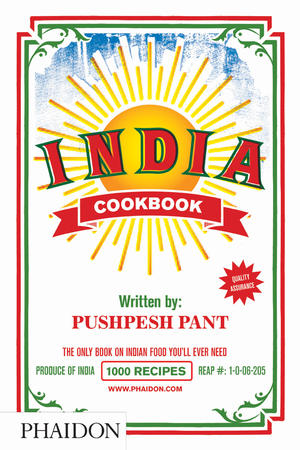
India Cookbook, by Pushpesh Pant, an Indian food writer and critic, is 815 pages and 1000 recipes, and “the definitive collection of recipes from all over India.” I cherish it the way other people cherish heirlooms or members of their extended family. This book is serious, and detailed, and gorgeous, and according the the cover, “the only book on Indian food you’ll ever need.” On this, I concur.

The book is thorough, and many of the recipes are long and involved, but the results have always been delicious and well worth the time and effort. There are recipes for spice mixtures and pastes, which you can make in large batches and use whenever you need them – this has been quite handy, though I’ll admit I’m moving into bigger and bigger Mason jars for storage and my cupboards are starting to look a little ridiculous.

Every recipe includes the Indian name of the dish, the English translation, the region of the recipe’s origin, and preparation and cooking time, and the number of servings, either in pieces or weight. The instructions are very detailed, and if, perhaps, you don’t have a coal fire over which to roast your lotus root, for example, alternative steps are included.

There are dishes from all over India, so there’s so much more than just the most popular stuff on the take-away menu. One thing I love about this book is that anytime I have a bunch of a vegetable I’m bored with just killing its last days in my crisper, I’ll refer to this book and find something new and exciting to do with cabbage or cauliflower or chickpeas (every vegetable, it seems, is given its place in the sun). India’s seemingly endless number of vegetarian dishes means that this book is a fabulous addition to the herbivore’s kitchen; often, the recipes also happen to be vegan-friendly, no adaptations necessary.

If you like Indian food, and want to learn more about it (and there is so much to learn), India Cookbook is worth the investment (it’s about $50 if you buy it online).

As it would otherwise be simply impossible to choose which recipe to share, I’ll give you the last one I made.

Parathas are dough patties stuffed with delicious stuff, which is essential to every culture’s cuisine, it seems. They are like pupusas, kind of – that’s my first point of comparison, so hopefully that makes sense to you. Basically, they are the best and you can make a ton of them and freeze them and then take them to work in your lunch bag and all your coworkers will be so jealous.

I simmered the potatoes for this recipe in coconut milk, because I wanted to slip some potatoes into Toddler and coconut milk is a sure-thing with him. You don’t have to do that – the recipe is perfect as it is.

Aloo ka Paratha

(Shallow-fried spicy potato stuffed bread; makes 4 or 5.)

Origin: Punjab/Delhi/Awadh
Preparation time: 1 hour
Cooking time: 30 minutes

  • 4 cups plus 3 tablespoons whole wheat flour, plus extra for dusting
  • Pinch of salt
  • 3/4 cup ghee (if you don’t have ghee, clarified butter will work but it’s not the same; vegetable oil will work in a pinch)

Filling:

  • 2 medium potatoes (9 oz.), unpeeled
  • 1 1/2 tablespoons chopped ginger
  • 6 green chilies, de-seeded and chopped
  • 1 large spring cilantro, chopped
  • 1 tablespoon dried pomegranate seeds (I didn’t have these; I used 2 teaspoons of amchoor powder; a squish of lemon will do in a pinch)
  • 1 teaspoon chili powder
  • Salt

Boil the potatoes whole for 20 minutes, or until soft. Drain, then cool. Peel off the skins, return the flesh to the pan, and then mash. Move the potatoes to a bowl, then add the ginger, chilies, coriander, pomegranate seeds, and chili powder. Mix, taste, season with salt, and then set aside.

Sift the flour and salt into another bowl. Mix in enough warm water to make a soft dough, about one and a half to two cups.

Knead the dough for about five minutes, then divide the dough into 8 to 10 equal portions and roll it into balls. Using a rolling pin (on a floured surface), flatten each ball to a disk about six inches in diameter.

Spread about a quarter (or a fifth, if you’re working with ten rounds) of the mixture on one disk, then top with the other and seal around the sides. Roll gently with a rolling pin until the rounds are sealed and have spread out to about seven inches in diameter.

Heat a heavy skillet over medium heat. Place a paratha in the pan, cook for 20 seconds, then turn over and cook for an additional 20 seconds. Repeat with each paratha.

Add the ghee to the pan, then fry each paratha until golden brown on both sides. Serve with mango pickle and yogurt. I also like them with ketchup, but I am ashamed of this.


The next book I want to tell you about is one that fits into the “super cheap and amazing” category, but was also the result of being in the right place at the right time.

The place was a bookstore that was closing; the time was just before the book won a James Beard award (Best International Cookbook, 2010) and came out with a new cover. The book is The Country Cooking of Ireland, and it’s by Colman Andrews, one of the guys who founded Saveur Magazine.

ccoi

Most people probably don’t think of Ireland as being a great place to grab something to eat, but in fact Ireland is basically a nation of comfort food and good beer. It’s full of good farmland and, since it’s an island, it’s in close proximity to all the best fish and shellfish. It’s not just potatoes, though they are well-represented among the 225 recipes contained in the book (which I don’t think is a bad thing – potatoes are the best, obviously). Among the recipes are stories of Ireland – the history, the people, the cookbooks; it’s as informative as it is lovely, with pictures that make you gaze out your own window and sigh, longingly.

I’ve made quite a few of the recipes in the book, for everything from Irish Stew to Donegal Pie, a cheap and easy dish made of potatoes, chives, hard-boiled eggs, bacon and shortcrust pastry. The food is hearty and warming, and makes sensible and interesting use of affordable ingredients.

One of the recipes I am fond of is the Battered Sausages, which, according to the book (and my stomach) are “admittedly dietarily excessive and nutritionally incorrect.” I’m trying to understand how that’s not a selling feature.

“A staple at gas-station food counters all over Ireland, battered sausages are usually grim and greasy. If made correctly though, they can be a real treat.”

Battered Sausages

(Serves 4.)

  • 2 packets active dry yeast
  • 1 1/4 cups stout, preferably Guinness
  • 2 3/4 cups all-purpose flour
  • 1 tsp. salt
  • Oil, for frying
  • 12 small breakfast sausages (not the maple kind)

Whisk together the yeast and the beer. In another bowl, sift together 2 1/4 cups of the flour and the salt. Stir the yeast mixture into the flour mixture, mixing well. Let stand at room temperature for an hour.

Heat about six inches of oil in a heavy-bottomed pot, such as a cast-iron or enameled cast-iron Dutch oven. Heat to 350°F.

Toss the sausages with the remaining flour, then dip into the batter. Deep-fry the sausages, a few at a time, for about eight minutes each. Drain the sausages on a wire rack over a pie plate until you’re finished frying; serve hot. Then take a nap.

Something to Read: On Booze

30days

Cocktails before meals like Americans, wines and brandies like the Frenchmen, beer like Germans, whiskey-and-soda like the English, and, as they were no longer in the twenties, this preposterous mélange, that was like some gigantic cocktail in a nightmare.

Ugh, this week.

I’ve been busy at work, working late the first two days of the week but then showing up late this morning because Toddler was fevered and barfing. The little guy seemed like he was doing better, but that was the Tylenol talking and by the time I got home he was back to flat and sweating, watching a Thomas (the train) movie for the fifth time in a row and throwing up his warm milk. I gave him a Gravol and sang him to sleep, but he’s been stirring all evening, whimpering and breathing heavy.

Poor little guy.

So, tonight, let’s talk drinks. I love drinks. I like them to relax, I like them to socialize, I like them by myself in a bathtub with a book or in a patch of sunlight with a book or in my travel mug at the grocery store. (People do that, right? It’s not just me? I don’t drive to the store, if that helps?)

I drink an drink when it’s been a long week already and after Toddler has gone to bed sick.

I’ve always been partial to writers with well-known vices. And since so many of the good ones had them, it’s easy to call a bit of cold vodka and a bit of olive brine something akin to creative juice; a drink once in a while suggests a darkness in one’s heart that makes one crave a bit of levity. Anyone who willingly suffers the creative process has at least a little darkness, and no doubt more than some will admit.

I read The Great Gatsby a million years ago in a high school English class and it bored me to death, but I read it again in a community college lit class my first year out of high school and found it suddenly very exciting. It was among my first Serious Literature, and I got it. (I wanted to be a lawyer and Irish when I was in high school and so I read every John Grisham book and every Maeve Binchy book published before 2001. I had some stories to catch up on.)

On-Booze


The Great Gatsby is by no means my favourite book, nor is it anywhere near my top ten, but it’s like an old friend who shows up to charm me every so often. For that reason, On Booze jumped out at me when I was wandering my local bookstore aimlessly one rainy weekend afternoon. On Booze is a collection of F. Scott Fitzgerald’s writing on the topic of booze (excerpts, letters and essays), and as it’s 86 pages it’s the kind of thing you can finish off with a few glasses of wine and some cheese on crackers some night when you don’t have anything else to do.

“Perfectly respectable girl, but only been drinking that day. No matter how long she lives she’ll always know she’s killed somebody.”

Dirty Vodka* Martini

(Makes one. Perfect to conclude long work-weeks and to soothe the tired mind after dealing with a sick cat or kid. Don’t use fancy vodka – you’re just going to stank it up with the olive juice.)

  • Ice cubes
  • 2 oz. cold vodka (I store mine in the freezer so it pours like syrup)
  • 1 tbsp. plus 2 tsp. brine from a jar of olives
  • 1 tbsp. dry vermouth
  • As many olives as you want for garnish and as a side-snack

Put ice, vodka, olive juice, and vermouth in a shaker, put the lid on it, shake it 23 times, then strain the mixture into a chilled glass. You can use a martini glass but those things are stupid impractical and prone to tipping; I am a classy lady who uses a tumbler because it doesn’t spill.

*You can use gin if you’re a purist, but gin and I have troubled history and are incompatible so my preference is vodka. Make the choice that best suits your needs on any given evening.


Something to Read: L.A. Son

30days

I have a crush on Roy Choi, the chef who started Kogi Truck and invented the Korean Taco. Tacos plus kimchi equals romance forever. I wanted his book, published under Anthony Bourdain’s imprint, before I even knew what it would be like.

la-son-roy-choi

It is exactly the style of book I’d like to one day be witty enough to write. It’s a memoir, it’s a cookbook, it’s mostly black and white but with the occasional full-colour photo thrown in. It’s beautiful. It’s funny. It doesn’t shy away from the swears, which I think is important because who cooks politely? I’m burning myself and spraying mess everywhere and cursing like a sailor on rough waters and that’s how I like it. Cooking is relaxing, and it’s relaxing because you’re in your kitchen burning off whatever needs it.

L.A. Son: My Life, My City, My Food is a fantastic book. It’s completely different in both tone and content from any other book on your shelf, I guarantee it. Roy Choi was born in Korea and raised in Los Angeles, and grew up around a mash-up of cultures and flavours. He studied, he misbehaved, he went to cooking school, worked at Le Bernardin, and then became a food truck boss and Anthony Bourdain pal. The book has recipes for everything – all kinds of things – from kimchi and spaghetti to pupusas and French onion soup. I read it over a week or so, savouring the text and marveling at every recipe.

There was one in particular that stood out to me – I laughed so hard I called Nick over to read it. You see, Nick is a sauce junkie. He needs small amounts of every possible flavour all the time, and prefers meals he can construct out of myriad bits. He loves dim sum, tapas, stuff like that, and he makes what he calls a “sauce line-up” whenever there are multiple sauces at his disposal. Chicken McNuggets plus every sauce including mayonnaise and honey is one of his secret favourite treats. The recipe is called “That’s So Sweet” and I might as well excerpt it for you here because if you’re on the fence, this will either sell you or sway you.

That’s So Sweet

I’ve always loved the sauces in life more than the food – maybe that’s why I cook the way I do. So it’s no surprise that I’m a sauce packet fiend. If I go to a fast-food joint or the mall food court, my tray is like twenty-five deep in the packets. And it’s not that I’m hoarding all this shit; no, I have a ritual. I’m real anal about my packet game. I open ’em all up before I eat anything, and make my sauces. I blend and mix and create. Then people say “Oh, he drowns his tacos and rice bowls in too much sauce.” Guilty as charged. Drown your chicken or shrimp in this sauce.

  • One 25-ounce bottle Mae Ploy Sweet Chilli Sauce or other Thai sweet chili sauce
  • 2 tablespoons plus 2 teaspoons roasted sesame seeds
  • 1 tablespoon plus 1 teaspoon Kosher salt
  • 2 serrano chiles, chopped, seeds and all
  • 5 tablespoons plus 1 teaspoon Sriracha
  • 3/4 white or yellow onion, chopped
  • 1/2 cup fresh lime juice
  • 1/3 cup fresh orange juice
  • 2/3 cup fresh Thai basil leaves
  • 2/3 cup chopped fresh cilantro
  • 6 garlic cloves, peeled
  • 2/3 dried Anaheim chile, chopped
  • 2 tablespoons plus 2 teaspoons chopped peeled fresh ginger
  • 2/3 cup chopped scallions
  • 1 teaspoon freshly ground black pepper
  • 2 tablespoons plus 2 teaspoons kochukaru
  • 2/3 cup natural rice vinegar (not seasoned)
  • 1 teaspoon chopped peeled galangal

Combine all the ingredients in a blender or food processor. Blend everything until it’s all real smooth.

Use liberally on whatever you got cooking for dinner – chicken, shrimp, everything – and pack the rest in Tupperware. It’ll store in the fridge for two weeks.

And here’s a preview of Eddie Huang, who I want to tell you about later this week. From his series Fresh Off the Boat, Eddie Huang interviews Roy Choi in L.A.:

https://www.youtube.com/watch?v=ASMMG2Bc1-Q

Something to Read: Hunt, Gather, Cook and The Homemade Pantry

30days

I’m not doing great at keeping to my schedule. Last night I ate some expired salad dressing that may have gone off and some shrimp that might not have been fresh and spent the evening in a state of discomfort, trying to focus on The Voice and also complaining a lot about my bad stomach feelings. I did not have an enthusiasm-filled day today.

So, to compensate, I’d like to tell you about two books from two bloggers I love and think you’ll love too.

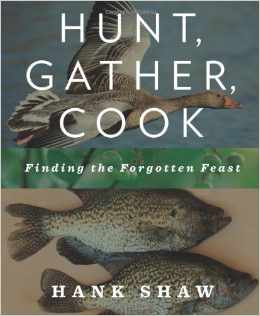
The first one is Hunt, Gather, Cook, by Hank Shaw.

hagc

Hank Shaw is so cool. He hunts, forages, fishes, cooks, and writes about it, which is basically everything I look for in a marriage partner. I like to live with someone who will bring me wild meat every so often, and who keeps me in fish all summer. Who doesn’t, though … right?

I was excited about Hank’s book because I knew it would contain recipes we would use. He’s got recipes for big game, like deer and moose, and for ducks and geese (which we get on occasion), and fish (though I had hoped there would be more on trout) and crabs, and since he’s from the west coast, a lot of what he talks about is relevant to our proteins of choice/availability. He writes about fruit and flower wine-making, meat curing and sausage making, and his chapters on foraging are the stuff of aspirations, at least for me. I long to trudge through the woods to find nettles and fiddleheads, which Nick calls  “hiking” (and I don’t care for it).

You can read Hank’s blog at Hunter Angler Gardner Cook and if you haven’t already been reading his posts, you should definitely start, especially if you are interested in sustainable diets and interesting recipes for wild meats and vegetation. He was profiled in Field & Stream, which I think proves he’s legit. I’ve never read Field & Stream, but I assume it is to outdoorsy people as Bon Appetit is to indoorsy people. Gospel.

When we first started smoking fish, we turned to Hank Shaw first and he did not let us down. And what’s helpful about Hank’s blog is that when I need to learn how to do something, like butterfly a fish, the instructions are probably there. He’s like a really helpful friend you can call up anytime you have a weird question about animal parts. If only my IRL friends could do what Hank does for me.

The following recipe is from his section on wild greens, and the time is right to make this dish. If you have nettles nearby, grab some gloves, pick some weeds, and turn them into a creamy, extremely iron- and Vitamin C-rich risotto for dinner this week.

Nettle Risotto

(Serves 2.)

  • 1 cup blanched nettles (about six handfuls of raw nettles boiled for three minutes)
  • 3 tbsp. unsalted butter
  • 1 large shallot, finely chopped
  • 3 cloves garlic, minced
  • 1 cup Arborio rice (I use half rice and half pearl barley)
  • 1 tsp. salt
  • 4 cups homemade or low-sodium chicken, vegetable or beef stock
  • 1/4 cup grated Pecorino cheese

Once your greens are blanched and cool, drain them and roll them into a tea towel and squeeze out any excess water. Chop them as finely as you can.

Heat stock to a gentle simmer.

In a heavy-bottomed pan over medium-high heat, melt two tablespoons of the butter. Once the butter is melted and has stopped frothing, add shallot, garlic, and rice, stirring for a minute or so until rice begins to look opaque and is nicely coated in fat.

Stir one cup of stock into the rice with the salt. Stir frequently, and when the first cup of stock has been absorbed by the rice, add the second cup. Repeat the waiting and stirring.

When it comes time to add the next round of stock, add your greens as well, this time with about a half a cup of stock. Your stirring should be more frequent now. Keep adding water in half-cup amounts until your rice is al dente and has reached the consistency you prefer. I always use all four cups, as I like my risotto loose.

Add the cheese and the last bit of butter. Stir, taste, and adjust seasonings as needed. Serve immediately.


The next blogger I’d like to tell you about is Alana Chernila of Eating from the Ground Up. I’ve been reading her blog since almost the beginning, marveling at how lovely her life seems out there in the Berkshires, wherever that is (I assume it’s like Narnia and I have to find a secret passageway to get there). Her book, The Homemade Pantry: 101 Foods You Can Stop Buying and Start Making has improved my life in simple, wonderful ways. I don’t buy ricotta anymore. There’s no need.

the-homemade-pantry


The best thing in this book might be the recipe for homemade instant oatmeal – ween yourself off that terrible-for-you sugary packet-stuff and start making instant oatmeal with rolled oats from your pantry – there’s a bonus recipe for homemade brown sugar, if you need it. This has been a life-saver for me with Toddler, who eats too much sugary crap but who can be tricked with better-quality stuff if you catch him before he’s formed a habit for the store-bought version. I’ve made it with Porridge Oats, which comes with bran and flaxseed in it, and it works just as well.

The recipe I’ve made over and over is her recipe for ricotta, which, if you leave it long enough, becomes paneer. A batch of ricotta is cheaper than the stuff you buy in plastic tubs from the supermarket, and it’s infinitely better and much more impressive when you serve it to friends. The recipe makes about a cup and a half, but I usually double it because why not.

Ricotta

  • 1/2 gallon whole milk
  • 1/3 cup fresh lemon juice (about two lemons)
  • 1/2 cup heavy cream
  • Sea salt to taste

Add the milk, lemon juice and cream to a cold pot (with a heavy bottom) off  the heat, and stir for a few seconds.

Affix a candy thermometer to the side of your pot, and warm the pot over low heat. You want to warm the milk mixture to 175°F, which at this low temperature should take somewhere around 45 minutes. After 30 minutes, be vigilant about checking. Stir a couple of times, here and there, as you putter around doing other things.

When you reach 175°F, turn the heat up to medium-high. Do not stir. Watch your pot, and wait for it to get to 205°F. Should take three to five minutes. Don’t let it boil.

When you reach 205°F, take the pot off the heat and let it sit for 10 minutes.

Line a fine-mesh sieve with cheesecloth, and strain your mixture. Strain it over a bowl or something, as you will want to save the whey that’s left behind – it’s beautiful in homemade bread, and I’ve also used it in muffins and soups. Leave the cheese for another 10 minutes, then sprinkle with salt. Serve warm, as is, with toasted nuts and honey, or chill it for later use, or use it as an ingredient for something else altogether.