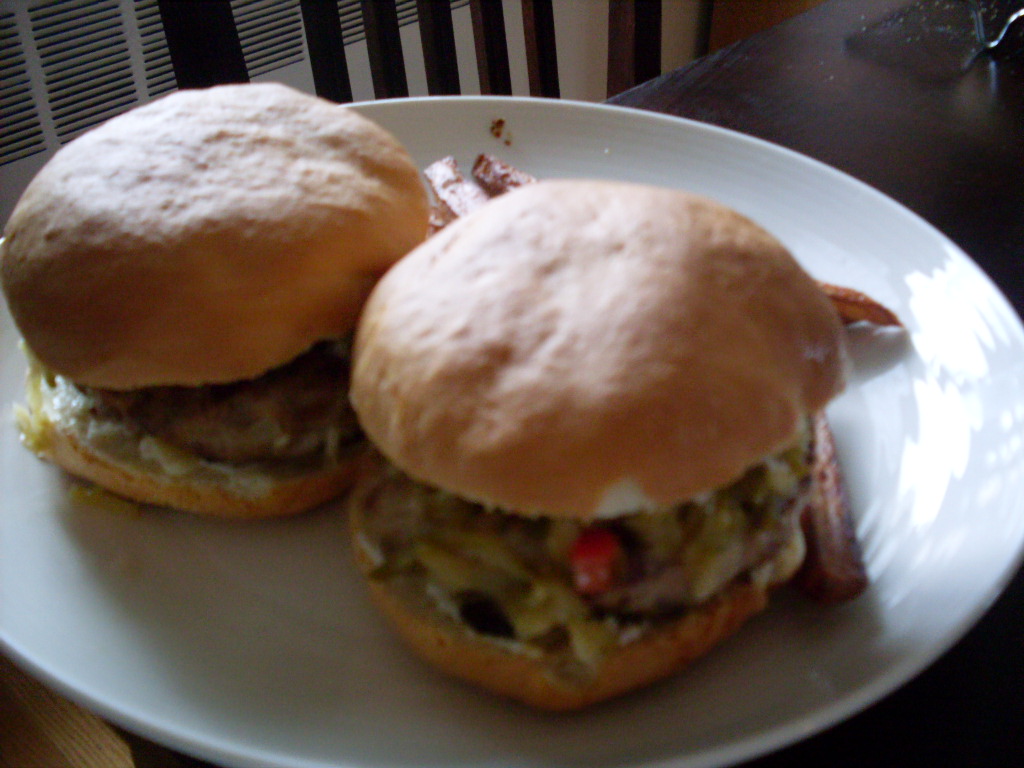
Burger night, but we had no buns or money.

It occurred to me recently that the reason all of my work clothes were faded and full of holes is that I haven’t actually bought anything for work in years, which also explains why I had begun to look so slovenly and outmoded. I am the kind of person who will go shopping for pants and come home with a sequined party dress, so was no surprise that I didn’t have anything practical that I could wear for a job interview I’ve got this week. So we looked at our bank accounts, decided that we’ve been responsible enough with our bills lately and that they could be ignored this payday, and determined that I could go shopping if I was smart about it and promised not to buy anything with sequins. If I get the job, I’m going to buy whatever dress I want.

So, because I had to buy a lot of grey and black clothes, and because we were down to our last as far as essential grocery items, and because life is full of surprises, this has been a big spending week, and now we’re poor again. But I wanted turkey burgers, because had ground turkey thighs in the freezer and one last jar of zucchini relish in the cupboard. The only thing we didn’t have was buns. Solution? Homemade hamburger buns.

The recipe is based on a recipe I dug out of the old Fannie Farmer, but I’ve adapted it to suit normal people’s lives. Who keeps dried milk powder on hand, and how many people other than me hoard lard in their freezer for no particular reason other than greed? I have no idea, but I think no one. This is a more modern, much more convenient take on things.

Hamburger buns

(Makes 12)

  • 2 packages (or 4 1/2 tsp.) dry yeast
  • 1 tbsp. honey
  • 1 1/2 cup milk, warmed slightly
  • 1/3 cup butter, melted (alternative: use olive oil, if you prefer)
  • 1 egg
  • 1/2 tsp. salt
  • 5 cups all-purpose flour

In a large bowl, whisk together yeast, honey, and milk. Let stand for five minutes, or until yeast has begun to foam on top.

Mix butter, egg, and salt, and stir into the yeast mixture. Add two cups flour, and stir until a paste has formed. Gradually add the rest of the flour until the paste becomes a dough.

Turn out onto a floured surface, knead for about a minute, and then cover with a kitchen towel and allow to rest for ten minutes.

After ten minutes, return to the dough, kneading until smooth and elastic, about eight to ten minutes. Place in a greased bowl and cover with plastic wrap and a kitchen towel, in a warm place, and let stand until doubled in bulk, 60 to 90 minutes.

Punch down dough, and divide into two equal pieces. Divide each piece in two again, and then each of those pieces into three, for twelve pieces of dough, roughly equal in size.

Grease two baking sheets, and sprinkle with cornmeal, if desired.

Roll each piece into a ball, pinching the bottom to secure the shape.
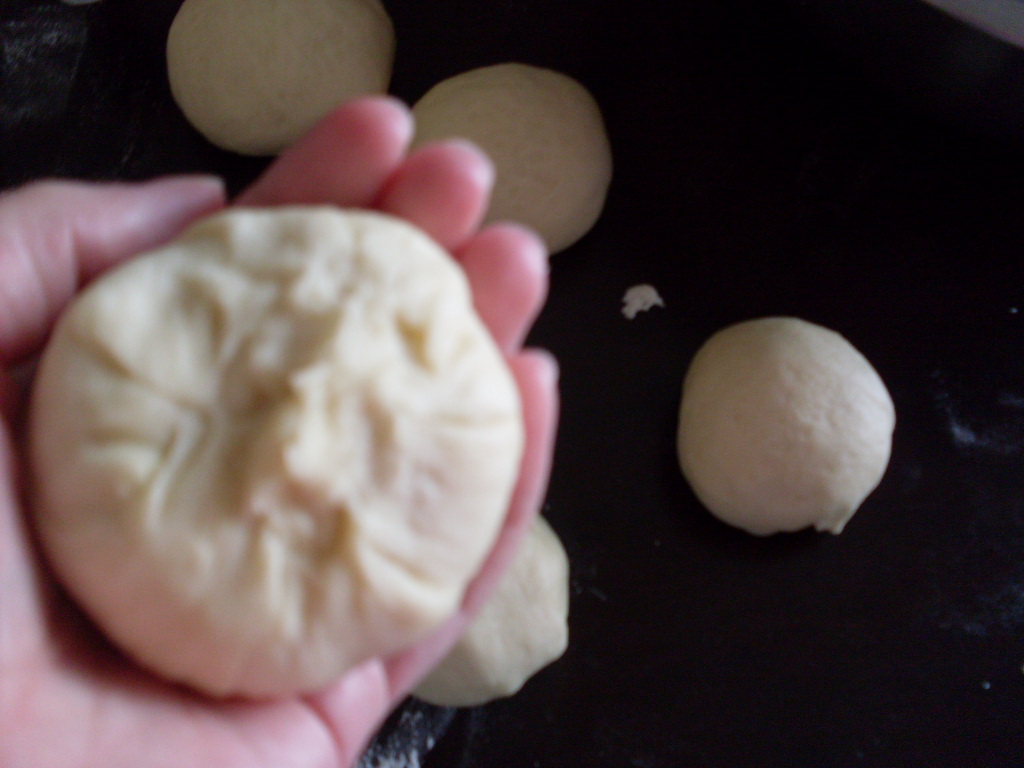
Place dough balls on baking sheets, pressing each ball flat with your palm, so that each ball forms a disc about a 1/2- to 3/4-inch thick. Let rise again, covered in plastic wrap and dish towels, until doubled, about 45 minutes.

Bake buns at 425°F, for about 20 minutes, until golden, then place on a wire rack until cool.

Slice in half and top with your favorite burger patty and condiments. Serve with “easy frites.” Or use as bread for your favourite sandwiches.

Bread pudding with spinach, feta, and ham.

Well, it’s official. This past weekend has been the laziest on record, with no signs so far of an upswing toward productivity or wise time-use. I blame the fort, which we have only just dismantled because I was beginning to worry that at a certain point, my trajectory toward the hobo lifestyle would be irreversible, and I was dangerously close to packing my crap in a bindle, crafting a few sturdy shivs, and finding a van to live in, down by the river. (You can build excellent forts around vans.)

Here’s my fort.

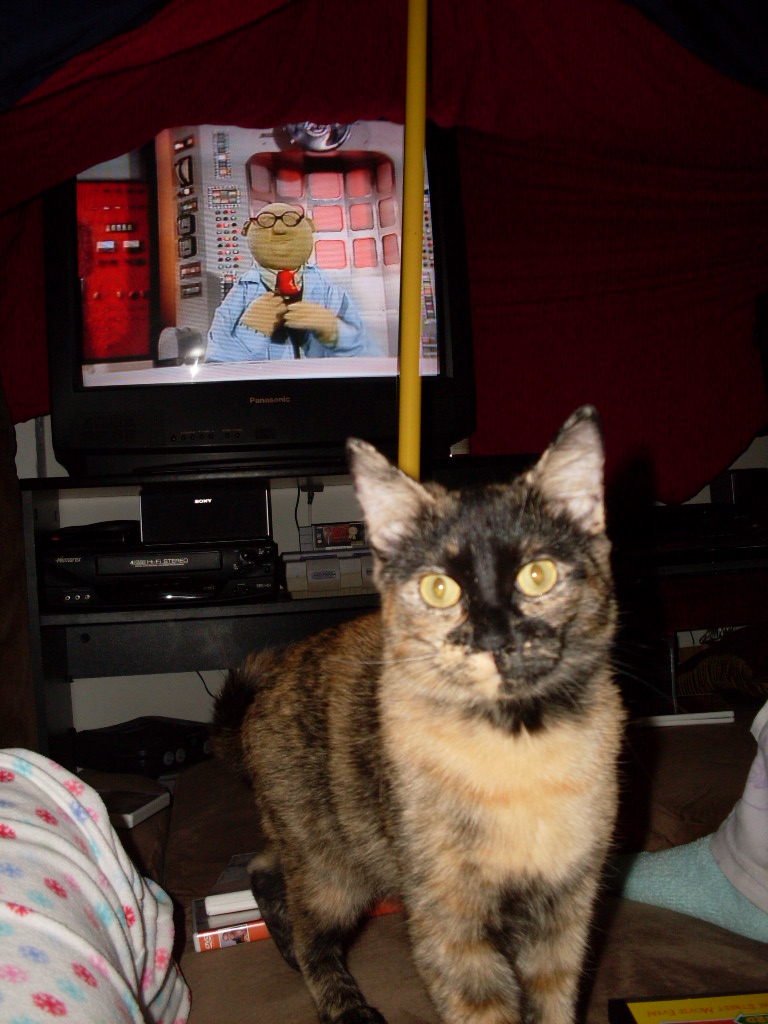
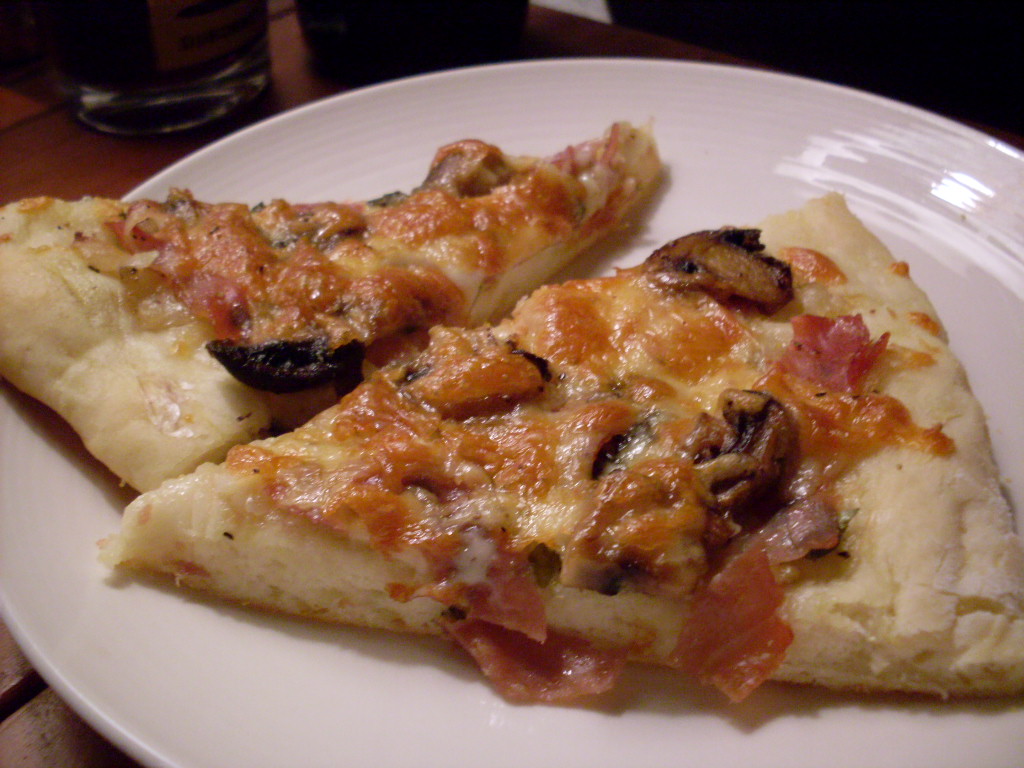
On Thursday night, Corinne came over in her pajamas and we sat in the fort, eating homemade pizza and watching many episodes of The Muppet Show on DVD. The cat was there, and made things difficult, so we had to lock her in the bathroom.

By Friday morning, the roof was gone (the cat also thinks forts are super fun, especially jumping on them), so we ended up enjoying an open-air fort, the kind of fort kids in more temperate climates probably build.

We came to love the fort, and even considered making it a permanent fixture; is anything more fun than doing stuff in a fort? The correct answer is no. The problem is, it was beginning to function as a vortex into which all of my motivation (and Nick’s, which has always been perilously low anyway) was completely sucked. If I hadn’t needed to go downtown in the middle of the day on Friday, I might still be in those same, smelly pajama pants, hair not brushed, and covered in food because you cannot eat sitting upright in a fort.

So we agreed that today we’d get rid of the thing, put our furniture back up like how grown-ups have their furniture, and do the dishes because a lot of mess accumulates when you’re spending all your time horizontal on a pile of cushions but still eating the same amount (if not more). We did take it down, but not before playing in it most of the day.

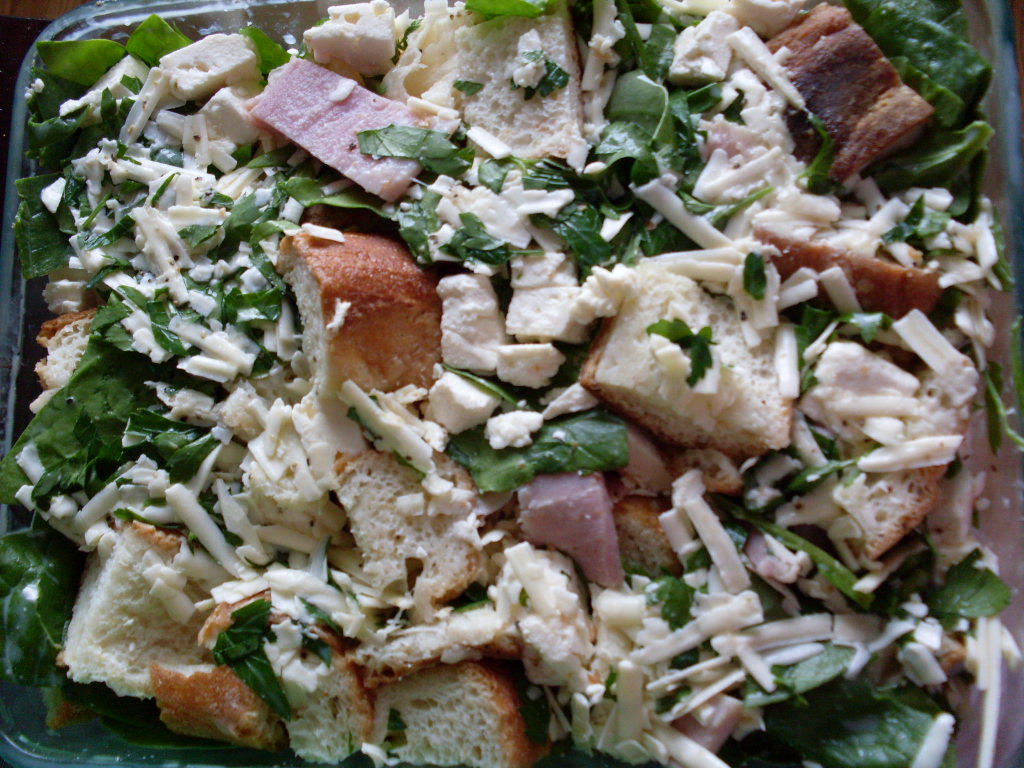
We spent the morning in the fort, napping and brunching. Last night I assembled a bit of bread pudding, and put out some sausages to defrost, so that breakfast could be in the oven by the time we were ready to move from bed to fort floor. It’s a recipe that I’ve played with a bit, and it comes from the December 2008 issue of Gourmet (see the original recipe on Epicurious, here). The two best things about this recipe are that it’s best if you assemble it the night before you want to bake it, and also that it’s very versatile. I’ve made it vegetarian with basil leaves, sundried tomatoes, and pine nuts, and I’ve used sausage and cheddar when I had leftover sausage and no Gruyere. Here’s my Greek-inspired adaptation, which is quite delightful and I insist you make it as soon as you can. If you end up with leftover Easter ham, well, then you’ve no excuse not to. It’s also good as a side-dish with dinner, so you could even make it for your next family feast.

Bread pudding with spinach, feta, and ham

(Adapted from a recipe from Gourmet, December 2008. Serves four, or six as a side-dish.)

  • 1 1/2 cups whole milk
  • 1/2 cup cream
  • 5 large eggs
  • 2 garlic cloves, minced
  • 1 tsp. ground black pepper
  • 1/2 tsp. dried oregano
  • 1/4 tsp. nutmeg
  • 1/2 lb. ham, cubed
  • 5 cups roughly chopped spinach
  • 6 cups cubed stale bread
  • 1 cup grated mozzarella cheese
  • 1 cup crumbled feta cheese
  • Good-quality extra virgin olive oil

Night before:

Butter two-quart shallow baking dish.

Whisk together milk, cream, eggs, garlic, pepper, oregano, and nutmeg in a large bowl.

In another large bowl, toss ham, spinach, bread, mozzarella, and feta. Transfer to baking dish and pour liquid mixture over top. Cover, and refrigerate over night.

Next morning:

Preheat your oven to 375°F.

Remove the dish from the refrigerator, and drizzle olive oil over top the uncooked bread pudding. Cover with foil, and bake for 30 minutes. Then remove foil and bake until golden in spots, about 10 minutes more.

Serve as part of a completely delicious brunch, or alongside a fancy dinner. Serve hot, so cheese is at its melty best. And, if desired, eat in a fort. In your pajamas.

Blood orange cookie bars.

I love blood oranges so much. It’s not just their deep red flesh – they taste like a mash of oranges and raspberries, at least to me, and they peel easily and they aren’t so bitter that you can’t eat eight of them in one sitting if you wanted to, and I want to, most of the time.

When I was a kid, my mom used to make lemon slice – lemon custard baked onto a shortbread cookie crust. I think everyone’s mom made it – it was the kind of thing you’d have at open houses, grown-up birthday parties, or on Sundays. I’ve made them with limes, and the result was delicious, and with oranges. I wonder about grapefruit – I bet grapefruit cookie bars would be pretty interesting. Today, we have blood oranges, because to be honest when it’s blood orange season we always have more than we can peel and eat on hand anyway. I hope you like these. They’re like mom would make – especially since they’re adapted from a recipe I swiped borrowed from her tattered kitchen binder. But prettier, because they’re pink.

Blood orange cookie bars

Shortbread crust:

  • 1/2 cup butter, at room temperature
  • 1/4 cup granulated sugar
  • Zest of one blood orange
  • 1 cup all-purpose flour

Custard:

  • Zest of one blood orange
  • 4 tbsp. blood orange juice
  • 1 tbsp. lemon juice
  • 1 cup sugar
  • 3 eggs
  • 1/4 cup flour
  • 1/4 tsp. salt
  • 2 to 3 tbsp. confectioner’s sugar

Preheat your oven to 375°F.

Cream together the butter, sugar, and zest to make your crust. Stir in flour until a crumbly dough forms, and then press it into a 9″x9″ square baking dish. Bake for 20 minutes, until the edges have browned and it smells like cookies. Remove from oven and cool in the pan on a rack, about 20 minutes.

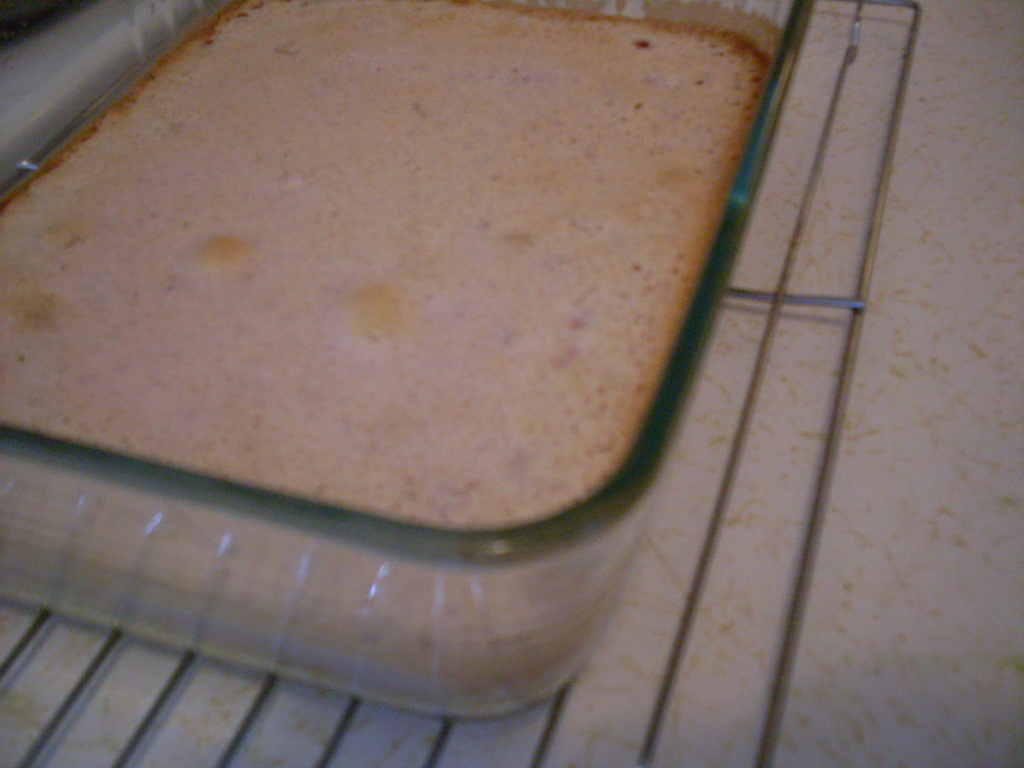
Whisk together your zest, orange juice, lemon juice, sugar, eggs, flour, and salt. Pour over crust. Bake for 30 to 35 minutes, until lightly golden around the edges, dry on the surface, and pretty much firm in the centre when tilted slightly.

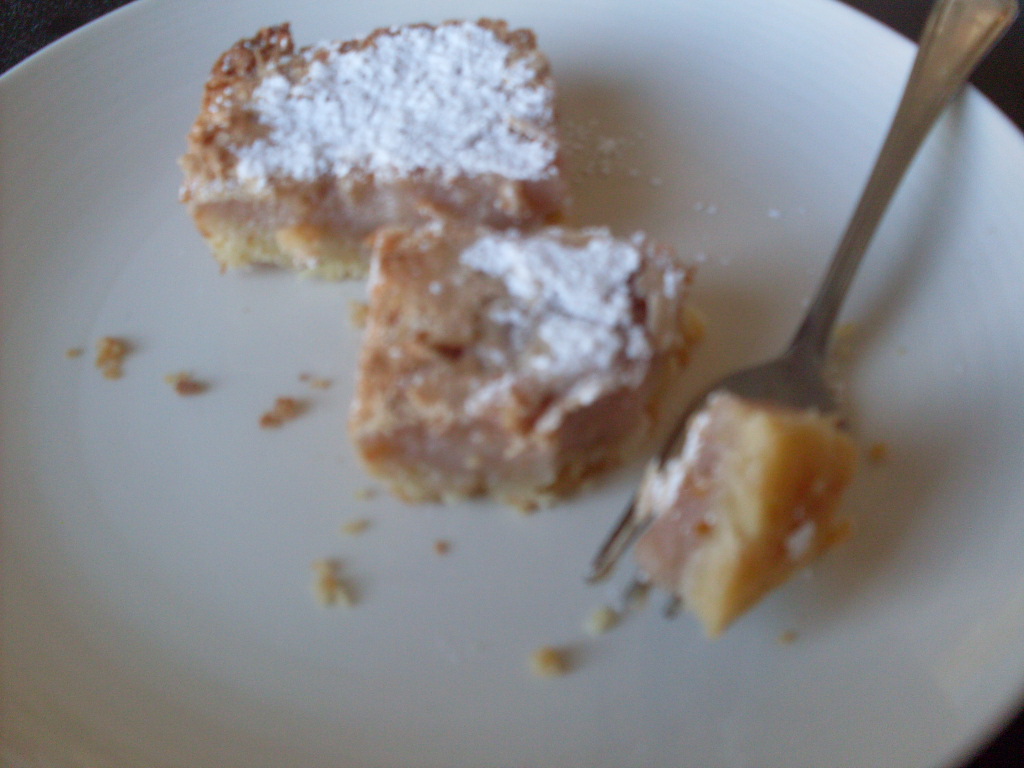
Cool, again in the pan, on a wire rack. Once completely cooled, sprinkle with confectioner’s sugar and cut into slices. Serve with tea. Or, if you had a crappy work week and it’s over now, serve with a glass of sparkling wine with just a squish of blood orange for colour.

Things to not be messed with: Sticky toffee pudding, and also me. But mostly the pudding, because I probably won’t fight back but we have to defend the food.

Despite its reputation to the contrary, England is actually home to a tradition of really delicious food. In theory, anyway. In practice? I’m not so sure, but it’s possible that when I was there, the good stuff was priced a tad out of my range. They do good fish and chips, and I can’t get enough mushy peas or potted Stilton.

It was much too long ago that I was there. I think it was 2005, which means I am long overdue for a return. I went with my aunt and uncle, Lynn and George, who continue to spoil me rotten despite my advancing years, and though the delicacies were mostly cheese– or chocolate-based (those fresh little croissants and their warm chocolate dip at the coffee shop beside Harrod’s – I dream about them!) and each very special in their own right, there was one extra special treat that tastes and reminds me of England in all its splendour, and it’s impossible to screw up.

Sticky.

Toffee.

Pudding.

Well, actually, I’m wrong. It’s super easy to screw up, and even the English are doing it. The thing about sticky toffee pudding is that it’s a pudding, not a cake with sauce. Semantics are important, and the difference must be appreciated. I noticed a few years after returning home that sticky toffee pudding had made itself known on this side of the world – there’s even a Haagen-Dazs flavour named for it. I got excited, and tried it everywhere. There are a couple of good spots for it locally, but on the whole, it’s gone the way of most other trendy food items: it got all tarted up, and in the process lost the magic that made it what it was.

Sticky toffee pudding is a gooey, sticky pudding that tastes like toffee. Which sounds obvious, but I’ve seen it complicated, dried out, and not even toffee-flavoured. It’s the kind of thing you’d eat after a big roast dinner with all your relatives or Two Fat Ladies. It’s homey, wholesome, and packed full of sugar. Even Nick liked it, and he’s usually not big on dessert. He suggested that he might want the leftovers for breakfast.

So anyway, I have been thinking about this for ages, and tonight, Auntie Lynn and Uncle George came over to see our new place and meet our new cat and have tea and a baked good. I decided that we would have sticky toffee pudding, with ice cream, and I searched the Interwebs for a suitable recipe.

But there wasn’t one.

Because the Interwebs also seem to think that it should be a cake with sauce. Even Jamie Oliver thinks so.

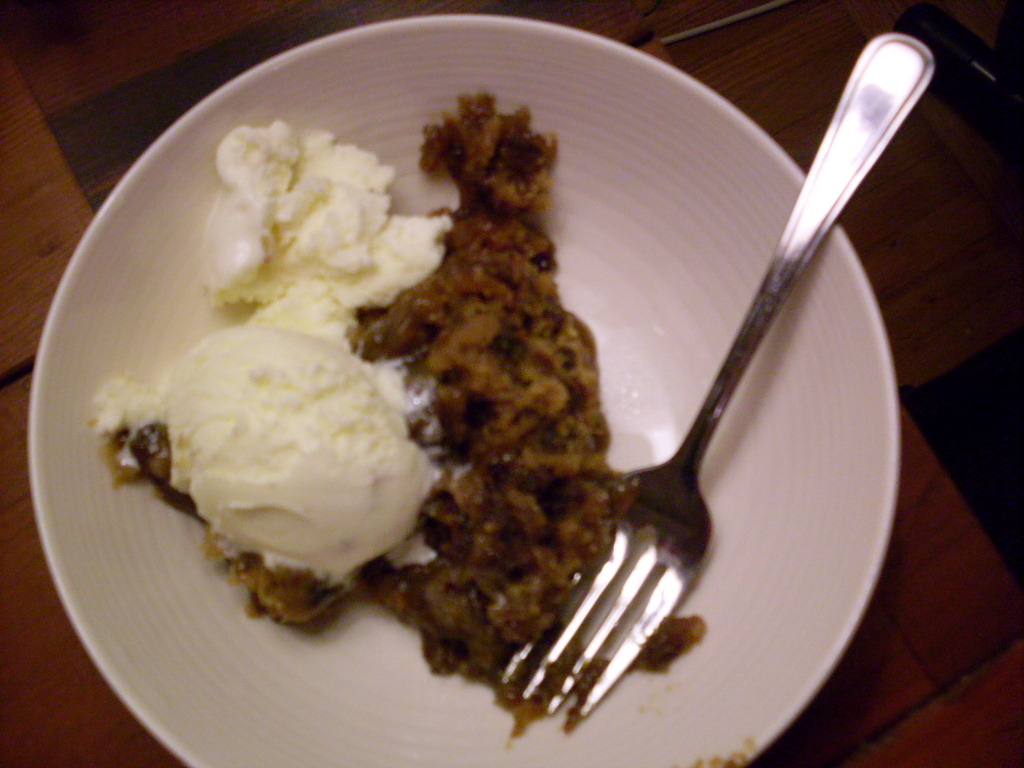
So I had to do it all myself. Here’s the result: sticky toffee pudding, mixed in its baking dish and baked in its own sauce. It’s rustic, and needs no further fussing to bring it any nearer perfection. Your grandmother would have approved, and I think she’d be more right than Mr. Oliver about this.

Sticky toffee pudding

  • 1 cup all-purpose flour
  • 1 1/2 cups dark brown sugar (1/2 cup reserved; please don’t use light brown sugar – it would be all wrong)
  • 1 tsp. baking powder
  • 1/4 tsp. salt
  • 2 cups chopped dates
  • 4 tbsp. butter, melted
  • 1 egg
  • 1/2 cup milk
  • 1 cup boiling water
  • 1/2 cup granulated sugar
  • 1 tbsp. butter

Preheat your oven to 375°F. In a 1 1/2 quart casserole or baking dish (which you don’t have to bother buttering), mix flour, one cup of dark brown sugar, baking powder, salt, and dates. Mix well, so that all ingredients appear to be thoroughly incorporated.

In a measuring cup, whisk together melted butter, milk, and egg. Pour over dry ingredients, and stir until just moistened.

In a separate bowl or measuring cup, mix boiling water, remaining brown sugar, granulated sugar, and additional tablespoon of butter. Pour over the cake-batter-like mixture in the baking dish, but do not stir. Place in the oven as-is, and bake, uncovered, for 45 to 50 minutes, until the sauce bubbles up on the sides and the top resembles a moist cake.

Serve warm, with ice cream.

My aunt confirmed that this is what sticky toffee pudding is supposed to taste like, and my uncle said little but nodded emphatically. I liked it very much – it had the right cakey-pudding to sauce ratio, and tasted exactly how I’d hoped it would. There will definitely need to be another trip to London in my future, but for now, this little recipe will make the meantime more tolerable.

**Also, as far as photo credits, the blurry food ones are mine. The others I swiped from my aunt’s album online.

A little bit of lemon on a weeknight.

I’ll be honest, this one doesn’t come from me. However, it has lived in my head for so long that I’m not sure where it comes from, though more than likely it comes from Fannie Farmer. You probably make something very similar, and if you don’t, your mom or grandmother probably did. Because it’s delicious, I think it bears repeating.

I made Alana’s ricotta again today – I’ve been making it a lot, and have found multiple uses for both the curds and the whey. I’ve been making it with those two-litre containers of homogenized milk, which has meant I’ve had at least a pound of ricotta and quite a lot of whey leftover for somewhere around $2.38, which is easily more than a pound of ricotta costs. And you know, the thing about whey? It subs in very nicely for buttermilk.

I’ve used it today, in my lemon buttermilk pudding cake, and it’s very nice. If you don’t have whey or buttermilk, you can use regular milk, and it will just be lemon pudding cake, which is plenty delicious and probably where the whole thing started.

This pudding cake is part of a long family tradition of pudding cakes, which includes stewed fruit and dumplings and my grandpa’s Radio Pudding. It’s magic, because it starts off as a very runny batter, which transforms into a pudding with a delicate sponge cake top once baked. Sound familiar? It’s the perfect dessert for company on a weeknight, its purpose this evening, because it’s easy, and uses just a handful of ingredients that you probably already have in your pantry and fridge. You can substitute limes, or oranges, if that’s what you have, and it will be different but also lovely. I bet it would look very pretty if you made it with blood oranges.

Lemon buttermilk pudding cake

  • 1 cup granulated sugar (1/4 cup reserved)
  • 1/4 cup all-purpose flour
  • Zest of one lemon
  • 1/4 cup butter, melted
  • 1/3 cup lemon juice (fresh-squeezed is best)
  • 1/2 tsp. vanilla
  • 3 eggs, separated
  • 1 1/2 cups buttermilk (or whey, or regular old milk)

Preheat oven to 350°F. Butter or grease a 1 1/2 quart casserole or baking dish, such as a soufflé dish or that Corningware dish that looks like a giant ramekin, or a 8-inch square baking pan. (Keep in mind that the deeper your baking pan, the runnier your result. Not that that’s necessarily a bad thing, but deeper means more to have to set up, you know?)

Combine three-quarters of the sugar, flour, and lemon zest in a mixing bowl, and whisk well. Add the melted butter, lemon juice, and egg yolks, and whisk to form a batter. Slowly add in buttermilk (or whatehaveyou), whisking as you go.

In a separate bowl, whisk remaining sugar with the egg whites until the egg whites form soft peaks. You want them to be sturdy but malleable – if you overdo it, they get to a point where you can almost “chunk” pieces off. It won’t be the end of the world if that happens, but try not to get to there.

Fold egg whites into sugar-flour-buttermilk mixture. Pour into your prepared dish.

Place the dish into a larger baking pan, and fill the outside pan with water until the water comes to halfway up the side of the dish.

Place carefully into the oven, and bake for 40 to 45 minutes, until the top is cake-like and lightly browned. Cool for at least 30 minutes before diving in.

Serve warm, with whipped cream. Possibly be transported back to your grandmother’s messy kitchen table, as many years ago as that was. This tastes like lemon slice, lemon meringue pie (sans meringue), and all those treats most of us rarely make anymore.

Thank-you cookies.


I wanted to do something nice for Judy, our building manager, who has been all kinds of nice to us and gave us a reference so we could get the kitten. She also came by and told me everything I needed to do to bond with the kitten and make her comfortable, and lent us some equipment and litter to get started, as we were confused about the process and didn’t think to buy things like a litter box before we brought her home. We’re smart.

Cookies are always nice. Everyone likes cookies.

I was going to make her peanut butter cookies because I thought that way there would be tons and then I could keep some, but I’m pretty sure I have no idea as to whether or not Judy has a peanut allergy, and while chances are probably slim, it would still be a shitty thank-you move to poison someone, even accidentally. Judy doesn’t have that coming to her. From me, anyway.

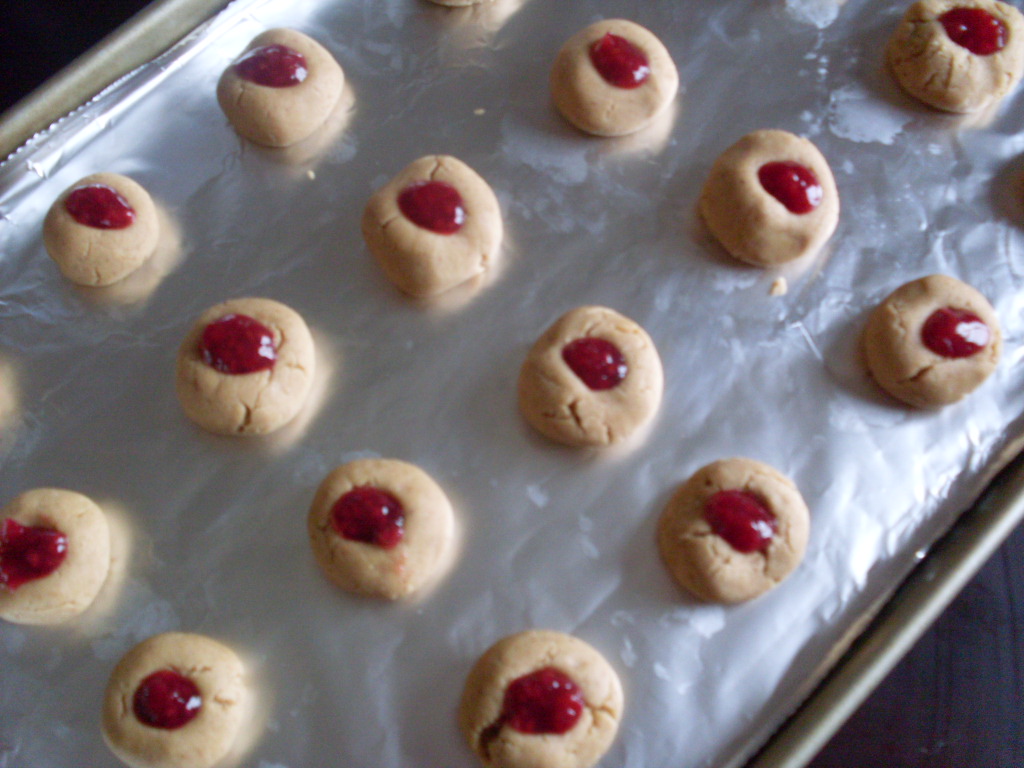
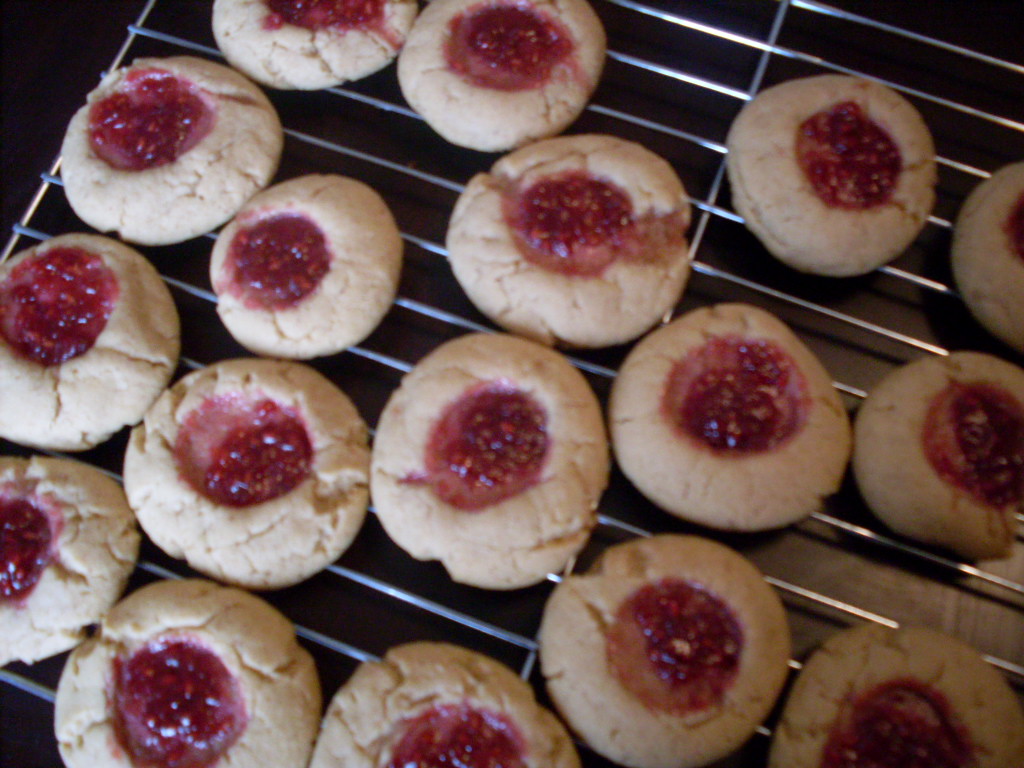
So, these are almond butter cookies, with a little smear of jam on top.

Almond butter cookies

(Makes about two dozen)

  • 1/2 butter
  • 1/2 cup almond butter
  • 1 cup light brown sugar
  • 1/4 tsp. cinnamon
  • 1 egg
  • 1 1/4 cup all-purpose flour
  • 1/2 tsp. baking powder
  • 1/2 tsp. baking soda
  • 1/4 tsp. salt
  • 1/2 cup jam

Preheat oven to 375°F.

In a large bowl, cream together butter, almond butter, brown sugar, cinnamon, and the one egg. Beat these until the mixture is fluffy and the ingredients have lightened in colour.

In a separate bowl, sift together flour, baking powder, baking soda, and salt. Stir these into wet ingredients, until dry ingredients are just moistened and a dough is formed.

Roll cookie dough into one-inch balls, and place on a lined or greased cookie sheet. I ran out of parchment paper, so I used tin foil, and it worked just fine. Press your thumb into the centre of each cookie to form a hole big enough to contain a drop of jam.

Spoon jam into cookie holes, about one-quarter teaspoon into each.

Bake for 12 to 14 minutes, until lightly golden but still slightly soft. You want these to be chewy. You really do. Let them cool on the pan for a minute or two when they’re fresh from the oven, then remove to a wire rack to finish cooling. Then eat with tea, or package up with a thank-you card to give to someone who was nice to you.

Root beer cookies.

I think I told you I’m writing a book. Aren’t we all? By “writing a book,” of course I mean spending four hours tonight on Facebook, Twitter, MyLifeIsAverage, and everyone-else-in-the-world’s blog. Four hours is probably not even an exaggeration.

As there’s no point in going outside for the next two to three weeks, and since this whole book-writing thing is much less fun than anything ever, today’s off-the-couch distraction was cookies. Root beer cookies, actually, because there was a little bit of a bottle of the stuff left in the back of my fridge and I get super neurotic about throwing anything out. Which explains why I have so many mostly empty jars taking space in my little fridge (at least eight of the jars are condiments that I felt compelled to purchase because they were so weird I couldn’t just leave them there to not be bought).

Most root beer cookie recipes I’ve come across call for root beer extract, which apparently is as easy to find as regular old vanilla, but I’d never heard of it, and, frankly, I can’t be bothered to go looking – why use root beer extract when a root beer reduction works just fine?

Well, maybe it would make the cookies more root-beery. But I like what I came up with here – it’s like sugar cookies high-fived vanilla, and the result is a chewy, sugary delight. A whiff of root beer, and that’s all you really need. If you wanted root beer hyperbole, you’d just drink the stuff, wouldn’t you? Yes. That’s what I thought. So here you go: my root beer cookie recipe. I hope you like it.

Root beer cookies

(About 30 cookies)

  • 1 cup butter
  • 1 cup dark brown sugar
  • 1 to 2 cups root beer, simmered until reduced to 1/2 cup (30 minutes to one hour), and cooled
  • 2 eggs
  • 1 tsp. vanilla extract
  • 3 1/2 cups all-purpose flour
  • 1 tsp. salt
  • 1/2 tsp. baking soda
  • 1/2 cup granulated sugar (for rolling)

Preheat oven to 375°F.

Cream together butter and sugar until fluffy. Gradually pour in root beer reduction, then each egg individually, beating continuously until just after the last egg has been added. Stir in vanilla extract.

Sift together flour, salt, and baking soda. Pour into the wet ingredient mixture, stirring to combine until dry ingredients are just moistened.

Roll dough between your hands to form a ball the size of a golf ball. Roll the balls in the sugar, and place on a cookie sheet, about an inch and a half apart. Press each ball down with a fork.

Bake 10 to 12 minutes, to desired doneness, or until golden around the edges. I like mine just shy of underdone, so that they’re still chewy, but I know other people like theirs finished. Serve warm, with cold milk, or store in a sealed container for about a week, if they last that long.

Tomorrow’s distraction? Cookie eating. I win two nights in a row!

Another easy pizza crust, perfect for something unpleasant like Wednesday.

So … burdock will have to wait until tomorrow. When you see prosciutto on special, you jump on it, and then you maximize its salty porkiness by cutting it into strips and baking it onto a pizza.

I make this foccacia bread that contains potato, and it’s quite delicious and always very moist. Sometimes I stretch the dough out and turn it into pizza, but it’s not a thing to make on weeknights, when I need to eat now-if-not-sooner the moment I get home. I thought tonight I’d try shredding potato into pizza dough and baking it that way, because it’s quicker than foccacia, and I might be onto something. Something awesome.

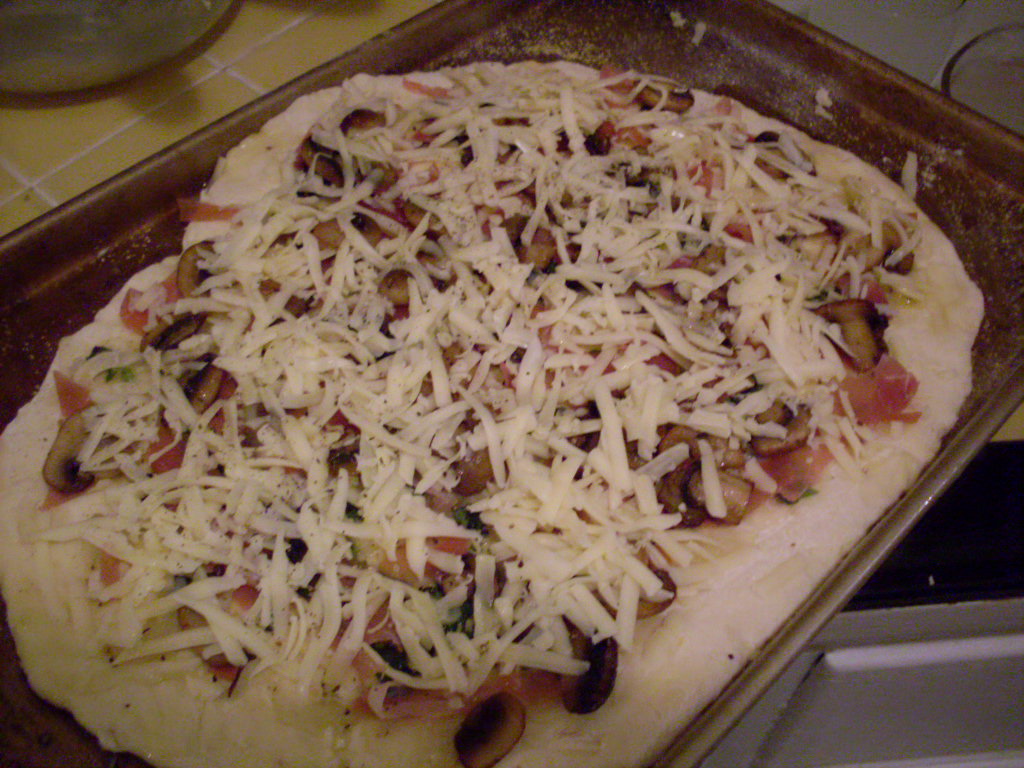
I topped the pizza with a sauce of a crushed bulb of roasted garlic and olive oil and some basil, strips of prosciutto, and a half-pound of mushrooms cooked in olive oil and garlic. And cheese, but not that much, actually, because even though it seems counter-intuitive not to load the thing up with an excess of cheese, on a pizza like this it’s better to use only what you need.

I’m only going to give you the recipe for the crust, because you can top it with whatever you want. But if you top it with roasted garlic and basil and prosciutto and mushrooms, I promise, you’ll be ecstatic upon eating it.

Potato pizza crust

(Makes one large-size pizza crust.)

  • 2 tsp. dry yeast
  • 1/2 tsp. sugar
  • 3/4 cup warm water
  • 1 medium potato (such as Yukon Gold), grated
  • 2 cups + 1/4 cup all-purpose flour
  • 1/2 tsp. salt
  • 1 tsp. olive oil
  • 1 tsp. cornmeal

In a large bowl, combine yeast, sugar, and water. Let stand about five minutes, until yeast is fluffy.

Add potato. Stir to combine.

Add two cups of flour, salt, and oil, and mix until a slightly sticky dough has formed. If your potato is bigger and causes an excessively moist dough, add a bit more flour. Turn out onto a floured surface, and knead in the additional quarter cup of flour.

Preheat your oven to 400°F. Cover dough and let stand for 20 minutes, as close to the oven as you can. Let it feel the warmth and grow just a bit.

Roll dough out into a relatively round sheet, a bit less than a half-inch thick, and lay onto a baking sheet sprinkled with the teaspoon of cornmeal. Top with whatever you like, and bake for about 25 minutes.

This is a bit unusual, and probably not what you want if you’re a die-hard thin-crust fan. It’s fluffy, because the potatoes get steamy as they cook, foofing up the flour and making this perfectly moist.

The other thing about it is that it’s filling, which is perfect for weeknight dinner, but it’s unexpected, and so you’re surprised around slice number three that you don’t even want dessert anymore, and you’re tempted to change into pajama pants if you haven’t already. Which I guess is good? Well, maybe the n0-dessert thing. Nick keeps mentioning my pajama pants, and how other wives wear skirts or sexy yoga pants, and he can shut right up because I feed him better than the other wives feed their Nicks, and they’re less fun and can’t hold their liquor. My pajamas are a point of contention around here.

Anyway, make this. It’s delicious. And soon, I promise, something about burdock root, which is not actually a very good hook if I’m hoping to get you to come back.

Lazy Sunday muffins.

Yesterday was non-stop, and I had a bijillion things to do and I was exhausted at the end of it, so much so that I decided it would be appropriate to change into footie pajamas mid dinner party, and then went to bed early, while all the guests were still here. As of right now, I am still in the footie pajamas, on the couch. It. Is. Awesome.

I got up briefly, because breakfast is important and I like baked goods. You know, something you can eat while you sit on your ass in front of the TV? That’s all I wanted, and so: Muffins. Lemony coconut muffins – little breakfasty bites – perfect for a pleasantly aimless Sunday morning.

Lemony coconut muffins

  • 1/2 cup butter (at room temperature)
  • 1 cup granulated sugar
  • 2 eggs
  • 1/2 cup coconut milk
  • 1 lemon (1/2 tsp. lemon zest, juice of whole lemon)
  • 1/2 tsp. vanilla
  • 1 1/2 cups all-purpose flour
  • 1 tsp. baking powder
  • 1/4 tsp. salt
  • 1/2 cup toasted unsweetened coconut

Preheat oven to 375°F.

In a large bowl, cream together the butter and the sugar until light and fluffy. Drop in eggs, one at a time, beating thoroughly after each egg. Add coconut milk, lemon zest and juice, and continue beating until batter is smooth.

Sift the flour, baking powder, and salt into the mix. Add in coconut as well. Fold the dry ingredients into the batter until just moistened.

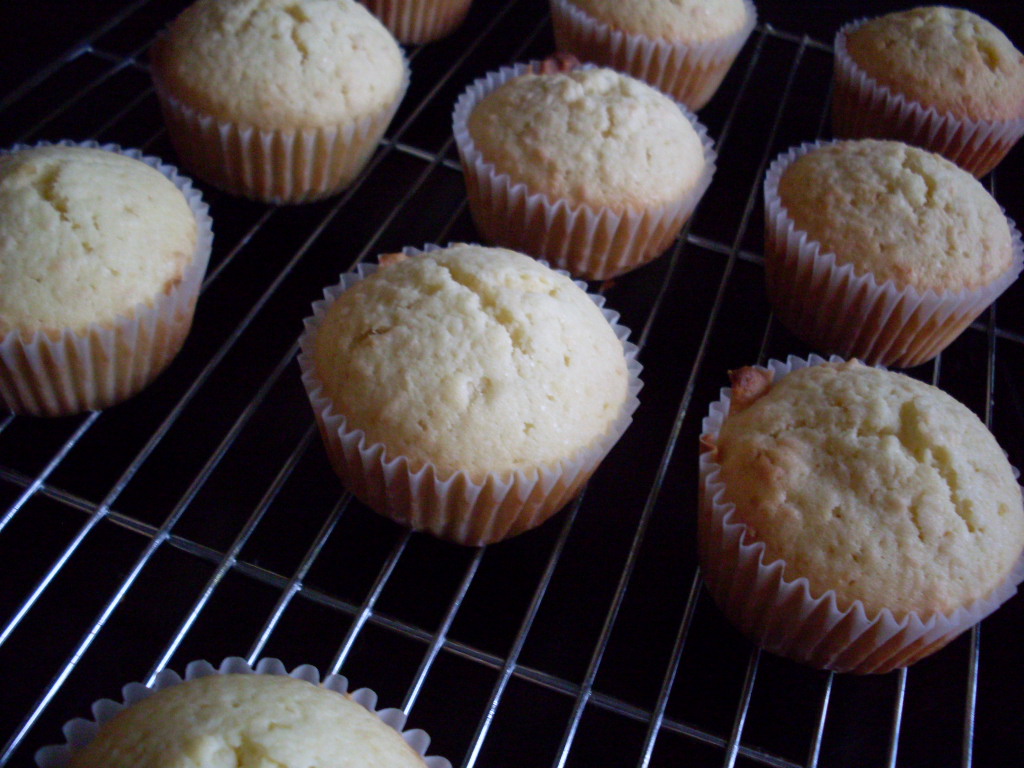
Fill a muffin pan with 12 muffin liners, and then divide the batter between the 12 cups. Bake for 20 to 25 minutes, or until a toothpick inserted into the centre of one comes out clean. Muffins should be yellow and lightly golden.

Remove muffins to a wire rack to cool, but serve warm, preferably with butter and a cup of tea or milk. These little muffins are so nice – softly coconutty, with a pop of lemon in every bite. Sweet, fluffy, and unexpected – I think I’ll make these next time we host brunch here. I bet they’d be nice with lime instead of lemon, if you wanted to switch things up. Lovely, and I tested them on the couch and they were perfect there too.

Quiche is nothing to sneer at and is plenty manly, thanksverymuch.

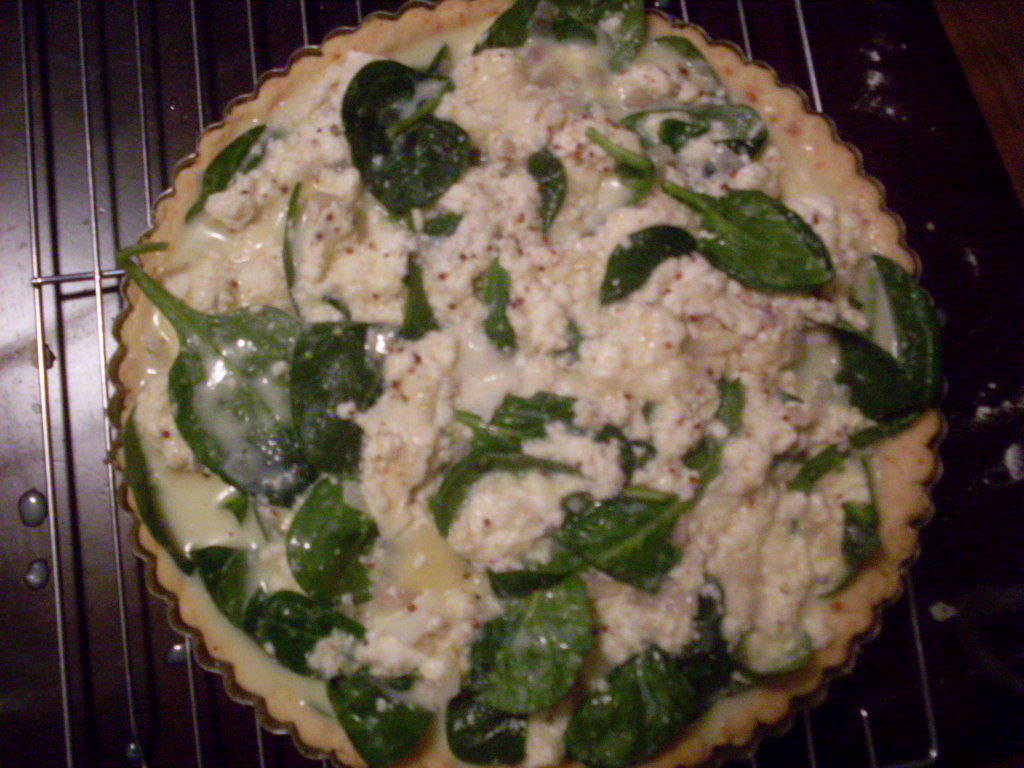
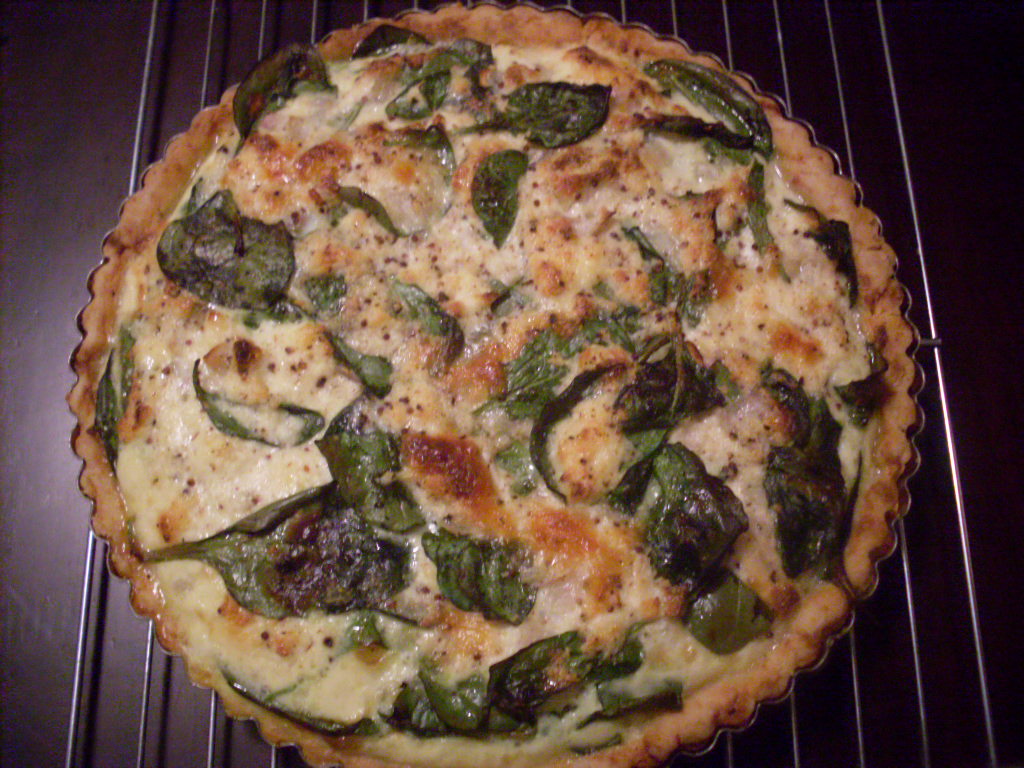
I made quiche for Nick.

In a different time, I’ve heard, it wasn’t so manly to eat quiche, never mind to want it. I met Nick in poetry class. The generations, how they gap. He wrote very long poems about damp shorelines and dead horses, and he wore scarves and I was convinced there was something wrong with him because he wasn’t madly in love with me. I thought he was the kind of guy who’d like quiche, you know?

It’s just as well: I was never interested in the kind of  boy who’d frown at quiche. And as it happens, that kind of boy was never interested in me either.

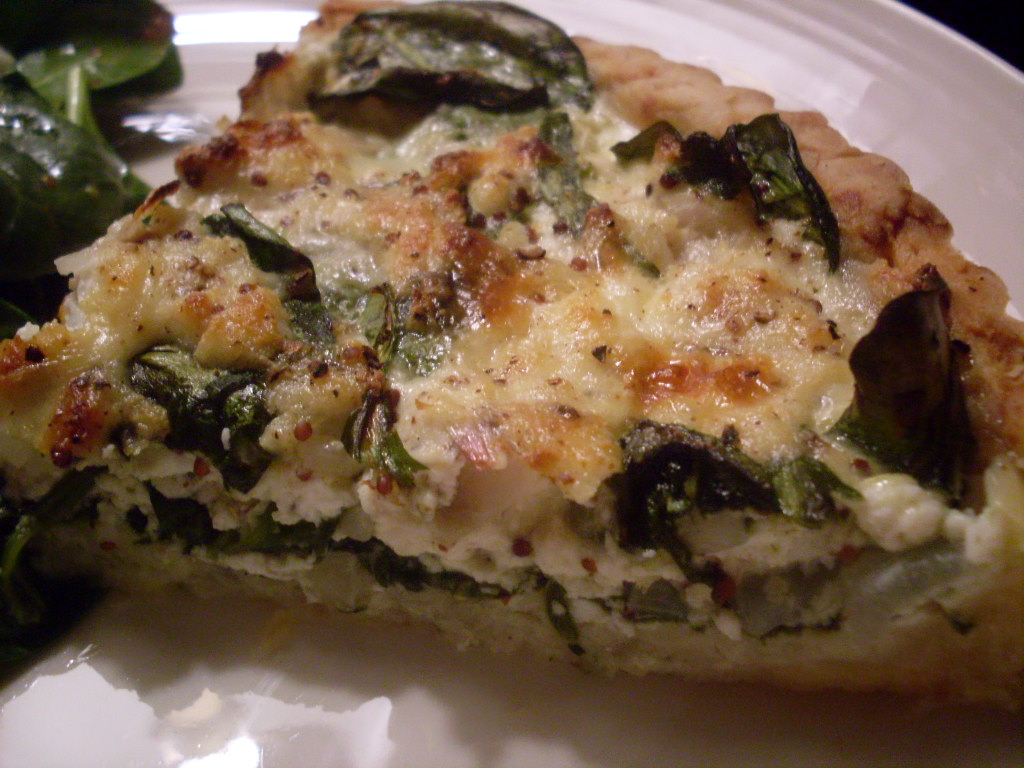
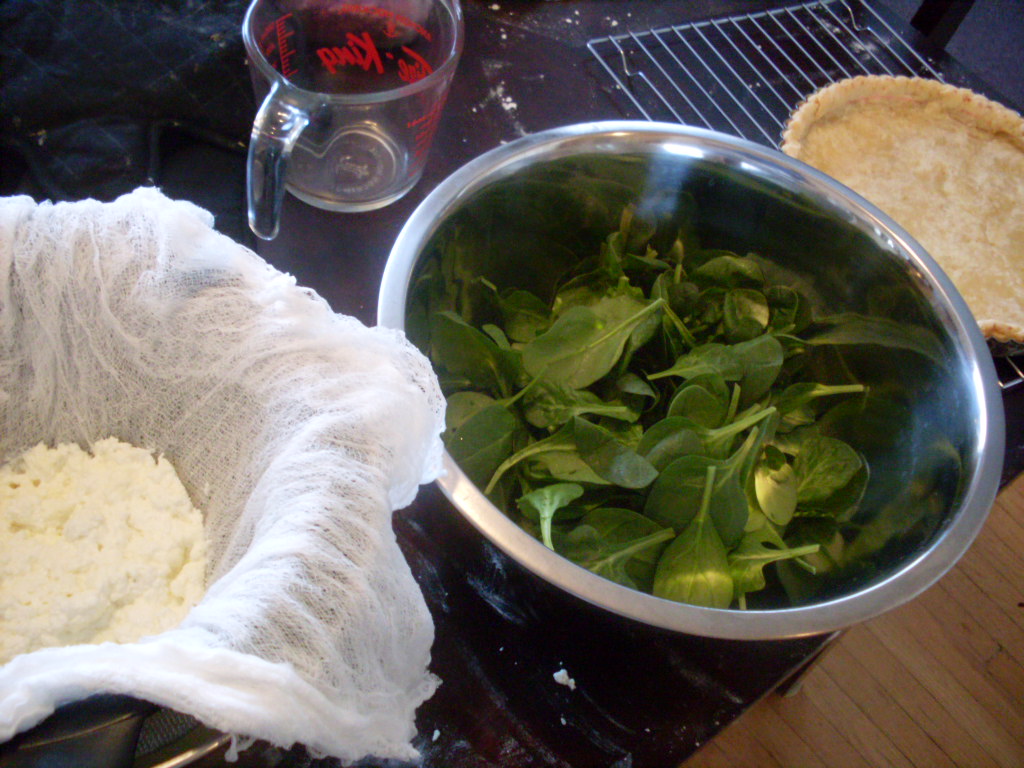
And here we are, a couple of years later and that’s all, and I mentioned quiche the other day and he kept reminding me I’d mentioned it. Nick wanted quiche. So I set out to buy some seasonal greens and a bit of whole milk for ricotta, and I made Nick an eggy pie for dinner.

I wanted to tell you about the quiche that had the chard in it, but my market was out and I was too lazy and too high up in heels to try another store, so I guess I’ll tell you about the spinach quiche, though I’d like for you to imagine it with chard. It’d be easy enough to substitute the chard for the spinach, just blanch the chard first. You don’t have to do the same with the spinach, because it’s wimpier.

Nick would have liked the quiche with chard better, I think, because chard is a manlier green, probably. (It’s perfectly lovely with spinach too, I’m just being unpleasant.) I suppose we’ll try again next week, maybe Monday when the shelves have been restocked.

Ricotta and greens quiche

Crust

  • 1 3/4 cups all-purpose flour
  • 1/4 cup grated Parmesan cheese
  • 8 tbsp. cold butter
  • 1 large egg plus 1 egg yolk, beaten
  • 3 to 5 tbsp. ice water

Filling:

  • 1 tbsp. butter
  • 1 shallot, minced
  • 1 cup fresh ricotta cheese (this is a very good recipe, and I keep wanting it, even now after it’s gone)
  • 1 1/2 cups milk
  • 2 large eggs, plus the white left over from the crust
  • 1 tsp. Dijon mustard
  • 1 1/2 tsp. Kosher salt
  • 1 tsp. freshly ground pepper
  • 1/4 tsp. nutmeg
  • 1/4 cup grated Parmesan cheese
  • 1 1/2 cups packed fresh spinach leaves or blanched chard (my estimate is two bunches, chopped and lightly packed once blanched; this is what I would use, but please correct me if I’m wrong)

Assemble pastry in the typical way, crushing the butter between your fingers into the flour, salt, and Parmesan. Stir in beaten egg and ice water until dough forms. Wrap in plastic, and refrigerate for 30 minutes.

Roll the dough out with a bit of flour, and press into a nine-inch tart pan. Roll the rolling pin across the top to trim away the extra dough. Line the pie crust with parchment and fill with dried beans or pie weights. Bake at 400°F for 20 minutes.

Remove pastry from the oven. Cool slightly, remove beans and parchment, and continue to cool. Until cool. Meanwhile, leave the oven on.

Sauté shallots in butter. Remove from heat and set aside.In a large bowl, whisk together your ricotta, milk, eggs and egg white, mustard, salt, pepper, Parmesan, and nutmeg. Add your shallots and butter to the mix, and whisk again.

Taste now, and adjust your seasonings as needed. Stir in your spinach or chard, and pour into the pie crust.

Bake mixture in shell for 4o to 45 minutes, until golden and slightly puffed. Cool in the pan on a wire rack for 20 to 30 minutes before serving. Remove from tart pan to slice and serve.

Enjoy. It smells so good, and is the creamiest quiche in the history of ever, because of the fresh ricotta and because when you’re making something like quiche, you just sort of will it to work, and those happy thoughts make it into the oven with the pie. Serves four for brunch or dinner, or more if you’re cutting it smaller to make it an hors d’oeuvre.

Nothing dainty about it. Isn’t it nice that anyone can have this sort of thing now? Yes. Yes it is. And besides, I wouldn’t serve something like this to anyone who’d sneer at any sort of homemade pie. We don’t take kindly to those types around here, poets or not.