In which it takes me a very long time to get to the point, the point being soufflé.

This was going to be a post about blackberries, because we’re right smack in the middle of a DIY revolution and I’m calling myself a revolutionary because I’ve never been cool and I thought this – this – might be my chance. I was going to pick the berries, and then preserve them elegantly with plums and other berries and Christmas spices, which is a thing I discovered in England (at the Queen’s grocer, no less) and give them to everyone at the holidays, which I believe is the pinnacle of DIY … that is, inflicting crap you made on people at Christmas under the guise of caring even though they know you’re actually just cheap.
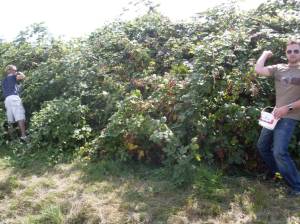
Pickers.Anyway. This was going to be a post about blackberries, but it isn’t.

And let me show you why:
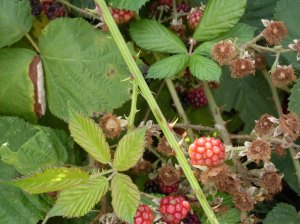
Sharp.Prickles. No, thorns. I was expecting a magical time where fat little blackberries would pop right off the plant into my palm, all juicy and lovely, just begging me to turn them into blackberry sorbet and Christmas jam. Instead, the berries were mostly red, and the black ones were almost all hidden behind skin-shredding barbs, almost all of them out of my reach. I think we gave it a solid 40 minutes before Grace was all, “Can we go home now?”

Stupid little jerks.And so we piled into James’ car and headed back home, a little disgruntled. Revolution isn’t supposed to be so prickly, I thought. I didn’t pick enough to do much with, so I turned them begrudgingly into clean-out-the-crisper jam. Which might be my best jam of the season, as it turns out, but I didn’t write it down so I can’t tell you about it until I reconstruct the recipe. Next year.

The surprise of the morning, the thing I’ve been dawdling at telling you about, was the soufflé. One can’t participate in any sort of revolution without a rich breakfast.

I am not sure how one finds himself in his third decade without so much as a taste of soufflé, but neither Grace nor James had ever made or consumed soufflé ever before, not even once. Le shock! Which leads me to believe that there are others. And I hope to correct that.

Soufflé is a kind of fluffy egg cloud filled with cheese, held up by butter and cream, and flavoured with any of many spices, the combination of which makes your kitchen smell like France. Not the sewery smells that unhappy tourists report, of course, but the France of my, and perhaps your imagination. Eggs and cheese. Melting. Fluffy. Clouds. That’s all the introduction I needed.

This recipe was adapted by Molly Wizenberg from Julia Child, and I’ve since adapted it a bit further. Recipes are not things to just read and obey – they are suggestions, and if you have no gruyere but you have gouda, don’t go out and buy a different sort of cheese. And if you feel like cumin seeds? Add those too. Hate nutmeg? Omit it then. This is a dish you can make entirely out of things you already have on hand. And breakfast should never be any more complicated than that.

Classic Cheese Soufflé

(Serves four to six as a main course.)

  • 2 tbsp. finely grated Parmesan cheese
  • 1 cup whole milk
  • 2 1/2 tbsp. butter
  • 3 tbsp. unbleached all-purpose flour
  • 1/2 tsp. paprika
  • 1/2 tsp. ground cumin
  • 1/4 tsp. salt
  • 1/4 tsp. ground nutmeg
  • 4 large egg yolks
  • 5 large egg whites
  • 1 cup (packed) coarsely grated gouda cheese

Preheat oven to 400°F.

Butter a six-cup (1 1/2-quart) soufflé dish. I used my Corningware dish that looks like a giant ramekin. I think that’s what’s meant by a soufflé dish. Round. It should be round. Add Parmesan cheese, coating the bottom and sides. Don’t worry if it doesn’t get everywhere.

Warm milk in small heavy-bottomed saucepan over medium-low heat until steaming.

At the same time, melt the butter in larger saucepan over medium heat. Add flour and whisk for about 3 minutes, until it is golden and doughy. Do not let it brown. Remove from heat and let stand for one minute. Pour in warm milk, whisking until smooth. Return to heat and cook, whisking constantly until very thick, another three minutes. Remove from heat and whisk in paprika, cumin, salt, and nutmeg. Add egg yolks one at a time, whisking to blend after each addition. Scrape soufflé base into large bowl. Cool to lukewarm. I made this part ahead, and then went fussed about with the music for a little while, and bothered Nick.

Beat egg whites in another large bowl until stiff but not dry. Fold 1/4 of whites into soufflé base, so that the mixture begins to look airy, and the colour is lighter. Fold in 1/2 the remaining whites while gradually adding cheese, then fold the remaining whites into the batter. Do not stir. If you stir it, you’ll break it.

Pour batter into your buttered dish.

Place dish in oven and immediately reduce oven temperature to 375°F. Bake until soufflé is puffed and golden brown on top and center moves only slightly when dish is shaken gently, about 25 minutes (do not open oven door during first 20 minutes). Serve immediately. People will be excited that you’ve placed this in front of them.
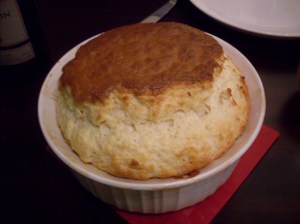
CHEESE CLOUD!Serve with a vegetable. I grilled some fresh pattypan squash (toss halved squash in olive oil, 1 tsp. kosher salt, and 1 tsp. black pepper, grill six to eight minutes per side) instead of frying up hash browns because it’s summer squash season.

Cute.

Breakfasty.A little bread and jam is nice too, and bacon makes everything better, so don’t forget that. All in all, an excellent start to the day, even if the day made us bleed. Note to self: Just buy blackberries. And definitely, DEFINITELY make soufflé.

Spaghetti squash latkes.

Oh, I have so much to tell you this week! It’s been busy around here, and we’ve been chopping and canning and roasting and eating, almost nonstop. The weekend was busy, and it’s only Tuesday but it feels like we’ve been going-going-going seven days already. And come to think of it, maybe we have. So tonight seemed like a good night to have breakfast for dinner. (Note: It’s always a good night to have breakfast for dinner.)

But I still wanted to use up the spaghetti squash I told you about last week, and not in the boring way that everyone always serves up spaghetti squash. You know, plain with butter. Which is delicious, of course, but if there’s a way to make anything into a pancake, it’s advisable to try. So, Nick roasted the squash when he came home from work, so that by the time I got here it was cooked. I shredded it, let it cool, and then turned it into batter.

The latkes were delicious, crispy to the bite and creamy on the inside. Squashy and delicate, and a delightful alternative to the traditional potato version.

Spaghetti squash latkes

(Makes 15 to 20 latkes. You can freeze any you don’t eat, up to one month.)

  • 2 lbs. spaghetti squash (about four cups), cooked, cooled, seeds removed and flesh shredded with a fork
  • 1 medium onion, grated
  • 1/2 cup all-purpose flour
  • 1 tsp. salt
  • 1/2 tsp. pepper
  • 1/4 tsp. nutmeg
  • 3 large eggs
  • 3/4 to 1 cup oil

Preheat oven to 250°F.

In a large bowl, combine the squash and onion. Mix together, and then pour out onto a large kitchen towel. Roll the towel up like a jelly roll, securing the ends, and squeeze out as much liquid as you can. Return the squash and onion to the bowl, and add the flour and salt and spices. Mix well, making sure there are no chunks. Break the three eggs into the bowl and stir to combine. When you’re done, it’ll resemble pancake batter.

In a large frying pan, heat 1/4 to 1/2 cup of the oil over high heat until it shimmers. Reduce to medium-high heat, and add the batter by the spoonful, gently pressing down to spread the batter so that it’s thin like a pancake, and two to three inches in diameter. You want the oil to touch the sides of the pancakes, but you don’t want the oil to cover them.

Batter!Fry for three minutes per side, or until the edges are crisp and the latkes are golden brown.
You’ll have to fry these in batches. To keep them warm and crisp, place them on a wire rack on a baking sheet, and place in your oven while the remaining latkes cook.

Serve hot with sour cream and chives. Possibly with other breakfast dishes. Like bacon. And eggs. And maybe eat in front of the TV, because if it’s breakfast for dinner night, then it’s possible that you’re not wearing pants and you don’t care about formal table settings or talking to each other. Enjoy!

Breakfast for dinner!

Beet pickles, zucchini relish, and my fingernails are still stained purple.

Rose gave me a bag of zucchini this week, and a five-pound bag of beets. And that’s quite a lot of produce, especially around here, where there’s just the two of us, and two very small apartment-kitchen counters, and all our dishes were dirty. So I didn’t cook it all right away, and by Saturday it was time to deal with it all, lest it perish and disintegrate in the crisper. And I really like beets and pickles. And relish.

So I’m giving you two recipes today, because it’s been a busy food week. Yesterday there was pattypan squash and soufflé and we picked blackberries, and today I made jam. Tomorrow, tomato sauce and something to do with strawberries. Here are Saturday’s recipes.

First, beet pickles. Bittersweet spicy magenta pickles. Wonderful with crusty bread, soft cheese, and thin slices of raw onion, or between stained pink fingers, straight out of the jar.

Beet pickles

(Makes four to five 500mL/2-cup jars)

  • 5 lbs. beets
  • 3.5 cups apple cider vinegar
  • 1 cup water
  • 1 cup brown sugar
  • 2 cups white sugar
  • 2 sticks cinnamon
  • 1 tbsp. whole cloves
  • 1 tbsp. whole green cardamom
  • 1 1/2 tsp. kosher salt

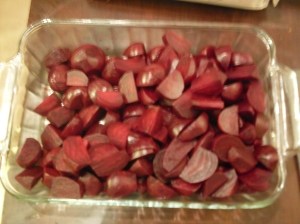
Boil whole beets, unpeeled, with tops and roots still attached, for 20 to 25 minutes. They should be just soft enough for the first millimetres of the prongs of a fork to just pierce the skin. Drain the beets, and dump them immediately into a sink full of ice water.

I want to say “shuck the beets.” Because shuck seems like the right word, though I don’t think it really is. You are going to peel the beets using your hands to strip the peels. Cut the tops and roots off, then strip the peel from each beet, pushing with your thumbs to rub the peel away from the flesh, then running a knife over any spots where the peel won’t tear away. I learned this week that I can record video using my camera, so I’ve taped a demo so you can see what I mean. I thought it was silent, so I didn’t bother talking.

Prepare your jars, using the Procedure for Shorter Time Processing.

Once the beets are peeled, cut them into slices, no thinner than 1/2 an inch thick. Set aside.

Beets. Resting.In a large stainless steel or otherwise non-reactive pot, combine your vinegar, water, sugar, spices, and salt. Bring to a boil, then add your beets. You’ll want to boil your beets for four to five minutes, just as your jars are about ready to come out of their boiling water and be filled.

Spoon beets into jars, and fill with liquid. Don’t worry about filtering out your spices. Add them to the jars too.

Once you seal the jars, process them as per the instructions linked above. Label them with the date you pickled, and be sure not to open them for six to eight weeks. They will need to soak up all that spicy pickle juice. And then they will be marvelous.

Beet pickles!Since the pot was boiling jars anyway, I also made five little jars of zucchini relish. Each jar held 250mL/2 cups. Easy, and very fresh-tasting, not too vinegary, and gently spiced.

This recipe comes from Epicurious, because I’d never made relish before and thought it’d be a good place to start. The Epicurious recipe makes ten jars; I halved the recipe because I only had half the zucchini. I didn’t peel it or seed it, because my zucchini were very small, with thin skins and soft seeds. Here’s my adaptation:

Zucchini relish

  • 2 lbs. zucchini, grated
  • 1 medium white onion, grated
  • 1 medium red bell pepper, finely chopped
  • 1 tbsp. kosher salt
  • 3/4 cup sugar
  • 1/2 cup water
  • 1/2 tsp. celery seeds
  • 1/2 tsp. nutmeg
  • 1/2 tsp. white pepper

In a large bowl, combine your zucchini, onion, and bell pepper. Salt, and refrigerate at least four hours. Drain well, and rinse.

Once drained, put your vegetables into a large stainless steel or nonreactive pot.

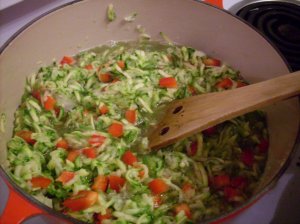
Relish, pre-relish.Add your vinegar, water, sugar, celery seeds, nutmeg, and white pepper, and bring to a boil. Boil for ten minutes, and then place into prepared jars. Process as usual.
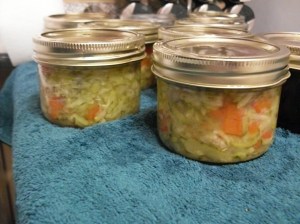
Zucchini relish.Give this a couple of weeks to sit in a cool, dark place, stewing in its juices. It will be very nice with burgers at the end of the summer, and meats and cheeses into the fall. And perhaps even the winter, if you don’t gobble it all up by then.
Fried green tomatoes, and I think it’s a sign.

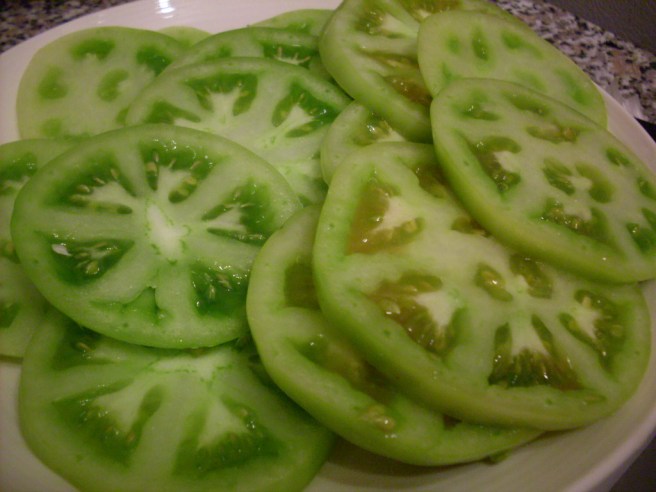
Green tomatoes.Fried green tomatoes are kind of weird. You either like them or you don’t. I’m on the like side of things, because I like their salty tartness, those thin slices with the texture of fresh tomatoes but with the bite of something else, coated in spicy crunch, and fried up in butter. Everything crunchy and fried in butter is worth a try. You know I’m right.
And as it happens, today is the anniversary of the passing of my awesome Grandpa, who also liked fried green tomatoes. And he had excellent taste. That today was the day I decided to make the tomatoes worked out strangely – a coincidence, to be sure. But I’m reading The Jade Peony at the moment, and it’s full of dead grandparent mysticism, and it’s making me paranoid that this was a sign, and now I’m kind of embarrassed that I didn’t wear underwear to work today. It’s laundry day. By which I mean, we have to do laundry because I officially ran out of clean underwear. I can’t be experiencing Grandpa-related coincidences on a day when I am all out of underwear. My grandpa would never run out of clean underwear.

My mom, upon alerting me to this coincidence, if this counts as one of those, told me that I should simply fry them in butter and sprinkle them with seasoning salt, which is how Grandpa did it. Seasoning salt is one of those strange things I can’t bring myself to use, because … well, why is it orange? What are those black things? I don’t know. I’m a salt snob. And, besides, I like my spices. My grandma, Cuddles, who I’ve mentioned before, would sneak spices into things and my grandpa would eat them, delighted. He didn’t know what they were. Better not to tell him, she thought.

Though he did eat around, and had a fondness for all kinds of tastes, particularly sweet tastes. He would buy boxes of seconds from the chocolate factory, and would hide them all over the house, so that wherever he passed by, a treat would be within reach. During business hours, he would apparently do lunch right around my neighbourhood – I didn’t realize this, but the company he worked for for years and years used to be located just a block or two down from where I live now. The little Chinese restaurant where my grandpa and his friends would go for lunch and eat so much he’d be too full for dinner? Probably the one I like to go to for lunch sometimes and eat too much at. It’s very reasonably priced, you know, and it’s been there for eons.

Oddly, my last apartment was right around the corner from my grandparents’ first house, or at least the one where my mom spent her formative years. Coincidences. Or, perhaps a weird kind of parallelism, or I’m reading too much into things. I never find out about these things until after I’ve settled on a place, or a thing. And I don’t look too hard for things like signs. It’s probably just that I am predisposed to good ideas. Yes. That must be it. Heredity. Green tomatoes.

Green, with sheen.

Fried Green Tomatoes

(Serves four as a side dish.)

  • Two or three large green tomatoes (make sure they’re very firm)
  • 1 cup cornmeal (the finer the grind, the better)
  • 2 tsp. ground cumin
  • 1 tsp. chili powder
  • 1 tsp. ground coriander
  • 1/2 tsp. white pepper (black is fine too)
  • 1/2 tsp. cayenne pepper
  • Salt, to taste
  • Two large eggs, beaten’
  • 1/4 cup of butter, melted

Slice the tomatoes into rounds about half an inch thick.

In a large pan over medium-high heat, melt the butter.

Combine the cornmeal with the spices. Dip each slice into the beaten eggs, and then dredge in the spicy cornmeal. Place into the pan of butter, and fry, two minutes per side, until the tomatoes are soft, about the texture of a ripe red tomato, and the crust is golden and crisp.

Buttery.You may have to fry your tomatoes in two batches, like I did. In that case, feel free to refresh with more butter. More butter. Have two more perfect words ever been uttered together, or typed side-by-side? I don’t think so.
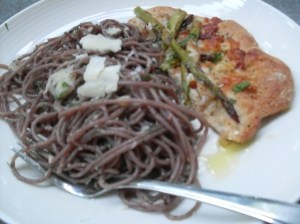
When the tomatoes are done, move them onto a plate covered in paper towels, and salt immediately, while still very hot. Serve right away.

And eat a box of very good chocolate in your favourite chair afterwards, for dessert. Luscious.

Drunken Spaghetti.

Too arthritic and whiny to invest all that much time in cooking, I wanted something flavourful and soothing that I could make and eat in under 20 minutes. I wanted to watch Good Eats, and then Iron Chef, and then Star Trek in my pajamas, and not have to move once the food was done. Solution? Drunken spaghetti. Flavourful, fast, and quite a lovely garnet colour. A pleasure for all the senses, the lazy sense included.

Different. Easy.This recipe grew out of David Rocco’s recipe of the same name. Only this one involves more wine, and is much improved by boiling the noodles in a portion of the wine. Use a cheap but drinkable wine, one you’re not hugely fond of but would drink if you had to. The effect you’re going for here is a winy taste, but the heat is going to kill a lot of what makes the wine distinctive. That’s the idea. Save the good wine for pairing with this dish.
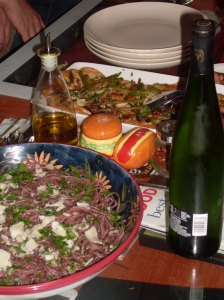
You could use a dry white wine if you wanted to, or if that’s what you had left over. I bet that would be quite nice as well, with asparagus.

Drunken Spaghetti

(Serves four to six. Adapted from David Rocco)

  • 1 lb. spaghetti
  • 3 cups of red wine (1 cup reserved)
  • 4 tablespoons extra virgin olive oil
  • 4 anchovy fillets, chopped (you can omit these if you’d prefer it be vegetarian)
  • 3 garlic cloves, finely chopped
  • 1 tbsp. chopped capers
  • 2 tbsp. chili flakes
  • Salt to taste
  • 1/2 cup finely chopped Italian parsley
  • 1/2 cup freshly grated parmesan cheese

Bring two cups of the wine and six cups of water to a boil in a large pasta pot. Add the spaghetti, and cook for seven to eight minutes. You want this to be al dente, and you are going to finish it in the frying pan so don’t worry if it’s got a bit of bite to it.

In a large frying pan, heat the oil, and add the anchovies, garlic, capers, and chili flakes. Sauté while the pasta cooks, five to seven minutes.

Once the pasta is about ready, drain it, and add your noodles to the frying pan. Pour in the remaining cup of wine, cooking until the wine has reduced and the spaghetti is done, another two to three minutes. Taste as you go to make sure you get the noodly doneness that you prefer.

Toss with parsley and cheese, and serve hot, with a dry, delicious red wine.Purple?

This is quite a good thing to make when you’re tired from too long a day. It’s easy, and you don’t need to do a lot to make it flavourful – it pretty much flavours itself. Literally. The wine does a fantastic job, and the salty bits and the cheese and the fresh parsley all add quite a lot without costing you much in the way of effort. From the time you set the pot on the stove to boil, it’s twenty minutes to cook, plate, and slip blissfully into your ass groove on the couch. Flavour aside, sometimes that’s the most important thing about a recipe.

Nice salt & pepper shakers.

Warm cucumbers? A good idea, actually.

One of the benefits of being so beyond-excited about food is that people like to give me stuff. My sister-in-law periodically gives me her overstock, or things she’s bought but has no real use for. Rose, at work, has given me lovely fresh basil, a jar of her homemade pesto, and a selection of delightful jasmine teas from her personal collection. I’ve come by garden-grown zucchini, green beans, cucumbers, and tomatoes. And on Friday, Nick came home with a bag of fresh goodies harvested from the garden of one of the ladies he works with. For me. For me! There was still damp soil on the squash, that’s how fresh it was.

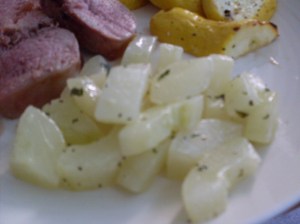
Included in the bag of goodies was a rather round cucumber. Nick had thought it was a zucchini, but it was, in fact, a short, stubby cucumber, about two inches in diameter with no tapering. A fat little guy, with firm flesh … the kind that stands up to a bit of braising.

From here, this looks like a close-up on a pickle.

I’ll admit, I hadn’t really thought about this until Julie & Julia. I’ve read recipes for this dish before, but kind of skimmed over them, barely reading, having always considered cucumbers a raw-eating vegetable, a thing suited to salads, and generally a pleasant sort of bland. I see now the error of my ways. And given that this dish is low-risk, requiring little investment of either time or money, it’s something you really ought to try. And it’s summer, and you might even have cucumbers in your garden; if not, they’ll be all over your local market.

Braised Cucumber

  • 1 large cucumber
  • 1 tbsp. butter
  • 1 tsp. lemon juice
  • 1/2 tsp. salt, or to taste
  • 2 tbsp. heavy cream
  • 1 tsp. chopped fresh mint (if you don’t like the sound of mint, you could use fresh dill, which would also be lovely, or a bit of fresh parsley … anything you like)

Peel cucumber. Cut in half, and scoop out the seeds. I find that scraping them out with a regular old spoon works great. Chop cucumber into one-inch pieces.

In a pan, melt the butter. Add the cucumber, make sure it’s coated in the butter, cover, and let cook covered for about five minutes over medium heat.

Remove lid, and add salt and lemon. Cover and cook for another minute. Remove lid, add cream to coat the cucumber, and cook for another minute.

Before serving, toss with mint. And then dive right in.

So fresh-smelling!
So fresh-smelling!

It’s an odd thing, and at first you may be a bit surprised – cucumbers are not all that notable, and they can often go without notice on your dinner plate. When turned into pickles, they are a thing to celebrate. And when they are freshly plucked from the garden and cooked in butter, they are a lip-smacking revelation, a buttery blend of flavours, with a satisfying touch of crunch. And the mint makes them even more lovely. I’ll be adding this to my list of staple side-dishes immediately.

No, really. Go make this right now.

The best tomato sauce you’ve ever tasted. For real. I’m not even exaggerating. Yes!

Love.I bought the tomatoes because they were lovely, but also because I was super-excited at the possibilities for solar tomato sauce. A fascinating idea, I thought, and what a way to have dinner ready in a hurry, just boil some pasta et voila! And then the sky turned grey for the first time in a long, long time and the heat wave broke and the long-range forecast whined rain for the next seven days and I still had the tomatoes, and then Rose at work brought me a bouquet of basil. And then everything was glorious.
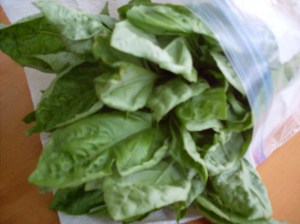
Basil from Rose.So, inspired in part by a recipe in this month’s Gourmet and in part by an unsatisfied desire to get to the essence of tomatoes through a batch of solar sauce, I’ve improvised some. And it worked out well. Very well. You will soon find an abundance of little tomatoes at your local market, and this is what you should do with some of them. About 1.5 pounds of them.

(If you’re like me, you’ll want a meatball or two to go along with things. Use this recipe. Add a little bit of spinach and lemon zest. Make the peperonata another time, and eat it cold with crusty bread.)

Make this in a pot you can use on the stove AND in the oven. It works better that way, and is less mess. Also, while I insist you try this with little tomatoes, you don’t have to. I was just lazy and didn’t want to bother with the whole blanching/skinning thing, which I kind of feel obligated to do when the tomatoes are bigger.

Tomato sauce that tastes like tomatoes

  • 1.5 to 2 lbs. fresh cherry tomatoes (or other small tomatoes)
  • 1 bulb of garlic
  • 1/4 cup good olive oil
  • 2 tsp. salt (or to taste)
  • 2 tsp. red chili flakes

Preheat your oven to 400°F.

Halve your little tomatoes, and trim the top off the bulb of garlic. Place your tomatoes in the pot, with the garlic right smack in the middle, and then drizzle the oil over top. Add a teaspoon of the salt, and toss into the oven, where you will bake the whole thing, covered, for thirty minutes.

Lusty.Place the pot on the stove, over medium to medium-low heat. You don’t need the thing to reach a rolling boil. Remove the garlic, and squish the cloves out into the pot. You may want to wait until it’s cool enough to handle – I used a clean dish cloth as a barrier against the heat. The cloves should pop out easily.
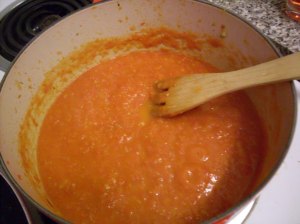
At this point, you are going to want to puree the contents of your pot. I recommend using a hand blender, because that’s the best way to keep a bit of texture – you could also use a food mill, a food processor, or a blender. If you’ve removed the mix from the pot to blend, return it to the pot. Taste, add the remainder of the salt and any more if you feel it needs it, and your pepper flakes, and simmer over medium to medium-low heat for another 30 to 40 minutes.

Sauce.Boil a pot of pasta (about one pound uncooked) until cooked to your liking, and then toss the noodles into the sauce pot and make sure every noodley strand is covered in fantastic tomatoey goodness.
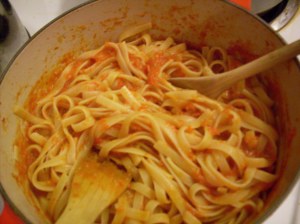
Sauced.Serve with chopped fresh basil, a dollop of ricotta, and/or your favourite shaved parmesan cheese. And meatballs. But you knew that.

Mmmm. Mmm!I am completely in love with this tomato sauce, because it tastes exactly like tomatoes, which, especially at this time of year, taste exactly like meaty summer sun, to me. And the garlic adds a nice bit of body, and is not aggressive. The roasting and simmering makes it sweet, so that it plays a supporting role here, heightening the taste of the tomatoes. It’s really very lovely. Go out and make this. Especially if it’s raining – the smell … the smell! The wafting, beautiful aromas of this sauce will make your home smell like all the best parts of your garden, roasting. It’s compliment sauce. As in, everyone who eats this will compliment you on your awesome talent and probably also your incredible good looks, and you will taste it and fall in love with yourself all over again. Sigh!
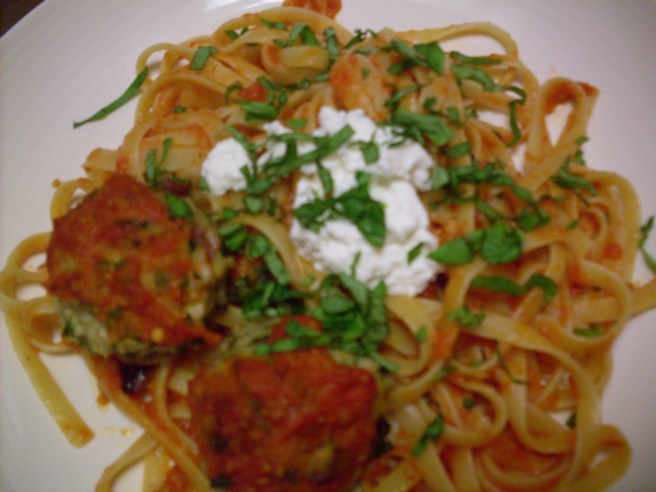
This kind of reminds me of the Flying Spaghetti Monster, in a good way.

Invoking Korea: I am madly in love with all pancakes.

Much as I love home, every so often (three to six times per week) I consider escape. Sometimes it’s the weather, and periodically it’s people – sometimes it’s both (though rarely is it some of the weather or all of the people). Sometimes the grey is all around and the idea of putting on a coat or fighting back is exhausting and you don’t care enough to do either because it’s the west coast and there will always be damp and because some people are going to rain on your parade whether it’s warranted or not. And that’s when I think of Korea. I’ve never been there. They do clever things with cabbage and have excellent pancakes.

A million years ago now, when I was very small, my grandpa returned from Korea with a pair of pretty dolls in blue dresses. They had marabou fans and elaborate hairstyles and I thought that everything pretty like that came from Japan until Where in the World is Carmen Sandiego? And then I found out where Reykjavik was and then I thought I knew everything. I hope you know that those two thoughts are not completely related. Korea. Seoul. I want to go.

Dollies.

Seven years ago I attempted to teach a Korean family English. They’d hired me as a tutor, totally unqualified, and they were so earnest and funny that I couldn’t wait to see them every week. They tried to teach me a thing about Korea for every thing I taught them about Canada or grammar or homonyms, and often that involved food. They had one son, Daniel, who was ten years old and worried that strangers would kidnap him because of his handsomeness. I told him to be wary of vans and free candy. His mother taught me about salty little dried fish and kim chi, and I’ve since tried in vain to find anything as good as the stuff she made at home. Her tofu was not the stuff of hippies.

My love affair continues, and with each passing year I wonder how it’s possible that I haven’t made it there yet. If my bank account contained enough for airfare, or if airfare was forty dollars, which I have, I’d be gone. (Don’t worry: When I go, I’m taking Nick with me.)

But it’s not my turn. This week David is leaving. He’s going to Amsterdam to ride his bike to Istanbul, and then he’s probably going to Germany to get even more educated, and he’s already one of the top eight smartest people I know. I assume he will miss Vancouver’s diverse culinary scene, most particularly the Asian stuff. It’s good here. Very good, every kind. Also I’m kind of selfish and have been harbouring escape fantasies, and so I planned for a room of us to dine Korean and send him off while I attempt to live kind of vicariously through David. Well, kind of Korean. I really wanted the pancake. (I really want all pancakes.)

As with all my plans, what started off as a quiet little evening soon grew to include all the people who actually ought to have been invited, and soon there were ten. In my mind, that was a totally reasonable number to try and feed, so I estimated that dinner would take a total of twenty minutes to prepare. In future, I will make time for what I like to call “inevitable realizations,” or: “I have no pans big enough to make this much food.” Thankfully, Greg offered his place across the street as a venue. I bought four pounds of Chinese noodles, many little bags of baby bok choy, and too many green things that I would have to accommodate in some way, probably the oven. I also had to double the pancake recipe, and because of that, bake it instead of fry it, which turned out more than okay, like Korean Toad in the Hole.

I’ve decided that you really ought to have my doubled-up recipe, and that you should probably bake it.

Pa jun or pajeon, or: “That really good pancake I like.”

  • 2 cups all-purpose flour
  • 2 cups rice flour
  • 4 eggs, lightly beaten
  • 3 cups cold club soda (or beer)
  • 1 tbsp. plus 1/4 cup canola oil
  • 1 cup green onions
  • 1 cup carrots, peeled and julienned
  • 1 cup zucchini, julienned
  • 1 small onion, sliced into thin strips
  • 1 tablespoon red pepper flakes
  • 2 tsp. salt
  • 2 tsp. black pepper

Grease a baking sheet with 1/4 cup of the oil. Preheat your oven to 400°F. Add your baking sheet and let the oven and the sheet heat up together.

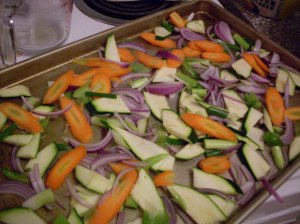
Pull the baking sheet out of the oven once the “it’s not ready” red light goes out (which means it’s ready). Add your vegetables.

I tell you to julienne things, but then I don't do it myself because I kind of hate doing that because it takes too long. I guess you don't have to. Just cut everything really thin.

In a large bowl, mix your flours, your eggs, your soda, one tablespoon of oil, your salt, pepper, and chili flakes, and whisk to combine. Pour over the veggies, tucking any strays into the batter blob.

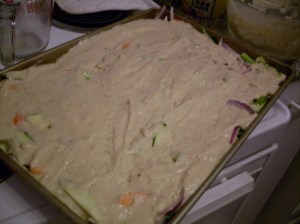
Batter blob.Bake for 15 to 20 minutes, until golden brown.
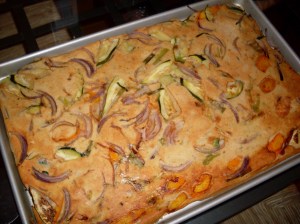
Large tray of pancake.Serve with a quick little sauce, and a bit of kim chi, which I’d meant to include but totally forgot about. The sauce?

Cho Ganjang

  • 4 tbsp. soy sauce
  • 4 tbsp. cheongju (Korean rice wine) or sake
  • 4 tbsp. rice vinegar
  • 2 tbsp. sesame oil
  • 4 tbsp. lemon juice
  • Salt, to taste

Serve to others. Because there is no love like the love between people who love pancakes.

A good-looking chap, yes?
Feasty, on Chinette.

Of course I am excited for David and his magical adventures. Though it is beginning to feel like time for my own adventures. Sometimes you fall into them, and sometimes your life pushes you in – I’ll let you know what compels me, once something finally does.

In the meantime, eat pancakes.

And then smile, lay on the floor, and be full.

Chana masala, eight years ago, and the only thing I miss about Surrey.

A quasi-Indian feast.

My first encounters with chana masala were from a place off the highway in Surrey called Kwality Sweets, a tiny little shop that sold samosas by the paper bag, three for a dollar, and you could pay any way you liked unless Mrs. Sekhon was working, and then you could only pay cash. I think Kwality Sweets provided me my first taste of chick peas.

Later, when I began spending weekly evenings in Burnaby with my grandmother, we’d go to the Himalaya in Vancouver at Main & 49th with my aunt and uncle, and the chana masala was heaped onto a plate with the samosas, which I think you got two of. My grandmother liked that place, and the waiter, George, who had been raised in India.

Ever since George, I cannot think of men like Rudyard Kipling without imagining anyone’s old dad or grandfather, grey slacks belted high on the waist, and the accent. If you closed your eyes when George spoke, you’d have thought he was turbaned and bearded, not blue-eyed and balding. His syllables, mottled and pleasant, undulating like a car rolling downhill on octagon tires, reminded me of the way that the chatty men spoke, those men always dressed in colourful turbans and white dhotis or Umbro tracksuits and dress shoes, seated on Kwality Sweets’ plastic deck chairs, nice men who would always ask if this was my first samosa, and had I had the jalebis? Yes, of course, I’d answer – they’re my favourite. George never asked me what I liked. It didn’t matter, and I was okay with that – I was a teenage girl, and he was more interesting than me.

George did not seem to be a fan of most of his customers, but Cuddles found him curious, and soon, like John and Chris of the Penny Farthing, he knew her order and they would chat. He would bring her the fiery pickled carrots and the minty green chutney, and he would almost, almost smile. Indian food was a kind rebellion, she told me once, a thing my grandfather would never have eaten. He liked curry, she said – he just didn’t know it. She would sneak hints of the yellow powder into his food. A trace of it in regular old potato salad makes all the difference in the world.

After my grandmother, my aunt and uncle remained familiar to George. I did not, though we would still stop in for a samosa, a plate of chicken tikka, and a little square box of jalebis and gulab jamun, and maybe a slice or two of barfi, which I think must be Indian shortbread. The last time I was there, George was too, although there was no small talk. He served Nick and I quickly, if disinterestedly, and I left a very large tip.

Indian food in the city is not like it was in the suburbs, where little sweet shops with the same blue and white and red signs that were all or almost all in Punjabi are pretty much everywhere now. The Himalaya is a rarity out here, where places like Vij’s, Maurya, and Chutney Villa turn out delightful delicacies that, while fantastic, are not what you’d qualify as comfort food. And they cost too much. Mrs. Sekhon would not charge you eight dollars for a small plate of chana masala. George would give it to you for free.

And so, periodically, when it seems like time again for a chick pea, I like to whip up an easy batch of spicy goodness, served with rice, and sweet potatoes and spinach simmered in coconut milk and nutmeg and lime, and a lazy sort of raita. It’s as satisfying a feast as I remember, even if it is my own spin on things, because it would feel like infidelity to produce the same meal exactly. Like ratting out your mother’s rumball recipe, it’s a thing you don’t do without at least a dozen years’ distance. So, stay tuned. As my moral fibre unravels, you can expect a perfect reproduction and detailed instruction in about a decade. (Not quite as soon for the rumballs. My mom insists that she will endure.)

Chana masala is a very easy thing to make. My version is utterly inauthentic, but it’s soothing and wonderful, and tastes enough like the stuff to pass, even if you cannot find your garam masala, which I couldn’t. So this recipe doesn’t call for it. Which makes it all the easier to make at home. I wonder if that means it isn’t chana masala? Maybe not. But I wouldn’t bother trying to come up with a new name.

Weeknight Chana Masala

  • 1 tbsp. butter
  • 1 tsp. coriander seeds (if you don’t have coriander seeds, ground coriander is fine, although if you’re using ground, then add it later, with the other dry spices)
  • 1 onion, chopped
  • 3 cloves minced garlic
  • 2 tsp. finely minced fresh ginger
  • 1 14 oz. can (about 1 1/2 cups fresh) diced tomatoes
  • 1 tbsp. chili powder
  • 2 tsp. ground cumin
  • 1/2 tsp. cayenne pepper (I use a full teaspoon, but Nick told me that I should tell you to use less, because you might not expect it to be as hot as it is, which is how we/I like it … I think he thinks you’re a wimp)
  • 1/4 tsp. cinnamon
  • 1 tsp. ground black pepper
  • 1 19 oz. can (2 cups) chick peas
  • 1 lime, just the juice
  • Salt, to taste
  • About 1/4 cup of cilantro, a third of which is reserved for sprinkling on top

In a pan on the stove, melt the butter. Add the coriander seeds. Give them about a minute, and then add your onions, garlic, and ginger. The smell will be pungent and fantastic. Once the onions have cooked until translucent, add in your tomatoes, juice and all. At this point, you’ll want to add in your dry spices, all of them. And the smell gets a bit stronger, and you’ll feel slightly more alive.

Add in your chick peas, and squish the lime juice over top. Reduce the whole thing until the juices all but disappear. You want it to be thick and rich, not runny. I didn’t add any salt, but here’s the point where you want to taste and adjust your seasonings.

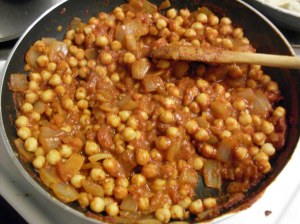
Chick peas getting awesome.Just before you serve this, toss in most of the cilantro. Reserve the rest for topping. Eat with naan bread, and something to sop up the spice (if you used a full teaspoon of cayenne pepper). I also served it with rice, and mashed sweet potatoes and spinach (simmer two medium sweet potatoes in a can of coconut milk, the zest of one lime, a bit of garlic and ginger, and a half teaspoon of nutmeg until the liquid has pretty much disappeared and the potatoes are tender, add a handful of spinach, and then mash).
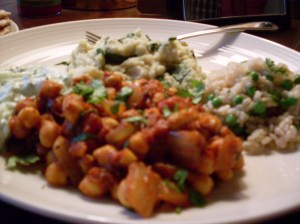
Chana masala and side dishes.With a crisp sauvignon blanc or dry rosé, this is excellent. Nick forgot what I asked him to grab on the way home, so we had a fresh little pinot gris, and it was also tasty. For dessert, I’ll cut into a fresh, perfect yellow melon I found at the store on the way home, because I do not have jalebi, or gulab jamun, or even barfi, and I don’t know how to make them. I imagine in India, and even in Surrey, that melon is perfectly acceptable when jalebis are unavailable. I may drive out there this weekend, just for a small square box, all my own.
Feasty.

Sweet potato gnocchi: Just because you’re broke doesn’t mean you have to eat poverty food.

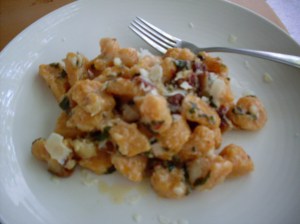
Sweet potato gnocchi with sundried tomatoes and basil.

When I called this thing “well fed, flat broke,” it was because payday was looming on the not-too-distant horizon and we had no money, but the quality of our meals did not suffer. And I thought it was appropriate, because even on nights when we literally have nothing left to show for all our hard work, we still manage to eat fantastically well.

This is in part due to my compulsive tendency to hoard when times are good – we always have a fridge full of basics that can be spun into something you’d want to eat. I think it’s also because our cute little existences would end in very clumsy suicide if we had to come home to Kraft Dinner and wieners every night once the cable’s been cut off (it has) and our astronomical debt rears its ugly head (it continues to). I cook because we love to eat, and because we don’t care to be reminded all the time about how many ways we suck (so stop calling, Canada Student Loans). A good meal makes us feel better, like regular people who are good at life and who manage to live on what they earn. A crappy meal reminds us that we are little more than 26- and 27-year-old children playing grown-up. So we are well fed.

And, today, we are flat broke.

But I have basil in the fridge, and sundried tomatoes, and sweet potatoes, and I felt like dining in a spot of sunshine and pretending I was anywhere else, and preferably somewhere where sand in my bathing suit would be my biggest worry at any given time. It’s very easy to indulge those fantasies – all you need is a little bit of preparation.

Oh! Before I get started, I wanted to show you what I mean by “two medium sweet potatoes.” I find that the size of vegetables is very subjective and varies from place to place and depends on what time of year it is.

I am aware of the unfortunate resemblance ... I wanted to show you the shot from the other angle, but at that point the resemblance wasn't merely unfortunate, it was uncanny, and sort of gross.
I am aware of the unfortunate resemblance.

Sweet potato gnocchi

  • 2 medium sweet potatoes, baked (bake in a 400°F oven for one hour – cool completely before working with these … I recommend doing this the night before)
  • 2 1/2 cups flour (plus additional flour for kneading – the amount will depend on how much moisture is in your sweet potatoes)
  • 1 egg
  • 1 tbsp. orange zest
  • 1/2 tsp. nutmeg
  • 1/2 tsp. white pepper
  • 1 tsp. salt

In a large bowl, mash your sweet potatoes. Add the flour, the egg, the orange zest, and the nutmeg, white pepper, and salt.

Ingredients.Mix these together until the whole thing forms a dough. It will be a very soft dough, which means that you will need to work a bit more flour into it. As mentioned, this amount is variable, and depends on how wet your potatoes are – I needed an additional cup, plus some to keep the gnocchi from sticking together once formed.

Once a dough is formed, divide it into six chunks of about equal size. I saved one, and threw the rest into the fridge to keep them cool while I worked. Roll the chunk out into a long dough snake. (Official term.) I rolled mine until it was about a half-inch in diameter. Then, cut the dough into small pieces, about half to three-quarters of an inch. If you know how to roll the gnocchi with a fork to make it look nice, go for it. If you’re like me and you just mangle the shit out of it, then you can call the little pieces done. Put them on a tray lined with floured parchment while you cut apart the rest of the dough.

Throw these in a pot of boiling water, and then when they rise to the top, they’re done, about seven minutes. You’ll probably end up with more than you can eat, and if that’s the case then you can freeze the uncooked gnocchi for another fun time.

Once cooked, I tossed these in a pan with two tablespoons melted butter, a 1/2 cup of chopped sundried tomatoes, a whole roasted garlic (with the cloves squished out), and a generous smattering of basil (reserve a bit to top the pasta with). I also threw in a handful of parmesan cheese.

Gnocchi in pan.Serve topped with fresh basil and parmesan cheese. Imagine you’re somewhere drenched in sun that smells like lemons. Drink red wine. Eat. Enjoy.

It may not look like a lot, but this was remarkably filling. Nick couldn't even finish my leftovers.
It may not look like a lot, but this was remarkably filling. Nick couldn’t even finish my leftovers.