Corn waffles.

Do you ever feel like someone just reached into your head and squished your brain like a giant stress ball, and that it’s taking forever to regain its shape? I’m all out of smarts. I barfed the last of them onto the table at today’s job interview and now I’m just sitting around, watching remixes of Gangnam Style on YouTube with my mouth hanging open.

The sorry sight of me in my pajamas looking lobotomized in the evening is becoming too common, and is the one drawback to the sudden increase in interviews I’ve had lately. I’m drained. The average hour-long job interview is preceded by at least eight hours of performance anxiety and trying to remember all the stuff I’ve ever done at work while wondering what compelled me to get this stupid haircut that I have no idea how to style.

The interview is then followed by five days of questioning, of wondering “WHY WOULD YOU SAY THAT, WHAT’S WRONG WITH YOU?!” and doubting all of my life choices. I’ve gone through this eighty-thousand times since April. Was my mother right? Should I have learned a trade? Would I have owned a home by now?
Awkward first Internet dates might be less fraught.

To remedy the constant feeling of mental stupor, I’ve been dragging people into my dining room and forcing them to entertain me in exchange for food. This provides me with opportunities to do something that isn’t worrying, while also allowing Nick and I to interact with people who have verbal skills and whose pants we are not responsible for changing. (On the upside, I’ve been able to relate to the baby on an intellectual level lately. We both watched a Baby Einstein DVD all the way through without blinking today.)

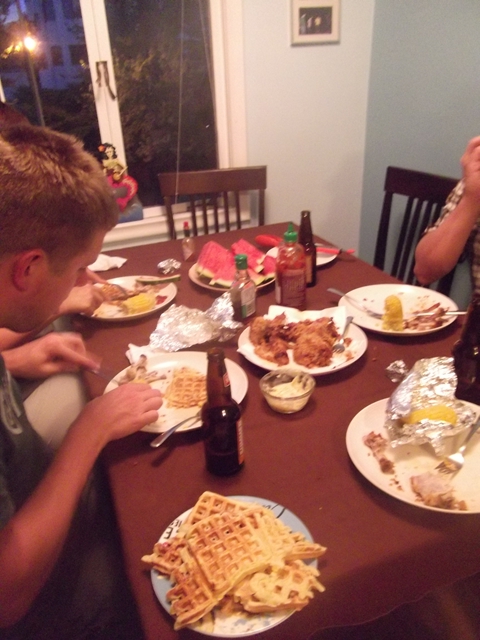
This past week, with corn season underway and my friend Missy’s desire for fried chicken and waffles at an all-time high, we invited both Missy and Greg over for a weeknight dinner party and ate fried meat served on carbs and drizzled with maple syrup and hot sauce until we felt no more feelings but fullness. They talked and we laughed and everyone felt okay about life as we slumped onto the couches afterward.

That sounds weird, doesn’t it? The chicken, waffles, hot sauce, and syrup combo? It does here in Canada, because until recently that combo was only available to us through our TV screens via Diners, Drive-Ins, and Dives. I promise you that it’s delicious. It works for reasons I am not even sure I can explain.

I mostly wanted to tell you about the waffles though. They have corn in them, and the kernels pop in your mouth as you bite down on them, and they’re sweet. Some people think corn is a vegetable, so a plate of waffles is practically a square meal (regardless of the shape of your waffle iron). Well, maybe not. But they’re quick and you can have them in the time it takes to complain about not knowing what to make for dinner. You’ll be back to watching PSY videos online in no time.

Corn waffles

(Serves three to four.)

  • 2 cobs corn (or 1 cup frozen corn kernels)
  • 1 1/2 cups all-purpose flour
  • 3 tsp. baking powder
  • 1/2 tsp. salt
  • 2 eggs, beaten
  • 1 1/2 cups buttermilk
  • 1/4 cup butter, melted
  • 1 tbsp. maple syrup

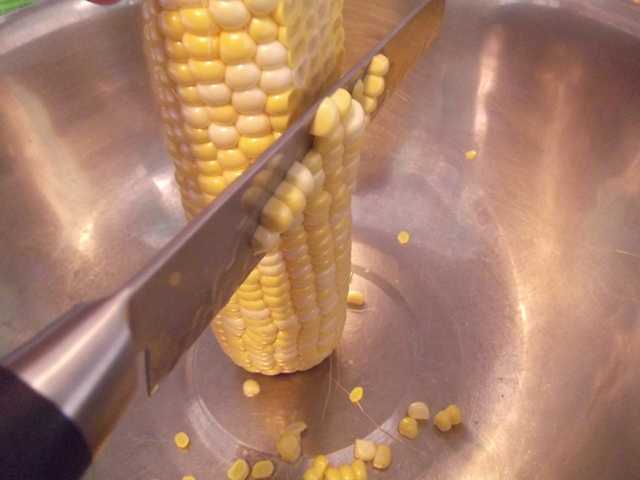
Cut the corn from the cob. If you would prefer not to get it all over everywhere, cut the corn into a bowl. Once the kernels are off the cob, scrape the cobs with the knife to get any remaining kernel bits and corn juice into the bowl as well.
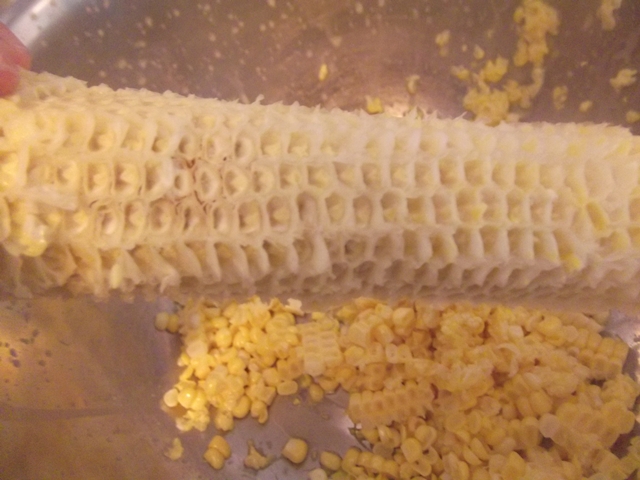
Sift the dry ingredients onto the corn kernels. In a separate bowl, whisk together the liquids. Stir the liquids into the dry/corn mixture and stir until no flour lumps remain.

Heat the waffle iron according to your waffle iron’s instructions. Spray the thing down with canola oil, top and bottom.

Pour batter into waffle iron, drop the lid, and cook until waffles have stopped steaming, and are golden and fluffy. Don’t lift the lid during cooking, or else they flatten out and get floppy.

Serve hot from the iron, doused in syrup. Or topped with chicken. Whatever gets you where you need to go.


Potato-crusted halibut cheeks.

The trouble with the Internet is that you can never really be sure that what you’re being given is the truth. It’s easy to zoom in and capture the beauty of a plate of cookies without all the mess that’s around it, or to choose long strings of delicate, pretty words when one’s situation might be better described more … colourfully. On the one hand, I tell you about risotto because I love it, but on the other hand, I’m still paying off my student loans and I lost my job but still have to make rent and rice and chicken stock and cheese go a long way toward filling a belly; risotto never made anyone feel badly about her lot.

Most food blogs would have you believe that everything is idyllic, all the time – we write as if MFK Fisher would be on her way over with chilled rosé and a spare page in her next manuscript for our quiche or bread or pound cake. A certain amount of this is contrived, because the point is to get you to want to sit down with us. We want you to like us, and to tell your friends about us. This is marketing, to various degrees, but it is not inherently dishonest.

When I zoom my lens in on a plate of food, it’s both because I want you to see it and because I don’t want you to see that I keep spilling things on the tablecloth so it’s stained pretty much anywhere I’d put a plate down but my only other tablecloth is plaid and meant for Christmastime but it went into the dryer even though it wasn’t supposed to and is now misshapen and faded. And I accidentally ruined the finish on the table because I still don’t understand which cleaning product to use for which task, so I need a tablecloth, or place mats, or something.

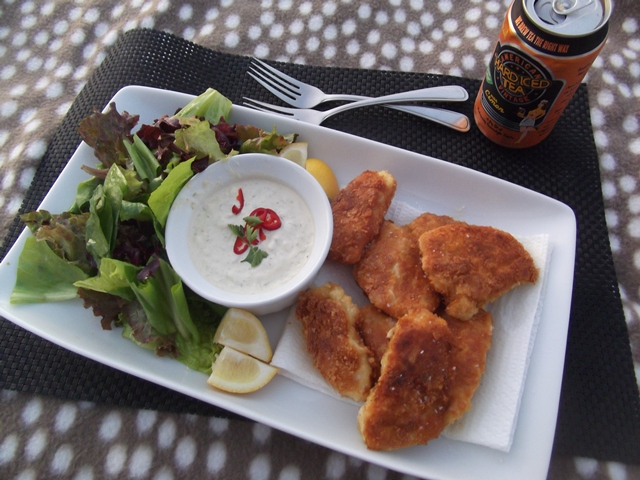
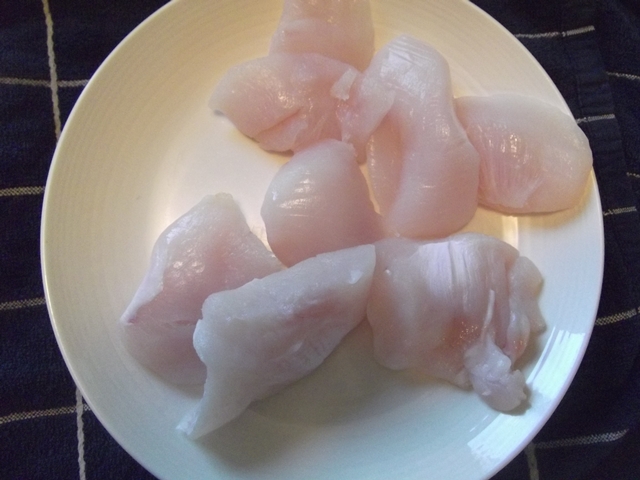
I’m broke. But, like the banner says – well fed. And even though it’s always messy here and I screen my calls for bill collectors, I can climb out onto the roof of my building and eat dinner while the sky turns orange and then pink before the sun disappears behind the mountains. And sometimes I’m maudlin and feel sorry for myself, but then I find halibut cheeks – which are the cheapest and most delicious part of a halibut – to crust and fry, and a new brand of booze sends me a case of freebies and my favourite stretch pants are clean and folded and waiting for me.

Sometimes a visit to the garden the day after it’s rained yields the crispiest red and green lettuce and sorrel I’ve had all season, the kind of greens that only need oil and lemon for dressing.

I might not be selling a lifestyle (though if I was, it would be the opposite of GOOP’s which should count for something), but I hope I’m selling the idea that there is good in even these bleakest of days. The job will come, the bills will get paid. I will lose 20 pounds. But right now, we have a few pieces of fish, a salad of greens fresh from the ground, a partial view of the mountains and English Bay from the roof, and nothing lasting to complain about.

These are good. That is a piece of information from the Internet that you can be sure is true.

Potato-crusted halibut cheeks

(Serves two. If you can’t find cheeks, cubes of your local white fish will work just fine.)
  • Oil, such as grapeseed or canola
  • 1/2 lb. halibut cheeks
  • 1/2 cup all-purpose flour or cornstarch
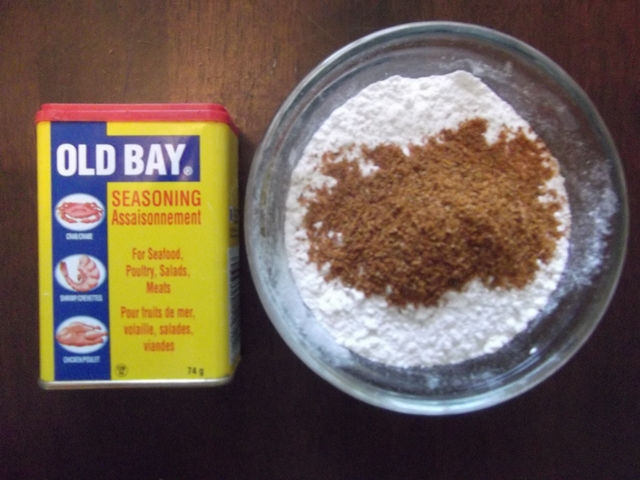
  • 2 tsp. Old Bay Seasoning
  • 2 large eggs, beaten
  • 1/2 cup potato flakes (dry instant mashed potatoes)
  • Salt

In a pan over medium-high, heat enough oil to coat the bottom of a heavy-bottomed (such as cast-iron) pan.

Meanwhile, mix flour and Old Bay. Dredge halibut cheeks in this. I find the most effective way to do this is to shake the flour mixture and cheeks in a paper or plastic bag – here in British Columbia, our BC Liquor Store bags are perfect for this.

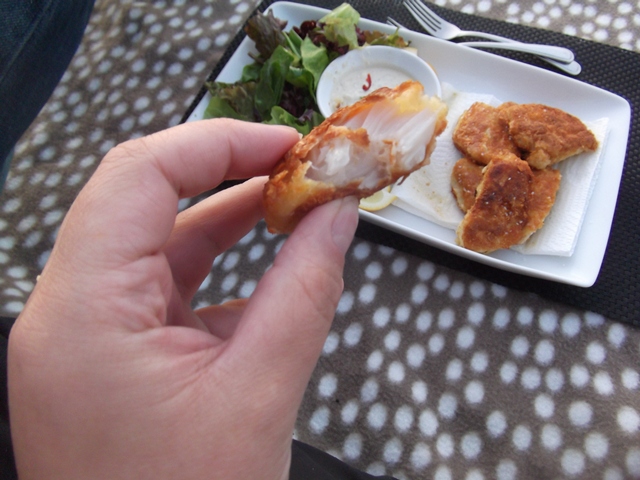
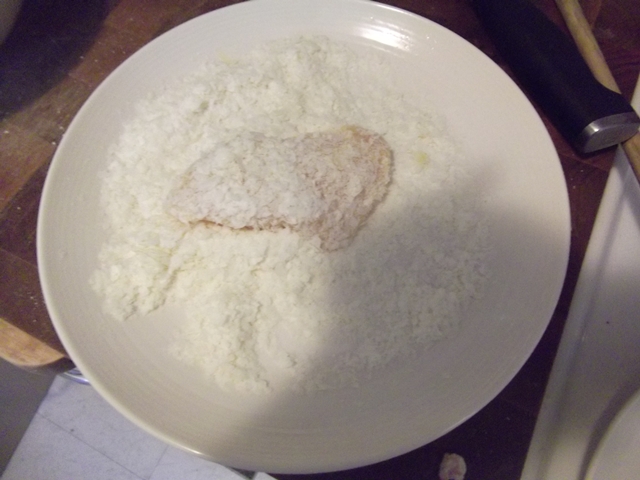
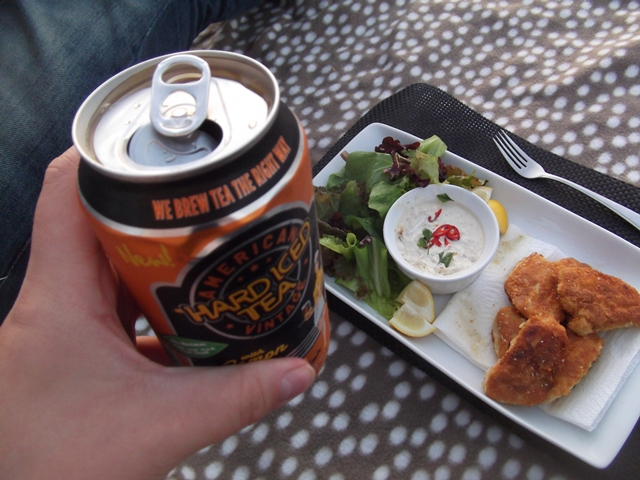
Coat floured pieces of fish in beaten egg, then dredge on both sides with potato flakes. Fry for two to three minutes on each side, until golden and crispy. Sprinkle with salt and serve hot, with sauce for dipping. I prefer tartar sauce (with pretty much everything), but go with what you like.

Disclosure: I got free drinks.

If you’d like a summery beverage to go with your cheeky bites, American Vintage Hard Iced Tea is pretty all right. It’s got a true tea flavour, but with a not-subtle boozy punch. If you’re fond of any of the canned Jack Daniels lemonade drinks, you’d like these. I don’t know how reliable I can be about a review of free alcohol, because FREE ALCOHOL, but they are a kind company and sent me samples at the precise moment when the urge to drink my feelings was strongest. This endears me to them, and a result I encourage you to try their product if you enjoy coolers. They don’t have a website (what? Is it not 2012?), but here’s a fairly thorough review I can agree with.

Making rainbow pasta at Project Space.

On East Georgia here in Vancouver, just up the block from Phnom Penh, a lot of little art spaces are starting to appear beside the lot of little restaurants I have long enjoyed. One of these is Project Space, a bookshop/art studio/everything-space run by the fabulous folks behind OCW Magazine, who have kindly published my words over the past five or six years.

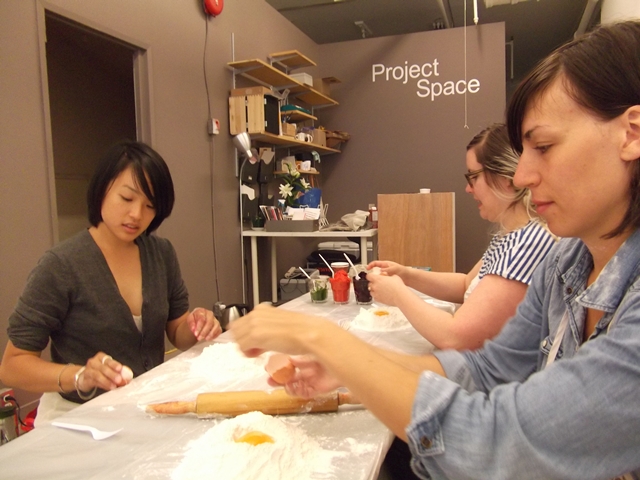
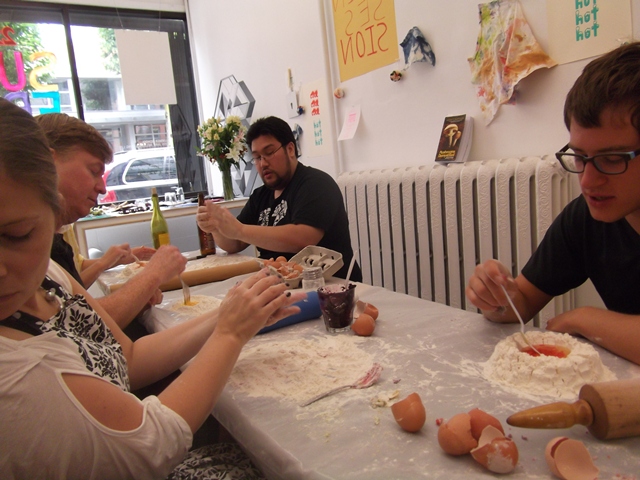
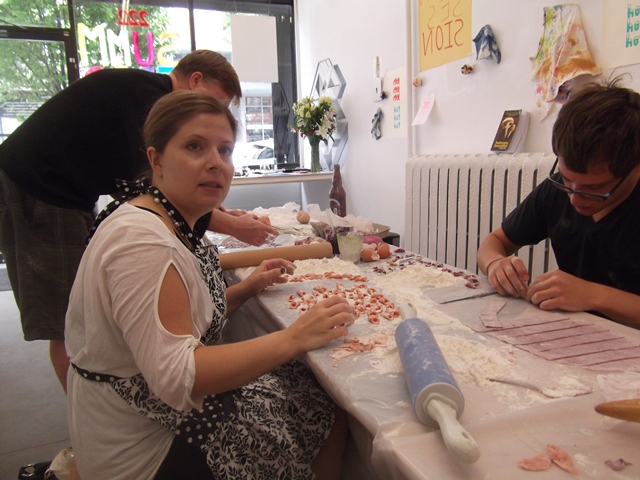
For the past few days (and tomorrow), Project Space has been home to Summer School, a series of free classes hosted by artists Erin Jane Nelson and Ming Lin. So, because I’m there any time someone wants to combine art with something I can eat, today I went back to school.

The class was led by Ming Lin, who taught us to make rainbow pasta. Natural dyes are a passion of Lin’s, and food is an obvious medium for the exploration of these.

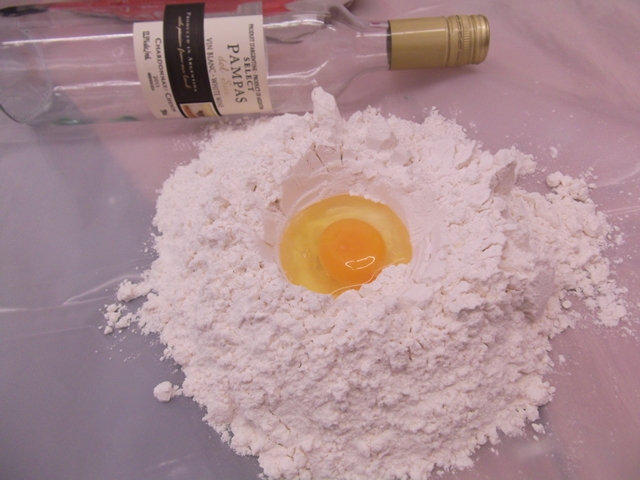
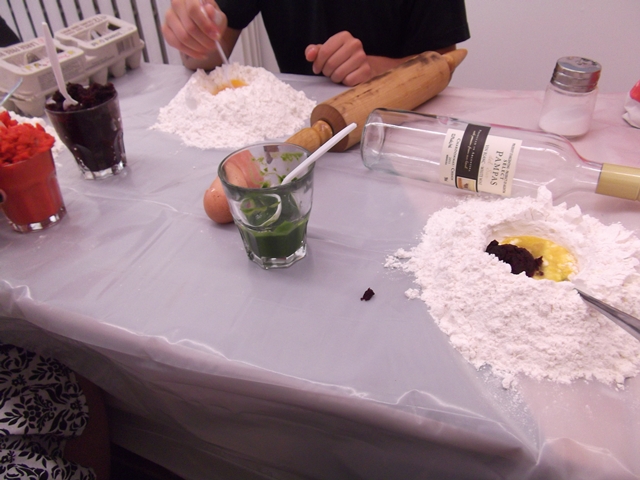
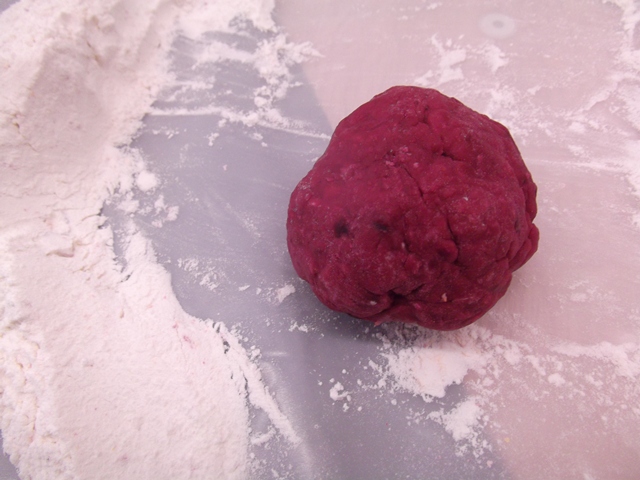
Making pasta is easy. For this class, we poured three cups of all-purpose flour into a pile on the table. We dug a well into the centre of the pile, and cracked an egg into it. We added salt, beat the egg gently in the well, then added about one tablespoon of puréed vegetables – either spinach, beet, or carrot. We’d then continue stirring, this time gradually folding flour into the the mix. When the dough began to form a ball, we’d pull it from the well and knead it, incorporating more flour until the dough was firm but pliable and no longer sticky. The dough went into the fridge for 15 to 20 minutes.

The same pile of flour lasted three rounds of this, and I ended up with three colourful balls of pasta dough, each time re-piling the flour, adding egg and salt, stirring, then adding a spoonful of purée.

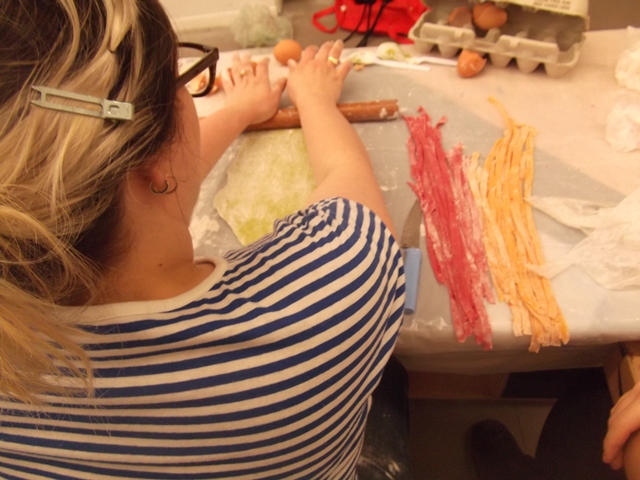
After resting in the fridge, the dough was ready to be rolled. At this point, I’d recommend the use of a pasta roller, unless you have the upper-body strength of someone over the age of eight. I do not, but no machine was available, so I rolled my pasta out with an empty wine bottle. Though the idea is to get your sheet of dough as thin as possible, mine was thicker than if I had run it through a pasta machine, which made the boiled noodles thicker and chewier than I prefer. But that’s okay.

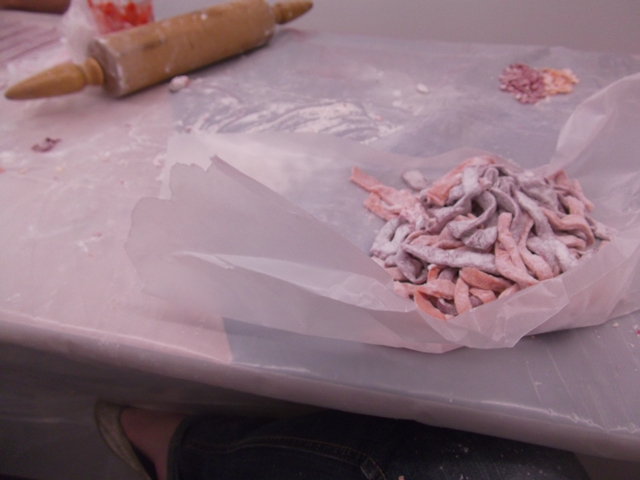
Some people trimmed their pasta into long strips. That’s how I did mine, as fresh strands of pasta tossed with browned butter and grated Grana Padano combine to form one of those perfect, simple dishes we ought to make more of. Others were more creative (and patient), and attempted to fold their pasta into bow-ties and penne.

Our teacher cut hers into tiny squares perfect for a pot of soup.

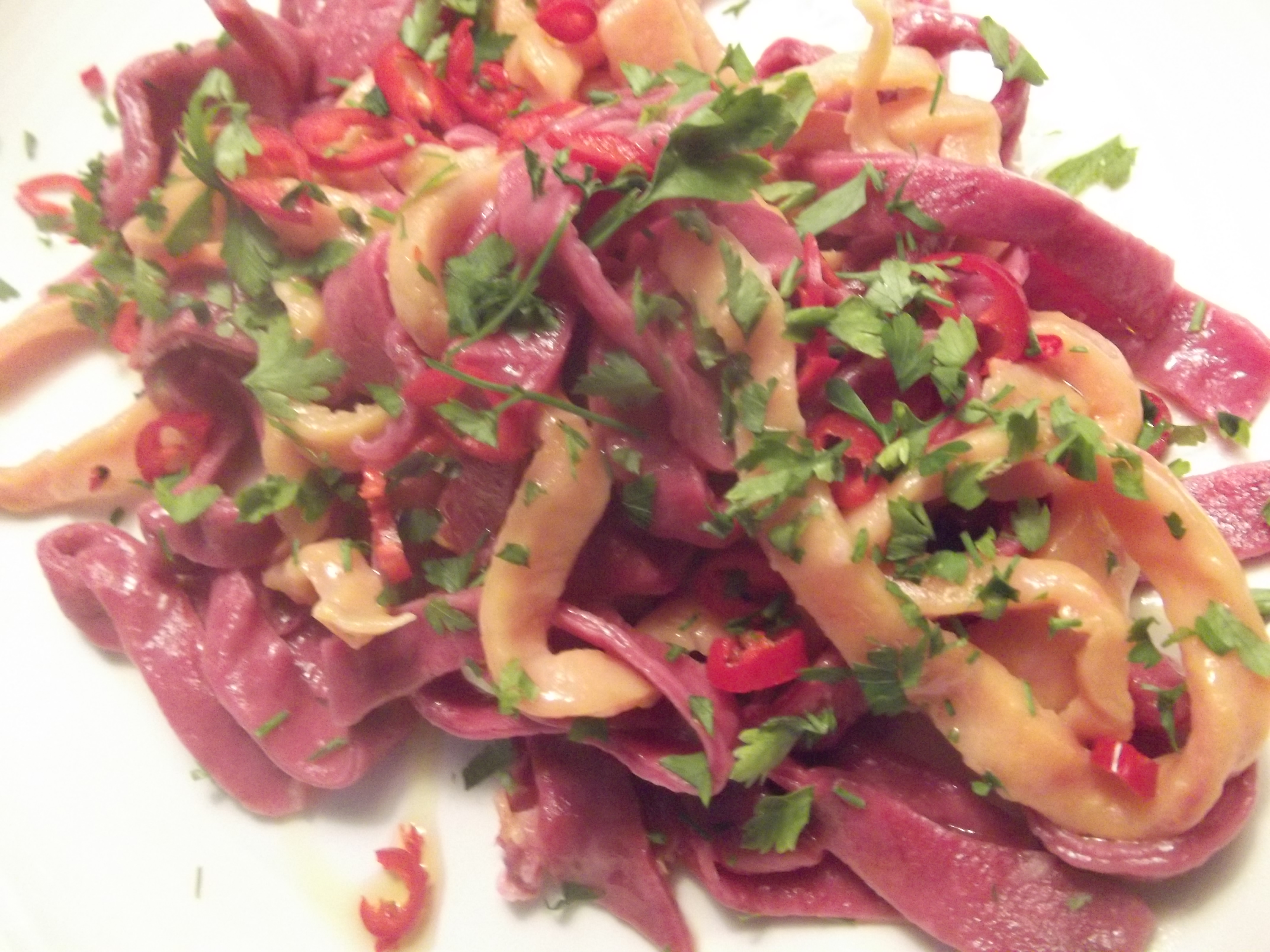
I ended up with a pile of purple and orange noodles, enough for two people to enjoy a small plate of pasta each. I boiled it for about three minutes, then tossed it in a pan with butter and cheese and chopped fresh chilies, and then scattered parsley over top.

Pasta-making was a pleasant diversion, and a reminder that a small amount of effort can yield delicious results. Why not dawdle over a bit of dough the next cloudy day and treat yourself to something simple and delicious? I hope it rains tomorrow, as I’d like to purée some chilies for a batch of dough and see what happens. What’s your perfect pasta? I’d love your tips and recipes. Bonus points for butter and cheese, obviously.

Strawberry lemon pancakes.


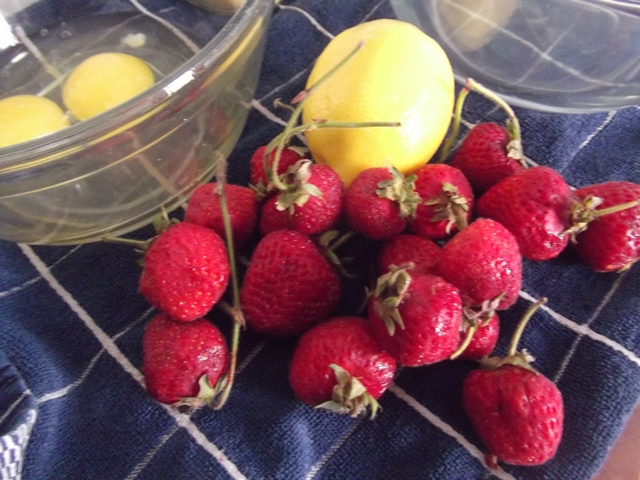
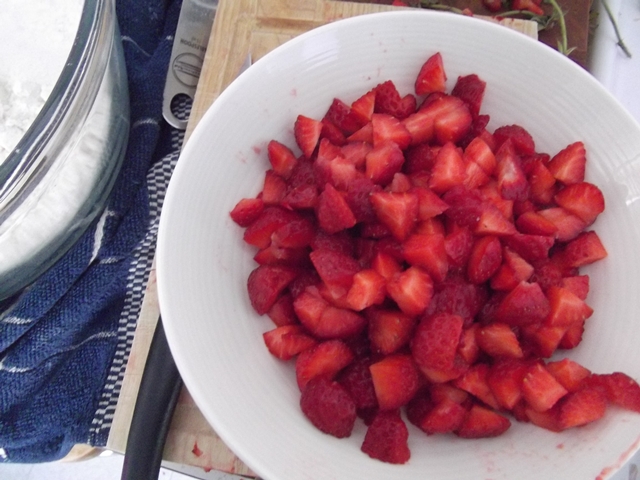
If last year’s strawberries – mouth-puckering and tannic – were the bitter embodiment of everything wrong with last summer’s weather, then this year’s fat, sweet berries have more than made amends. I can’t tell if I’m sunburned or turning into a red Violet Beauregard, I’ve eaten so many strawberries – handfuls and handfuls every time I’ve passed the fridge this past week. Berries dipped in sugar, berries sprinkled with cracked black pepper, berries melted into caramel and crushed into smoothies and boiled into jam.

I’m not tired of them, and raspberry season is already here. But we have to finish these before I can move on to a new berry – I am aware that this is the best problem a person can have.

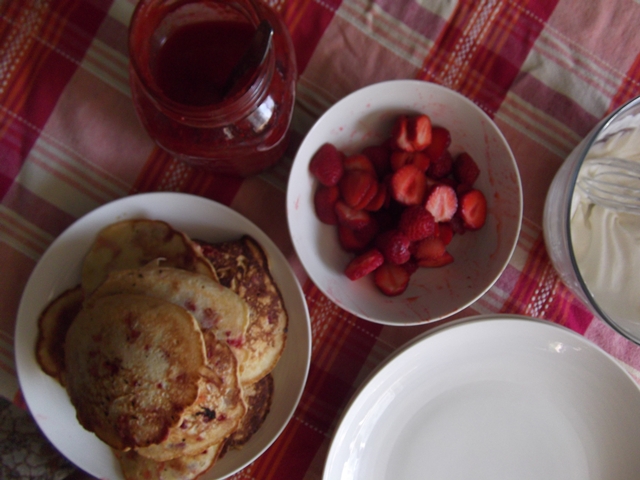
So this morning we had pancakes.

There’s a breakfast place in New Westminster I liked to go to called The Jiffy Wiffy Waffle House. It’s changed, cleaned up, and isn’t the delightfully dodgy waffle purveyor it once was, but in its (my?) waffly prime, I would go there and order the waffle with peaches or berries baked right in. This was a novel idea, at the time – maybe it still is, because the last time I tried to do that here I burned frozen raspberries between the grooves of the waffle press and it took forever to scrub the thing clean. Don’t press fruit in your waffle iron unless you know what you’re doing, I guess.

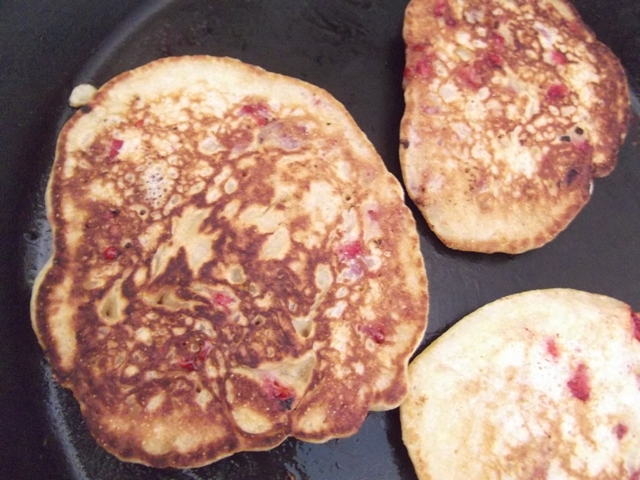
Anyway. I like fruit baked into carby things. Who wouldn’t? And these pancakes, thin and crisp and lemony, topped with sliced fresh berries, whipped cream, and this strawberry caramel? It’s like breakfast strawberry shortcake, which is the embodiment of everything right with this summer in Vancouver at this very moment.

Strawberry lemon pancakes

(Makes eight pancakes.)

  • 1 cup all-purpose flour
  • 1/2 cup cornmeal
  • 2 tbsp. sugar
  • 1/2 tsp. baking powder
  • 1/4 tsp. salt
  • 2 eggs, lightly beaten
  • 1 lemon, zest and juice
  • 2 cups milk
  • 3 tbsp. melted butter
  • 1 lb. fresh strawberries, hulled and diced

In one bowl, stir together flour, cornmeal, sugar, baking powder, and salt. In another bowl, whisk together eggs, lemon zest and juice, milk, and one tablespoon of butter. Stir in diced strawberries.

In a large skillet heated over medium heat, pour half of the remaining butter into the pan and turn to coat. When it begins to sizzle, pour in four equal portions of batter, turning once the edges of each pancake have started to look crisp and bubbles have formed on the surface of each cake. Turn, cook another one to two minutes, until golden on the bottom. Repeat until you’re out of batter.

Serve with fresh berries, whipped cream if you’re feeling indulgent, and this strawberry caramel I keep talking about if you feel like you’ve sweated away enough calories already this week and therefore deserve it.

If you end up with more pancakes than you can eat, simply cool them completely on a wire rack, and then stack them between sheets of wax paper, stick them in a bag, and freeze them. You can pop them in the toaster as you need them. They are way better than Eggos.

Picnics and bacon-wrapped garlic scapes.

All of a sudden, two layers of clothes are too many layers of clothes, and my toes are naked and touching the grass, and I’m drinking wine in parks and getting dirty looks from the other mothers for all my drinking wine in parks. Summer finally landed in Vancouver yesterday, so picnic season began in earnest this afternoon.

I have written about the joy of picnics here before but I am getting older and with age has come a tendency to repeat myself, and also to assume that what I say bears repeating. Take yourself on a picnic. Bring a friend, and a bottle of wine, and something to nibble on, and whittle away the afternoon, or just languorously pass your lunch hour (bottle of wine optional in that instance, unless you work from home). All you need is a patch of grass and a bit of bread and cheese.

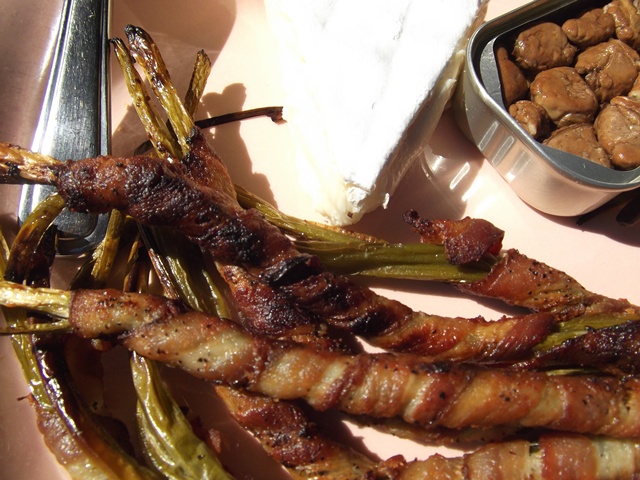
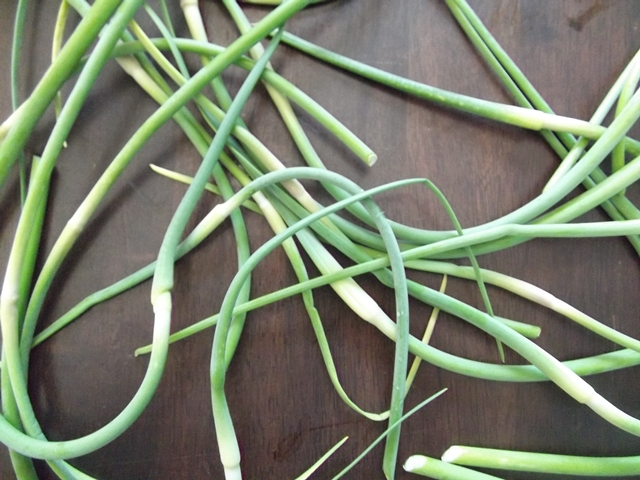
And garlic scapes, if you can find them. Even better if you can grow them. Wrap them in bacon, and eat them outside.

Bacon-wrapped garlic scapes

  • 24 garlic scapes
  • 8 strips bacon
  • Coarse salt
  • Pepper

Preheat your oven to 425°F. Lightly grease a rimmed baking sheet.

Trim scapes at the bud, leaving eight to 10 inches of the stalk. (I left the buds on some of the shorter scapes, and the flowers inside were a little fluffy, but not unbearable if you’re used to finding cat hair in everything.) Bundle scapes in threes, wrapping each as tightly as possible with the bacon.

Sprinkle each bundle with a few flecks of coarse salt, then with freshly ground pepper.

Bake for 25 minutes, until the bacon is brown and looks crisp. Flip the bundles halfway through. Delicious served hot, but also pretty nice eaten cold, in the shade, on the grass.


Scotch eggs.

I wish I was in a place where we could talk warm yellow heirloom tomatoes, or crisp radishes drizzled with olive oil and speckled with flecks of ashy black salt, or fat red berries dipped in vanilla sugar. But I am in Vancouver, with wet socks because my galoshes both now have holes in the soles, half wondering what the hell I’m still doing here.

When we talk about our respective cultures, those muddled European backgrounds we cling tenuously to, what is important to Nick and I is less about the place – his heritage is roughly Dutch in the same way that mine is vaguely British – than it is about the food. When people talk about where they’re “from,” often they talk about a somewhere else, as if they really came from there, as if they identify more strongly with some other place than the place they are now. And maybe they do.

In the ongoing (and tedious) pursuit of a novel, I have been writing about the idea of reclaiming my culinary heritage. Mine, I guess, but to be honest the further I go with it the less sense it makes. Are the meals I grew up eating the only thing that counts? Are my grandmother’s recipes more significant than the dim sum I have eaten almost every weekend for more than half my life? Is the influence of Nick’s family recipes worth mentioning, or are they too new to count? I don’t know.

When I started writing about my grandmother’s shortbread, I had a direction in mind, but the further I go, the more I realize that culture is fluid, and I am Canadian which means nothing and everything all at once. Meatballs and maple syrup and smoked salmon and Szechuan green beans and Southern Barbeque are equally weighted here. And I loathe ketchup chips.

Being from the west coast of Canada, my food is everyone’s food – this is the meltiest melting pot I’ve ever seen. Way to add confusion, Emily. Never finish that culinary memoir, you feeb. So as much as I’d like to be able to write a simple book of recipes that speak to a simple culinary heritage, I can’t. My grandparents never ate tofu.

Do you claim a cultural heritage different from the one in the place you grew up? How do you self-identify, and is it more complicated than simply “the place you grew up is where you’re from?”

On days like these, after weeks of rain, the food that comforts Nick and I the most is the kind of food that goes with a lot of cold cheap beer. Food that is fried and rich and bad for us. Maybe the culture we most subscribe to is pub culture, as we are creatures of deep-fried habit. Tonight we ate a dish that has its origin in Scotland, where my grandmother’s family emigrated from. No relative of mine ever made it for me, but I make it whenever it’s rained too long, and whenever the pantry runs low and payday is still a long way off.

For Scotch eggs, I recommend starting with soft-boiled eggs. You will not overcook the yolks this way, but they will be set and cooked through by the time you’re done. Peel the eggs carefully.

Scotch eggs

  • 4 soft-boiled eggs*, shells removed
  • 1 lb. lean ground beef
  • 1 1/2 cups bread crumbs, divided
  • 1/2 medium onion, grated
  • 1/2 cup finely grated carrot
  • 1/4 cup fresh parsley, finely chopped
  • 3 cloves garlic, minced
  • 1 tbsp. vegetable oil
  • 1 tsp. Worcestershire sauce
  • 1 tsp. coarse salt
  • 1 tsp. ground yellow mustard
  • 1/2 tsp. dried oregano
  • 1/2 tsp. ground black pepper
  • 1 egg, beaten

Combine ground beef, 1/2 cup of bread crumbs, onion, carrot, parsley, garlic, oil, Worcestershire sauce, salt, ground mustard, oregano, and black pepper in a large bowl, and mix with your hands until thoroughly blended.

Divide meat mixture into four even portions. Spread meat across your palm – about twice the width of your egg – and press to an even thickness. Carefully wrap your egg in the meat mixture, pressing the meat to ensure the egg is completely sealed within.

Dip each meat-wrapped egg in the beaten egg, and dredge through bread crumbs until coated on all sides.

Fry in 1/2″ of oil over medium high heat, about four minutes per side, making quarter turns until each side is golden and meat is cooked through.

Remove to a plate lined with paper towel. Salt to taste.

Serve hot, with mustard as an accompaniment.


* I have never had any trouble using soft-boiled eggs, but my sister-in-law made these and found soft-boiled eggs hard to work with. Feel free to hard-boil the eggs; they might be easier to work with.

Yellow curry braised beef.

I spent the last half of my teens and the first half of my twenties playing field hockey for the Vancouver Rowing Club, and every Victoria Day long weekend I would dig through the piles of laundry I always left unfolded to find my jersey, skirt, and Dutch-soccer orange knee socks and then head out to the pitch to play in the Vancouver Invitational Tournament. Except for one weekend when it was so hot I spent the afternoons in the beer garden in my sports bra, it rained. In nine of ten years I spent the weekend soaked, my toes wrinkling in my turf shoes, my skin slick with a layer of moisture that never seemed to dry.

I was awful at field hockey. I am too competitive and would get aggressive at all the wrong times, but I never had the skill to back it up. And I don’t run very fast. In the wild, I could be taken down by the oldest, most arthritic bear or mountain lion. Nevertheless, in all the years since I played, I miss it most in the weeks before the May long weekend. And then the weekend arrives, and it rains, and I remember peeling my polyester jersey off my damp, sticky body, and I still miss it. There were always cute Australians to look at, and the beer was cheap and plentiful.

For half the time I played, I was dating one of the goalies on the premier men’s team. When that ended badly (oh so badly!) I had already been subtly trying to trick Nick into spending time with me, and when he finally relented, I found other things to do on the long weekend. I couldn’t go back to hockey, but at that point, I didn’t want to. The possibility of an awkward run-in was enough to keep me from trying to dig up those socks again.

But, you know … Facebook. I am still friends on Facebook with a few of the women I played with, and I see that they’re playing this weekend and I miss it all. I liked playing field hockey, and the interesting characters that comprised the teams I liked to play on. I am starting to wonder if I can have all that, and still avoid the awkward run-ins, and somehow convince Nick to come watch and cheer me on. Maybe not on the May long weekend, of course. It’s always so rainy.

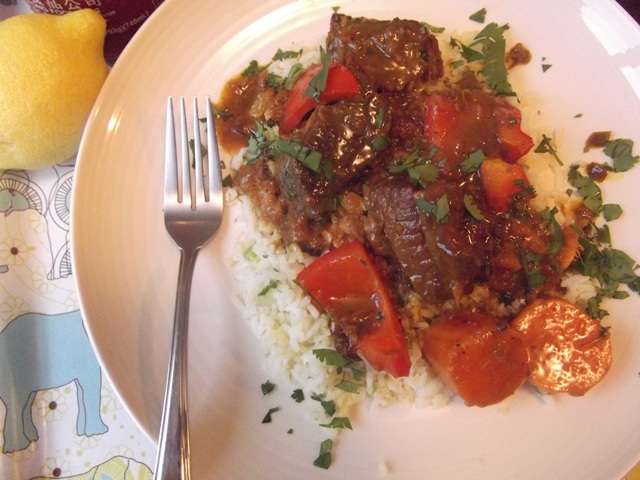
This May long weekend has been fairly quiet, and it has been raining steadily since yesterday. So today has been a day for laundry and long hours spent braising meat in fragrant coconut milk and warm spices, and for remembering fondly how it feels to be so damp from the vantage point of my warm apartment, in my pajama pants fresh out of the dryer.

Yellow curry braised beef

  • 2 tbsp. coconut oil (or vegetable oil)
  • 3 to 4 lbs. cubed beef brisket or boneless chuck (sometimes sold as stew meat) – short ribs would also work well here
  • 1 tsp. salt
  • 1 onion, diced
  • 2 tbsp. minced ginger
  • 2 tbsp. minced fresh lemongrass
  • 2 tbsp. minced fresh cilantro stems (leaves reserved)
  • 6 cloves garlic, minced
  • 2 jalapeño peppers, minced (to minimize the spice, you can remove the seeds and the membranes before chopping)
  • 2 tsp. ground turmeric
  • 2 tsp. ground cumin
  • 1 1/2 tsp. ground coriander
  • 1 tsp. ground black pepper
  • 1/2 tsp. ground cardamom
  • 1/4 tsp. ground cinnamon
  • 3 tbsp. fish sauce
  • 3 tbsp. brown sugar
  • 2 14 oz./398 ml cans coconut milk
  • Zest and juice of one lime
  • 3 to 4 kaffir lime leaves (optional)*
  • 2 red Thai bird chilies (optional)
  • 1 lb. cubed sweet potato
  • 1 medium red bell pepper, chopped

Preheat your oven to 325°F.

In a pot you can use on the stove and in the oven, melt coconut oil over medium-high heat. Add beef pieces, and season with salt. Brown beef deeply on all sides, about three minutes. You want to get good colour on the beef, but you don’t want to burn it. When beef is browned, remove it and set it aside.

To the same pot, add onion, ginger, lemongrass, cilantro stems, garlic, and jalapeño peppers. Sauté until fragrant, two to three minutes. Add turmeric, cumin, coriander, black pepper, cardamom, and cinnamon, and cook another two to three minutes, until the bottom of the pan looks dry.

Add sugar, fish sauce, coconut milk, and lime. If you have kaffir lime leaves and Thai chilies, add these to the pot as well – I leave my chilies whole. Add beef back to the pot, with any meat juices that have collected in the meantime – there’s good stuff in there. Cover, and put on the middle rack of your preheated oven. Braise for 3 to 3 1/2 hours, stirring occasionally.

In the last 45 minutes of cooking, add your sweet potatoes to the pot, and re-cover.

Remove the pot from the oven, uncover it, and return it to the stove over medium heat. Add bell peppers, cooking an additional 10 minutes until peppers are tender and the sauce has reduced slightly. Serve over rice, with a sprinkling of fresh cilantro.

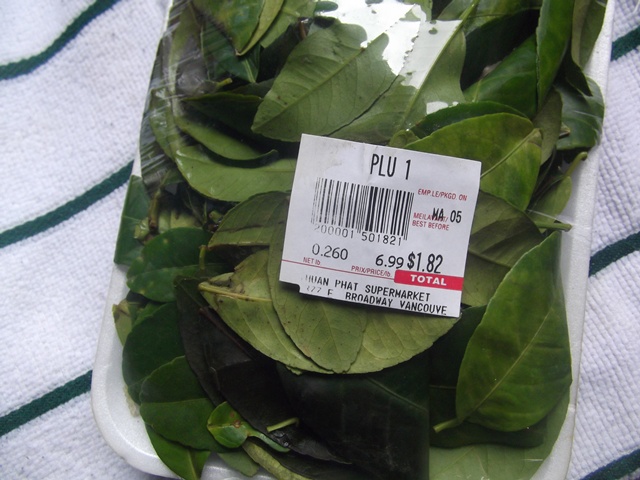
*You can buy kaffir lime leaves at most Asian markets. They are very inexpensive, so if you end up with a lot of them, stick them in a baggie and store them in the freezer – they’ll keep a few months if well sealed, and you can use them to liven up curries of all kinds.

A maple-scented pudding and a quiet moment alone.

It’s finally quiet, except for the squeak-bark of some cat-infuriating miniature dog or giant rodent on its leash and squatting beneath the wilted rhododendron bush beside the street. Nick is out for a nerdy night of board games with his friends. The baby is sleeping. I have sent out all the resumés I feel like sending out for today, and am no longer wearing pants (as is my preference). There are dried smears of yogurt and vegetable purée all over everything including the washable high chair I keep not washing, but I am not going to let that be my problem. That is why I have Nick.

We are spending a lot of time together now that neither of us is required at an office every day, and though the ratio of arms to babies is now 4:1, I’m still finding myself busy most of the time. There are cover letters to write and my resumé to tweak for each job application. Every time I click “submit” or “send” on some application I panic that I accidentally typed the bad words I’m always thinking, or that I used the wrong homonym, or that I spelled the word “editor” with two Ds.

There are meals to make: minimally spiced purées for the baby and interestingly spiced lunches and dinners for the diabetic, who answers “I’m not really excited about that” to most of what I suggest we eat. We keep producing dirty laundry. I spend a lot of time shaving my legs in case someone calls for a last-minute interview and there’s no time to find or buy pantyhose. I always have to go to the store.

But when there is no one around to bug me, I eat pudding.

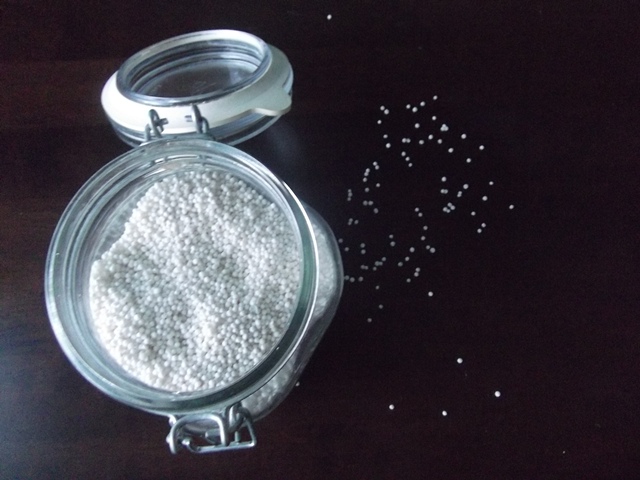
The surest way to ensure that no one else touches my pudding is to make it with tapioca.

Stirring a sweet-smelling pot of goo can be relaxing, helping to erase the little panics and trifles that so often take up the days. The goo will burble softly, in a way that is wholly unlike something tedious like oatmeal or hot cereal (which splatters and plops and lacks euphony). You can make pudding for other people, and sometimes I do, but a small amount of pudding is the sort of easy indulgence that suits a night alone, in a room barely lit by a lamp in the corner that’s just bright enough to read a book beside.

The tapioca pudding recipe I like to use is at Simply Recipes, though once you make it the recipe will stick in your head forever (it’s that easy). I don’t know enough people who like tapioca pudding to have ever made a full batch, so I can tell you that a half-batch works quite nicely – it will make enough to fill four ramekins or two soup bowls (I always eat one serving warm, and then another much later after it’s been in the fridge for awhile).

I am not going to bother reprinting the recipe here as it’s all right there, but I will tell you that I make a few changes.

  • Instead of white sugar, I use maple syrup, and rather than add it after the pot comes to a boil, I add it at the beginning. It’s less sweet this way, but more complex. If you don’t have maple syrup, use honey, or brown sugar.
  • At the end, rather than add a drop of vanilla extract, I like a scrape of half of one vanilla bean.

When you are making something that is just for you, use good ingredients (tapioca costs so little anyway) – you will be more inclined to savour if you use the good stuff, and it will be the good kind of eating alone (there is a bad kind of eating alone, which I also enjoy, but for that just use the cheap stuff).

This is a good for-now recipe, for while we’re still not into the abundant-fruit season. Do you realize that in just a few short weeks and we’ll be having conversations like this one over lightly sugared local strawberries? And reading our books in patches of summer sunlight. I can’t wait.

Nasi goreng.

For the past six months, with one of us being off work and on parental leave, after the rent and car insurance come out there isn’t much left for the first two weeks of the month. I spent what little was leftover on clothes to wear to job interviews and a cute outfit for the baby, and why can’t I stop buying cute outfits for the baby? He’s like a damp, squirmy doll. One that never stops eating. The kid lives for food – convulses for it, even – so maybe the outfits are a kind of reward for fitting in with the rest of us around here?

Anyway, we’re in for a week or two of pantry meals.

One that we eat frequently during times like these is nasi goreng, a spicy Dutch/Indonesian fried rice dish I learned about the first time I went to meet Nick’s family. There’s a Dutch breakfast restaurant near us that serves nasi goreng wrapped in a pannekoek. The Dutch are into it.

It was Nick’s and his sister’s birthday when he first brought me over, and he’d requested nasi goreng with beef for their special birthday meal. I wasn’t eating red meat at that point, so his mom made me a separate meal (Relationship tip: start out high-maintenance, especially with your in-laws!). I was grateful – “nasi,” as they called it, looked semi-unappealing due to the unusual and disgusting (to me) addition of fried bananas.

Nasi goreng is one of Nick’s favourite dishes, so fortunately I would encounter it again later after I had re-embraced red meat and understood that bananas aren’t mandatory. Side note: I am living proof that there is someone for everyone, even if he probably did something awful in a past life to deserve this. He doesn’t like bananas either.

There are no actual unappealing parts to this dish, which I would come to learn (bananas aside). It’s salty and spicy and meaty, and there is so much garlic in it (I use nine cloves, but you can use less if garlic isn’t its own food group at your house). It’s especially good after Christmas or Easter dinner when you end up with a lot of leftover ham – a little diced ham goes a long way in this. If you have a lot of leftover chicken, dice that up instead of the ground meat. Add shrimp if you’ve got it. Make it vegetarian with smoked tofu and a few handfuls of frozen peas.

This is best if you have a lot of leftover rice, but more often than not I end up making rice fresh due to my having forgotten to plan ahead. We use brown rice, but you can use whatever you want – three to four cups of cooked rice is about what you’ll need. And if you don’t have the ingredients I have listed below, substitute freely – soy sauce and sugar for the ketjap manis, sriracha for the sambal oelek.

Nasi goreng

(Serves four to six as a main course.)

  • 2 cups long-grain brown rice
  • 3 cups vegetable stock
  • 3 tbsp. vegetable oil
  • 6 to 9 cloves of garlic, sliced
  • 1 shallot, roughly chopped
  • 2 tbsp. sambal oelek*
  • 2 tbsp. ketjap manis (sweet Indonesian soy sauce) **
  • 2 tbsp. fish sauce
  • 1 tbsp. sesame oil
  • 2 tsp. lime juice
  • 3/4 tsp. ground cumin
  • 1 lb. lean ground beef
  • 2 cups grated carrot
  • 1 cup finely sliced cabbage, packed
  • Salt and pepper

Accompaniments

  • One fried egg per serving
  • Cilantro, for garnish
  • Chopped scallions
  • Additional sambal oelek

In a medium heavy-bottomed pan with a tight-fitting lid, over medium-high heat, bring rice and vegetable stock to a boil. Reduce heat to low, cover, and cook for 45 to 50 minutes. Set aside and allow to cool completely, which will take between two and four hours.

In a large pan over medium-high heat, sauté garlic in oil until it is golden and crispy but not burned (two to three minutes – any longer and it will become too bitter). Remove garlic from pan with a slotted spoon, and drain garlic on a plate lined with paper towel. Set aside.

In a blender or food processor, purée the shallot with the sambal oelek, ketjap manis, fish sauce, sesame oil, lime juice, and cumin. Set aside.

Add ground beef to the now garlic-infused cooking oil in your hot pan. Continue cooking over medium-high heat until meat has browned and is cooked through. Add cooked rice, shredded carrot, and cabbage. Pour shallot mixture over pan contents and stir to coat. Cook an additional three to five minutes.

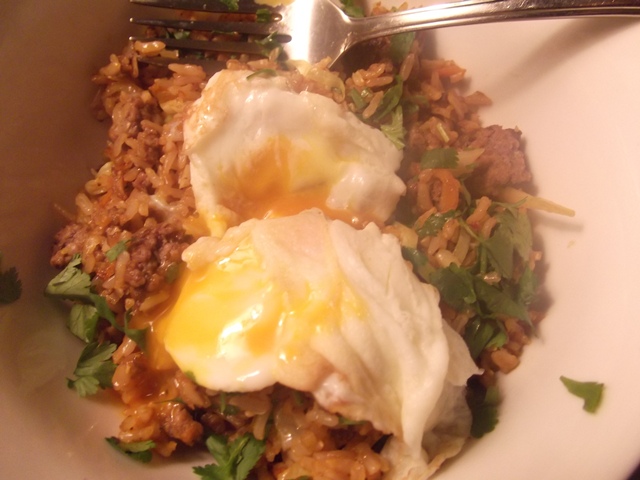
Stir the crispy garlic into the rice. Taste, adjusting seasonings with salt and pepper to taste. Serve hot, topped with a sprinkle of cilantro, some scallions, and an egg fried over-easy, so that the yolk is still runny. Nick always adds more sambal oelek, and then apologizes as he douses the whole thing in Maggi sauce.

*I find sambal oelek hotter than our usual hot sauces, so tread lightly if you’re spice-sensitive. If you don’t have sambal oelek, Chinese chili garlic paste will work, and so will Sriracha (which goes with everything).

**If you don’t have or can’t find ketjap manis (also called kecap manis), use two tablespoons soy sauce with one tablespoon brown sugar. You can find ketjap manis as Asian grocers or Southeast Asian specialty markets – I got a huge bottle for  less than three dollars at Thuan Phat Supermarket on Broadway and Prince Edward in Vancouver (though I hadn’t had much luck finding it at T&T). You can also find it online.

Sugar sandwiches.

If you read a lot of parenting blogs or websites (and oh, for the love of all the things please don’t), one of the myths you might encounter is the one about how if you do everything right, in your fourth month post-partum the pounds will literally melt off of you and you will suddenly weigh what you did in high school. It’s almost month five, and I did everything according to the literature but noticed this morning that my top is more muffin-like than it ought to be and my chins are more numerous than I remember. So you know what? Screw it. Sugar sandwiches.

By this point it’s well established that most of my happiest memories involve food, so it makes sense that some of my earliest recollections of my grandparents involve treats. My Dad’s mother died when I was very young and I don’t recall very much about her but I do remember sitting at her kitchen table, and the way my skin felt beneath my thin cotton undershirt against the cold vinyl of her kitchen chair, and the way my spoon scritched on the bottom of my bowl of Rice Krispies. I remember scraping brown sugar off the bottom of the bowl, my spoon holding more sugar than cereal, and how much better these Rice Krispies tasted than any I had eaten before.

More than 25 years later there is no more unhealthy breakfast cereal for me than puffed rice, because I can’t have it without adding too many heaping tablespoons of brown sugar – there is more sugar in my Rice Krispies than in five bowls of anyone else’s Cap’n Crunch. There can be no breakfast cereal in my cupboards.

My Mom’s Dad had as much to teach me. His penchant for sweets remains unrivaled by anyone I’ve ever met. Around my grandparents’ house there were always dozens of boxes of chocolate, some stashed in his usual spots – the kitchen, the living room, other parts of the living room, every container or drawer on his side of the bedroom – and some stored in the freezer for when his reserves ran low. At the end of every visit he would send me home with a sandwich bag full of the better flavours – hedgehogs, caramels, and never the gross orange cremes.

It was watching my grandfather that I learned about sugar sandwiches.

To make a sugar sandwich, you need good whole-grain bread (the whole-grainier, the better), non-fancy peanut butter, and brown sugar. After admitting on Twitter that I really don’t like natural peanut butter, I was comforted to discover that most people have strong feelings about, or at least have considered, what makes good peanut butter, and most of the time one remains loyal to the peanut butter of her childhood. And while natural peanut butter makes a good ingredient in other things, in sugar sandwiches we do not mess around. Use the kind of peanut butter you are faithful to.

You must smear a tasty amount of peanut butter evenly upon one entire side of each of two pieces of bread. Then add the sugar to one of the pieces of bread, spreading evenly over the peanut butter, even to the edges of the slice. How much sugar you use depends on you, but I have the kind of weak character that compels me to unapologetically don footed pajamas for company, so I use a little more than a rounded tablespoon.

At that point, you can slap your bread together and shove the whole thing in your mouth, or you can get a little bit fancy. You can add a few flecks of fleur de sel which will make your sandwich quite lovely if your peanut butter isn’t salty. You can jump back in time and toast each slice before peanut-buttering them up. You can shove the whole deal in a panini press, or you can put the sandwich under the broiler. I like the last option, because the effect of a crunchy exterior giving way to a soft interior is a sensation I enjoy. Warm, a sugar sandwich tastes very similar to fresh peanut butter cookies but it only takes two minutes to make.

Eat your sugar sandwich on the couch, with your feet jammed between the cushions and your legs covered by a blanket. You may want to have a book handy. A glass of milk or a cup of tea will complement the sandwich nicely. Linger long over your snack, drink, and book, and then indulge in a nap afterward. Calorie-counters and diabetics will take issue with this luxury, but the important thing is that Grandpa would heartily approve.