Paneer with greens and chickpeas.

If you’ve recently returned home from Paris to find your diabetic husband has eaten nothing but brisket sandwiches from the BBQ place down the street since you’ve been gone, your home full of needy pets and their molted winter fur, and your own digestive system in distress, you’ll relate to this sudden need for the nourishing simplicity of stewed greens. While they simmer, you can toss out all those little containers he left behind that contain just a strand or two of coleslaw and maybe run a vacuum over the floors or the cat. If your jaw is still sore from all that ravenous mastication of so much perfect French meat, this dish will ease your suffering – you don’t have to chew too hard.

Also it includes cheese. Which, if you are harbouring some variety of Space Dinosaur, means that you are addressing all of your needs in one dish and will not have to run out to the market later in the evening for a hunk of medium orange cheddar and some saltines to quell any mad cravings you might be experiencing. In your absence, he ate all the cheese.

Sometimes there’s a lot going on, you know?

Anyway.

This dish is an adaptation of Palak Paneer, one of my favourite things in the whole world which requires only the effort of finding paneer, which in Vancouver is no effort at all, or of making it. The recipe is loosely based on one I’ve made a few times from India Cookbook by Pushpesh Pant, which is a resource that I insist you get if you like to make Indian food – it’s worth it’s (dense) weight and (slightly pricey) price, even if all you do is read it and look at the gorgeous photos. The dish is generally made with spinach, but I like to throw it together with whatever’s on hand; a mix of greens is lovely and also very healthy.

Paneer with greens and chickpeas

(Serves four to six.)

  • 2 lbs. greens, such as chard, spinach, kale, or collards
  • 2 tbsp. mustard oil (or olive oil)
  • 1 tsp. fenugreek seeds
  • 1 medium onion, diced
  • 4 garlic cloves, minced
  • 1 tbsp. minced fresh ginger
  • 2 jalapeño peppers, finely chopped
  • 2 tsp. ground cumin
  • 2 tsp. salt
  • 1 tsp. ground black pepper
  • 1/2 tsp. cayenne pepper
  • 1 14 oz. can diced tomatoes, including juice
  • 1 cup chopped fresh cilantro
  • 1 14 oz. can chickpeas
  • 1 lb. paneer, cubed
  • 1/2 cup chopped cashews, toasted

There are two ways you can start the greens, and I like both ways. You can either blanch them in boiling salted water and then purée them in a blender or food processor, or you can put them dry into the blender or food processor. If you use the blanching method, you will end up with creamy greens; if you go dry, the final product will have a bit more texture. Both ways are good, so I’ll leave that part up to you. Process greens and then set aside.

In a large, heavy-bottomed pot over medium-high heat, sauté fenugreek seeds for about 30 seconds, or until fragrant. Add onion and cook until translucent. Add garlic, ginger, jalapeño peppers, cumin, salt, black pepper, and cayenne pepper, and cook for two minutes, stirring frequently.

Add greens and diced tomatoes, and reduce heat to medium. Let simmer for ten minutes, adding water as needed (if you processed your greens without blanching, you may need somewhere around a cup of water) to soften the greens. Add cilantro.Taste, adjusting seasonings as required.

Add chickpeas, paneer, and cashews, cook until paneer is warmed through, about two more minutes. Serve over rice with a dollop of plain yogurt.

And stay tuned – more on Paris later! Get super excited for strawberry season.

Mexican minestrone.

If there seem to be a lot of soup recipes on this site, it’s because we seem to have more bouts than we ought to of not taking good care of ourselves. Nick’s belly aches and his glucose levels are all over the place and I am eating grapes and Cheerios as if either is sufficient nourishment all on its own. So we have soup to feel good when we have been bad, and generally, it works.

Of course, as I write this I am snarfing down a bowl of bunny-shaped pasta and cheese that came from a box and that is organic, and I believe I am meant to pretend that it being organic somehow makes it less bad for me than conventional boxed macaroni and cheese. I don’t call this eating because I am ingesting it in a manner that more closely resembles inhalation.
There is shame in this, and I am grateful that few can see me. I am tucked into a corner of the couch while I write, ignoring the incessant groaning and play-by-play analysis of the hockey game by a team of grown-up boys in my living room as they in turn ignore me. If this game is anything like the last one, it will last four hours and emotionally devastate them. But I digress, as that is not important, at least to me. What matters here is that yesterday I had a nourishing bowl of soup, and it contained vegetables and I was better for it. I hope the effects are lasting.

The soup is something like minestrone, or maybe pozole, and it tastes sort of like salsa and Mexico. It’s best if you chop all your veggies to about the same size. It’s an easy vegan recipe, though I’ve made it with chicken and chicken stock and it was not harmed by the addition of meat. It is very hearty. Serve with avocado or a dollop of sour cream.

Mexican minestrone

(Serves four to six.)

  • 2 tbsp. olive oil
  • 1 medium onion, diced
  • 1 cup diced carrot
  • 1 cup diced celery
  • 1 cup diced sweet potato
  • 5 cloves garlic, minced
  • 1 jalapeño pepper, minced
  • 2 tsp. ground cumin
  • 1 1/2 tsp. chipotle powder
  • 1/2 tsp. dried oregano
  • 1/2 tsp. ground black pepper
  • 4 cups vegetable stock
  • 1 5.5 oz. can tomato paste
  • 1 28 oz. can hominy, rinsed
  • 1 14 oz. can diced tomatoes, including juice
  • 1 14 oz. can black beans, rinsed
  • 1 cup diced red bell pepper
  • 1 lime, zest and juice
  • Salt to taste
  • Cilantro

In a large pot over medium-high heat, sweat onion, carrot, celery, sweet potato, and garlic until the colours have brightened, two to three minutes. Add jalapeño, cumin, chipotle powder, oregano, and pepper, and stir to coat.

Add vegetable stock and tomato paste, and bring to a gentle boil; reduce heat to medium. Simmer for ten to fifteen minutes, until sweet potatoes have softened.

Add hominy, diced tomatoes, black beans, and red bell pepper. Stir in lime zest and juice, and then taste. Adjust seasonings and add salt as needed. At the last moment, stir in a handful or two of cilantro; chop additional cilantro for serving.

And, because it makes me so happy, here’s my favourite photo of the week.

Guest post: Vegetable pulao and fruit lassi.

Today’s guest post comes to us from Sandy of mango on an apple. Sandy and I were a year apart at the same high school, and somehow reconnected after ten years, despite a distance of 3,400 kilometers, via the Internet. She’s now travelling India and having grand adventures, and graciously offered a recipe from a cooking class she took along the way. I’m making this tonight for Meatless Monday.

***

On our year off to find the cure for quarter-life crisis, we began in India where in addition to sightseeing and avoiding cow poop, we took a cooking class in Udaipur at Shashi’s Cooking Classes. We learned lots of Indian cooking methods for rice, naan, and curries, plus how to make a delicious cup of masala chai. Check out mango on an apple to see more of our trip so far!

DSC_4769In keeping with the theme of cooking healthy and staying low-GI, I thought the vegetable pulao would be great here, along with a nice fruit lassi to finish off the meal.

Pulao means more vegetables, less rice. Biryani, on the other hand, means more rice, less vegetables. The vegetables used in this recipe are flexible – use what’s in season, but make sure to include something crunchier in texture, like cabbage, to give the dish more personality.

Vegetable pulao

  • 2 tbsp. oil
  • 2 shallots, sliced*
  • 2 tsp. dry anise/fennel seeds
  • 3 green onions, chopped
  • 1 bell pepper, sliced julienne
  • 1/2 cauliflower, sliced into long strips
  • 1/4 small cabbage, sliced julienne
  • 1 carrot, sliced julienne
  • 1/2 tsp. – 1 tsp. chili powder, to taste
  • 1 tsp. coriander powder
  • 1 generous pinch of turmeric
  • 1 generous pinch of garam masala
  • 1/4 cup – 1/2 cup water, depending on the vegetables you choose
  • 3 small firm tomatoes
  • 2 cups cooked basmati rice
  • 2 tbsp. cashews, roughly chopped
  • 2 tbsp. sultana raisins, soaked in water for about 5 minutes before using so they’re nice and plump
  • Salt to taste

*Shashi used red onions, but they were really small and flavourful, so I’d suggest using shallots if cooking this in North America

DSC_4721  DSC_4725
DSC_4726  DSC_4728

  1. Heat the oil in a large pan until hot, and then add anise seeds and onion. Cook until onions become translucent and start to caramelize.
  2. Add in the sliced vegetables and green onions, chilli powder, coriander powder, turmeric, and garam masala. Correct with salt to taste.
  3. Add the water, stir, and then cover and let simmer for about five minutes.
  4. Add in the chopped tomatoes, stir well, and simmer for another five minutes.
  5. Once the vegetables are cooked through (not necessarily mushy, but if you like softer vegetables, give it a little longer), add in rice and combine.
  6. Add in the cashews and raisins, toss together, and correct again with salt.
  7. Serve with freshly chopped cilantro and perhaps a bit of grated cheese if you have some on hand.

DSC_4729After a meal in India, with all the spicy tastes lingering in your mouth, the best dessert is often a lassi. Lassi in India is a milky drink, although depending on the fruit used, sometimes it is a bit more like a smoothie. The best kind of lassi we found was plain, sweetened, and sold in terra cotta cups that you throw out when you’re done!

Fruit Lassi

  • 1 cup pureed fruit (banana and mango are typical choices in India, and I think peach, when in season, would be delicious as well)
  • 1 cup Greek yogurt
  • Pinch of cardamom powder, or open up two cardamom pods and crush the seeds between your fingers and a little bit of granulated sugar
  • 2 – 4 tbsp. of milk or water, depending on the thickness you’d like, the thickness of the yogurt you use, and the fruit in question

Whisk everything together, and serve. If you’re feeling extravagant, top with one tablespoon of finely shredded coconut.

Asparagus.

We’re getting to that glorious time of year when one does not need a recipe, because the ingredients speak for themselves, and they insist upon little more than olive oil, garlic, a sprinkle of chilies, the smallest squish of lemon, and a poached egg. Asparagus has just begun to appear; soon, fiddleheads will beg for the same treatment, and then later on, so will green beans. A pound of asparagus, or one large bunch, will make enough for dinner for two.

There are no drawbacks to allowing your vegetables to insist in this way, because it is an almost instant meal – 15 minutes, maybe, depending on how long it takes your water to boil. You will boil your asparagus in salted water for three minutes, and then you will pull them out of the water and drop them into a hot pan already sizzling with olive oil, garlic, chili peppers, and the zest of half a lemon. Toss your asparagus in the hot oil, 30 seconds, and then squish half a lemon over the whole thing. Serve with polenta and a poached egg. Chewy, crusty bread on the side with a generous smear of butter will tie the whole thing together beautifully.

And you will feel at ease upon sitting down to this, because it is the unfussy food of spring, and it is time for it at last.

Sriracha buffalo wings.

I don’t really get chicken wings.

Like, I get that they are a vehicle for sauce and dip and that sauce and dip are two of humanity’s greatest triumphs, but as a vehicle they are clunky and difficult. There are too many parts of the chicken wing that are not meat, and you have to work for what you get, and you don’t get much. You have to keep eating chicken wings forever if you expect them to make a meaningful meal.

And anyway, if I am going to get my hands dirty, it’s got to be for something really worthwhile, like crab legs or brownies.

But Nick really likes them, and doesn’t even seem to care that they are messy and complicated. And since we always eat what I feel like eating sometimes it’s not a bad idea to throw him a bone. These wings are fried and then doused in sriracha and then baked, and I served them with a chilled dip of sour cream, lime juice, salt, pepper, and cilantro. For the longest time Nick ate in silence, not even pausing to swear at the Canucks or complain that he had to get his own beer. These are good wings – the first period has ended and he still hasn’t spoken a word.

Sriracha buffalo wings

  • 2 cups peanut oil
  • 2 lbs. chicken wings, tips removed
  • 1/2 cup flour
  • 4 tbsp. sriracha
  • 2 tbsp. butter, melted
  • 1 tbsp. lime juice
  • 1 tsp. salt
  • 1 tsp. pepper
  • Chopped scallion, for garnish

In a large pan over medium-high heat, heat oil for three minutes.

Preheat oven to 350°F.

Place chicken into a plastic bag with flour, and shake until wings are covered – you may need to do this in two batches. Place half the wings gently into the pan, and cook eight to 10 minutes, until golden. Remove to a plate lined with paper towels, and repeat with the second set of wings.

Meanwhile, in a large bowl, combine sriracha, butter, lime juice, salt, and pepper. Add fried wings and toss to coat.

Place on a baking sheet fitted with a wire rack. Bake for 25 minutes.

Serve hot and sprinkled with chopped scallions.

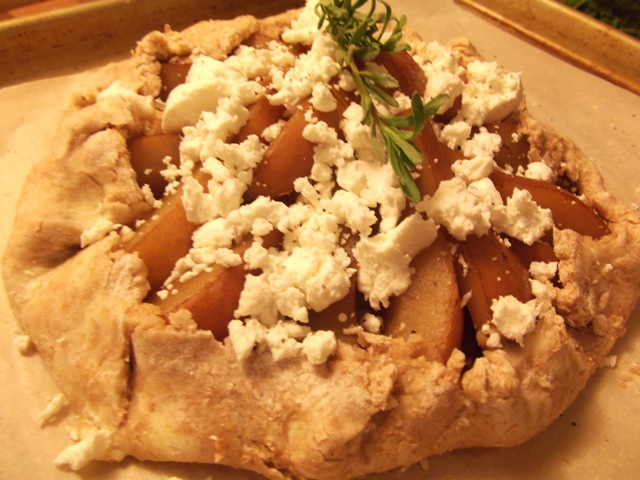
Pear galette with rosemary and Chevre.

Nick and the cat are fighting over bedtime (they holler at each other while he completes his nighttime routine), and she needed to have her claws trimmed a week ago and now it’s his problem, and it’s laundry night but the sheets came out damp, and we’re all out of Glee episodes to watch and books to read and original thoughts to think. But the apartment is clean, scrubbed down to its grout even, and we have a week of relaxation planned, of catching up on lost sleep and homemade dinners and digging in the garden. We’re not driving places or spending money. We’ve booked ourselves an entire weekend of going nowhere and doing nothing but slow-cooking beans and brisket for Sunday dinner. I’m looking forward to it.

Every so often it becomes urgent to not do anything for a week or two, to be very boring until the bags disappear from under our eyes for awhile. We generally eat well during these lulls, because we are not always worrying about what to wear before dashing frantically off to some thing. It’s during these breaks that we sometimes get to eat pie for dinner, so even if the lulls sound terribly dull, at least there is pastry. And that is a thing to look forward to in itself.

Pear galette with rosemary

  • 1 cup whole wheat flour
  • 1 1/4 tsp. salt, divided
  • 1/2 tsp. ground black pepper, divided
  • 1/2 cup cold unsalted butter, cubed
  • 5 tbsp. ice water
  • 1 lb. firm-fleshed pears
  • 1/2 cup balsamic vinegar
  • 1/2 cup maple syrup
  • 1/2 cup crumbled Chevre
  • 2 sprigs fresh rosemary
  • 1 egg white, beaten with 1 tsp. water

Make your dough. Combine flour and 1/4 teaspoon of salt, and drop each cube of butter in, squishing them between your fingers. The end result before you add the water should be a crumby mixture with larger chunks, some as large as kidney beans or peas. Stir in water, a bit at a time, to form the dough – you may not need all of the water; the dough should be just moist enough to hold together. Press into a disk and wrap in plastic wrap. Refrigerate until pears are done.

Quarter pears and remove centres, and cut each quarter in half. You can peel them if you want to but I didn’t feel like it, and it didn’t make a difference in the end. Place pear pieces into a saucepan and pour over balsamic vinegar, maple syrup, and enough cold water to just cover the pears. Add the remaining salt, 1/4 teaspoon of black pepper, and the sprig of rosemary. Bring the pot to a simmer over medium-high heat, reduce heat to medium, and simmer for 30 minutes.

Preheat oven to 375°F.

Roll pie dough onto a sheet of parchment paper to a thickness of 1/4-inch. Place parchment with pie dough onto a sheet pan.

Place pear slices in the centre of the dough in a circle. Sprinkle Chevre and remaining pepper over top, then fold the edges of the dough over the pears. It will be rough and rustic-looking, but that’s perfectly all right, because who wants to make a perfect pie after working all day? Not me. Place the remaining sprig of rosemary over top, paint the edges of the pie with egg white, and bake for 35 to 40 minutes, until golden.

Serve with gently dressed greens and hot black tea.

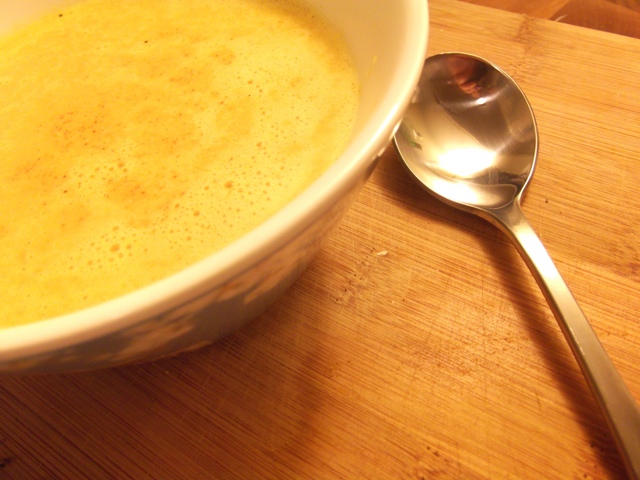
Curried apple and Cheddar soup.

Every so often circumstances force us to face unpleasant truths about ourselves. I am fortunate in that I am quite delusional, but over the course of the past week I have come to the stunning realization that I might be just as annoying as anyone else when faced with even the suggestion of illness, and that my dramatics are lost on everyone I’m married to.

As the weight in my sinuses drags me down, I’ve realized that I must feed us real food if we are to survive this thing, even if the idea of cooking in that kitchen that is piled with an unnavigable stack of dirty dishes is so repellent that all I can do is fall into the couch to marathon Glee and slurp kimchi ramen out of a Styrofoam bowl and whine about how no one really loves me or he’d throw out everything we own and go to the store to buy new, clean stuff so we could start over and maybe also give the floor a wash and fold that pile of laundry that’s lived a week on the sofa that gets wrinklier and covered in more and more cat hair every day. Also it would be good if someone would make me a pot of tea and find me my lip balm.

Cheese soup might not be the healthiest thing we could do for ourselves at this tissue-littered time, but it’s restorative in that it contains all of the calories I have not been getting by only consuming bowls of cereal, instant ramen, and juice since my face decided to protest health. It’s an easy meatless meal, and despite its half-pound of delicious aged Cheddar and its scandalous amount of cream, there are good things in it. The carrots aren’t just for colour.

Curried apple and Cheddar soup

(Serves four to six.)

  • 2 tbsp. butter
  • 1 medium onion, chopped
  • 2 cups diced carrot (about four)
  • 2 cups diced apple (such as Granny Smith, about two large)
  • 3 cloves garlic, chopped
  • 1 tbsp. Madras curry powder
  • 2 tsp. salt
  • 1/2 tsp. turmeric
  • 1/2 tsp. ground black pepper
  • 1/4 tsp. cayenne pepper
  • 5 cups water or vegetable stock, or a combination
  • 1/2 lb. sharp Cheddar cheese, grated
  • 1 tbsp. lemon juice
  • 1 cup cream

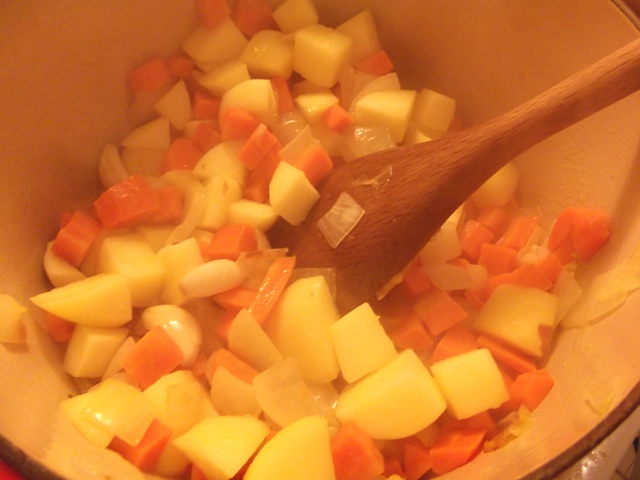
In a large, heavy-bottomed pot over medium-high heat, melt butter. Sauté onion, carrot, apples, and garlic until golden, three to five minutes. Add curry powder, salt, turmeric, and black and cayenne peppers. Stir to coat.

Add water or stock, and bring to a boil. Reduce heat to medium, and simmer until carrots have softened, 10 to 12 minutes.

Remove from heat and purée using a blender or immersion blender. Return to heat and stir in cheese and lemon juice. Taste, adjust seasonings as needed. Stir in cream, and serve hot, with a sprinkling of additional cayenne pepper, as desired.

Also because it’s been awhile here’s a photo of the cat in the laundry basket that we emptied onto the sofa and then just left in the middle of the living room.


Avocado waffles.

Breakfast is a challenge around here. We have never been very good at morning meals, or at getting up on time, or at being nice to each other before 10:00 a.m. It’s no longer possible to just skip breakfast in favour of a latte on the way to work or whatever we’re doing, because Nick needs to eat right after his morning insulin shot. I’m not a morning person, and most mornings it’s a challenge to come up with something more interesting than oatmeal, and if I have to eat another bowl of mush I am going to ugly-cry until someone else volunteers to do the morning feeding around here.

The weekends offer a bit of relief, because he can eat at any point within about a 90-minute period and no one has to leave for work at 8:00 a.m. A weekend breakfast must make up for the previous five days’ worth of hot glop. Since I’m the one making breakfast, that means waffles, which everyone knows are the greatest of all the breakfast foods. These ones have avocado in them – the taste of avocado in the finished product is very light, with a buttery sweetness, and goes magnificently with maple syrup.

This recipe is based on one I like for plain old buttermilk waffles from the Saveur Cooks Authentic American cookbook (which is completely worth its purchase price if you only make the fried chicken).

Avocado waffles

(Serves four)

  • 1 cup all-purpose flour
  • 2 tbsp. cornmeal
  • 1 tsp. baking soda
  • 1 tsp. baking powder
  • 1/2 tsp. salt
  • 3 eggs, separated
  • 1/2 cup mashed avocado (about one small avocado)
  • 1 cup buttermilk
  • 1 tbsp. honey

Combine dry ingredients in a bowl. Set aside.

Combine egg yolks, avocado, buttermilk, and honey in a blender, and puree until smooth. Set aside.

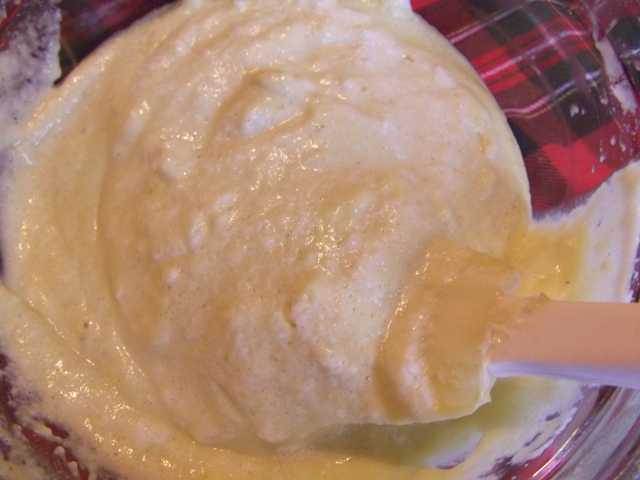
Beat egg whites until stiff peaks form. Combine avocado mixture with dry ingredients, mixing until just combined, then add one-quarter of the egg whites to the mix. Fold batter into remaining egg whites until what results is a fluffy pale green batter cloud.

Cook in waffle maker according to manufacturer’s instructions.

Serve with maple syrup and fresh fruit.

Peanutty soba noodles with kale.

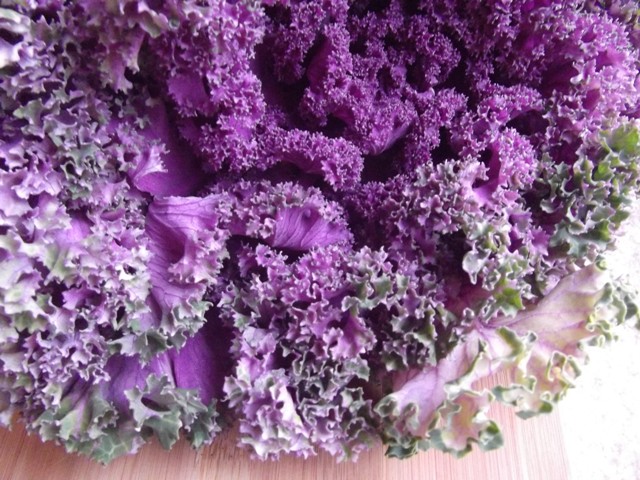
This past week, I have been inexplicably drawn to purple vegetables. I’ve bought turnips rimmed with a violet blush, potatoes dark as over-dyed denim, two kinds of purple yams, and that jewel-hued bunch of kale. Maybe it’s that purple suggests nutrients I’ve been lacking – it’s been a long winter of dark leafy greens and sweet potatoes and chickpeas – or maybe it’s that I am so very tired of winter and am ready to just get on with spring already. Maybe it’s that everything seems so grey and cold and apocalyptic right now, and purple suggests whimsy, a decadence we couldn’t afford if it came in any other form. Whatever the reason, if it’s purple it’s getting stuffed into my shopping bag.

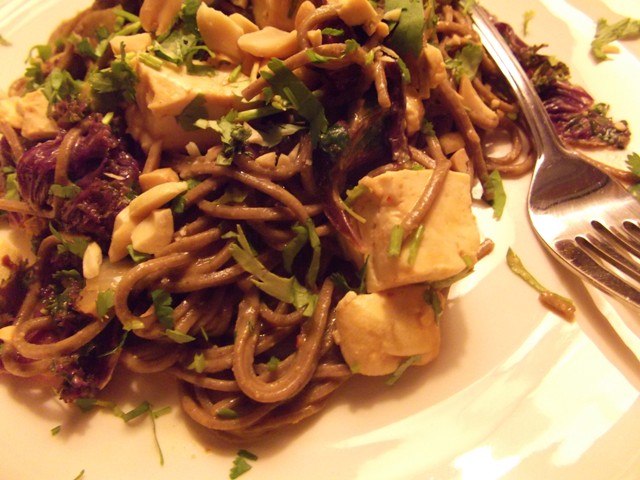
You don’t have to use purple kale here; green would be perfectly lovely and probably more aesthetically pleasing – the purple with the soba and the peanut butter got a little lost. Purple desire aside, I was willing to overlook a sub-par presentation because this came together in under 15 minutes; the longest part was waiting for the water to boil. Perfect for this Meatless Monday, or anytime it feels like March or the end of the world.

Peanutty soba noodles with kale

(Serves four)

  • 2 tbsp. peanut or vegetable oil
  • 1 small onion, chopped
  • 4 garlic cloves, minced
  • 1 tbsp. minced fresh ginger
  • 1 block medium-firm tofu
  • 1/2 lb. soba noodles
  • 1/2 lb. chopped fresh kale
  • 1/2 cup peanut butter (natural peanut butter is best because it’s runnier)
  • 1/4 cup soy sauce
  • 1/4 cup sriracha
  • 2 tbsp. rice vinegar
  • 1 tbsp. sesame oil
  • 2 tsp. honey
  • Salt and pepper, to taste
  • 1 cup chopped fresh cilantro
  • 1/2 cup chopped roasted peanuts

In a large pan, over medium-high heat, heat oil and add onion, garlic, and ginger. Cook until fragrant, about two minutes.

Pat tofu dry with a kitchen towel and cut into cubes. Add to the pan, tossing occasionally.

Meanwhile, bring a large pot of water to a boil. Add soba noodles, and cook for three minutes.

Meanwhile, combine peanut butter, soy sauce, sriracha, rice vinegar, sesame oil, and honey in a bowl. Mix well, taste, and adjust seasonings as needed.

After three minutes, add kale to the pot. Cook an additional three minutes, then drain. Rinse with cold water and drain again.

Add noodles and kale to onion mixture, and pour sauce over top. Toss with 1/2 cup of the fresh cilantro. Divide between four plates, and garnish with remaining cilantro and chopped peanuts.

This would also be good with chopped scallions and fresh bean sprouts. We might have had those things if I wasn’t only buying purple stuff.

Rapini and sausage with white beans and orecchiette

When we found out that Nick has diabetes, we were  lucky in that we were already eating mostly pretty well, most of the time, cheese and butter and cream aside, and that we didn’t have to make significant dietary changes. I threw out one stale half-bag of poor-quality elbow macaroni that I might have bought at Walmart that dark year I was an intern and had to have three roommates in a basement suite where the front door only kind of locked and where when it rained the water ran into the suite right over the electrical panel. We weren’t going to eat it anyway.

The only thing I really miss now that Nick is restricted is having pasta as a default – not being able to serve up a big plate of refined white carbs when I don’t feel like putting in a real effort, which can happen a couple of times a week, means adapting to a new kind of laziness. And the difference between pasta and something like, say risotto or sushi, which is also white and low on the glycemic index, is that pasta tends to last a couple of meals so you get that good blood-sugar spike a couple of days in a row. Fine for me, shakes and comas for him.

He can still have a small amount of pasta, of course. What he can have is likely what would be considered a normal portion size. And when you get down to comparing labels and noting the varying levels of carbohydrates, the rice pastas and whole-wheat pastas and gluten-free pastas are all similarly bad news carbohydrate-wise; a plate of the whole-wheat stuff is going to affect Captain Diabetes the same way that a plate of the delicious semolina stuff will.

So we adapted. Instead of a big plate of pasta, we have a big plate of stuff with pasta in it if there isn’t enough time to devise a huge and clever feast, or if the idea of opening a cupboard is too daunting to even consider. Here is one of those meals. It calls for blanching, which may qualify as a step that’s too daunting, but it’s really nothing. I promise.

Rapini and sausage with white beans and orecchiette

(Serves four.)

  • 1 lb. rapini, chopped
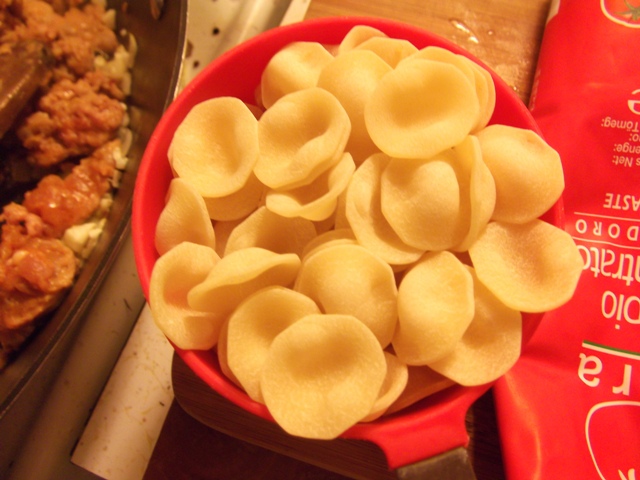
  • 1 cup uncooked orecchiette pasta
  • 1 lb. spicy Italian sausage, casings removed
  • 3 tbsp. olive oil
  • 1 small onion, chopped
  • 3 cloves garlic, minced
  • 1 tsp. red pepper flakes
  • 2 tbsp. tomato paste
  • 1 19 oz. can white beans, drained and rinsed
  • 1/2 lemon, zest and juice
  • 1/2 cup chopped fresh parsley
  • 1/4 cup grated Parmesan
  • Salt and pepper, to taste

Bring a large pot of lightly salted water to a boil. Drop chopped rapini in, and boil for two to three minutes until wilted and brightened in colour. Remove rapini from water, reserving liquid, and plunge into a large bowl of icy water. Set aside.

Return the pot to the heat and bring water back up to a boil.

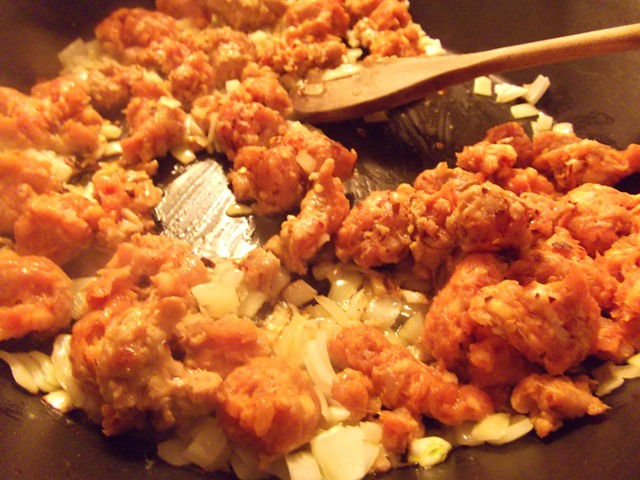
Meanwhile, heat olive oil in a large pan over medium-high heat. Cook onions until translucent. Add garlic, then crumble sausage into the pan. Stir with a wooden spoon, breaking the meat up as you go. Add red pepper flakes and tomato paste and continue moving the meat around the pan.

When the water has come to a boil, add pasta and boil until al denté, about eight minutes.

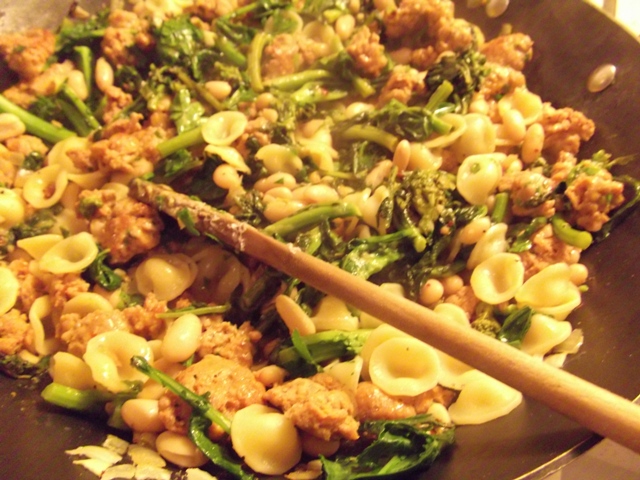
Drain and then add rapini to the pan, stirring to coat in pan juices. As pasta finishes cooking, add beans and lemon zest and juice, then add pasta. Reserve some of the pasta water in case the pan becomes too dry.

Add parsley and cheese. Taste, and adjust seasonings as needed. Serve with additional cheese.