Something to Read: An Alphabet for Gourmets

30days

We put a clean cloth, red and white, over one of the carpenters’ tables, and kicked wood-curls aside for our feet, under the chairs brought up from the apartment in Vevey. I set our tumblers, plates, silver, smooth unironed napkins sweet from the meadow grass where they had dried.

While some of us started to bend over the dwarf-pea bushes and toss the crisp pods into baskets, others built a hearth from stones and a couple of roof-tiles lying loose and made a lively little fire. I had a big kettle with spring water in the bottom of it, just off simmering, and salt and pepper and a pat of fine butter to hand. Then I put the bottles of Dezelay in the fountain, just under the timeless spurt of icy mountain water, and ran down to be the liaison between the harvesters and my mother, who sat shelling from the basket on her lap into the pot between her feet, as intent and nimble as a lace-maker.

I dashed up and down the steep terraces with the baskets, and my mother would groan and then hum happily when another one appeared, and below I could hear my father and our friends cursing just as happily at their wry backs and their aching thighs, while the peas came off their stems and into the baskets with a small sound audible in that still, high air, so many hundred feet above the distant and completely silent Leman. It was suddenly almost twilight. The last sunlight on the Dents du Midi was fire-rosy, with immeasurable coldness in it.

“Time, gentlemen, time,” my mother called, in an unrehearsed and astonishing imitation of a Cornish barmaid.

I read An Alphabet for Gourmets one summer when I was 20 or 21 and working for a place that exported cars to the US, back when the exchange rate was favourable for that kind of thing. It was my first non-retail job; I’d never realized before that how much sitting you could do and get paid for it.

On a good day, I’d drive some nice car down to the Seattle Auto Auction, sit around for a couple of hours, and drive some other car back. On a bad day I’d be stuck in a white cargo van with no rear-view mirrors and a sense of worry, or I’d be in one of those silly giant pick-up trucks when a snow-storm struck and remain stranded on the I-5 with not enough money for gas to get home. There was a lot of driving, but also a lot of waiting, and so in those lulls I’d read MFK Fisher. She always got me through.

an-alphabet-for-gourmets-fisher

While How to Cook a Wolf  is a book for simpler, leaner times, much of the rest of Fisher’s work is lush and decadent, and even when she’s describing something as simple as peas, there’s extravagance in the details. You want to go to there, wherever it is (most likely France). The way she writes, it’s as if the whole scene is set in that late-August evening light that’s so yellow that the shadows are blue, so golden that everything just sort of sparkles. It’s all like that, verdant, even when it’s nighttime or raining. She’s wonderful. Her life is the stuff of paintings and good poetry.

My bias is showing. She’s one of my favourites.

If you can find The Art of Eating, her selected works, buy it. I picked up my copy in that San Francisco bookstore I told you about before; it was another trip, but I never learn and picked up that book and a couple of other similarly dense, heavy books to lug around until Nick finally got sick of my complaining and carried the bag for me. If all you can find is An Alphabet for Gourmetsthat’s fine; you can collect the others as you find them. It’s a good one; that and How to Cook a Wolf will get you started.

Since we’re talking about peas, kind of, here’s a recipe for one of my favourite summer sides; it’s not a Fisher recipe, but it’s a good one and sort of fits the theme I was kind of going for (French, peas).

Peas with lettuce and mint

  • 1 tbsp. butter
  • 1 shallot, minced
  • 2 cups shelled peas, preferably fresh but frozen will do if you get those little baby peas
  • 1/2 head of romaine or green leaf lettuce, cut crosswise into ribbons
  • 1/2 cup chicken stock
  • Salt
  • Freshly ground black pepper
  • 2 tbsp. finely chopped mint
  • 1 tbsp. heavy cream

Melt the butter in a skillet over medium-high heat. Add your minced shallot, and cook until translucent. Add the peas, lettuce, and chicken stock, and cover. Cook for three minutes, until the lettuce has wilted. Add salt and pepper to taste. Sprinkle with mint.

Using a slotted spoon, transfer to a serving dish. Drizzle with cream.

This dish is nice with cold chicken or grilled fish; I quite like it as a side with barbecued Sockeye salmon and buttery steamed new potatoes.
Something to Read: The Sriracha Cookbook

30days

We’ve been a sriracha household ever since Nick first tasted sriracha one fateful night at the 24-hour pho place that used to be at Broadway and Cambie. After maple syrup, it may be my favourite condiment; in fact, when we make chicken and waffles, we use them both together. (This pretty accurately describes how we feel.)

While I don’t allow a liberal dousing of the stuff on my home-cooked dinners, we’ll happily splatter it all over any and all take-out, and it gets well used as an ingredient. It’s a marinade, a salad dressing, a replacement for ketchup, and essential to soups and sandwich fillings. It’s the secret and most important ingredient in our homemade Caesars (for my American friends, a Caesar is like a Bloody Mary but 100 times better because of Clamato, which is tomato juice with clam nectar. Come over sometime. I’ll show you.).

We like our rooster sauce.

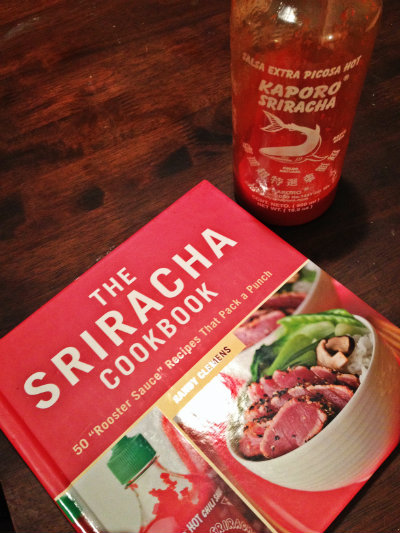
We could have lived happily ever after, just pouring our favourite hot sauce on everything. When I discovered you could buy two giant bottles of it at Costco for $6, things started to really get spicy. Then, one day, our beloved friends Dan and Dennis were in Puerto Vallarta and couldn’t find the sriracha they needed (most of our friends are similarly sriracha-dependent). It was then that they happened upon Shark Sauce, the Mexican version of sriracha (pictured below), which turned out to be kind of amazing, and then they bought some for us too. Dan and Dennis improve our lives in many ways, but Shark Sauce has been perhaps the greatest of their gifts to us.

sriracha

Mexican sriracha is everything that regular American sriracha is, but with more garlic flavour. So, it takes one thing we love and can’t stop eating (sriracha) and improves upon it with the other thing we love and can’t stop eating (garlic) to make a thing that is so wonderful we have to ration it because we’re never sure when we’re going to get more of it. You can only get it in Mexico. We are not likely to get to Mexico anytime soon. Dan and Dennis, recently returned from Mexico, confirmed via Facebook that they have Shark Sauce for us and I think I saw a tear of gratitude form in Nick’s left eye.

If you go to Mexico, get Shark Sauce. If someone you know is going to Mexico, get them to get you Shark Sauce. You can get it in Mexican Walmarts, apparently. I’m sure there are other places.

If you love sriracha like we love sriracha and put it on and in all the things, get The Sriracha Cookbook. Endorsed by David Chang (of Momofuku fame), The Sriracha Cookbook will help you incorporate more sriracha into your diet with recipes for every meal. (Maybe you already have sriracha with/on every meal. This will help you use sriracha in fancier, possibly more socially acceptable ways.) It’s not a long book, but the recipes are solid and the photos are nice; it would be a good gift for a bridal shower or a Secret Santa exchange.

I figure a cookbook is worthwhile when it contains at least three recipes that produce reliable results and that I’d make again and again. I’ve made at least three recipes from the book, and have made them multiple times, and people have not gagged when served the food I made from the book so I figure it’s a hit. It’s a fun book.

My favourite recipe from The Sriracha Cookbook is the tropical fruit salad. I think papayas taste like decaying bodies, and Nick thinks he’s allergic to pineapple, and we don’t eat bananas for complicated banana-hating reasons, so I use watermelon and a couple of avocados and it works very well. I also add more soy sauce because 1/4 teaspoon is much too conservative for my liking; adjust the seasonings to your taste. This dish is great for brunch, or as a side-dish for a summer meal; it also keeps well in the fridge (up to three days) so it’s kind of nice to make ahead for weekday lunches.

Tropical Fruit Salad with Sriracha-Sesame Vinaigrette

(Serves 8.)

  • 1/4 cup toasted sesame oil
  • 1/4 cup seasoned rice vinegar
  • 1/2 cup honey
  • 2 tbsp. sriracha
  • 2 tbsp. toasted white sesame seeds
  • 1/4 tsp. soy sauce
  • 1 medium pineapple, peeled, cored and cubed
  • 2 mangoes, peeled, cored and cubed
  • 1 papaya, peeled and cubed
  • 2 kiwi fruits, peeled, halved lengthwise, and sliced
  • 1 pint strawberries, hulled and quartered
  • 1/2 cup sweetened flaked coconut, for garnish
  • Fresh mint, cut into ribbons, for garnish

In a medium bowl, combine sesame oil, rice vinegar, honey, sriracha, sesame seeds, and soy sauce. Whisk everything together. Taste it. Does it need more of anything? Adjust seasonings to taste.

Put the fruit into a large mixing bowl. Pour the dressing over top, and toss gently, using your (clean) hands.

Serve with a garnish of flaked coconut and mint chiffonade.

And seriously. Get someone to get you Shark Sauce. It will change your life. I’m probably not exaggerating.

Something to Read: Steingarten Double-Header

30days

My plan was to write every single day in April, but yesterday I came up short. It was Birthday Eve, and I just sort of melted into the couch with a bowl of pho and season four of Parks & Rec. It had been a long week; my boss has been away, so I’ve been using this bit of down-time to cross a million little things off my to-do list. I have been sweatily productive, even on painkillers. It wears a person out, you know?

So, anyway, though I had every intention of remaining committed to this arbitrary goal I’ve set for myself, I vegged out instead and am probably better for it.

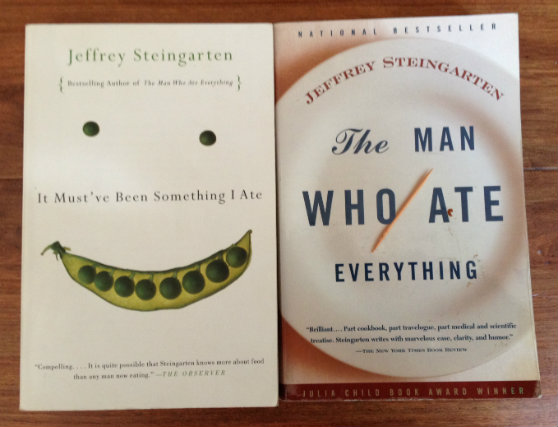
Fortunately, I have two books to tell you about today! Two books I read in one weekend, back when I had no small person demanding a lot of my time and attention. I read the first book (The Man Who Ate Everything), and liked it so much I went out and bought the sequel (It Must’ve Been Something I Ate) and finished it the next day.

steingarten

Jeffrey Steingarten, the author of both, is a writer and a curmudgeon. He has been a columnist for Vogue since 1989, and frequently appears as a judge on Iron Chef. He is obsessive, and so funny that even years after I first read the books, when I flip through them again I find myself in tears, laughing until I can barely breathe.

From The Man Who Ate Everything:

“For weeks I had been preoccupied with horses. Every time I saw a horse dragging tourists across the snow in Central Park, or standing under a policeman on the cobblestones of SoHo, I began to salivate. In truth, it was the fat of the horses, the fat around their kidneys, that excited me.” (Page 401.)

“Someday soon, I was sure, I would cook my own French fries in the fat of a horse. When and how this would be accomplished were questions that made the future seem alive with prospects and possibilities.” (Page 402.)

From It Must’ve Been Something I Ate:

“As soon as I arrive at the Chinos’, a 20-minute drive north of San Diego plus ten minutes to the east, I nearly always enter their farm stand through a door on the left, say hello to everybody on duty, and start eating. First I eat half a basket of the best strawberries in America, the smallish, irregular, incredibly sweet and perfumed Mara des bois, developed in France with a heady foretaste of the European wild strawberry. Nobody has them but the Chinos. Then I eat half a basket of the other best strawberries in America, the tiny conical Alpine variety, in your choice of red or white, hard to distinguish in aroma from the French fraises des bois. Also only at the Chinos’. As long as I pretend to take notes, nobody gawks at my behaviour.” (Page 206.)

Each chapter is its own essay, and each is darkly humourous and self-deprecating and rich with the kind of in-depth information you can only get from someone truly committed to unraveling the science and mystery of a particular dish. You get the history, you get the chemistry, you get the details of Steingarten’s step-by-step process of achieving whatever culinary goal he’s set out to achieve (and eat). The prose is spectacular, and the recipes work. In my mind, there is no other potato gratin recipe than Steingarten’s Gratin Dauphinois, from It Must’ve Been Something I Ate.

Gratin Dauphinoise

  • 1/2 cup of butter
  • 1 cup whole milk
  • 1 large garlic clove, crushed
  • 1/2 tsp. white pepper
  • 3/4 tsp. salt
  • 1/8 tsp. nutmeg
  • 1 1/2 lbs thinly-sliced potatoes (use a mandolin if you have one; if not, cut 1/8″ slices by hand)
  • 1 1/2 cups heavy cream

Using a good dollop of the butter, grease the inside of a 9″x13″ baking dish on all sides. If you have an enamelled cast iron baking dish (I don’t), that’s ideal; if not, glass or ceramic will do. Preheat oven to 425°F.

In a pan on your stove, bring the milk, salt, pepper, garlic clove, and nutmeg to a boil. Remove from heat and turn off the element.

Line your pan with potatoes. You will overlap each slice of potato a third of the way down each slice that comes before it. When you complete the first layer of potatoes, follow a similar process with the second row, this time overlapping entire rows a third of the way over the first row. Repeat with subsequent rows until potatoes are neatly layered. If none of that made sense and you’re sitting here thinking “uh, what?” then just layer the potatoes neatly and do your best. Steingarten’s instructions are detailed, but I am comfortable half-assing these things.

Put your pot of milk and spices back on the stove – bring it to a boil once more. When it’s come to a boil, pull the clove of garlic out, and pour the mixture over the potatoes. Bake, covered with a lid or aluminum foil, for 15 minutes.

Bring the cream to a boil. Remove from heat, and turn off element.

When the potatoes come out of the oven, bring the cream to a boil once again. Pour the boiled cream over the potatoes, and dot the whole thing on the top with the remaining butter.

Bake, uncovered, for 20-25 minutes. Let stand 10 minutes before serving.

I did promise a second recipe! I was tempted to phone it in and just re-share the Choucroute garnie à l’Alsacienne I posted here now several years ago …  but I did miss writing yesterday and really ought to do better. So, here’s a pretty excellent recipe for Bagna Caôda, a hot dip you should make right now and eat with a lot of bread and raw white mushrooms. It’s from The Man Who Ate Everything, page 266. It calls for Barolo, which is expensive; use a decent Shiraz. I like the Cono Sur Shiraz which costs $10. (I’m too poor to cook with really good wine.)

Cesare’s Favorite Bagna Caôda

  • 1 cup Barolo (or Shiraz)
  • 1 head garlic, cloves separated and peeled and sliced
  • 1 1/2 oz. (8 to 10) anchovy fillets
  • 1/2 cup extra virgin olive oil
  • 4 tbsp. butter

In a small saucepan, bring the wine to a boil over medium high heat. Add garlic, reduce heat to medium, and simmer for two minutes. Add anchovies and olive oil, and simmer for another two minutes. Add butter, and reduce heat to medium low, simmering gently for about 45 minutes, or until the anchovies dissolve.

If you are making this in advance, don’t refrigerate it. Just reheat when you’re ready. Serve as a dip for raw vegetables. Don’t mind your breath.

Something to Read: Spoon Fed

30days

I’m still in a bit of a mood, as the pain after my wisdom teeth extraction remains ongoing. Tomorrow I have to leave the office for a bit to go back to the surgeon’s office to have him review his work. On my walk home from work today I simply couldn’t stand it any longer and found myself back in Dairy Queen for the second time in less than a week. I make a lot of excuses for my behaviour, but I stand by all of them.

spoonfed

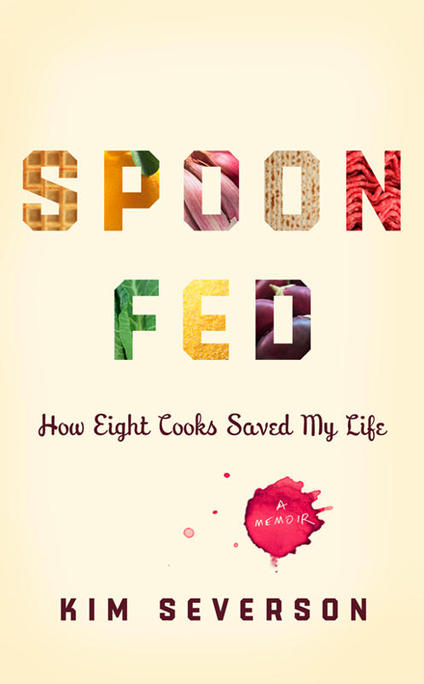
Today’s book is Spoon Fed: How Eight Cooks Saved My Life by Kim Severson, who is a writer for The New York Times. The book features stories about Severson’s interactions with eight cooks, all women, who play a pivotal role in Severson’s life (both in the kitchen and outside of it). My favourite part is the chapter on Marcella Hazan, who teaches Severson to Let go of expectations and you’ll be a lot happier.” And it features That Perfect Sauce.

“Can you recall the first grown-up recipe you really mastered? It’s likely not the first thing you ever made, the misshapen pancakes cooked at your father’s elbow or a batch of cookies crammed with too many M&Ms. And it is likely not the first few experiments when you left home, the ones you made to impress a date or because it was your turn in the kitchen at the shared house you lived in during college.

“That special dish usually comes once you are old enough to have someone to cook for and mature enough to understand the value in mastering a recipe so that its preparation is as routine as making a bed with fresh sheets, and the results as predictably nice.” (Page 219)

You can make it with fresh tomatoes, but the thing I like about Marcella Hazan’s tomato sauce is that you can make it with dirt cheap Superstore No Name Brand canned tomatoes and it still turns out beautifully – not harsh or acidic, not ever. It’s so simple, and so wonderful, and you can gussy it up with meatballs or gnocchi or whatever, but you don’t even have to. I like Hazan’s sauce (from Essentials of Classic Italian Cooking) over a bit of whole wheat pasta and a bit of shaved Parmesan, maybe a little buttered bread on the side for sopping. It’s perfect, beyond what you might expect.

If you’re serving other people, double the recipe. If you’re in a pissy mood because your teeth still hurt, have someone else make it for you. Thank that person. Repeatedly.

Marcella Hazan’s Tomato Sauce

  • 1 28-ounce can of canned whole tomatoes
  • 5 tablespoons butter
  • 1 onion, peeled and cut in half
  • Salt

Put the tomatoes and their juices in a pot with the butter and the onion, and bring to a simmer over medium heat. Simmer, uncovered, for 45 minutes. Stir occasionally. Taste, adding salt if you find it needs it.

Before serving, fish out the onion and discard it. Give the tomatoes a whiz with an immersion blender, or use a regular blender to smooth the sauce. Serve over pasta.

Something to Read: The New Purity Cook Book

30days

The New Purity Cook Book alleges, on its cover, that it is the complete guide to Canadian cooking. I’m not convinced that this is true, though it remains one of my most beloved books, though I only make one or two things from it.

My parents had the book when I was growing up – apparently Purity is a brand of flour? – and that’s where our waffle recipe came from. I got my copy of the book at a thrift store for a dollar, which is actually pretty reasonable – there are gift coupons in the back of the book, and for $1.25 (cash or money order), you could, in the 1980s, have a copy of the cookbook mailed anywhere in Canada.

Purity-Cook-Book

It’s actually a pretty reliable book, with solid recipes for the kind of home-cooking you might have grown up with. There are the usual things – Pineapple Upside Down Cake, Enchiladas, and Salmon Casserole – as well as a handy guide to freezing, defrosting, and boiling the living hell out of vegetables until all that’s left is a weepy grey mush. There are also some pretty good recipes for breads and loaves, especially the Old Fashioned Porridge Bread, which you can make with leftover oatmeal. If you can find it for a dollar, it’s worth it. There’s a recipe for something called Chop Suey Cake, which seems to be a kind of inappropriately named fruit cake, and I want someone to make it so I can try it (but I don’t want to spend $20 on candied fruit to do it myself).

I use the Purity waffle recipe, because it makes the waffles I was raised on, and, therefore, The Best Waffles. If you make too many (I always do), you can stack them between sheets of waxed paper and store them in a bag in the freezer; they toast up pretty nicely so you can have waffles even on weekdays.

Waffles

  • 1 1/2 cups all-purpose flour
  • 1 tbsp. granulated sugar
  • 3 tsp. baking powder
  • 1/2 tsp. salt
  • 2 eggs, beaten
  • 1 1/2 cups whole milk
  • 1/4 cup butter, melted

Sift together the dry ingredients. In a separate bowl, whisk together the liquids.

Heat the waffle iron according to your waffle iron’s instructions. You may need to lightly grease the iron before heating, depending on what kind you have or how old it is.

Pour batter into waffle iron, drop the lid, and cook until waffles have stopped steaming, and are golden and fluffy. Don’t lift the lid during cooking, or else they flatten out and don’t work as well for syrup-sopping.

Serve with tons of maple syrup. Like, an obscene amount. (That’s the whole point of waffles anyway.)

Something to Read: Eat, Memory

30days

It’s been five days since I had my wisdom teeth out and my mouth still throbs with a dull, insistent ache. I haven’t eaten a satisfying meal in what feels like forever, and nobody is interested in indulging me as I whine about it. These are the worst of times. I am not exaggerating, I don’t care what Nick says. Also we have ants. And I’m almost out of pills.

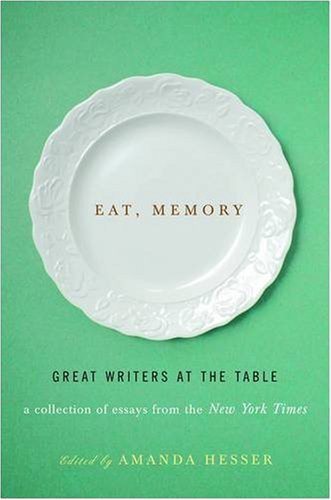
I am having a hard time mustering a kind word or the slightest enthusiasm for anything, so I’m phoning it in tonight, and leaving you with a poem and a recipe for Sole Meunière, a wonderful thing and a meal I could probably eat if someone else would make it for me. The poem and the recipe both come from Eat, Memory, a book of culinary essays from the New York Times, assembled and edited by Amanda Hesser.

eat_memory

The Fish, by Billy Collins

As soon as the elderly waiter
placed before me the fish I had ordered,
it began to stare up at me
with its one flat, iridescent eye.

I feel sorry for you, it seemed to say,
eating alone in this awful restaurant
bathed in such unkindly light
and surrounded by these dreadful murals of Sicily.

And I feel sorry for you, too –
yanked from the sea and now lying dead
next to some boiled potatoes in Pittsburgh –
I said back to the fish as I raised my fork.

And thus my dinner in an unfamiliar city
with its rivers and lighted bridges
was graced not only with chilled wine
and lemon slices but with compassion and sorrow

even after the waiter removed my plate
with the head of the fish still staring
and the barrel vault of its delicate bones
terribly exposed, save for a shroud of parsley.

Sole Meunière

  • 1/2 cup all-purpose flour
  • 2 tbsp. oil, such as canola
  • 2 fillets of sole
  • Salt and freshly ground black pepper
  • 4 tbsp. unsalted butter, diced
  • 2 tbsp. white wine
  • Juice of 1/2 lemon
  • 1 tbsp. finely chopped flat-leaf parsley

Place the flour in a wide dish, such as a pie plate. In a large skillet, heat oil over high heat.

Season fish on both sides with salt and pepper. Dredge through flour.

Cook in the oil for two minutes, the flip and cook the other side a minute more.

Pour off the oil in the skillet and wipe clean with a paper towel.

Place the pan back on the heat, and add the butter. Cook the butter until it has melted and turned golden. It should smell faintly nutty. Add the wine, and boil for 20 seconds. Add the lemon and parsley, and cook another 20 seconds. You’ve just made a beurre blanc. It is fabulous. Pour it over the sole and eat immediately. Serves two.

Something to Read: Alone in the Kitchen with an Eggplant

30days

I’ll admit that most of the times I end up cooking for just me, I eat weird food. Last time Nick was away, one night for dinner I ate a whole purple cauliflower, roasted with olive oil and garlic, and three eggs, scrambled medium-rare in probably more butter than was necessary with a lot of black pepper. Not something I’d make for a family dinner, it was a meal that I enjoyed intensely probably in part because I was all by myself.

Eating alone is a secret joy, the kind of thing I recommend everyone give a good solid try. It’s important to be able to enjoy one’s own company, and some people need a bit of practice dining in silence, alone but not lonely. Start with brunch; the most wonderful way to spend Sunday morning is sitting at a table alone in a well-lit dining room with cold white wine, a bit of fruit, a poached egg and some toast, and a stack of magazines you haven’t yet gotten around to. If you go a little while after the lunch rush, you can sit undisturbed for a good long time, and the serving staff will be kind to you and generous in topping up your glass. Tip well. But that goes without saying.

You can practice at home by cooking for yourself and then not eating that meal in front of a screen. Books and magazines are allowed, but iPhones, computers, and televisions are not. Even if you just roast yourself a whole bunch of cauliflower, you must do yourself a favour and eat it at a table, with nice music playing and something manual to distract yourself.

eggplant

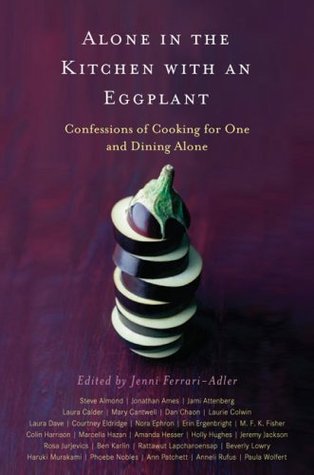
And while you’re practicing, read Alone in the Kitchen with an Eggplant: Confessions of Cooking for One and Dining Alone, a collection of essays by brilliant people on the topic of dinner for one.

This book has a little bit of something from everyone, from Nora Ephron and Laurie Colwin to Haruki Murakami and Marcella Hazan. From her own piece called Alone in the Kitchen with an Eggplant, from her book Home Cooking and from which the book takes its name, Laurie Colwin writes:

Dinner alone is one of life’s pleasures. Certainly cooking for oneself reveals man at his weirdest. People lie when you ask them what they eat when they are alone. A salad, they tell you. But when you persist, the confess to peanut butter and bacon sandwiches and bacon sandwiches deep fried with hot sauce, or spaghetti with butter and grape jam.

Be your weird self. Cook for just you. Enjoy the silence. Eat a whole head of cauliflower, if that’s what makes you happy.

Roasted cauliflower

  • 1 x 2 lb. cauliflower, cut into florets
  • 1/3 cup extra-virgin olive oil
  • Zest and juice of 1 lemon
  • 1 or 2 cloves garlic, minced
  • Salt
  • Ground black pepper

Preheat the oven to 400°F.

In a large bowl, drizzle the cauliflower florets with the olive oil. Zest the lemon over top the florets, then drizzle them with the juice. Add the garlic, salt and pepper, and mush the whole thing together with your hands until the cauliflower is well coated.

Place the cauliflower on a large, rimmed baking sheet.

Roast for 25 to 30 minutes, turning occasionally, until the cauliflower is tender and golden. Sprinkle with a little bit of additional salt, then eat with your fingers out of a big bowl with a plate of scrambled eggs, a glass of cold white wine, and a novel you’ve been meaning to get into. Don’t answer the phone if it rings – it’s me time.

Something to Read: How to Cook a Wolf

30days

There are times when helpful hints about turning off the gas when not in use are foolish, because the gas has been turned off permanently, or until you can pay the bill. And you don’t care about knowing the trick of keeping bread fresh by putting a cut apple in the box because you don’t have any bread and certainly not an apple, cut or uncut. And there is no point in planning to save the juice from canned vegetables because they, and therefore their juices, do not exist.

In other words, the wolf has one paw wedged firmly into what looks like a widening crack at the door. (How to Cook a Wolf, page 66)

No other book has been as inspirational or as significant in both my cooking and my desire to write about food as MFK Fisher’s How to Cook a Wolf. It’s a book about cooking (and remaining happy) in the absolute bleakest of times – during war, under ration, or when one is limited by finances, shortages, or long, cold seasons. It was written in 1942, then revised in 1954, and it remains timeless in its advice and good sense. It’s also beautifully written.

mfkfisher

It’s not very long – you could probably read it in a weekend. And it’s just so sensible. Gas and electricity are expensive – why not spend one evening making enough soup to last a week? Meat and eggs aren’t always affordable – why not make a meal of corn grits and vegetables? What we’d now call vegan cooking is, in this book, just what you do when you don’t have much else. There are also good tips for working with cheap cuts of meat and offal, recipes for dinners in which eggs are the main course, and instructions for making mouthwash and soap.

Even if you don’t make the recipes, they are a great jumping-off point. Many of the recipes call for things like rabbit and pigeon, which are expensive proteins now and not likely to be in your fridge or freezer anyway. But you can adapt, and stew a tough bit of beef, or cook up chicken thighs or make a meatball or turn your leftovers into something else entirely with a long cook in a bright sauce and a low oven.

It’s also about redefining dinner – dinner does not have to be meat, potatoes, and some boiled vegetable. I don’t know how many times our dinner has been some manner of grain porridge topped with steamed spinach or asparagus and a poached egg; it’s something we eat all the time, not just when we’re broke (but also when I’m lazy, when it’s raining too much to walk to the store, when I just feel like a poached egg and something green …). It’s a good book, and a short book, and not preachy. Where some of Fisher’s other writing is more indulgent, How to Cook a Wolf is a reflection of the time it was written and quite sensible.

I’ve actually made her War Cake a few times, while not at war but certainly without eggs or milk or butter. It’s a nice thing to have when you are 22 and your parents are coming to your damp basement apartment for tea and you want to look like a grown-up but can only afford half the illusion.

If you already have a bit of fat and buy just what you need for this recipe out of the bulk bins, it will cost you just a few dollars to make and you’ll end up with a loaf you can slice and toast or muffins you can freeze. It’s very adaptable as well, so feel free to make substitutions based on what you have in your cupboards already.

War Cake

  • 2 cups flour, white or whole wheat
  • 1/4 tsp. baking soda
  • 2 tsp. baking powder
  • 1/2 cup shortening, oil or bacon fat (always save your bacon fat)
  • 1 cup sugar, brown or white
  • 1 cup water
  • 1 tsp. cinnamon
  • 1 tsp. other spices, such as ginger, cloves, mace, etc.
  • 1 cup chopped dried fruit, such as raisins or prunes

Lightly grease a 9″x5″ loaf pan. Set aside.

Sift together your flour, baking soda, and baking powder. Set aside.

In a pan over medium-high heat, combine the rest of your ingredients, and bring them to a boil. Reduce heat to medium and simmer for five minutes. Remove the pot from the heat and cool its contents completely.

Add the dry ingredients to your cooled wet ingredients, stir to combine, and pour into your prepared loaf pan. Bake at 325°F for about 45 minutes, or until a toothpick inserted in the centre of the loaf comes out clean.

You can also make this recipe as muffins; reduce your cooking time to 20-25 minutes.


Something to Read: The Williams-Sonoma Cookbook

30days

Williams-Sonoma is ridiculous and I love it.

Our last apartment was about half a block off Granville Street, and three blocks away from Vancouver’s only Williams-Sonoma. It was a weird place to live, because the rent was very affordable and many of the apartment buildings were very old, but all the stores were for the fancy rich people who lived up the hill in Shaughnessy. There was a Restoration Hardware, an Anthropologie, and a lot of expensive art galleries. Occasionally I would see an outfit I liked in a shop window and wander inside to look, discreetly search for a price tag, and then high-tail it out of there because who can afford $800 jeans?! Also most of the restaurants in the neighbourhood sold only bland food because rich people don’t like to taste flavours.

But I’d go into Williams-Sonoma a lot, mostly to fondle the expensive enameled cast-iron and copper pots. I rarely bought anything, though occasionally some of their cookbooks would be on sale, and once I bought this great vinaigrette mixer-spritzer that I later broke because I am not gentle with things.

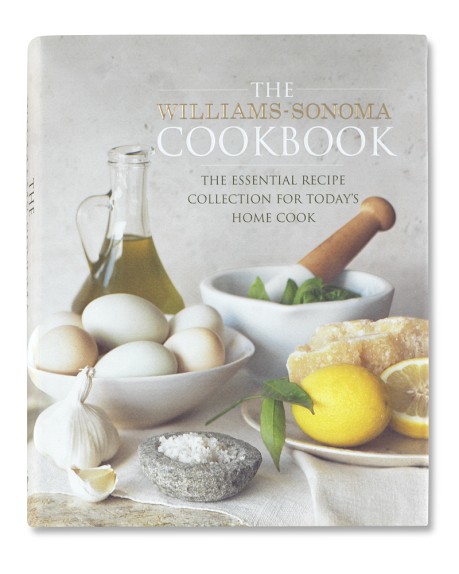
When we were first married, I didn’t have the impressive cookbook collection I now fill an obtrusive shelf in our dining room with, and I wanted to have a few reliable books I could refer to. I happened to be in Williams-Sonoma, and was delighted to discover that The Williams-Sonoma Cookbook (you can buy it for less here) was actually very reasonably priced for a big, fat, hardcover cookbook. The cover price was $40, but it was (miraculously) on sale for only $20. The recipes are easy to follow, even for a beginner cook, and they don’t call for unusual or expensive ingredients. I later acquired a copy of Williams-Sonoma’s Essentials of French Cooking (I think when my aunt was thinning out her cookbook collection), which has also turned out to be pretty good.

wscookbook

It’s been well used, and certainly worth more than what I paid. One recipe in particular has proven itself invaluable, as it turned out to be Nick’s favourite dessert. Nick doesn’t eat much dessert, and didn’t eat much dessert even pre-diabetes (I do not understand this). But this one pleased him so much that he insisted I bring it to his parents’ for his birthday one year, and his family loved it and now it’s in the family cookbook and we have it almost anytime there’s an occasion that calls for dessert.

Panna Cotta

  • Butter (for greasing six ramekins)
  • 1 1/2 cups whole milk
  • 2 packages, or four teaspoons, unflavoured powdered gelatin
  • 1/2 cup granulated sugar
  • 1 vanilla bean (you can use 1 tsp. vanilla extract if that’s what you have in your pantry)
  • 1 1/2 cups heavy cream (whipping cream)

Lightly grease six ramekins with butter. Set the cups on a small baking sheet.

Pour one third, or 1/2 cup of the milk into a small pot. Sprinkle the gelatin over top, and let sit for about three minutes.

Add the rest of the milk and the sugar and heat it until the sugar and gelatin is dissolved, then take the pot off the stove and stir in the cream and vanilla bean. Whisk everything together, then pour the mixture into ramekins. Cover ramekins with plastic wrap, then place in the fridge to set, which should take four to six hours.

To serve, remove the panna cotta from the ramekins by sliding a knife gently around the circumference. It should come out easily, but you can serve it in the ramekins too if you want. It saves dirtying more dishes, which counts for a lot around here.

Serve with fresh berries and whipped cream. In the winter, I warm frozen blueberries with a bit of maple syrup, then let the compote cool to just about room temperature before spooning over the panna cotta.

Something to Read: The Perfect Scoop

30days

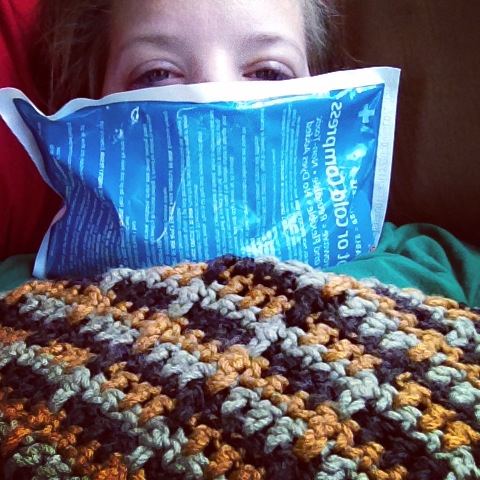
Well, I did it. I had my teeth out, and it sucked and apparently I cried. I think I only heard the “sedation” part when I attended my consultation with the surgeon; I did not hear the part about consciousness.

‘It will be like you have had a few too many glasses of wine, Ms. Wight,” they said.

“I have a few too many glasses of wine often enough to know that won’t be sufficient for this procedure,” I said. And then they stabbed a needle into my forearm and took out my teeth and weren’t delicate about it.

And to top if off, they gave me what amounts to strong ibuprofen as part of my recovery goodie bag. It may not need to be said, but I’m not great with pain. I am, in fact, one of the worst whiners in the history of the world and if something serious and prolonged ever afflicts me, I think Nick will take me to an amoral veterinarian and have me put down. I wouldn’t blame him for it either.

So, I have spent the majority of the day in and out of sleep and in and out of gallons of ice cream. Nick, kind man that he is, spent what would ordinarily be our bi-weekly daycare lunches budget on peanut butter-chocolate Häagen-Dazs ice cream and then bought me a Blizzard for dinner. I will not have Nick put down, as he provides a level of service I do not deserve and would not find anywhere else. It may be worth injuring him to prevent him from leaving.

DQ

Anyway, I am swollen and pained and eating thousands of calories of frozen dairy and while I have many complaints I’ll have to admit that from where I sit, I have it pretty good. My parents took Toddler overnight, and I am sitting around in my old maternity clothes and some Pajama Jeans while Nick queues up all my favourite bad movies.

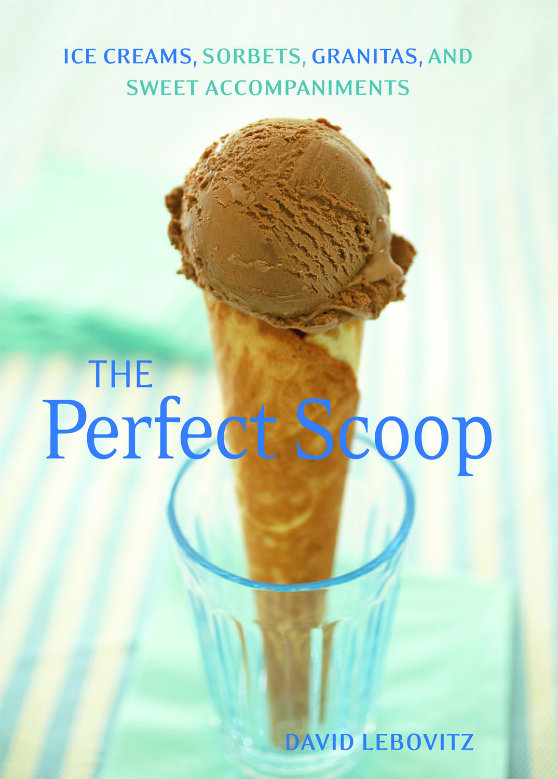
This has been a lot of preamble and I meant to tell you about a book. So, The Perfect Scoop.

PerfectScoop

I think everyone who bakes probably knows about David Lebovitz by now, and if you don’t I won’t bore you with a lot of background which you can easily discover on his eponymous and highly regarded blog. He is very good at what he does.

I have made a great many of his recipes over the past few years, and his basic vanilla ice cream recipe has come to be the base upon which I build almost every ice cream I make. I’ve made it so many times I don’t even need the book anymore; it’s committed to my memory which means that it is something important, and that it probably pushed something I might have really needed out.

In my current (pathetic) state I have been longing for a bite of his salted butter caramel ice cream, which is as close as you’ll get in North America to the salted butter caramel ice cream at Berthillon in Paris, which everyone must experience at least once in their life even if you have to sell an organ to get there. Do you need a kidney? I’d very much like to go back.

perfectscoopberthillon

The ice cream in question is sweet – but not too sweet – and slightly bitter, as the caramel is slightly over-cooked, so that it has just a whisper of burnt taste. If you’re wary, trust me; it’s perfect. To have some right now …

The cookbook has a lot in it that’s useful; I’ve even made his vegan ice cream recipe and found it delightful (I used coconut milk in place of rice milk, as it’s what I had). If you like making ice cream, or if you have an ice cream maker and are looking for an excuse to put it to use, The Perfect Scoop is an invaluable resource, and I think you’ll really love it.

My face hurts, and I’m too lazy to type out David’s recipe … fortunately it already exists on his blog. Go to it. Make it. Mail me some?

We’ll be back on track tomorrow, I hope. Think anti-inflammatory thoughts for me, will you? I’ve got to go pass out in an ice cream coma.

photo (4)