Avocado waffles.

Breakfast is a challenge around here. We have never been very good at morning meals, or at getting up on time, or at being nice to each other before 10:00 a.m. It’s no longer possible to just skip breakfast in favour of a latte on the way to work or whatever we’re doing, because Nick needs to eat right after his morning insulin shot. I’m not a morning person, and most mornings it’s a challenge to come up with something more interesting than oatmeal, and if I have to eat another bowl of mush I am going to ugly-cry until someone else volunteers to do the morning feeding around here.

The weekends offer a bit of relief, because he can eat at any point within about a 90-minute period and no one has to leave for work at 8:00 a.m. A weekend breakfast must make up for the previous five days’ worth of hot glop. Since I’m the one making breakfast, that means waffles, which everyone knows are the greatest of all the breakfast foods. These ones have avocado in them – the taste of avocado in the finished product is very light, with a buttery sweetness, and goes magnificently with maple syrup.

This recipe is based on one I like for plain old buttermilk waffles from the Saveur Cooks Authentic American cookbook (which is completely worth its purchase price if you only make the fried chicken).

Avocado waffles

(Serves four)

  • 1 cup all-purpose flour
  • 2 tbsp. cornmeal
  • 1 tsp. baking soda
  • 1 tsp. baking powder
  • 1/2 tsp. salt
  • 3 eggs, separated
  • 1/2 cup mashed avocado (about one small avocado)
  • 1 cup buttermilk
  • 1 tbsp. honey

Combine dry ingredients in a bowl. Set aside.

Combine egg yolks, avocado, buttermilk, and honey in a blender, and puree until smooth. Set aside.

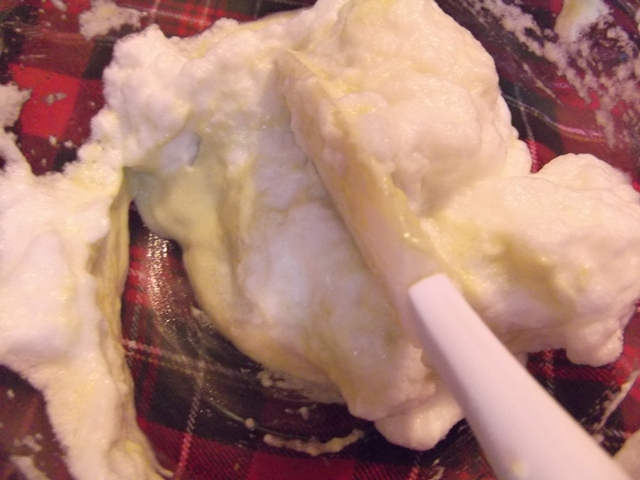
Beat egg whites until stiff peaks form. Combine avocado mixture with dry ingredients, mixing until just combined, then add one-quarter of the egg whites to the mix. Fold batter into remaining egg whites until what results is a fluffy pale green batter cloud.

Cook in waffle maker according to manufacturer’s instructions.

Serve with maple syrup and fresh fruit.

Peanutty soba noodles with kale.

This past week, I have been inexplicably drawn to purple vegetables. I’ve bought turnips rimmed with a violet blush, potatoes dark as over-dyed denim, two kinds of purple yams, and that jewel-hued bunch of kale. Maybe it’s that purple suggests nutrients I’ve been lacking – it’s been a long winter of dark leafy greens and sweet potatoes and chickpeas – or maybe it’s that I am so very tired of winter and am ready to just get on with spring already. Maybe it’s that everything seems so grey and cold and apocalyptic right now, and purple suggests whimsy, a decadence we couldn’t afford if it came in any other form. Whatever the reason, if it’s purple it’s getting stuffed into my shopping bag.

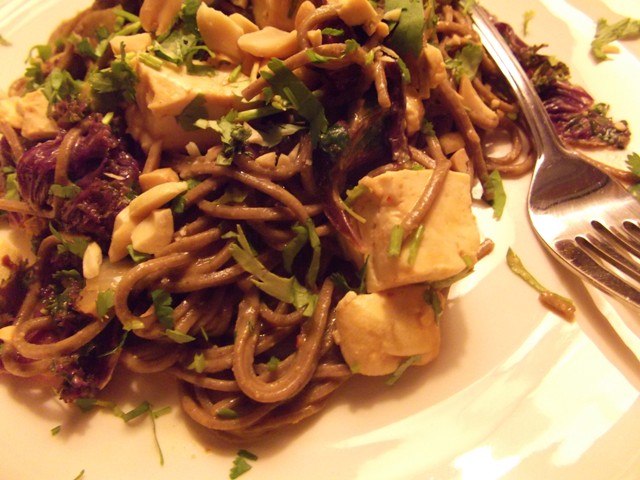
You don’t have to use purple kale here; green would be perfectly lovely and probably more aesthetically pleasing – the purple with the soba and the peanut butter got a little lost. Purple desire aside, I was willing to overlook a sub-par presentation because this came together in under 15 minutes; the longest part was waiting for the water to boil. Perfect for this Meatless Monday, or anytime it feels like March or the end of the world.

Peanutty soba noodles with kale

(Serves four)

  • 2 tbsp. peanut or vegetable oil
  • 1 small onion, chopped
  • 4 garlic cloves, minced
  • 1 tbsp. minced fresh ginger
  • 1 block medium-firm tofu
  • 1/2 lb. soba noodles
  • 1/2 lb. chopped fresh kale
  • 1/2 cup peanut butter (natural peanut butter is best because it’s runnier)
  • 1/4 cup soy sauce
  • 1/4 cup sriracha
  • 2 tbsp. rice vinegar
  • 1 tbsp. sesame oil
  • 2 tsp. honey
  • Salt and pepper, to taste
  • 1 cup chopped fresh cilantro
  • 1/2 cup chopped roasted peanuts

In a large pan, over medium-high heat, heat oil and add onion, garlic, and ginger. Cook until fragrant, about two minutes.

Pat tofu dry with a kitchen towel and cut into cubes. Add to the pan, tossing occasionally.

Meanwhile, bring a large pot of water to a boil. Add soba noodles, and cook for three minutes.

Meanwhile, combine peanut butter, soy sauce, sriracha, rice vinegar, sesame oil, and honey in a bowl. Mix well, taste, and adjust seasonings as needed.

After three minutes, add kale to the pot. Cook an additional three minutes, then drain. Rinse with cold water and drain again.

Add noodles and kale to onion mixture, and pour sauce over top. Toss with 1/2 cup of the fresh cilantro. Divide between four plates, and garnish with remaining cilantro and chopped peanuts.

This would also be good with chopped scallions and fresh bean sprouts. We might have had those things if I wasn’t only buying purple stuff.

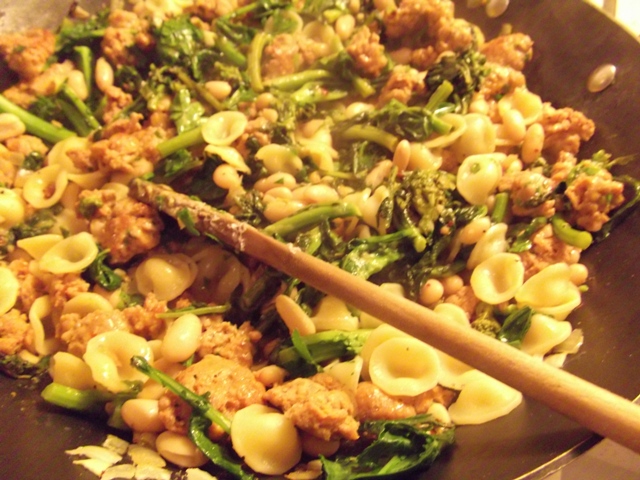
Rapini and sausage with white beans and orecchiette

When we found out that Nick has diabetes, we were  lucky in that we were already eating mostly pretty well, most of the time, cheese and butter and cream aside, and that we didn’t have to make significant dietary changes. I threw out one stale half-bag of poor-quality elbow macaroni that I might have bought at Walmart that dark year I was an intern and had to have three roommates in a basement suite where the front door only kind of locked and where when it rained the water ran into the suite right over the electrical panel. We weren’t going to eat it anyway.

The only thing I really miss now that Nick is restricted is having pasta as a default – not being able to serve up a big plate of refined white carbs when I don’t feel like putting in a real effort, which can happen a couple of times a week, means adapting to a new kind of laziness. And the difference between pasta and something like, say risotto or sushi, which is also white and low on the glycemic index, is that pasta tends to last a couple of meals so you get that good blood-sugar spike a couple of days in a row. Fine for me, shakes and comas for him.

He can still have a small amount of pasta, of course. What he can have is likely what would be considered a normal portion size. And when you get down to comparing labels and noting the varying levels of carbohydrates, the rice pastas and whole-wheat pastas and gluten-free pastas are all similarly bad news carbohydrate-wise; a plate of the whole-wheat stuff is going to affect Captain Diabetes the same way that a plate of the delicious semolina stuff will.

So we adapted. Instead of a big plate of pasta, we have a big plate of stuff with pasta in it if there isn’t enough time to devise a huge and clever feast, or if the idea of opening a cupboard is too daunting to even consider. Here is one of those meals. It calls for blanching, which may qualify as a step that’s too daunting, but it’s really nothing. I promise.

Rapini and sausage with white beans and orecchiette

(Serves four.)

  • 1 lb. rapini, chopped
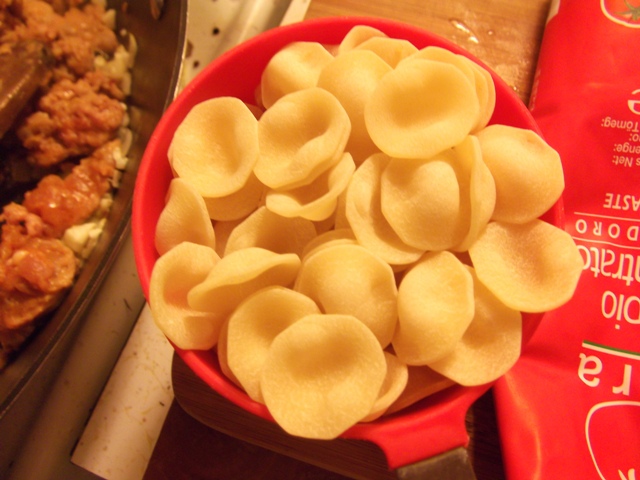
  • 1 cup uncooked orecchiette pasta
  • 1 lb. spicy Italian sausage, casings removed
  • 3 tbsp. olive oil
  • 1 small onion, chopped
  • 3 cloves garlic, minced
  • 1 tsp. red pepper flakes
  • 2 tbsp. tomato paste
  • 1 19 oz. can white beans, drained and rinsed
  • 1/2 lemon, zest and juice
  • 1/2 cup chopped fresh parsley
  • 1/4 cup grated Parmesan
  • Salt and pepper, to taste

Bring a large pot of lightly salted water to a boil. Drop chopped rapini in, and boil for two to three minutes until wilted and brightened in colour. Remove rapini from water, reserving liquid, and plunge into a large bowl of icy water. Set aside.

Return the pot to the heat and bring water back up to a boil.

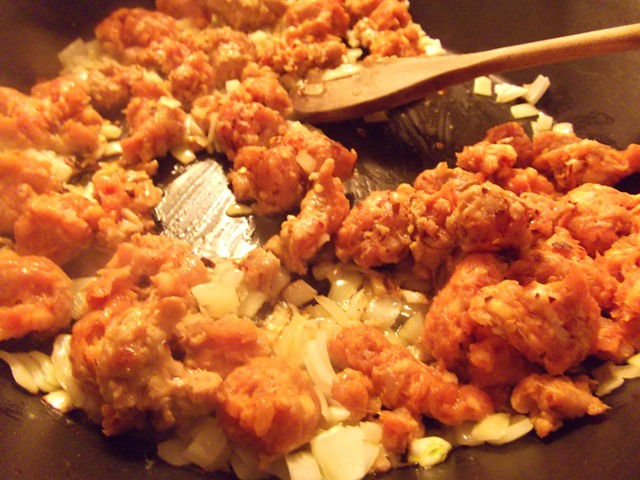
Meanwhile, heat olive oil in a large pan over medium-high heat. Cook onions until translucent. Add garlic, then crumble sausage into the pan. Stir with a wooden spoon, breaking the meat up as you go. Add red pepper flakes and tomato paste and continue moving the meat around the pan.

When the water has come to a boil, add pasta and boil until al denté, about eight minutes.

Drain and then add rapini to the pan, stirring to coat in pan juices. As pasta finishes cooking, add beans and lemon zest and juice, then add pasta. Reserve some of the pasta water in case the pan becomes too dry.

Add parsley and cheese. Taste, and adjust seasonings as needed. Serve with additional cheese.

Yogurt cheese, smoked salmon, and canneloni.

Oh, this week! I don’t know where it’s gone, and I have two modes and two modes only these past seven days: frantic disorganization and head-bobbing lethargy, neither of which has proven to be particularly sustainable. My arthritis is flaring up again, this time with insistence, and Nick’s always talking about his diabetes, and I’m always telling him how much fibre is in things and we both feel 800-years-old.

Also, if the weird loop of incongruous music in my head is any indication, my internal DJ is totally high (when did that song from Aladdin get mashed up with The Beach Boys and why has either crossed my mind?), and I know we must have eaten something Monday and Tuesday, but I can’t figure out what it was. And the mountains are dark behind a scattered mist and the temperature has dropped and there are rumours of snow, even after I snapped photos of little white buds in a patch of dirt in front of a building around the corner just this past Saturday when we were running around having adventures in light jackets.


Anyway. I made yogurt cheese because the yogurt I like was on sale. (Given my current state of mind, that’s as good a transition as any.) I told you about yogurt cheese a long while back – it comes from this wonderful blog. At first it was a perfectly good spread for bagels, but now is so much more.
This would be best if you made it with hand-rolled sheets of fresh pasta. Second best is store-bought sheets of fresh pasta, which is what I used. Third would be those hard canneloni tubes you get in a box in the dry pasta aisle, but I have never been able to handle those without crushing them like so many taco shells. It’ll take about five sheets, each one cut in half so that it is roughly 4″x3″ (those Olivieri ones will work just fine).

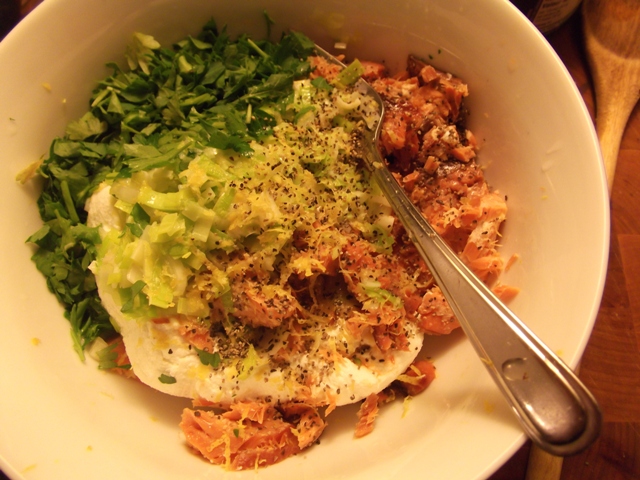
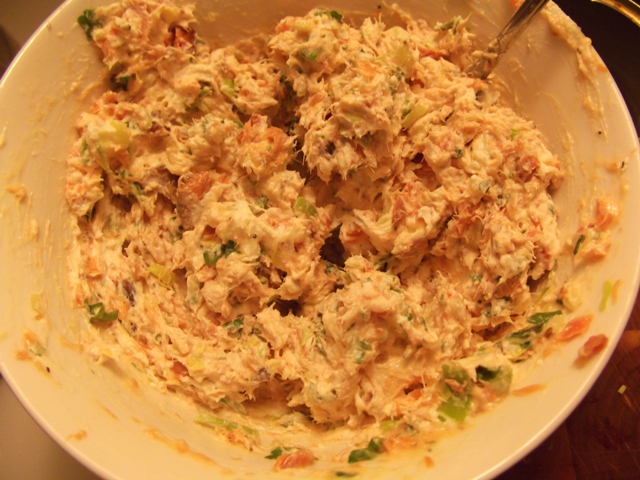
And don’t just cheat and use ricotta. With the yogurt and the lemon and the salmon together, the filling is bright and flavourful. The night before you plan to make this, empty a large container of yogurt (750mL) into a strainer lined with cheesecloth. Tie up the edges, and hang it over the sink overnight (with a bowl underneath to catch  the whey, which is a fantastic addition to soups and bread). Instructions with photos are here. You’ll end up with a little over a cup, maybe a cup and a half, and it should be the consistency of crumbly cream cheese. Refrigerate the stuff until you’re ready to use it.

Smoked salmon canneloni with yogurt cheese

(Serves four.)

Pasta

  • 5 sheets fresh pasta, 8″x6″ (approximately)
  • 1 tbsp. butter
  • 1 clove garlic, minced
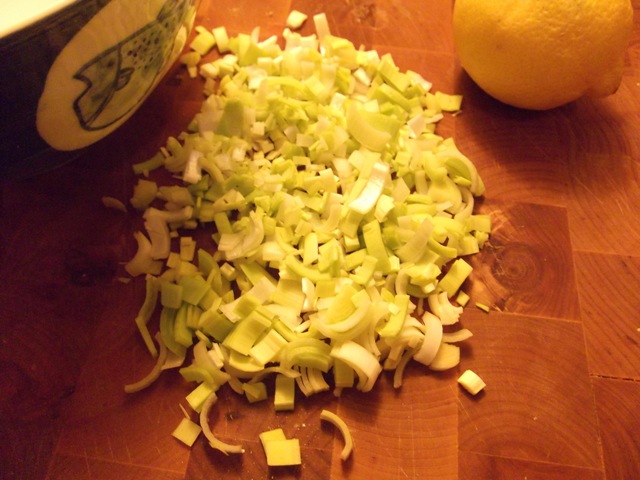
  • 1 leek, 1″ thick, white and light-green part only, chopped
  • 1 batch yogurt cheese (about 1 1/4 cup)
  • 1/2 cup smoked salmon, flaked and packed
  • Zest and juice of one lemon
  • 1/4 cup parsley
  • 1/2 tsp. salt, or to taste
  • 1/2 tsp. ground black pepper
  • 1 egg, beaten

Sauce

  • 1 tbsp. olive oil
  • 1 medium onion, diced
  • 1 clove garlic, minced
  • 1 28 oz. can crushed tomatoes
  • 1/2 cup light cream
  • Salt and pepper to taste

Preheat oven to 350°F.

Melt butter in a pan over medium-high heat. When bubbling, add leek and garlic. Cook for one minute, until garlic is fragrant and leek has brightened in colour. Remove from heat.

In a medium bowl, mush together yogurt cheese, smoked salmon, and lemon zest and juice. Use a fork – the best mushing is usually done with a fork. Pour buttery garlicky leeks into the bowl, and add parsley, salt, and pepper, stir, and taste. Adjust seasonings as needed. When you like what you’re tasting, stir in the egg. Set aside.

Ready pasta for rolling according to package instructions. For store-bought fresh pasta, you may need to soak it for a couple of minutes in cold water. Trim to about 4″x3″.

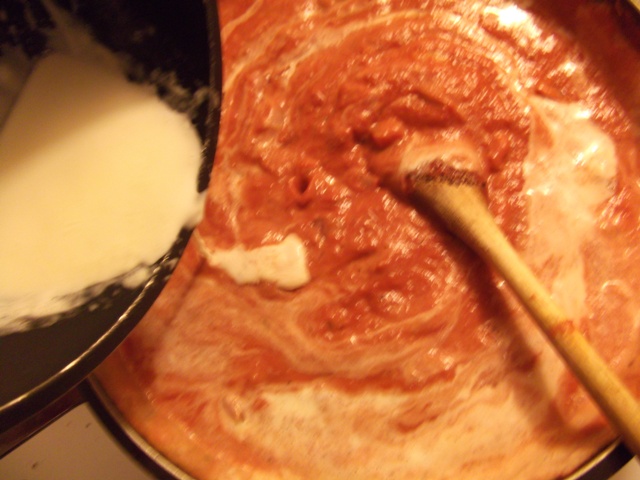
Bring light cream to just a simmer. Remove from heat. Meanwhile, heat olive oil in a pot over medium-high heat. Add onions and garlic, and cook until translucent. Add crushed tomatoes. Once the tomatoes begin to burble and steam, reduce heat to medium and carefully stir in cream, slowly and in a steady stream, stirring until fully incorporated. Remove from heat.

Coat the bottom of a glass or enameled 9″x13″ baking dish with a thin layer of sauce.

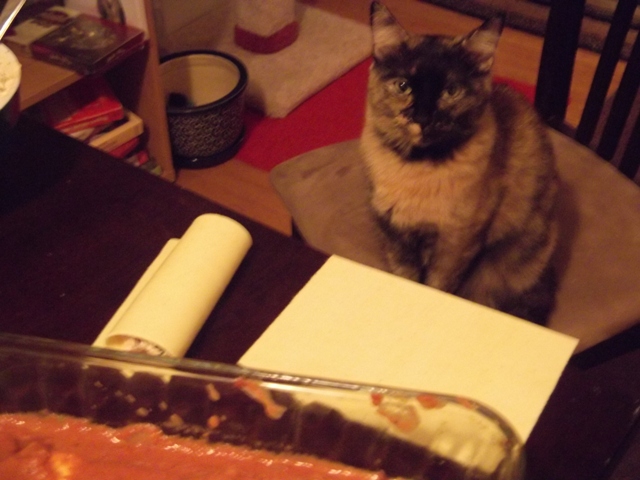
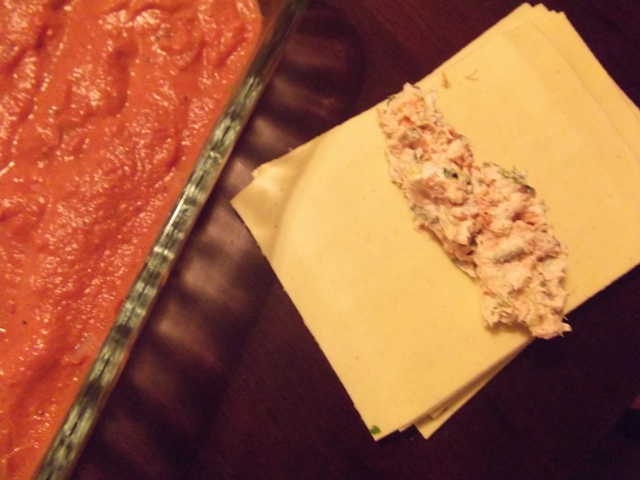
Scoop 1/4 cup filling into the centre of each piece of pasta. Roll into loose cylinders, and place side by side into the pan. Once you have run out of room on the first layer, coat the tops with sauce, and continue laying rolls in a second layer. Coat the whole thing with remaining sauce, then cover with aluminum foil.

Bake covered for 35 minutes, then remove foil and cook uncovered for an additional 10 minutes. Serve sprinkled with fresh parsley.

I served the pasta over a bed of wilted chard, which turned out to be a nice way to balance the flavours of the dish, the earthiness of the greens tempering the acidity and smoke of the pasta. It would also go nicely with salad.

Beet risotto.

Last year we didn’t do much about Valentine’s Day because we’d just gotten Molly the Cat and felt an urgency to be home with our cute little ball of fur. I don’t think we’ve ever done much about Valentine’s Day; the sentiment is nice but I feel sort of silly about it. It’s just the two of us all the time, you know?

We’ll go out later this week, when the restaurants are quiet and we’re not surrounded by moon-eyed couples sitting on the same side of the booth, which makes me irrationally angry, which is the opposite of how you’re supposed to feel on February 14. Seriously – can’t they hear each other chew when they sit like that, and doesn’t that just shoot the romance right in the foot?

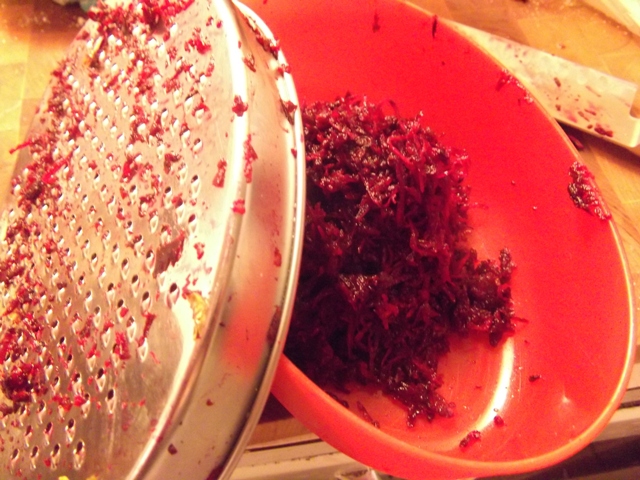
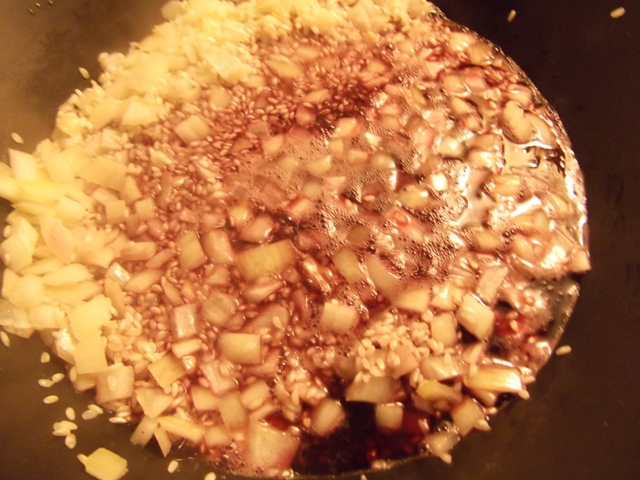
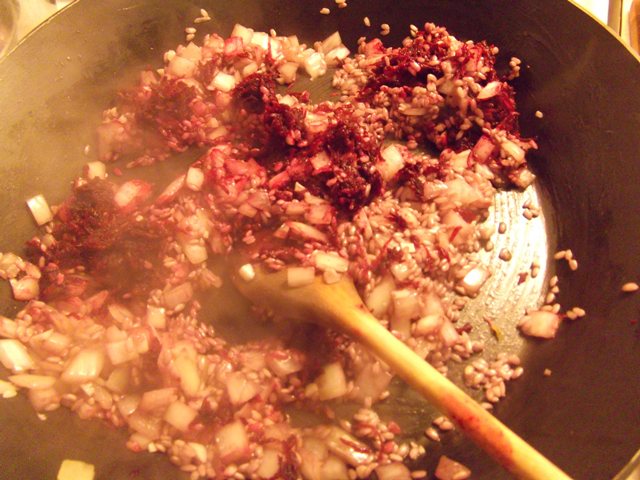
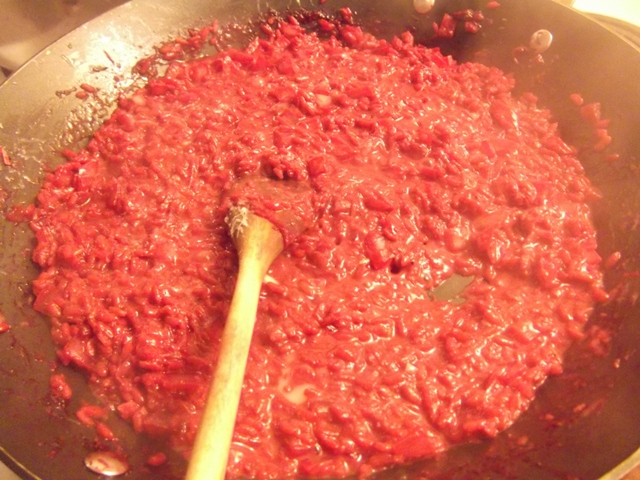
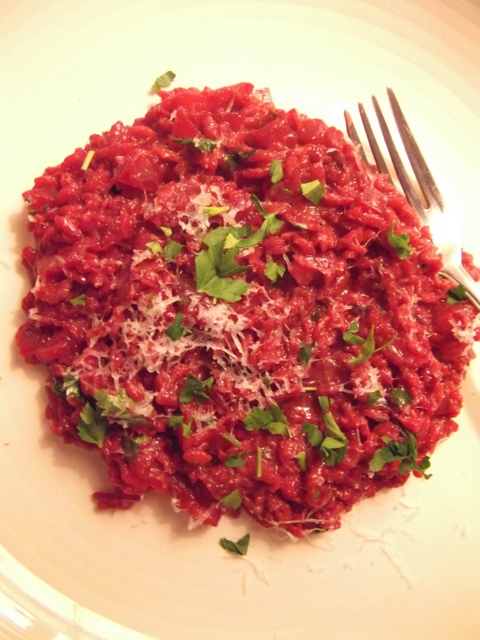
But I do like a good theme. So tonight, even if we weren’t celebrating, we did recognize the day, and Meatless Monday, with a plate of lusty, blood-red risotto. It was both virtuous and decadent, with its vegetable stock and beets and butter and Manchego cheese, and it came together in the 30 minutes Nick spent tidying the kitchen. Add a little red wine on the side, and there’s no better way I can think of to spend a Monday Valentine’s Day.

Beet risotto with Manchego

  • 1 tbsp. olive oil
  • 2 tbsp. butter, divided
  • 1/2 tsp. red chili flakes
  • 1 medium onion, chopped
  • 3 cloves garlic, minced
  • 1 cup arborio rice
  • 1 tsp. smoked paprika
  • 1/2 cup dry red wine
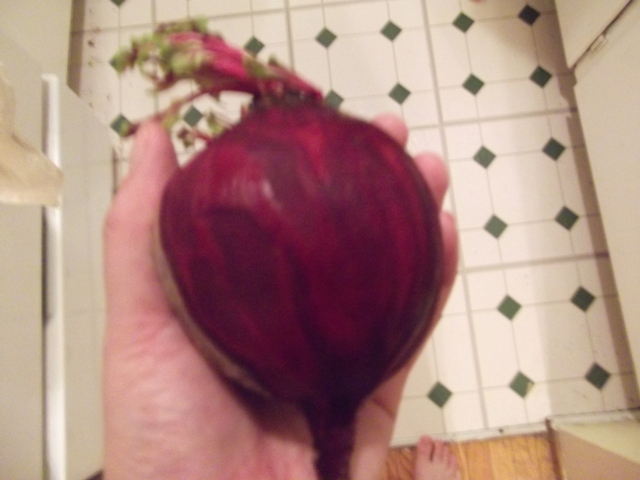
  • 1 medium beet, peeled and finely shredded
  • 3 to 4 cups warm vegetable stock
  • 1/2 cup shredded Manchego cheese
  • Salt and pepper, to taste
  • Handful chopped fresh parsley

Heat stock until boiling, then reduce heat and maintain a gentle simmer.

In a heavy-bottomed pan over medium-high heat, heat oil and melt the first tablespoon of butter with the red chili flakes. Add onions and garlic, and cook for two to three minutes, until onions are translucent. Add paprika and rice to pan, stirring for about a minute, or until rice grains turn opaque. Add the wine.

Add shredded beets, and cook until wine has been completely absorbed.

Add one cup of the warm vegetable stock, stirring frequently until liquid is mostly absorbed. Repeat with an additional cup of stock, and then repeat again with one to two more cups as needed. Test your rice for tenderness – if it is al denté, great. If it isn’t, just pour in a little bit more stock, as needed, and let it absorb into the rice. I almost always need the full four cups of stock.

When rice is ready, stir in butter and Manchego cheese. Taste, and adjust seasonings quickly, as needed. Stir in parsley, and serve hot, with additional Parmesan cheese and a light sprinkling of chopped fresh parsley.

And Happy Valentine’s Day. However you did or did not celebrate it, I hope you had a lovely evening and ate something you really liked, in the company of someone you really like, whether it was you alone or with someone else.


Bacon.

You know when you finally do something you’ve been wanting to do for a long time but for whatever reason you kept not getting around to it, and then when you finally do get around to it you feel so silly for having waited all that time?

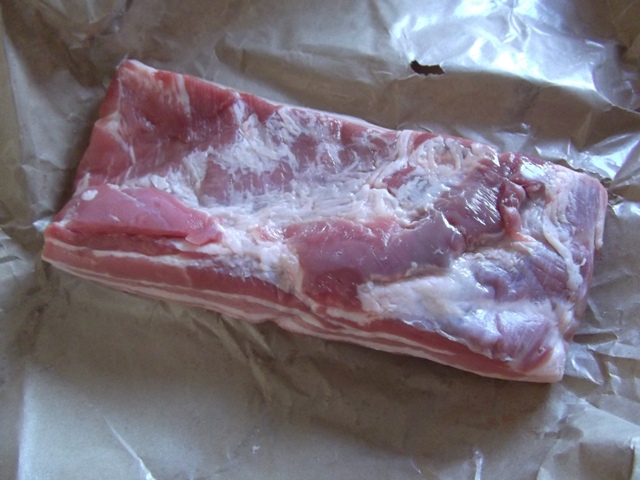
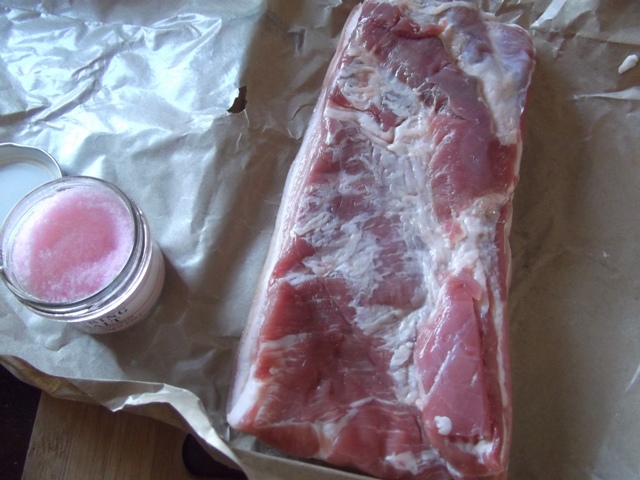
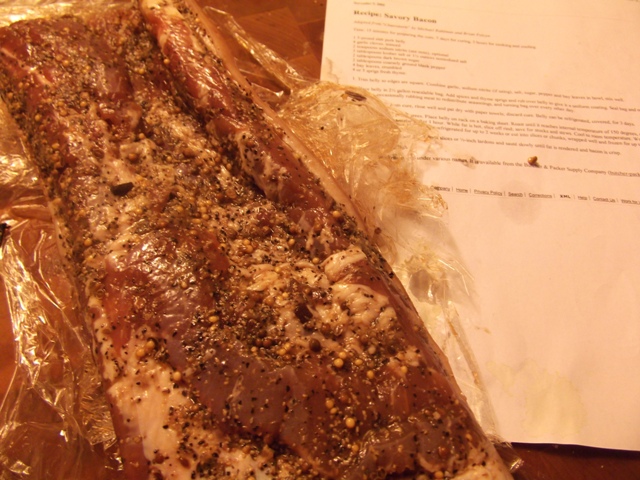
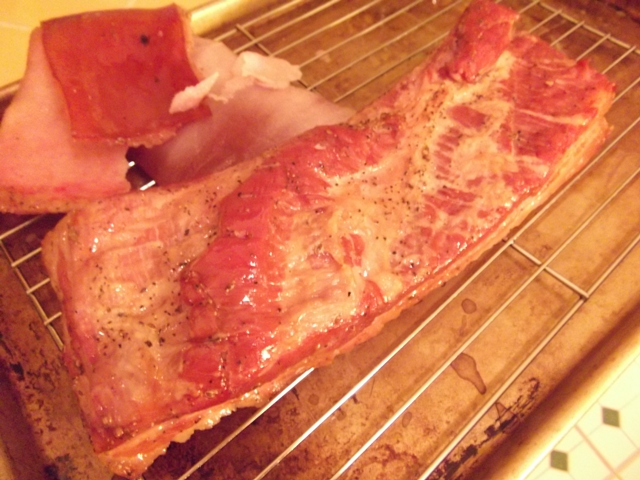
For me, the thing was bacon. Homemade bacon, which I always knew you could do but put off because for some reason the thought of finding curing salt was rather daunting, even though I knew you could buy it literally three blocks from my apartment. I don’t know. I think I figured once I had the pink salt, I’d have to commit, and then what if I wasted my money and half a kilo of pork belly? There was a lot to consider, and the threat of failure and food poisoning put me off.

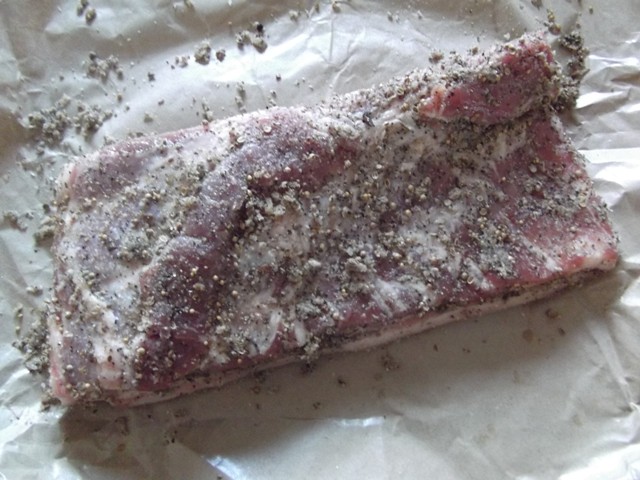
Then a couple of weeks ago the director at work told me about a butcher shop that her French cooking teacher recommended and I went there to buy something else, and there, in its fatty, rosy glory, I found just over two pounds of local pork belly, just the right amount to make my first batch of bacon. I found a Michael Rhulman recipe, and bought my pink salt, and in about ten minutes I had done everything I’d need to do to the meat to make it bacon. After that, it would need seven days, and to be mostly left alone.

I feel silly for having waited all this time.

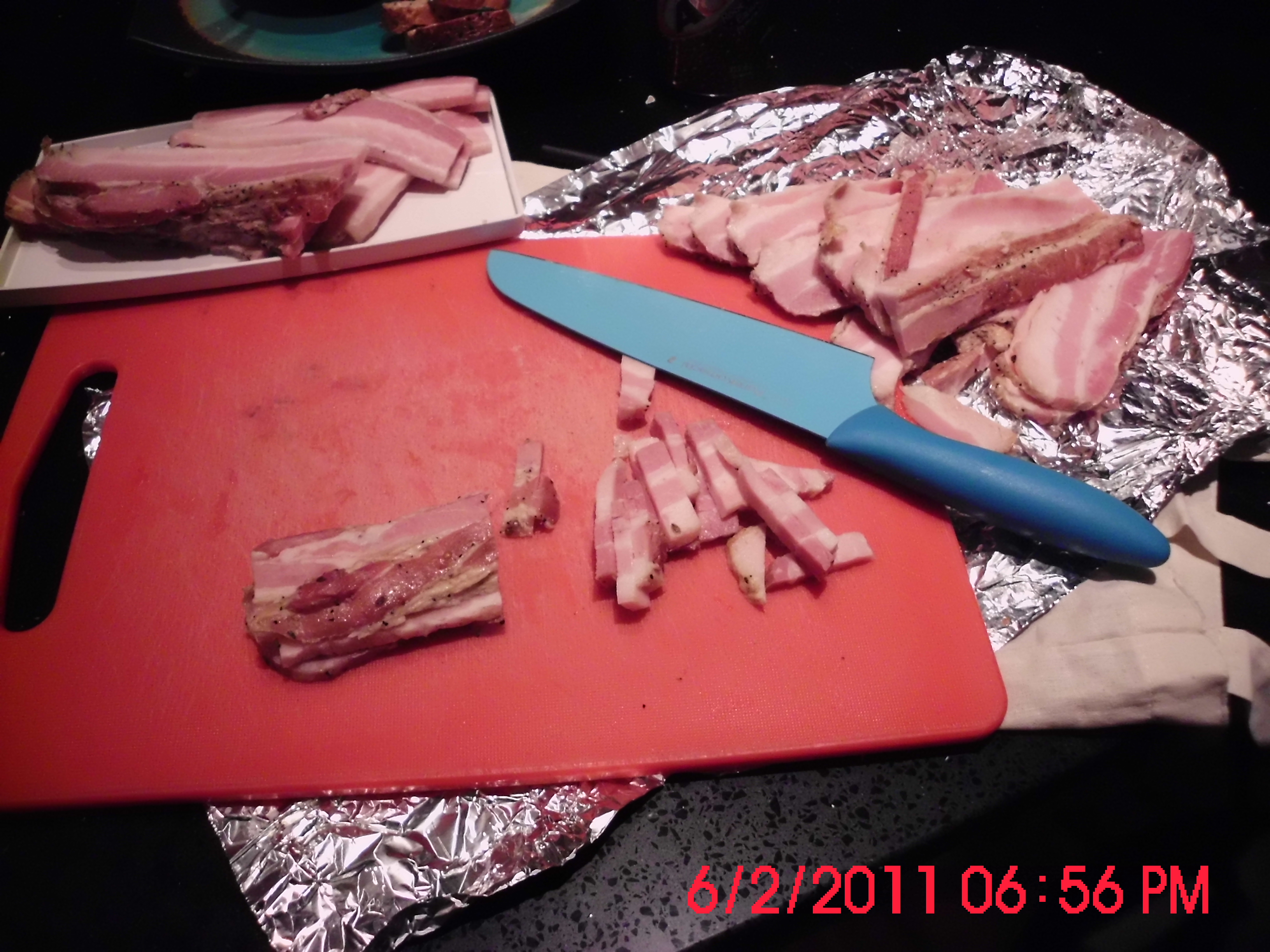
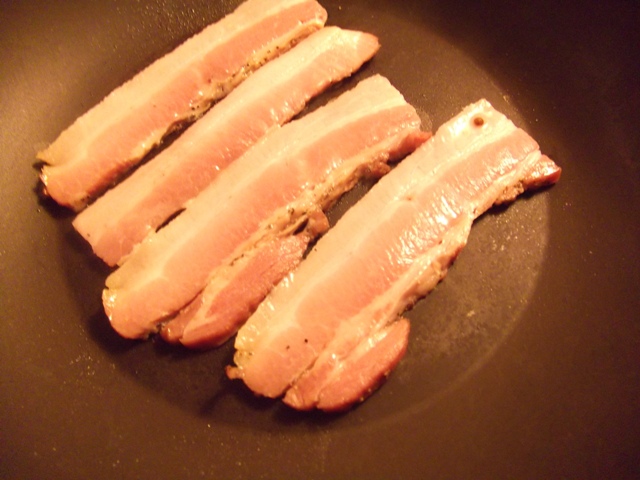
The result was impressive, meatier than regular bacon and not as salty, with a pronounced garlickyness that was thrilling – garlic and bacon go almost as well together as bacon and cheese. I cut it thick, about an eighth of an inch (my parents have a meat slicer they let me use … *mental note: add meat slicer to wish list*), but it would last longer in thinner strips (some of us never learned when to say no).

Bacon might just be a gateway charcuterie. One cannot simply stop at a slab of cured pork belly; there’s pancetta to think about, and guanciale, and corned beef, and sausage … I already have plans to convert a wine fridge I got as a wedding gift to a climate-controlled curing chest, and even though our apartment is already crowded with kitchen tools and the hydro bill grew exponentially with the addition of the deep-freeze, Nick is okay with this – he stopped just short of encouraging me. For him: salumi.

I’m asking for Charcuterie for Valentine’s Day, which we don’t usually celebrate but neither of us has a greater love than cured or smoked meats – I am not exaggerating when I say Nick would trade me for my weight in bressaeola, and I’d happily swap him for a lifetime’s supply of jamón ibérico de bellota – and I can’t quit now.

But I’m getting ahead of myself. Big plans, no direction: story of my life. Have you done this before? Have you cured, smoked, dried, or otherwise preserved meat and made it more wonderful with salt and spices and air? Have you done it at home? Can you teach me? At this point I fear nothing, not food poisoning or living in an apartment that smells like a delicatessen, and there’s no going back to store-bought bacon.

And if you haven’t made bacon at home? Don’t wait any longer. Start your first batch today.

Paprika roast chicken, again.

When speaking of this site, Nick and I call it Bloggy, affectionately as it is a large part of our existence. “Will it go on Bloggy?” Nick asks when dinner is good. Well, today is Bloggy’s second birthday. We celebrated with an update to the roast chicken I wrote about in my very first post. It’s strange, but this week has felt just as long as it did the first time I wrote, and just as much now as then, we both felt that spicy roast chicken would solve all our problems and be just the thing to help us move into another seven days. Chicken’s magical the way it does that, isn’t it? Well, maybe not, considering the part wine plays.

In two years, my paprika roast chicken has undergone some changes. I’ve streamlined the process and added butter, so now you simply slather the chicken in a paste of spices and butter, and roast it with a bit of white wine for 90 minutes in a 425°F oven. The last part is because of Ina Garten, who roasts her chickens in a similar way, and who is right about how to do things quite a lot of the time.

To roast a chicken in this way is to save yourself steps, time, and fussing; the result is a meal that makes itself (save for a couple rounds of basting when you’re passing through the kitchen to refill your wine glass – if you’re like me, in 90 minutes you will do this three or four times and if it’s the weekend you may need to open a second bottle but that’s okay because you’re cooking and cooking is art).

Paprika roast chicken

  • 1 whole chicken, 4 to 5 lbs.
  • 2 tbsp. unsalted butter or olive oil
  • 3 cloves garlic, minced
  • 1 tbsp. sweet paprika
  • 1 1/2 tsp. cayenne pepper
  • 1 tsp. cinnamon
  • 1 tsp. ground black pepper
  • 1 tsp. salt
  • 1/2 cup dry white wine

Let chicken rest at room temperature for an hour. Preheat oven to 425°F.

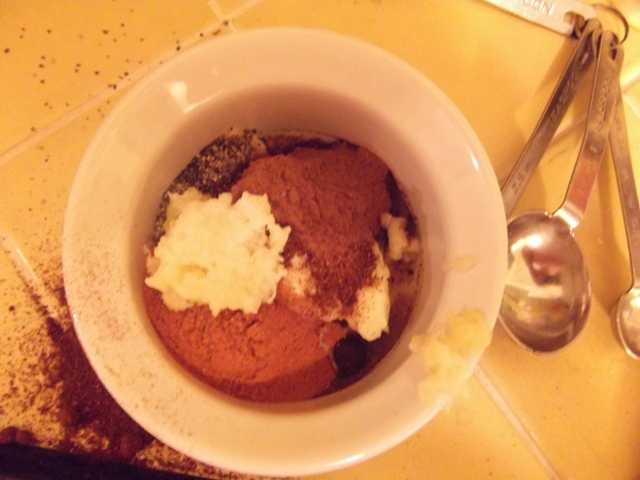
In a small bowl, combine butter or oil, garlic, paprika, cayenne pepper, cinnamon, black pepper, and salt. Mush together with a fork until the mixture forms a paste.

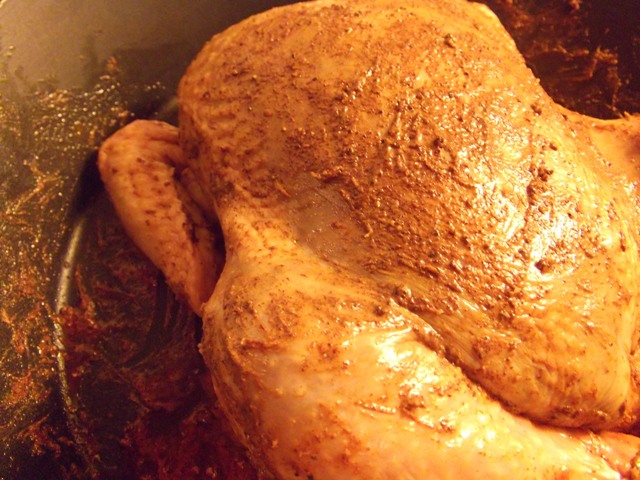
Using your hands, slather the paste all over the chicken, sliding your fingers under the skin to rub the paste into the breast, legs, and thighs. Wash your hands, then truss the chicken, folding the wing tips behind the bird, and place it into a roasting pan. Pour wine into the bottom of the pan. Optionally, you could throw in some chopped carrots or onions at this point. Sweet potatoes would also be lovely.

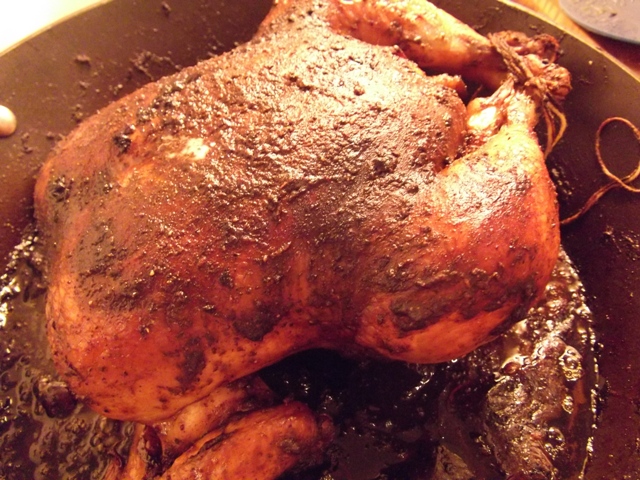
Roast the chicken for 90 minutes (or 18 minutes per pound), until the juices run clear when you cut into the spot between the leg and thigh. Baste periodically, adding additional wine or water as needed to moisten the bottom of the pan.

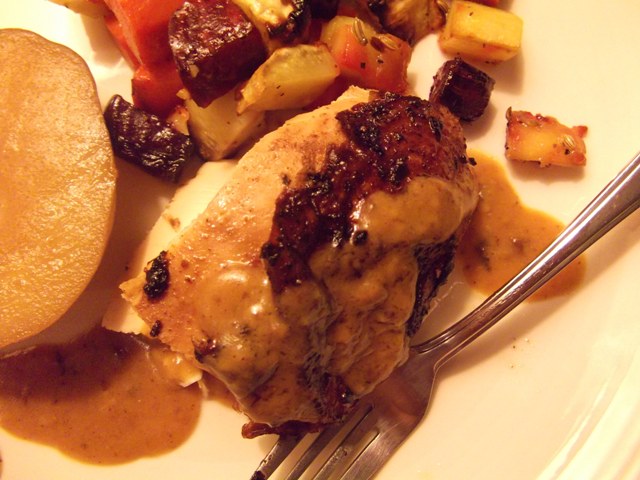
Remove from oven and tent with tin foil. Let rest 20 minutes before serving. You can make a spicy, luscious gravy by tossing a handful of flour into the pan drippings and stirring in a bit of milk or cream. If there are leftovers they are wonderful in pozole, and the carcass makes a glorious stock.

Meatless hot and sour soup.

In the aftermath of yesterday’s chaos, Nick spent today on the couch, fielding phone calls from everyone in the world and suggesting today was the day I take charge of his correspondence. No luck with that, so every 30 minutes he’s telling the same story. The cat seems to sense something is wrong, and has been his constant companion. I am helping by drinking all the wine.

We still had yesterday’s groceries in bags as I’d just shoved them into the fridge before running out to the ER, and since my only outing all day was  to get Nick’s prescription, I figured we might as well do Meatless Monday over.

We’ve been battling colds (it’s starting to feel like like we’ve always been battling colds), so soup was what we wanted yesterday, specifically hot and sour soup, and to be able to eat within fifteen minutes of arriving home after a long day. I picked up some fat white mushrooms and some crisp-looking bok choy, and couldn’t wait to eat.

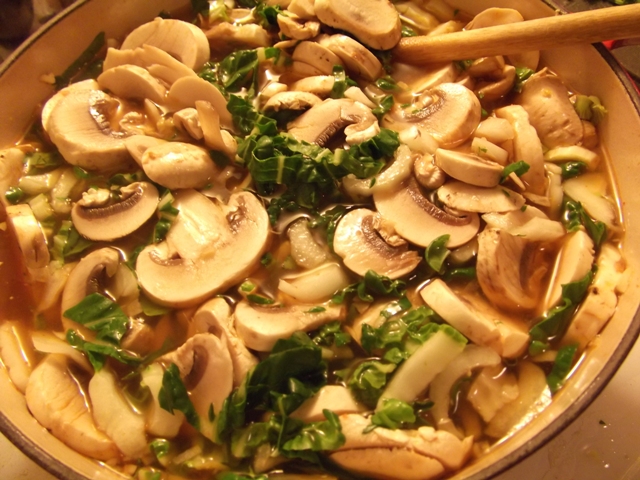
You could use cabbage, if that’s what you’ve got, or any leafy green thing you have on hand. The point here is ease while still making a dinner that’s somewhat interesting. This is a short-cut version of the kind of hot and sour soup I’d have delivered if it didn’t take so little time to make, a soup that captures the gist of what I’m after when I’m after salt and spice and tang, and it makes enough for four to six people. This is the basic recipe, but if you like it hotter, or sourer, or if you prefer a bit of lemongrass, or chicken or pork instead of tofu, there’s room for creativity and adaptation.

Meatless hot and sour soup

  • 1 tbsp. sesame oil
  • 1 tbsp. minced fresh garlic (heaping)
  • 1 tbsp. minced fresh ginger (heaping)
  • 1/2 cup soy sauce
  • 1/3 cup rice vinegar
  • 2 to 3 tbsp. sriracha, or to taste
  • 2 tsp. honey
  • 8 cups vegetable stock
  • 1 block tofu, cubed
  • 3 cups thinly sliced bok choy
  • 2 cups sliced mushrooms
  • Salt and pepper to taste
  • 1 egg, beaten
  • Bean sprouts and chopped scallions and cilantro for garnish

In a large, heavy-bottomed pot over medium-high heat, cook garlic and ginger in sesame oil until fragrant. Add soy sauce, vinegar, sriracha, and honey, and stir to combine. Let simmer one to two minutes, until reduced by a third. Add stock.

Bring to a boil, then reduce heat slightly so that liquid comes to a simmer. Add tofu, bok choy, and mushrooms, and let cook three to five minutes, until bok choy has wilted. Taste, adjusting seasonings as needed. I used homemade stock, so I had to add a little bit of salt. If you’re fighting sniffles, a little more hot sauce might be a good idea.

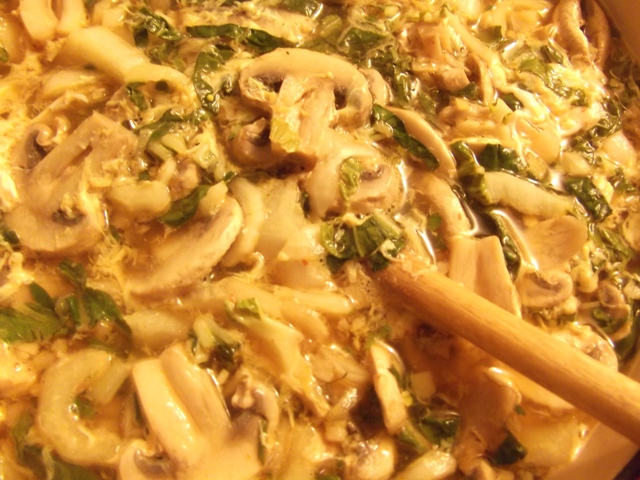
Stirring the liquid in the pot, pour the egg in a steady stream, swirling the liquid so that the egg forms many strands. If you don’t keep the liquid moving, the egg will form an unappetizing-looking glob.

Serve immediately, garnished with bean sprouts, scallions, and cilantro as desired. I bring out the bottle of sesame oil and the sriracha as well.

Orange upside-down cake.

It was plum season when I wrote about upside-down cakes, and I mentioned then that you would want to try making upside-down cakes with oranges in the wintertime. I love being right – and with oranges baked in caramel, how could you go wrong?

On an unrelated note, the lighting in my apartment continues to be terrible, despite my best efforts, so even with my shiny new camera the photos are turning out yellow. If this is something you can solve for me with a simple explanation (Fuji FinePix JX250, in the hands of an unskilled clicker), I will love you forever AND be your best friend.

Anyway.

When I got home from work I was too tired to do anything about feeding myself, so I slumped onto the couch with a can of room-temperature PBR and watched RapCity while Nick made merely adequate grilled cheese sandwiches for dinner. For an hour or two I was resigned to an evening of staring blankly at the TV with my mouth hanging open.

Then Nick went out to play boardgames with his boyfriends, and I felt repentant for my earlier uselessness but also disinterested in washing dishes or bending over to collect his socks from the floor, so I made a cake.

This is a variation on October’s upside-down cake, as I’ve decided that cornmeal is what I am in the mood for. You could make it with the other cake if you want, but the yellow of this version is nice, and the citrus in the batter brightens it up enough that you’ll almost forget you haven’t seen sunlight in a month. It’s just about healthy, with its corny base and orangey top, and something about it tells me it will be as satisfying reheated for breakfast tomorrow morning as it was fresh from the oven tonight.

Orange upside-down cake

Top:

  • 3 to 4 small navel oranges or blood oranges (or a combination)
  • 1/4 cup unsalted butter
  • 3/4 brown sugar
  • Pinch salt

Cake:

  • Zest of one orange
  • Zest and juice of one lemon
  • 2/3 cup yellow cornmeal
  • 2/3 cup all-purpose flour
  • 1/2 tsp. baking soda
  • 1/2 tsp. salt
  • 2 tbsp. unsalted butter, melted
  • 2 tbsp. honey
  • 1 cup milk
  • 1 egg

Preheat oven to 375°F.

Using a knife, peel your oranges. Cut slightly on the diagonal, running the blade along the flesh of the orange, being careful not to leave any of the bitter white pith behind. Slice oranges horizontally to about 1/4″ thick. Test to be sure they fit into the bottom of a 9″ cast iron pan; they should fit comfortably with only nominal overlapping. Set aside.

In a bowl, combine orange and lemon zests, cornmeal, flour, baking soda, and salt. In a separate bowl, whisk together lemon juice, melted butter, honey, milk, and the egg.

Place the 9″ cast iron pan over medium high heat, melt butter and sugar together until bubbling. Turn the heat off, and carefully add orange slices, placing them evenly across the bottom of the pan.

Whisk wet ingredients into dry ingredients, and pour into pan on top of the butter-sugar-orange mixture.

Bake for 25 to 30 minutes, until top is golden, edges appear crisp, and caramel has bubbled through in places.

Let stand five minutes, then carefully turn out onto a serving plate. Let cool for 15 minutes before serving.

PS – Lisa over at Sweet as Sugar Cookies asked me to share this at her linky party. Since I like parties and adjectives that end in “y,” I said yes. Go check out her line-up of awesome desserts!

Lentils with bacon.

Nick is a pretty, pretty boy, with bright blue eyes and dimples, and he’s tall and I met him in poetry class in 2006. He was literate and a looker, and that’s all I thought I needed. We started dating in 2007, and shortly thereafter I learned that he fished. And then I learned that he hunted. We were engaged almost immediately, and I’m still surprised I wasn’t the one who asked.

For the past couple of years, we’ve had our freezer stocked with wild local venison, and I can’t think of a bigger thing to brag about. Last year Nathan, my brother-in-law, brought the deer home and we got a portion – a few pounds of ground meat and some backstrap. This year, he and Nick got the deer together a little north of Princeton, BC, and so we have half a deer to call our own, portioned into roasts, chops, stew meat, and ground, and it is some of the most flavourful meat I’ve ever had. Once you try the meat of an animal that’s lived a happy life and that’s been fed its natural diet, there’s no going back to that cruelly treated but cheaper feedlot stuff. This is beautiful meat, dark and lean, wild-tasting but not gamey. If it’s possible, I am more into Nick now that he’s bringing home wild game than I was when our teacher was comparing him to John Thompson and Ezra Pound. The good meat more than makes up for Nick’s faults, which I would later discover include teeth-grinding, wrong-part-of-the-toothpaste-squeezing, and drinking the last of anything I might have wanted in the fridge, among other things.

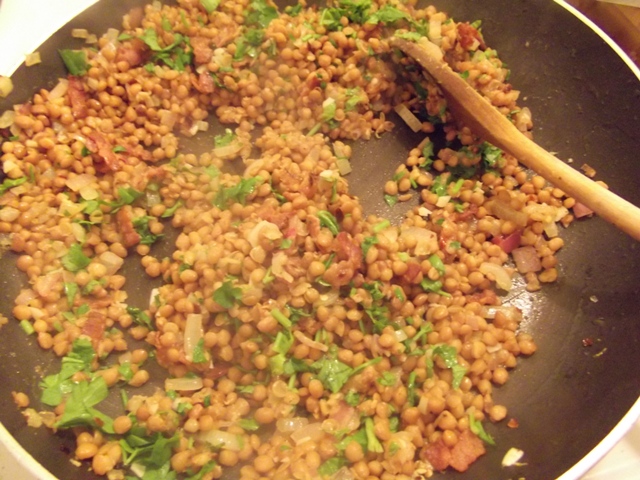
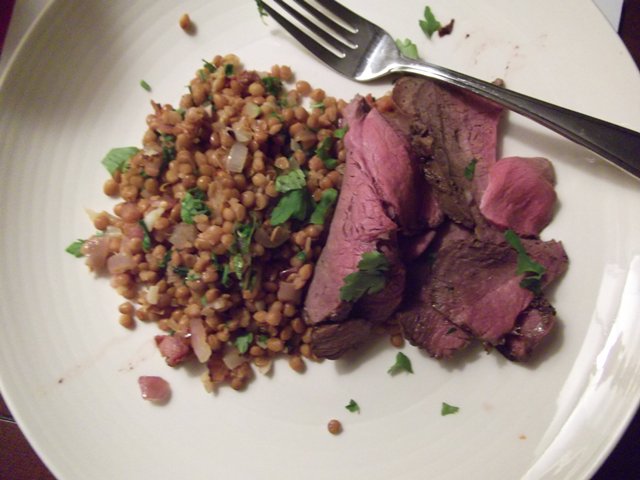
I’ve deviated a fair bit from what I wanted to tell you, and I hope you’re not disappointed that the thing I sat down to write about here was lentils. I made a venison sirloin tip roast tonight, and it was flawless, cooked perfectly and seasoned with black pepper and rosemary, but to be honest I didn’t write the recipe down and now I’ve forgotten it. I was intent on telling you about the lentils, which Nick groaned about when I suggested them, but which he later helped himself to seconds of, and even though I planned for there to be four servings of the stuff, there ended up only being two.

If you’re going to make these as your side dish, maybe make a salad as well, so there’s enough to go around. These lentils are spicy, warming, a little tart, and taste of bacon, so don’t underestimate their appeal.

Lentils with bacon

(Serves four as a side-dish.)

  • 4 strips bacon, chopped
  • 2 tbsp. olive oil
  • 1/2 onion, finely chopped
  • 1/2 tsp. red chili pepper flakes
  • 3 cloves garlic, minced
  • Zest and juice of 1 lemon
  • 1 19 oz. can lentils
  • 1/2 tsp. kosher salt (or to taste)
  • 1/2 cup chopped fresh parsley

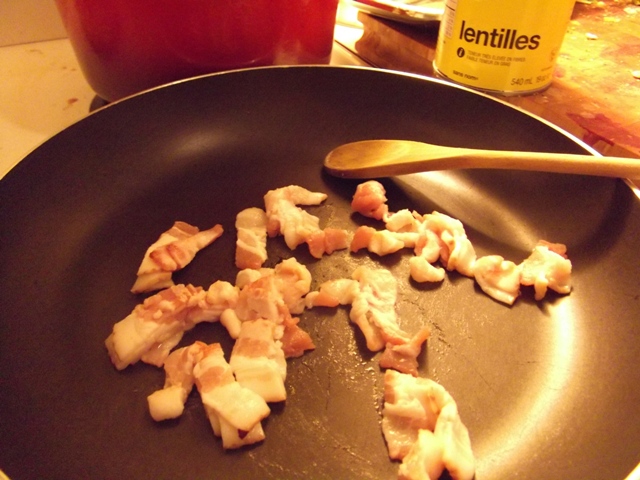
In a large pan over medium-high heat, cook bacon until crisp. Remove bacon to a plate lined with paper towel, and drain all but one tablespoon of fat from the pan.

Add olive oil to pan.

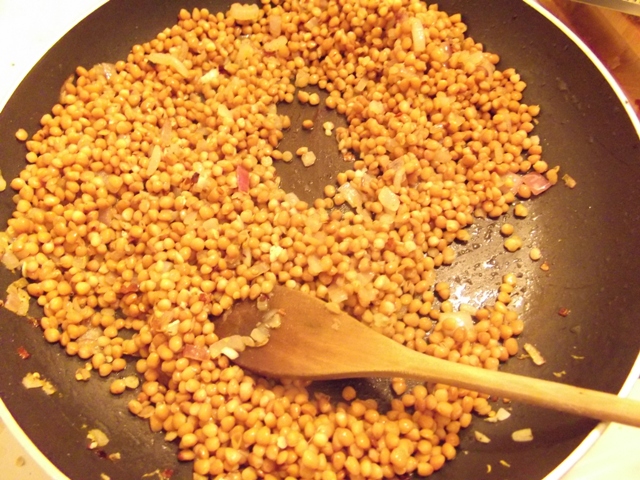
Add onions to pan, and fry until translucent. Add chili flakes, garlic, and lemon zest, and cook until fragrant, about a minute. Add lentils, and then squish lemon juice over top. Add salt, and cook until lentils are warmed through and beginning to brown, about two minutes. Taste, adjust seasonings, and then add bacon back to the pan. Add parsley, and cook until leaves have brightened, 30 seconds to a minute, and then serve.

These are excellent alongside roasted meat, but they’d also be pretty fabulous on their own with some buttered crusty bread, or with some roasted winter vegetables for a mostly wholesome weeknight meal. The recipe is easily doubled, but if you do double it, taste as you go before doubling the lemon; the zest and juice of two lemons might be a lot more than you’ll need.