Creamy, springy trout chowder.

I know. You’re probably looking at that photo thinking, “wow, she’s pretty lucky,” or “he’s probably the best she could do.” Some days, I’m not sure which is right. Or maybe you’re new here and this is your introduction, and you’re thinking that you’ve made a horrible mistake in clicking whatever link brought you here.

Fortunately, today’s recipe is pretty sound. And it was fished for by the above-implicated weekend fisherman, which means it was local and sustainable and all those keywords that people and I love to toss around. So today, I have for you a recipe for trout chowder, and it is all the things you want from a chowder. Fresh. Moderately healthy, if fattening. Local. Contains bacon. Good stuff.

Trout chowder

(Serves six.)

  • 1/4 lb. bacon, cut into 1/2-inch chunks
  • 1 lb. new potatoes, boiled and cooled, and then cut into bite-size chunks
  • 3 stalks celery, halved lengthwise and chopped
  • 1 large clove garlic, minced
  • 1 tsp. lemon zest
  • 2 tbsp. all-purpose flour
  • 4 cups milk
  • 1 1/2 tsp. salt
  • 1 tsp. black pepper
  • 1/4 tsp. cayenne pepper
  • 1/4 tsp. nutmeg
  • 1/2 lb. trout, chopped
  • 1 cup frozen peas
  • 1 tbsp. lemon juice
  • 1/2 cup heavy cream

In a large (three or four quart) pot over medium-high heat, crisp up bacon. When bacon is glistening and crispy, add potatoes, stirring to coat, and fry for about three minutes, or until lightly golden. Add celery, garlic, and lemon zest. Sprinkle flour over top of ingredients in pot, and stir once again to coat.

Pour milk into the pot, and reduce to medium heat. Bring mixture to a boil, and once thickened, add pepper, cayenne pepper, and nutmeg. Stir in trout and frozen peas, and cook for five to seven minutes, until trout is cooked through and mixture has returned to a boil.

Stir in lemon juice, followed by the cream. Taste, and adjust seasonings as needed.

Serve hot, with bread (or corn bread!), and cold, delicious beer. This is the kind of meal that will remind your spouse, special someone, roommate, or friend that you are so much better than the best they could do, and they will appreciate you profusely. If that person has had their tongue in a fish’s mouth recently, you do not have to appreciate him back.

Homemade salted caramels.

There’s this tiny shop just off Main Street, on 21st Avenue, called Chocolaterie de la Nouvelle France, and they make fleur de sel caramels that I could spend my last dollars on without regret. They’re like sugar butter. Fortunately, I am becoming slightly wiser as I age – I realized that you can make caramels at home! And we always have butter, sugar, and cream here (I don’t know why we’re putting so much weight on either), so to make a batch of caramels required no special shopping trip.

Making caramel is about the easiest thing ever. It doesn’t seem like it, because molten sugar can be a bit daunting, and a candy thermometer is not everyone’s favourite kitchen tool. But a few ingredients and a little bit of science/magic, and it’s amazing what heat can do.

I don’t have fleur de del, but it doesn’t really matter. A little bit of sea salt in the caramel and some smoked salt for finishing, and these are every bit as delightful as something you could go and buy. If you don’t have smoked salt, use kosher salt, or some other coarse, delicious finishing salt.

Homemade caramel candy

  • 1 1/4 cup heavy cream
  • 1/2 cup (1/4 lb.) unsalted butter, cut into pieces
  • 3/4 tsp. salt
  • 1 tsp. vanilla
  • 1 1/2 cups sugar
  • 1/4 cup golden syrup
  • 1/4 cup water
  • 1 tsp. coarse salt

In a medium saucepan, bring cream, butter, and salt to a gentle boil. Remove from heat and stir in vanilla. Set aside.

In a large (three or four quart), heavy-bottomed pot over medium-high heat, combine sugar, golden syrup, and water. You can use corn syrup if that’s what you’ve got, but there’s a little rumor going around that high-fructose corn syrup is bad for you. Of course, butter and sugar and cream are not.

Allow sugar to melt before stirring. Stir occasionally with a wooden spoon, watching the sugar closely to ensure that it doesn’t burn. Nothing is a bigger culinary piss-off than getting excited about candy and then burning it. I let mine cook until it reached a red-amber hue. If you go darker than that, the caramel will take on a smokey, slightly burnt taste, which can be sort of good, but more often than not just tastes like you overcooked the sugar.

When your sugar is bubbly and red-amber, pour in the cream mixture. Don’t freak out. This is going to swell and bubble and threaten to maim you, but it probably won’t. If it didn’t maim me, you’re probably safe – I don’t do anything carefully.

Reduce heat to medium, and clip in your candy thermometer. Stir occasionally. You want the caramel to reach between 245°F and 250°F, which should take between ten and 15 minutes. Don’t rush it.

Pour caramel into a 9″x9″ baking dish that’s been buttered and lined with parchment, which you should have also lightly buttered, for good measure. Tip: when lining the bottom of the pan, cut the parchment too long, so that you end up with pieces sticking up on either side; these will act as handles when you go to take your caramel out of the pan – much easier. Let cool for 30 minutes.

After 30 minutes, sprinkle salt over top of the caramel. Let rest for two hours.

Cut into one-inch squares with a sharp knife dipped in cold water. You should end up with about 50 caramels. You lucky duck.

You can proceed to wrap each one with parchment or wax paper, or put each one into those little candy cups that look like mini cupcake wrappers. I’m sure they have a name, and I bet you can Google it.

Serve. To others, to mom (happy Mother’s Day!), or just to yourself. Enjoy!

Some people use air fresheners, but I prefer spicy cakes.

Sometimes I clean around here, and though that doesn’t happen as often as it should, when it does, I’m always a little OCD about the place smelling like it was cleaned. If I can smell it, it’s right, and so from time to time, the bleachy, VIMy, ammonia smells are a little more prominent than they need to be. It’s momentarily satisfying – it’s the way I let Nick know that I don’t always do almost nothing around here. And then I hate it, so baking happens, because spices and vanilla and sugar cover up the smell of cleaning stink and make an apartment feel like home.

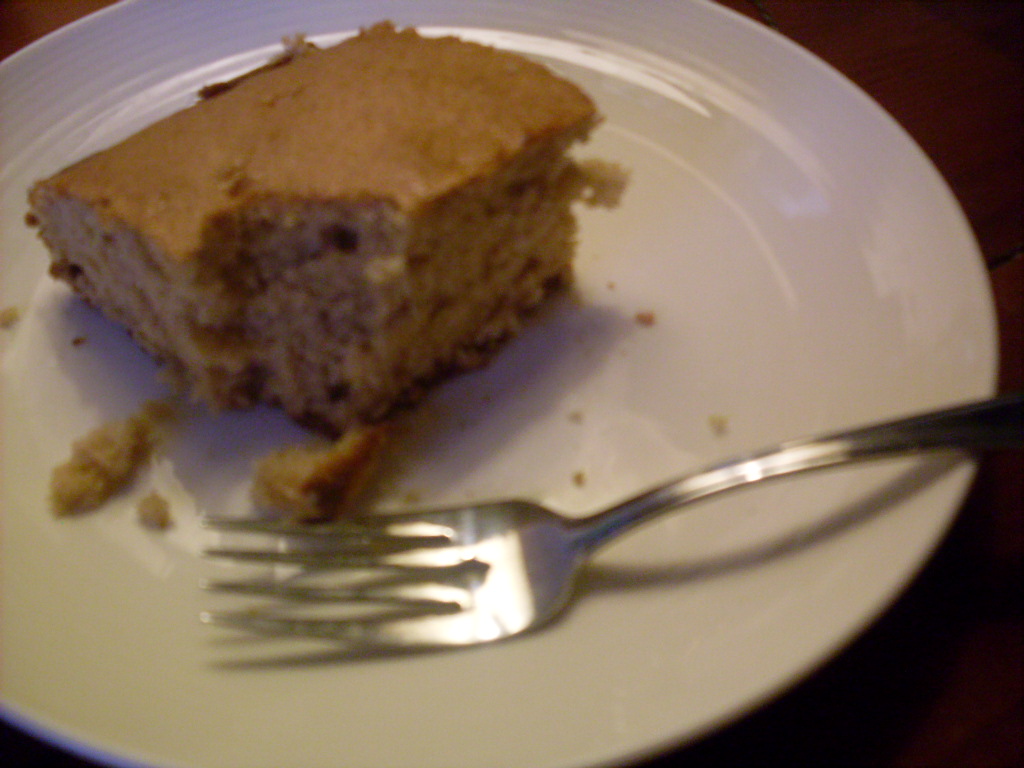
Tonight the evening light was golden, and though we’re well into spring, it doesn’t feel too late for cake. The warm glow through the trees seemed to call for something yellow and spicy, and this cake is it. Well, maybe not yellow. Golden, I guess, but definitely spicy. Perfect for brunch or tea.

Ginger spice cake

  • 2 1/2 cups all-purpose flour
  • 2 cups brown sugar
  • 2 tsp. baking powder
  • 1/2 tsp. baking soda
  • 1/2 tsp. salt
  • 2 tbsp. ground ginger
  • 1 tsp. cinnamon
  • 1/2 tsp. nutmeg
  • 1/2 tsp. finely ground white pepper
  • 1 1/4 cups plain yogurt
  • 2/3 cup vegetable or canola oil
  • 2 eggs, beaten
  • 1 tsp. vanilla

Preheat oven to 375°F.

In a large bowl, combine flour, brown sugar, baking powder, baking soda, salt, ginger, cinnamon, nutmeg, and pepper. Mix well.

In a separate bowl, combine yogurt, oil, eggs, and vanilla.

Pour wet ingredients into dry ingredients, and combine until wet ingredients are just moistened.

Pour mixture into a greased 9″x13″ pan. Bake for 25 to 30 minutes, or until a toothpick inserted into the centre comes out clean.

Serve warm, with whipped cream or ice cream.

I am pretty sure that every recipe for pistachio pudding that exists anywhere on the Internet or elsewhere is the direct result of the Kraft marketing department. This recipe is no such thing.

So, as has been well-established around here, I am all about comfort. And lately, I’ve been sick so I sent Nick to the store for something creamy with pistachios and he came back with Reese’s Peanut Butter Cup ice cream – nothing like what I wanted exists. So when I was feeling mobile, I went to the Internet to find out how to make pistachio pudding, because I was too lazy to think about it on my own, and would you believe that every single recipe for pistachio pudding that I was able to find is based on three ingredients, namely Jell-O pistachio pudding, canned pineapple chunks, and baby marshmallows? I had never even heard of such a combination, but there it was, all up in my sick-face grill.

And then I was angry. Because the comfort food of my imagining was, in reality, mint-green, chunky, and gross – there was nothing unctuous and soothing about it. And as someone who had been vomiting a lot, there was no going there – I knew ahead of time how that was going to look.

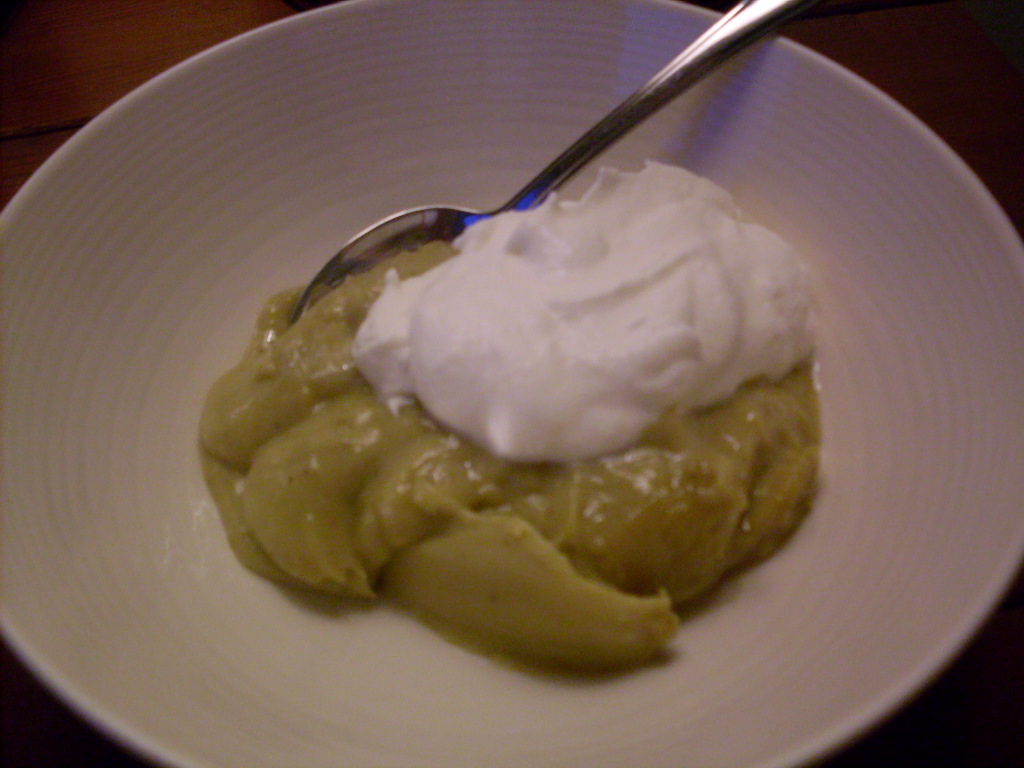
Fortunately for everyone and the Internet, I am feeling much, much better. And, Angry Emily is Motivated Emily and she gets shit done. The result is that I’ve come up with something I think you’ll really, really like. It’s smooth, creamy, nutty, the right amount sweet, and every bit as unctuous as it needs to be. If I was going to serve this to fancy company, I’d divide it cleanly between six ramekins and serve each with a discerning dollop of whipped cream. Otherwise, pour it into a bowl and serve it with a less discerning, more gluttonous fwop! of whipped cream. Do what you need to do.

Pistachio pudding

  • 1/2 cup unsalted whole pistachio nuts
  • 1 tbsp. butter
  • 1 tbsp. honey
  • 2 tbsp. cornstarch
  • 1/2 cup sugar
  • 1 cup milk
  • 1 cup cream
  • 1 tsp. vanilla
  • Pinch salt

In a pan over medium-high heat, toast pistachio nuts for one to two minutes, until you can smell them. Pour them into a blender or the bowl of a food processor.

Purée with butter and honey. It’s not essential that this form a paste, but get it as close as you can.

In a medium saucepan over medium-high heat, whisk together cornstarch and sugar. Pour pistachio mixture into the pan, whisk to combine. Pour in milk and cream, and bring to a boil.

Boil for one minute, and remove from heat. Whisk in vanilla and salt.

Pour mixture into a bowl through a mesh sieve. Taste as you go. As if you’ll be able to resist.

Cover the top of the pudding with plastic, and place in the fridge to set, two to three hours. Serve with too much whipped cream.

In other creamy food news, I made this “super easy homemade yogurt” and it was every bit as super easy as it promised it would be. It is amazing. The recipe produces a litre of yogurt (about four cups), and costs a fraction of what you’d pay for the same amount of yogurt in-store. I sweetened mine with honey and flavoured it with vanilla bean, but even plain it would be fantastic. So, go. Get the best dairy products you can, and make your own. It feels amazing to know that what you can make at home is a bijillion times better that what you can buy, and that making your own is cheaper. And the effort is minimal. There’s no reason not to get started right now for your Monday breakfast.

Chicken and spinach calzones.

We make and eat a lot of pizza around here – it’s my go-to meal when a bunch of people show up and are hungry. Last summer I discovered my new favourite easy crust, and there’s been no going back – I make it all the time. I change it from time to time – whole wheat flour, a little bit of buckwheat flour every so often, or spelt even. I let it rise a little for a thicker pizza, which is how I like it, or roll it out flat for a thinner crust. Or, sometimes, I add a little bit of semolina flour, give it 30 minutes in a warm kitchen, cut it into eight pieces, roll each piece out until it’s barely as thin as a pie crust, and stuff it with sauce and cheese.

Calzones are a treat, and they’re awesome for lunches at work or school – they’re pizza pops, but with none of that chemical stuff that’ll probably kill you. Cheese, a little sauce, some veggies and meat if you want – and you can stick them in the freezer and reheat them as you need them, in the microwave or toaster oven, whatever you’ve got. And if you’re using an easy crust, they’re the kind of thing you can serve on a weeknight, or even to company, with a little bit of salad and not much else.

If you use leftover chicken, even better! Less effort, so you have more time for drinking beer and inhaling the smell of baking pizza. Which is infinitely better than ordering delivery, even though delivery is easier. Some things are just worth a little bit more time, and people will like you more if you serve them calzones over take out schlock. Some of us need all the help we can get in that regard.

Chicken and spinach calzones

(Makes 8.)

Dough (inspired by a recipe from everybody likes sandwiches):

  • 1 package yeast (or 2 1/4 tsp.)
  • 1 tsp. honey
  • 1 cup warm water
  • 2 cups all-purpose flour
  • 1/2 cup semolina flour (if you don’t have this, it’s not crucial; just use regular flour, or sub whole-wheat, if you want)
  • 2 tbsp. olive oil
  • 1 tsp. salt

Filling

  • 2 tbsp. olive oil
  • 1 medium onion, chopped
  • 3 cloves garlic, chopped
  • 1 28 oz. can crushed tomatoes
  • 2 cups shredded cooked chicken
  • 2 cups packed fresh spinach, roughly chopped
  • 1 tbsp. chopped fresh basil
  • 2 tsp. ground black pepper
  • 1 tsp. lemon zest
  • Salt, to taste
  • 2 cups grated mozzarella cheese

In a large bowl, combine yeast, honey, and water, and let stand until foamy, about five minutes. Add flour, semolina flour, oil, and salt and stir to combine. Turn out onto a floured surface, knead ten times, and then place in a greased bowl and cover with greased plastic wrap and allow to rise in a warm place for 30 to 40 minutes.

Use semolina if you can, because it’s extra nice in this kind of crust. It’s a coarser flour, and it produces an excellent crispiness that you’ll want in your calzones. Regular old all-purpose will work fine if that’s what you’ve got, but semolina is a nice touch. A little goes a long way too – spend the two dollars, and you’ll have a bag that will last you a long time, and you can add it to homemade pastas and breads and all kinds of things.

In a large skillet over medium-high heat, heat onions in olive oil until shimmering. Add garlic, stir and saute for another minute, and then add crushed tomatoes. Reduce heat to medium, then add chicken, spinach, lemon zest, garlic, and basil. Taste, adjust salt as needed, and set aside.

Cut dough into four equal pieces, and then cut each piece in half. Roll each piece out until it is no more than 1/8-inch thick – it should be as round as possible, about the size of a small plate.

Preheat oven to 375°F.

Spoon filling onto dough, dividing the amount as equally as possible between all eight rounds. Place the filling slightly above the centre of the dough, so that when you fold the short side of the dough over top of the filling, you still have an inch or so of dough on the other side. Place 1/4-cup of cheese on top of each scoop of filling, and fold dough over.
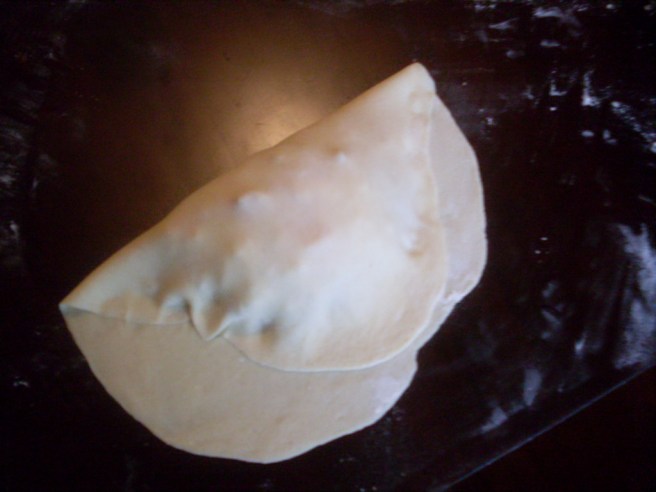
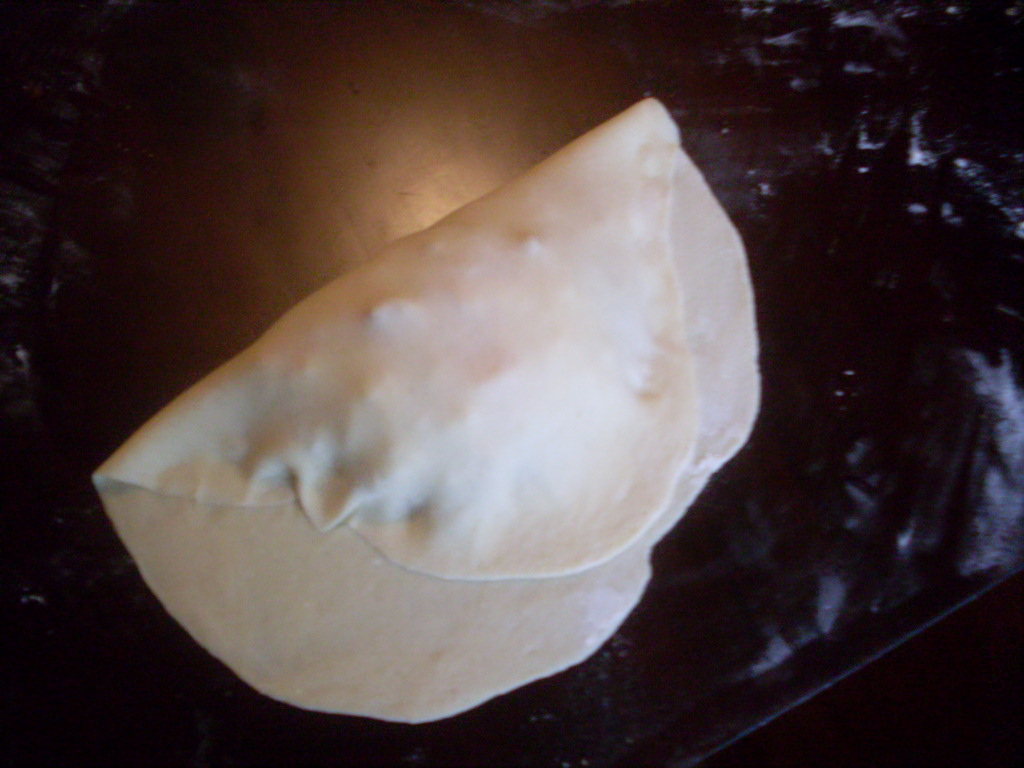
Press dough down gently to seal, and then fold the remaining dough over the crease to seal. You’ll end up with a sort of scalloped pattern, as you fold each bit of dough over the last. (See below.)
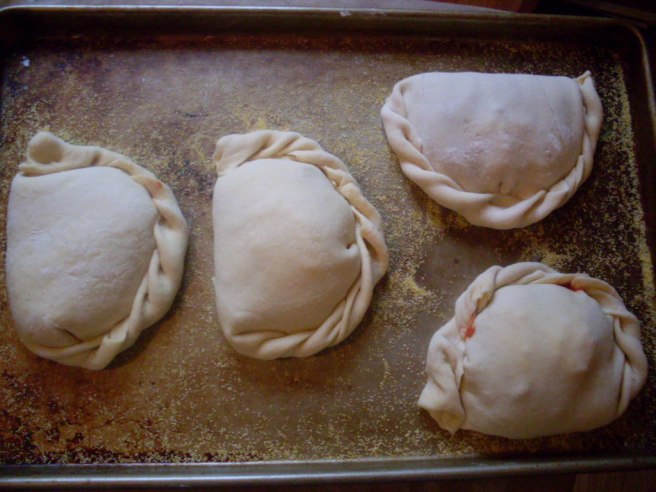
Place gently on a baking sheet lined with parchment or sprinkled with cornmeal. I bake these four to a sheet, with at least an inch between them, as they’ll puff up a bit and get bigger.

Bake for 20 minutes, or until golden brown. Serve hot.

If you’re not going to serve them all right away, you can cool the rest on a wire rack, and then wrap up and freeze. Reheat as needed.
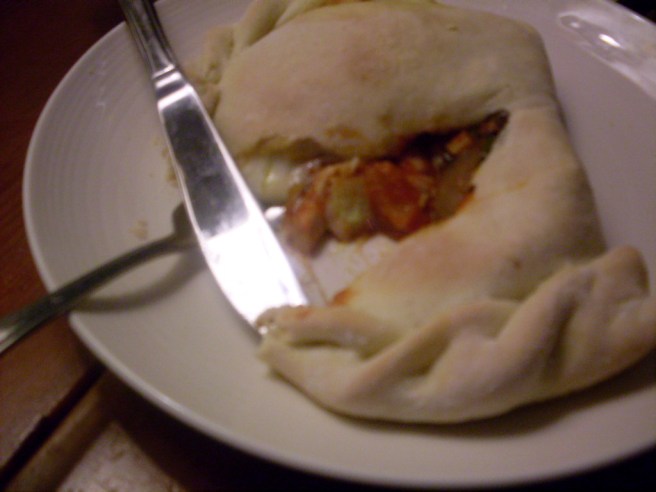

Ten-minute sweet yellow curry.

It was supposed to be Rib Week, and indeed that’s how the week started off, but then I felt an obligation to perform and then some other stuff happened and I decided to hell with it, and stuck the rest of the ribs Nick bought into the freezer for another week. Today we had chicken in an easy ten-minute curry, because I am working on a few freelance writing projects before going back to work and have less time this week than I thought I would.

Don’t let the long list of ingredients put you off. It’s not that much, really, and it really does all come together by the time the rice is cooked. Which leaves you time for other important things, like drinking wine and watching What Would Brian Boitano Make?

Sweet yellow curry

  • 1 cup diced mango (about one mango)
  • 1 banana, sliced into rounds
  • 1 large shallot (or small onion), chopped
  • 1 tbsp. chopped fresh ginger
  • 3 cloves garlic, smashed
  • Zest and juice of one lime
  • 2 tsp. sriracha (or the hot sauce of your choice)
  • 1 tsp. fish sauce
  • 1 bunch green onions, light green and white part separated from darker greens
  • 1 398mL (14 oz.) can coconut milk
  • 1 tbsp. canola or vegetable oil
  • 2 tsp. sesame oil
  • 1 lb. boneless, skinless chicken thighs
  • 1 tsp. ground cumin
  • 1 tsp. turmeric
  • 1 tsp. freshly ground black pepper
  • 1/2 tsp. ground coriander
  • 1/4 tsp. nutmeg
  • 2 red bell peppers, chopped
  • 1 cup frozen peas
  • 1/2 cup chopped cilantro

In a food processor or blender, combine the mango, banana, shallot, ginger, garlic, lime juice and zest, fish sauce, sriracha, white & light green part of green onions, and coconut milk. Pulse or blend until smooth. Set aside.

Chop chicken thighs, and smash each piece with a meat mallet or rolling pin until flattened. Flattening the meat tenderizes it, and it cooks much faster because it’s not so thick.

In a large pan over medium-high heat, sauté chicken in canola and sesame oil. Add bell peppers. Let cook for a minute or two until the chicken browns, stirring frequently. Once chicken has browned, add cumin, turmeric, pepper, coriander, and nutmeg, stirring chicken and bell peppers to coat in spices.

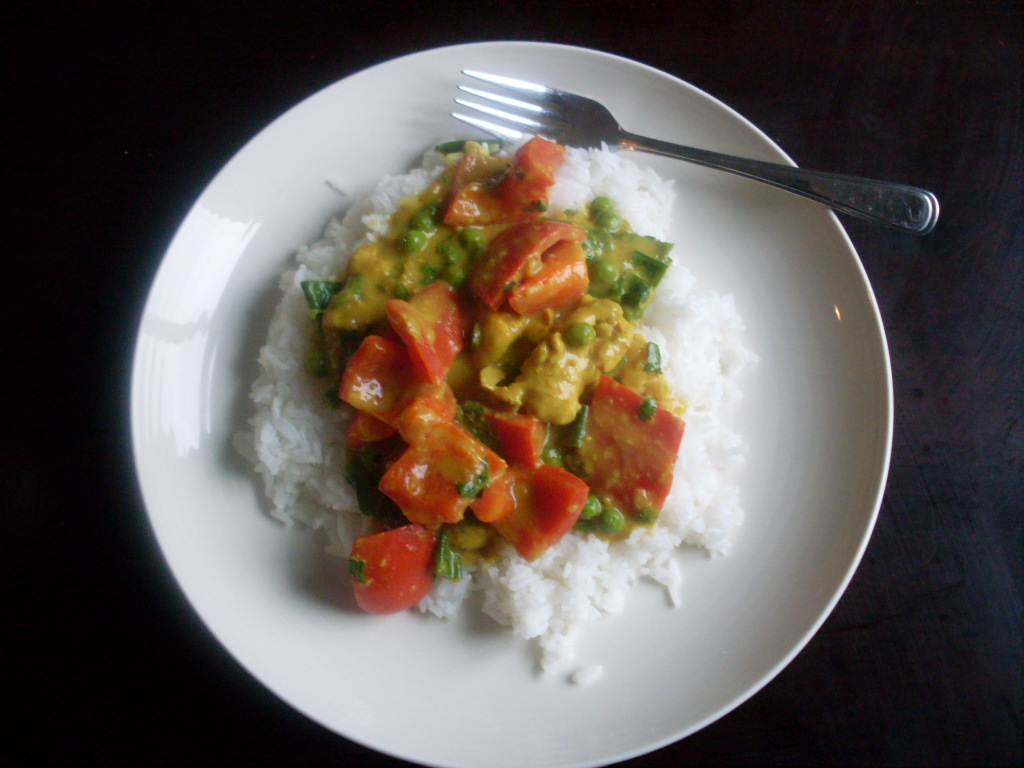
Pour mango-coconut milk mixture into the pan, scraping the bottom of the pan with a wooden spoon to remove any browned bits, and stirring to incorporate all of the spices. The colour will be fantastic, possibly alarmingly bright. Reduce to medium heat, and bring to a gentle simmer to warm the sauce through.

Stir in the green part of the green onions (chopped) and the frozen peas. Simmer for five minutes, stirring occasionally. Before serving taste to check your seasoning, adjust as needed, then add cilantro. Serve over jasmine rice.

Seriously – this whole thing takes, like, ten minutes. It’s got a delicate sweetness, but not cloyingly or oppressively so, and gently spicy. It’s fragrant, and all kinds of good for you. Anything that colour has to be good for you.

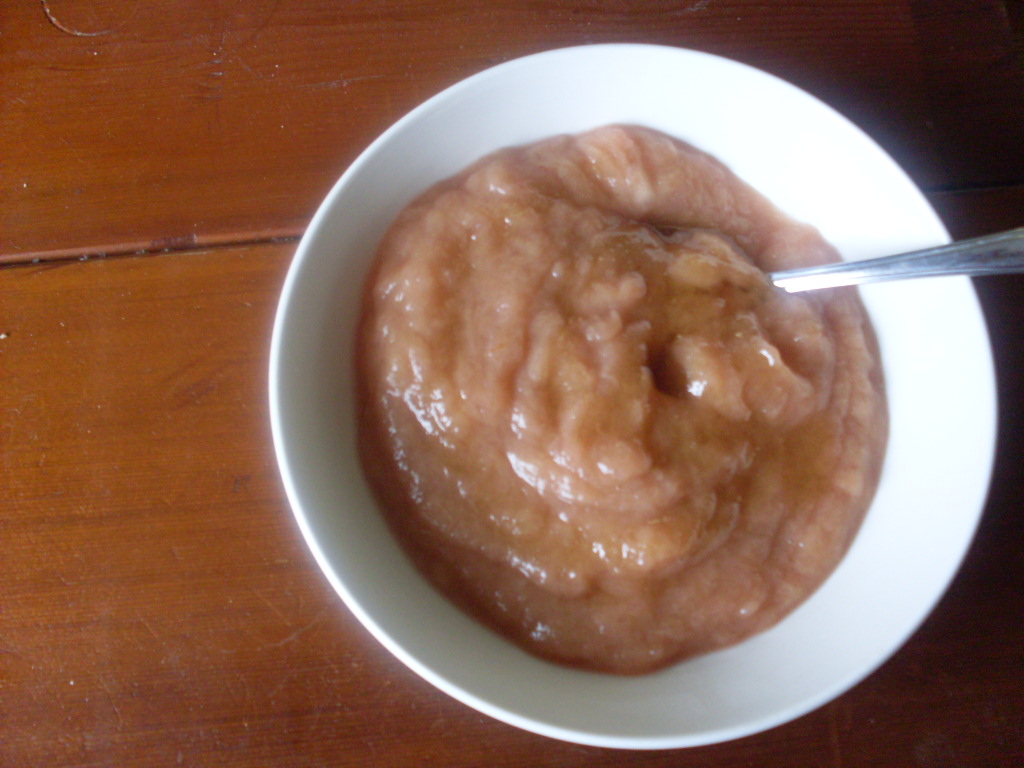
If, like me, you ate a kilo of Mini Eggs this weekend, a little bit of stewed rhubarb is probably exactly what you need.

You see that terrible disaster? It’s the first thing on my to-do list this week, and I’m a little overwhelmed. We’ve just had a three-day weekend of constant going and doing, and I don’t even recall cooking anything, and somehow, this is the aftermath. Even the cat is tired and doesn’t want to do anything.

This week and the early part of next week will be very busy, as I’ll be back to work next Thursday. Hooray! I have enjoyed unemployment (my four-week paid vacation), but it’s going to be great to be back. And back better than ever, as I’m moving on up to something a little different, a little more challenging, and likely with my own office to fill up with pictures of my cat. It’s very exciting. Nick is glad I will continue to earn an income, and I am glad that obligation will force me to brush my hair and shower, and to get out of bed before 10:00.

Best to ease into the day (and the week) slowly, I think. Stewed rhubarb with a little bit of local honey should do the trick – warm, tart, and like sweet porridge, it’s comfort in a bowl. This recipe makes about two cups’ worth, and is very good poured over oatmeal, if you prefer actual porridge, or over ice cream, which I don’t mind if you have for breakfast.

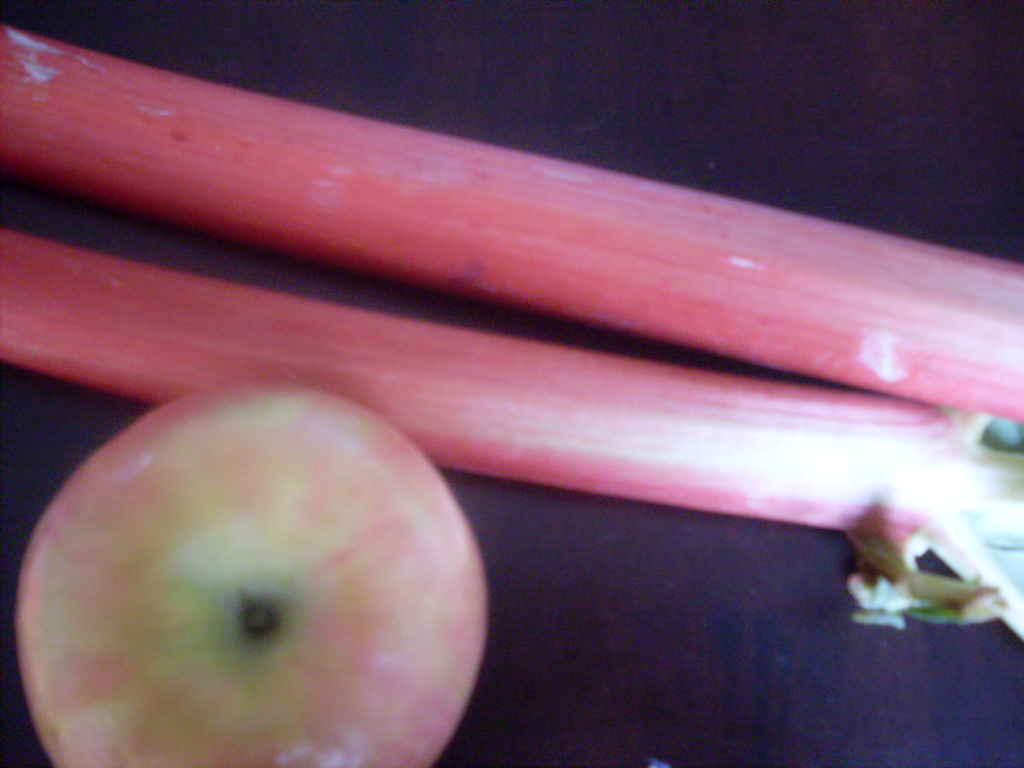
I prefer to stew greener rhubarb, as often it’s almost too sour to do anything else with. Red rhubarb has greater possibilities, which I am sure we’ll get into later. Stewed rhubarb is a very good start though, and you can make it all through rhubarb season using apples as I’ve done here for the early part of the season, or summer berries as the season continues. Strawberries are the obvious choice later in the season, but blueberries can be used as well, to great effect. This is also a recipe that Miss Rosa can adapt to the GI Diet, and the restrictions therein.

Stewed rhubarb

(Makes one to two servings, however the recipe is easily multiplied.)

  • 1 lb. rhubarb, cut into 1/4 inch slices
  • 1/2 lb. apples, finely chopped
  • Honey, to taste

In a medium saucepan over medium heat, combine rhubarb and apples with 1/4 cup of water. Stir occasionally to ensure fruit doesn’t stick to the bottom of the pan, until rhubarb and apple have disintegrated and the mixture resembles pink applesauce, 15 to 20 minutes. Sweeten with honey to taste, and serve warm.

Meyer lemon shortbread.

I’ve been thinking about shortbread lately, and I wasn’t going to give in to temptation (especially after I consumed 80% of the butter/cream/cheese buns the other day), but then I needed comfort food and my stew failed last night and cookies always make everything better when we’re out of the stuff to make pudding (pudding is the most soothing of comfort foods). My grandpa died yesterday, and though we all knew it was coming, that kind of advance warning doesn’t make the news any less surprising or unpleasant. And while I certainly have thoughts on the matter, I think I’d best save them for now – I’m well past the age of emo, and besides, it’s impossible to think clearly about anything until you feel able to focus.

So this morning, I am busying myself with shortbread cookies, the kind that sparkle with Meyer lemon and whisper vanilla. Regular lemon – or any citrus you like – will do if your local market didn’t surprise you with Meyer lemons this week. To replicate the taste of Meyer lemons, use two tablespoons lemon juice and one tablespoon orange juice (preferably mandarin orange juice), and that should give a suitable impression.

Meyer lemon shortbread cookies

(Makes about 24.)

  • 1 cup butter, softened (room temperature)
  • 1 cup confectioner’s sugar
  • 2 Meyer lemons, zest and juice (zest = about 2 tbsp., juice = 2 to 3 tbsp.)
  • 1 tsp. vanilla
  • 1/4 tsp. salt
  • 2 cups all-purpose flour

Cream together butter, sugar, lemon zest and juice, vanilla, and salt until liquid is absorbed into the mix. Mixture should be shiny and light.

Add flour, stirring until a soft dough forms. Form dough into a log (make sure the ends are equal to the middle in girth), and wrap tightly in plastic. Place in the freezer for up to one hour.

Preheat your oven to 350°F.

Slice cookie roll into approximately 24 equal pieces. Place cookie slices on a baking sheet, and bake for 20 to 25 minutes, checking after 15 minutes for doneness.

Shortbread is different from regular cookies, in that it’s best if it isn’t allowed to bake until golden. The other thing that’s different is that you don’t want to eat it warm. Like bread, there are changes that occur when the shortbread cools, and you want the texture to have a sandy fall-apartness that you have to wait for. Troublesome, isn’t it? Not really, but they smell so good when they bake you’ll want to dive in right away.

Allow to cool on the baking sheet for five minutes before removing to a cooling rack. Serve with tea.

Bread pudding with spinach, feta, and ham.

Well, it’s official. This past weekend has been the laziest on record, with no signs so far of an upswing toward productivity or wise time-use. I blame the fort, which we have only just dismantled because I was beginning to worry that at a certain point, my trajectory toward the hobo lifestyle would be irreversible, and I was dangerously close to packing my crap in a bindle, crafting a few sturdy shivs, and finding a van to live in, down by the river. (You can build excellent forts around vans.)

Here’s my fort.

On Thursday night, Corinne came over in her pajamas and we sat in the fort, eating homemade pizza and watching many episodes of The Muppet Show on DVD. The cat was there, and made things difficult, so we had to lock her in the bathroom.

By Friday morning, the roof was gone (the cat also thinks forts are super fun, especially jumping on them), so we ended up enjoying an open-air fort, the kind of fort kids in more temperate climates probably build.

We came to love the fort, and even considered making it a permanent fixture; is anything more fun than doing stuff in a fort? The correct answer is no. The problem is, it was beginning to function as a vortex into which all of my motivation (and Nick’s, which has always been perilously low anyway) was completely sucked. If I hadn’t needed to go downtown in the middle of the day on Friday, I might still be in those same, smelly pajama pants, hair not brushed, and covered in food because you cannot eat sitting upright in a fort.

So we agreed that today we’d get rid of the thing, put our furniture back up like how grown-ups have their furniture, and do the dishes because a lot of mess accumulates when you’re spending all your time horizontal on a pile of cushions but still eating the same amount (if not more). We did take it down, but not before playing in it most of the day.

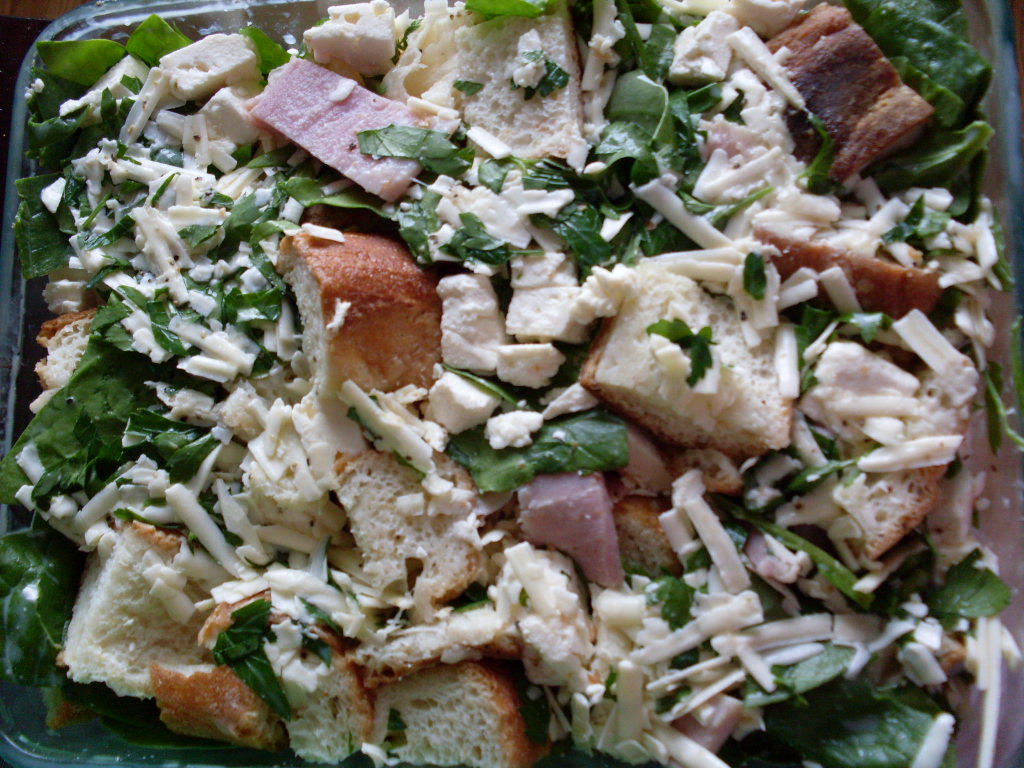
We spent the morning in the fort, napping and brunching. Last night I assembled a bit of bread pudding, and put out some sausages to defrost, so that breakfast could be in the oven by the time we were ready to move from bed to fort floor. It’s a recipe that I’ve played with a bit, and it comes from the December 2008 issue of Gourmet (see the original recipe on Epicurious, here). The two best things about this recipe are that it’s best if you assemble it the night before you want to bake it, and also that it’s very versatile. I’ve made it vegetarian with basil leaves, sundried tomatoes, and pine nuts, and I’ve used sausage and cheddar when I had leftover sausage and no Gruyere. Here’s my Greek-inspired adaptation, which is quite delightful and I insist you make it as soon as you can. If you end up with leftover Easter ham, well, then you’ve no excuse not to. It’s also good as a side-dish with dinner, so you could even make it for your next family feast.

Bread pudding with spinach, feta, and ham

(Adapted from a recipe from Gourmet, December 2008. Serves four, or six as a side-dish.)

  • 1 1/2 cups whole milk
  • 1/2 cup cream
  • 5 large eggs
  • 2 garlic cloves, minced
  • 1 tsp. ground black pepper
  • 1/2 tsp. dried oregano
  • 1/4 tsp. nutmeg
  • 1/2 lb. ham, cubed
  • 5 cups roughly chopped spinach
  • 6 cups cubed stale bread
  • 1 cup grated mozzarella cheese
  • 1 cup crumbled feta cheese
  • Good-quality extra virgin olive oil

Night before:

Butter two-quart shallow baking dish.

Whisk together milk, cream, eggs, garlic, pepper, oregano, and nutmeg in a large bowl.

In another large bowl, toss ham, spinach, bread, mozzarella, and feta. Transfer to baking dish and pour liquid mixture over top. Cover, and refrigerate over night.

Next morning:

Preheat your oven to 375°F.

Remove the dish from the refrigerator, and drizzle olive oil over top the uncooked bread pudding. Cover with foil, and bake for 30 minutes. Then remove foil and bake until golden in spots, about 10 minutes more.

Serve as part of a completely delicious brunch, or alongside a fancy dinner. Serve hot, so cheese is at its melty best. And, if desired, eat in a fort. In your pajamas.

Radishes are the new whatever we were eating all winter.

Today was supposed to be another errand day, but laziness and that pesky but inevitable St. Patrick’s Day hangover took hold in the morning and I ate one of Grace’s magnificent cupcakes (from this recipe here) for breakfast and thought that I could probably spend most of the day in the bathtub reading Kerouac and imagining I had the oomph to find and follow adventure someplace else. And then, I realized that the breeze blowing through my window was warm, and thought that today was a day I could venture outside in a sundress, with a sweater, of course, so I hopped on my bike and crossed the errands off my list like a champ.

Apologies for the exceedingly blurry photos of late – I discovered after I uploaded these, after lunch had been snarfed down gluttonously, that the lens was dirty, because I am a slob.

It’s so warm and pleasant right now, it’s as if summer is just around the corner. Everywhere I looked, there were rhododendrons and cherry blossoms, and occasionally I caught sight of tulips with petals splayed so wide that spring might as well be half over. It was a glorious seventh day of unemployment, and at this point, I’m not sure I ever want to go back to work. I wish there weren’t so many rules for working – I would be the happiest, most productive worker bee ever if I could follow my own schedule, eat something fresh and homemade at lunchtime, and nap in the sun when I felt like it. There has to be a way to do that. If there is and you’ve figured it out, let me know.

Because it is now spring, and a new season of veggies is upon us, today’s something homemade was radish bruschetta, loosely assembled and flung onto a few crusty slices of rustic baguette. I ate the overflow with a fork, and sipped sweet German Riesling all the while.

And I’ll tell you the ingredients, but there’s not really a recipe, because all you do is throw in a bit of this and that, to your taste, and dump it all out onto a few slices of bread. You can make as much or as little as you need, and you can add anything you like. If you cut the radishes bigger it can be more like a salad, and if you chop them a little finer, they could pass for a sandwich filling.

Radish bruschetta

  • Bread
  • Radishes
  • Feta cheese
  • Mint
  • Parsley
  • Lemon, zest and juice
  • Good olive oil
  • Coarsely ground black pepper

Slice the bread, and into a bowl slice the radishes, crumble the cheese, chop the mint and the parsley, and zest and juice the lemon. Drizzle with olive oil, and grind as much pepper as you like into the mix. Toss. Then spoon out onto bread. This is nourishing springtime lunching at its best.

I think it’s time for a nap now, then a wander to the wine shop, and then to build a fort in my living room.