Something to Read: L.A. Son

30days

I have a crush on Roy Choi, the chef who started Kogi Truck and invented the Korean Taco. Tacos plus kimchi equals romance forever. I wanted his book, published under Anthony Bourdain’s imprint, before I even knew what it would be like.

la-son-roy-choi

It is exactly the style of book I’d like to one day be witty enough to write. It’s a memoir, it’s a cookbook, it’s mostly black and white but with the occasional full-colour photo thrown in. It’s beautiful. It’s funny. It doesn’t shy away from the swears, which I think is important because who cooks politely? I’m burning myself and spraying mess everywhere and cursing like a sailor on rough waters and that’s how I like it. Cooking is relaxing, and it’s relaxing because you’re in your kitchen burning off whatever needs it.

L.A. Son: My Life, My City, My Food is a fantastic book. It’s completely different in both tone and content from any other book on your shelf, I guarantee it. Roy Choi was born in Korea and raised in Los Angeles, and grew up around a mash-up of cultures and flavours. He studied, he misbehaved, he went to cooking school, worked at Le Bernardin, and then became a food truck boss and Anthony Bourdain pal. The book has recipes for everything – all kinds of things – from kimchi and spaghetti to pupusas and French onion soup. I read it over a week or so, savouring the text and marveling at every recipe.

There was one in particular that stood out to me – I laughed so hard I called Nick over to read it. You see, Nick is a sauce junkie. He needs small amounts of every possible flavour all the time, and prefers meals he can construct out of myriad bits. He loves dim sum, tapas, stuff like that, and he makes what he calls a “sauce line-up” whenever there are multiple sauces at his disposal. Chicken McNuggets plus every sauce including mayonnaise and honey is one of his secret favourite treats. The recipe is called “That’s So Sweet” and I might as well excerpt it for you here because if you’re on the fence, this will either sell you or sway you.

That’s So Sweet

I’ve always loved the sauces in life more than the food – maybe that’s why I cook the way I do. So it’s no surprise that I’m a sauce packet fiend. If I go to a fast-food joint or the mall food court, my tray is like twenty-five deep in the packets. And it’s not that I’m hoarding all this shit; no, I have a ritual. I’m real anal about my packet game. I open ’em all up before I eat anything, and make my sauces. I blend and mix and create. Then people say “Oh, he drowns his tacos and rice bowls in too much sauce.” Guilty as charged. Drown your chicken or shrimp in this sauce.

  • One 25-ounce bottle Mae Ploy Sweet Chilli Sauce or other Thai sweet chili sauce
  • 2 tablespoons plus 2 teaspoons roasted sesame seeds
  • 1 tablespoon plus 1 teaspoon Kosher salt
  • 2 serrano chiles, chopped, seeds and all
  • 5 tablespoons plus 1 teaspoon Sriracha
  • 3/4 white or yellow onion, chopped
  • 1/2 cup fresh lime juice
  • 1/3 cup fresh orange juice
  • 2/3 cup fresh Thai basil leaves
  • 2/3 cup chopped fresh cilantro
  • 6 garlic cloves, peeled
  • 2/3 dried Anaheim chile, chopped
  • 2 tablespoons plus 2 teaspoons chopped peeled fresh ginger
  • 2/3 cup chopped scallions
  • 1 teaspoon freshly ground black pepper
  • 2 tablespoons plus 2 teaspoons kochukaru
  • 2/3 cup natural rice vinegar (not seasoned)
  • 1 teaspoon chopped peeled galangal

Combine all the ingredients in a blender or food processor. Blend everything until it’s all real smooth.

Use liberally on whatever you got cooking for dinner – chicken, shrimp, everything – and pack the rest in Tupperware. It’ll store in the fridge for two weeks.

And here’s a preview of Eddie Huang, who I want to tell you about later this week. From his series Fresh Off the Boat, Eddie Huang interviews Roy Choi in L.A.:

https://www.youtube.com/watch?v=ASMMG2Bc1-Q

Something to Read: Hunt, Gather, Cook and The Homemade Pantry

30days

I’m not doing great at keeping to my schedule. Last night I ate some expired salad dressing that may have gone off and some shrimp that might not have been fresh and spent the evening in a state of discomfort, trying to focus on The Voice and also complaining a lot about my bad stomach feelings. I did not have an enthusiasm-filled day today.

So, to compensate, I’d like to tell you about two books from two bloggers I love and think you’ll love too.

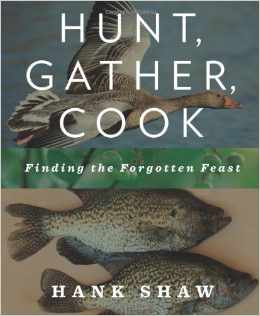
The first one is Hunt, Gather, Cook, by Hank Shaw.

hagc

Hank Shaw is so cool. He hunts, forages, fishes, cooks, and writes about it, which is basically everything I look for in a marriage partner. I like to live with someone who will bring me wild meat every so often, and who keeps me in fish all summer. Who doesn’t, though … right?

I was excited about Hank’s book because I knew it would contain recipes we would use. He’s got recipes for big game, like deer and moose, and for ducks and geese (which we get on occasion), and fish (though I had hoped there would be more on trout) and crabs, and since he’s from the west coast, a lot of what he talks about is relevant to our proteins of choice/availability. He writes about fruit and flower wine-making, meat curing and sausage making, and his chapters on foraging are the stuff of aspirations, at least for me. I long to trudge through the woods to find nettles and fiddleheads, which Nick calls  “hiking” (and I don’t care for it).

You can read Hank’s blog at Hunter Angler Gardner Cook and if you haven’t already been reading his posts, you should definitely start, especially if you are interested in sustainable diets and interesting recipes for wild meats and vegetation. He was profiled in Field & Stream, which I think proves he’s legit. I’ve never read Field & Stream, but I assume it is to outdoorsy people as Bon Appetit is to indoorsy people. Gospel.

When we first started smoking fish, we turned to Hank Shaw first and he did not let us down. And what’s helpful about Hank’s blog is that when I need to learn how to do something, like butterfly a fish, the instructions are probably there. He’s like a really helpful friend you can call up anytime you have a weird question about animal parts. If only my IRL friends could do what Hank does for me.

The following recipe is from his section on wild greens, and the time is right to make this dish. If you have nettles nearby, grab some gloves, pick some weeds, and turn them into a creamy, extremely iron- and Vitamin C-rich risotto for dinner this week.

Nettle Risotto

(Serves 2.)

  • 1 cup blanched nettles (about six handfuls of raw nettles boiled for three minutes)
  • 3 tbsp. unsalted butter
  • 1 large shallot, finely chopped
  • 3 cloves garlic, minced
  • 1 cup Arborio rice (I use half rice and half pearl barley)
  • 1 tsp. salt
  • 4 cups homemade or low-sodium chicken, vegetable or beef stock
  • 1/4 cup grated Pecorino cheese

Once your greens are blanched and cool, drain them and roll them into a tea towel and squeeze out any excess water. Chop them as finely as you can.

Heat stock to a gentle simmer.

In a heavy-bottomed pan over medium-high heat, melt two tablespoons of the butter. Once the butter is melted and has stopped frothing, add shallot, garlic, and rice, stirring for a minute or so until rice begins to look opaque and is nicely coated in fat.

Stir one cup of stock into the rice with the salt. Stir frequently, and when the first cup of stock has been absorbed by the rice, add the second cup. Repeat the waiting and stirring.

When it comes time to add the next round of stock, add your greens as well, this time with about a half a cup of stock. Your stirring should be more frequent now. Keep adding water in half-cup amounts until your rice is al dente and has reached the consistency you prefer. I always use all four cups, as I like my risotto loose.

Add the cheese and the last bit of butter. Stir, taste, and adjust seasonings as needed. Serve immediately.


The next blogger I’d like to tell you about is Alana Chernila of Eating from the Ground Up. I’ve been reading her blog since almost the beginning, marveling at how lovely her life seems out there in the Berkshires, wherever that is (I assume it’s like Narnia and I have to find a secret passageway to get there). Her book, The Homemade Pantry: 101 Foods You Can Stop Buying and Start Making has improved my life in simple, wonderful ways. I don’t buy ricotta anymore. There’s no need.

the-homemade-pantry


The best thing in this book might be the recipe for homemade instant oatmeal – ween yourself off that terrible-for-you sugary packet-stuff and start making instant oatmeal with rolled oats from your pantry – there’s a bonus recipe for homemade brown sugar, if you need it. This has been a life-saver for me with Toddler, who eats too much sugary crap but who can be tricked with better-quality stuff if you catch him before he’s formed a habit for the store-bought version. I’ve made it with Porridge Oats, which comes with bran and flaxseed in it, and it works just as well.

The recipe I’ve made over and over is her recipe for ricotta, which, if you leave it long enough, becomes paneer. A batch of ricotta is cheaper than the stuff you buy in plastic tubs from the supermarket, and it’s infinitely better and much more impressive when you serve it to friends. The recipe makes about a cup and a half, but I usually double it because why not.

Ricotta

  • 1/2 gallon whole milk
  • 1/3 cup fresh lemon juice (about two lemons)
  • 1/2 cup heavy cream
  • Sea salt to taste

Add the milk, lemon juice and cream to a cold pot (with a heavy bottom) off  the heat, and stir for a few seconds.

Affix a candy thermometer to the side of your pot, and warm the pot over low heat. You want to warm the milk mixture to 175°F, which at this low temperature should take somewhere around 45 minutes. After 30 minutes, be vigilant about checking. Stir a couple of times, here and there, as you putter around doing other things.

When you reach 175°F, turn the heat up to medium-high. Do not stir. Watch your pot, and wait for it to get to 205°F. Should take three to five minutes. Don’t let it boil.

When you reach 205°F, take the pot off the heat and let it sit for 10 minutes.

Line a fine-mesh sieve with cheesecloth, and strain your mixture. Strain it over a bowl or something, as you will want to save the whey that’s left behind – it’s beautiful in homemade bread, and I’ve also used it in muffins and soups. Leave the cheese for another 10 minutes, then sprinkle with salt. Serve warm, as is, with toasted nuts and honey, or chill it for later use, or use it as an ingredient for something else altogether.

Something to Read: Fannie Farmer Cookbook & Baking Book

30days

Yesterday we spent the day in Porteau Cove and it was rainy and everyone ended up damp to their skin but it was fun and Toddler had a fabulous day and when we got home I still had to put Easter together so last night, I didn’t end up posting (I did watch a few cooking shows off the PVR and eat about a pound of Easter candy though, so that’s got to count for something).

Easter prep

I had meant to tell you about the Fannie Farmer cookbooks, which you likely already know about as they’re classics but if not, you should know about because they’re classics. So I might as well tell you about the Fannie Farmer Cookbook and The Fannie Farmer Baking Book, which are two of my most essential kitchen resources (both edited by Marion Cunningham). My aunt had asked for the recipe for Lazy Daisy cake, as she’s celebrating her PhD candidacy and it’s her favourite cake, so the timing is all kinds of right.

The Fannie Farmer cookbooks are pretty much the family cookbook where I grew up; my grandmother used them and I inherited her three copies; my mom has several copies (since I ruined her first one as I’m messy and irresponsible and not careful with things). If I’ve ever wondered how to make anything, even before Googling it, I check in with Fannie. Chances are the answers are all in there, probably with my grandmother’s notes.

Cuddles_FF

The thing I like about the cookbooks is that they’re reference as much as they are books of recipes; there are instructions on selecting cuts of meat and what each cut means, information and recipes for cooking for the sick, and a great many recipes that can be made on even the tightest budget. If you know someone about to move into his or her first home away from home, Fannie Farmer is a great gift.

I have a couple of really old versions of the books, and I keep them because they were my grandmother’s, but also because they’re pretty funny. For example, from my 1973 version which purports to be a facsimile of the original (circa 1896):

Banana Salad

Remove one section of skin from each of four bananas. Take out fruit, scrape, and cut fruit from one banana in thin slices, fruit from other three bananas in one-half inch cubes. Marinate cubes with French Dressing. Refill skins and garnish each with slices of banana. Stack around a mound of lettuce leaves.

I love recipes like these. So gross. So delightful to imagine someone serving banana salad in French Dressing to company.

But seriously, Fannie Farmer.

Here’s the recipe for Lazy Daisy Cake, followed by a recipe for Lazy Daisy Topping, both from the Fannie Farmer Baking Book. “Because this light and delicate cake is so easy to make, it is an ideal dessert for a lazy day. The topping is a rich butter-caramel glaze, and it is good.”

Lazy Daisy Cake

(Makes one 8-inch square cake.)

  • 1/2 cup milk
  • 1 tbsp. butter
  • 2 eggs
  • 1 cup sugar
  • 1 tsp. vanilla extract
  • 1 cup all-purpose flour
  • 1 tsp. baking powder
  • 1/4 tsp. salt
  • Lazy Daisy Topping (see below)

Preheat the oven to 350°F. Grease and flour an 8″ square cake pan.

Warm the milk with the butter in a small saucepan over low heat.

Meanwhile, beat the eggs until they are foamy and feel like they’ve thickened slightly. Slowly whisk in the sugar, then add the vanilla.

Sift your dry ingredients into another bowl. Stir the dry mix into the egg mixture and beat until the batter is smooth.

Check that the butter has melted into the milk; if it has, stir into the batter and mix well. If it hasn’t, give it another minute or so.

Pour your batter into your pan and bake until a toothpick inserted in the centre comes out clean, about 25 minutes.

While your cake is baking, prepare the Lazy Daisy Topping (recipe below).

Spread the topping over the warm cake and brown slightly under the broiler for about one minute, paying attention all the while so that it doesn’t burn. Serve the cake from the pan.

Lazy Daisy Topping

(Makes about 1 1/4 cups, enough for one Lazy Daisy Cake)

  • 4 tbsp. butter
  • 1/4 cup heavy cream
  • 1/2 cup brown sugar
  • 1/2 cup shredded coconut, toasted if you wish

Combine butter, cream and sugar in a small, heavy-bottomed saucepan. Stir over medium heat until melted. Add the coconut. Pour the frosting over the baked cake; cook under a hot broiler for about a minute, until it bubbles and browns slightly.

Something to Read: The Billingsgate Market Cookbook

30days

I think I’ve said it before, but I have a bit of a soft spot for British food. And not, like, the new kind, that Marco Pierre White-inspired next generation British cuisine, the stuff of Jamie Oliver and Nigella Lawson. I mean, like, BRITISH food. Sausages and potatoes. Stuff where herring features prominently. Dishes composed of varied shades of beige. I like gravy. British food is all about gravy. Carbs and gravy. Gravy carbs.

It’s a bitter, bitter shame that when I actually went to England, I was still in the throes of my picky-eater stage, which lasted from sometime after I started solid foods until I was about 22, and included a confusing period where I didn’t eat red meat for texture reasons. I suppose if I were to really think about my life, my biggest regret would be all those years when my metabolism was at its peak and I was just squandering my advantage.

Fortunately I’ve always been fish-positive, and when I went to England I ate a lot of seafood. Even though I have good reason to believe I have a mild shellfish allergy, I would endure the consequences and sidle up to the table for another round again and again. I’d rather have shellfish plus consequences (and a slightly shortened life expectancy) than no fish and shellfish at all.

A couple of years ago, a book fell into my collection that I have come to refer to at least once per month. The living room in our apartment has a window that juts out a bit from the building, and when it rains the water pounds the glass and it’s quite loud; on afternoons when the rain pours and pounds (often) and Toddler’s down for his nap, sometimes I like to read my book in the chair beside the window and imagine a busy fish market in England and being treated to a plate of kedgeree made by somebody else.

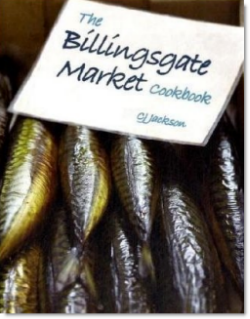
I’m talking about The Billingsgate Market Cookbook.

billinsgate_market_cookbook

The Billingsgate Market is a fish market in London. According to the book:

Situated in the heart of London’s Docklands, the frenetic pace and historical kudos of the market are more than a match for the financial institutions that surround it. Although the unassuming building sits squatly in the shadows of its impressive high-rise neighbours, the bland facade only serves to belie what’s going on side. Here, shirts and ties are swapped for Wellington boots and aprons, and city lingo takes a back seat to market banter.

Sounds fun. Don’t you want to go to there?

The book has a history of the market and info about choosing sustainable seafood, among other things, and the recipes are for things as simple as herring on toast and as unexpected as taramasalata and ceviche. Unexpected might be the wrong word, but if you have notions about British cuisine, I think you might be pleasantly surprised by the recipes you’ll encounter in this book. British food is not all beige. I promise. (More on that later.)

For now, because I’m thinking of kedgeree because it’s looking like another night of rain, here’s a recipe. It calls for “smoked fish;” I usually grab a tin (or a couple if the store only has small tins) of smoked mackerel, which you generally get in the same place your store stocks its canned tuna. It’s cheap, and it’s actually really good for you, with it’s DHA and calcium. If it’s cold where you are, make it tomorrow. It’ll warm your bones.

Kedgeree

(Serves 6.)

  • 1 1/2 cups basmati rice
  • 1/2 tsp. turmeric
  • 12 oz. smoked fish
  • 1 1/4 cup milk
  • 5 tbsp. butter
  • 2 tsp. yellow/Madras curry powder
  • 2 tsp. ginger, finely minced
  • 2 red chilies – whatever kind you prefer – seeded and chopped
  • 2 bunches scallions, finely sliced
  • Salt and pepper, to taste

Using a saucepan with a tight-fitting lid, bring the rice with the turmeric to a boil in three cups of water. Turn on the lid, reduce the heat to low, and cook for 20 minutes, not removing the lid until 20 minutes has passed.

If you’re using fish that hasn’t been cooked, poach it in milk for three to four minutes until it’s cooked through and opaque. If you’re using canned fish, put the milk away and skip this step.

Melt butter in a large pan, and add the curry, ginger, chilies, and onion. Cook over medium heat, stirring frequently, for three to four minutes, until the onions have softened. Add the rice, and stir together until the rice is well mixed. Using your fingers, break the fish into chunks and add it directly to the pan. Taste, and adjust seasonings as needed.

I like to serve this topped with a runny-yolked fried or poached egg; try it. You’ll like it, I promise.


Something to Read: American Food Writing

30days

A good story is as good or better than a good recipe, but a good story that ends in a recipe is about my favourite thing, because it means you can take the story with you and re-tell it, in a way, every time you make a dish. I like stories.

With food in particular, I like to know why things are the way they are. I mean, it’s all well and good to find a nice recipe for scones, but why do the scones exist in the first place? Are they the fancy scones your grandmother would always make on Sunday to go with tea? Tell me about tea with your grandmother. The scones will taste better if they are not just any old scones. I want to be biased. I want to believe they are exceptional.

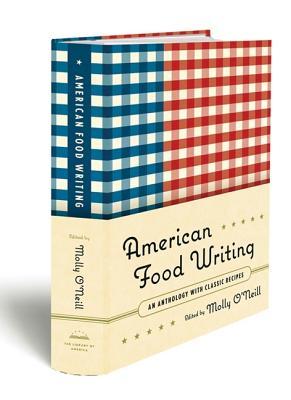
Good writing about food fills most of my emotional voids (the rest are filled with cheesy carbs or over-buttered popcorn). Which is why I was delighted to find American Food Writing: An Anthology, edited by Molly O’Neill, at a local bookstore that was tragically set to close but then was bought/rescued by another local bookstore and then everyone lived happily ever after. The book is a collection of 250 years of American writing on food, from writers as diverse as John Steinbeck, James Beard, Madhur Jaffrey, David Sedaris, and Emily Dickinson, among others. It’s food writing and writing about food excerpted from longer works, and there are recipes.

afwa

There’s a recipe for a clambake to feed 500 people (and 125 workers) that requires 200 pounds of sausage and “1 1/2 tons of stones about the size of a cantaloupe melon;” there are recipes for risotto and chowder and hoe cake and Chicken Marbella. There are stories of “primal bread” and “enough jam to last a lifetime” and “adultery” and “The Toll House Cookie.” It is, as it turns out, both a pleasant incremental read and a reference book, and I am pleased to have it in my collection and to recommend it. I honestly can’t choose an excerpt because I can’t narrow one down. Borrow it from the library; if you agree that it’s wonderful, buy yourself a copy.

Here’s a recipe for Lady Bird Johnson’s “Pedernales Chili,” because this is the kind of thing the book contains and isn’t that fantastic? There’s definitely a story behind it. The recipe originally appeared in a 2004 book by Robb Walsh called Tex-Mex Cookbook. I’ve excerpted it here in its entirety; you can find it on page 711 of American Food Writing: An Anthology.

During the ranch era, the Dutch oven and cast-iron skillet became common cooking utensils. The new cookware made it possible to brown the meat before cooking the chili, which improved the color and flavor. Here’s a classic cowboy chili recipe that Lady Bird Johnson used to give out. (Page 711)

Pedernales Chili

(Makes 12 cups.)

  • 4 pounds chili meat (beef chuck ground through the chili plate of a meat grinder or cut into a 1/4-inch dice)
  • 1 large onion, chopped
  • 2 garlic cloves
  • 1 tsp. dried Mexican oregano
  • 1 tsp. ground cumin
  • 2 tbsp. chili powder
  • 1 1/2 cups whole canned tomatoes and their liquid
  • 2 to 6 generous dashes of liquid hot sauce
  • Salt

Saute the meat, onion, and garlic in a large skillet over medium-high heat and cook until lightly colored. Add the oregano, cumin, chili powder, tomatoes, hot sauce and 2 cups hot water. Bring to a boil, lower the heat, and simmer for about 1 hour. Skim off the fat while cooking. Salt to taste.

Something to Read: Foodie Babies Wear Bibs

30days

This post is a bit like cheating. I’m telling you about the book so I can share a recipe for muffins, which I feed to my non-foodie baby. I posted a photo of them to Instagram yesterday and someone asked for the recipe, so, since the recipe is for something I feed Toddler, why not also write about a book I read to Toddler as well? It’s a bit of a stretch, sure, but these are pretty good muffins.

My copy of Foodie Babies Wear Bibs was a gift at a baby shower thrown by my colleagues at my old job at the university. At the time, I was expecting to spend much of my maternity leave introducing exciting flavours to a little boy who would surely be thrilled by each and every one. I ended up with a toddler who is not even interested in flavours except the flavours that store-bought pudding comes in, and to be honest I’m not even sure where he discovered store-bought pudding, so my expectations have shifted somewhat. When I got my wisdom teeth out last week, Nick bought me a whole bunch of pudding; what’s left over has been tempting Toddler since.

As I mentioned in another post, he will eat a muffin.

He actually really likes Foodie Babies Wear Bibsand will enthusiastically pretend-eat any and all food, insects or animals off the pages of his books. He has a Cookie Monster book where Cookie Monster makes and serves a turkey dinner – Toddler pretend-gobbles it right up! Real turkey is, of course, an insult.

Gobble gobble

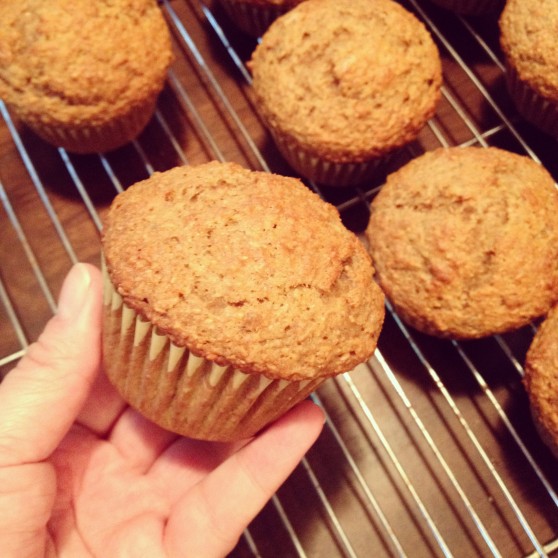
I guess liking (and eating?) books counts for something, so I shouldn’t complain. So, muffins. I made a dozen yesterday and only have five left, so they must be pretty good (though I’ll admit I did break my own no-white-flour-rule). These are made with pear sauce, as I made and canned a ton of it last September, but you could make these with applesauce and they’d be just fine. I also used maple extract to boost the mapley taste, but if you don’t have that, vanilla will do fine.

And if you need a baby shower gift, pick up a copy of Foodie Babies Wear Bibsjust warn the mum-to-be to never speak her desire for a well-rounded eater out loud because she’ll jinx it.

Mmmuffins!

Bran Muffins

(Makes 12.)

  • 1 cup wheat bran
  • 1 cup white flour
  • 3/4 cup whole wheat flour
  • 1 tbsp. ground flax seed
  • 2 tsp. baking soda
  • 1 tsp. salt
  • 1 1/2 cups pear sauce or applesauce
  • 2 eggs, beaten
  • 1/2 cup dark brown sugar, packed
  • 1/4 cup maple syrup
  • 6 tbsp. melted butter
  • 1 tsp. maple or vanilla extract

Preheat your oven to 400°F. Grease your muffin tins, or use paper liners which I prefer since my muffin pan is on its last legs. If you can find them on sale, the parchment liners are great and peel off easily.

Combine your wheat bran, flours, flax, baking soda, and salt in a large bowl. Whisk together. Set aside.

In another large bowl, whisk together pear or applesauce, eggs, sugar, and maple syrup. Add butter and maple or vanilla extract, and whisk again.

Stir your dry ingredients into your wet ingredients until your dry ingredients are just moistened.

Spoon your batter equally into your 12 muffin cups. Don’t level the batter off it appears uneven; the muffins will sort themselves out in the oven.

Bake for 8 to 10 minutes, then open the oven, turn the pan around, close the oven door, and bake for another 8 to 10 minutes, or until a toothpick inserted in the centre comes out clean. 16 minutes was perfect for my oven.

When the muffins are ready, remove them from the pan onto a wire rack and let them cool. Once fully cooled, you can freeze these in a container with a tight-fitting lid for about a month; they’ll store in a container on the counter for a week otherwise.

Eat them buttered, with a good book. Pants optional.

Muffin, book.


Something to Read: Flavors of Hungary

30days

One of the things I love about where I live is my close proximity to a whole bunch of bookstores. There’s a new one opening this week, even, and it’s on my way home from work! The convenience is incredible. One of the bookstores also happens to have a Twitter account and they post when they get new stuff in. One day last spring they posted – right before payday! – that they’d just received a whole bunch of used cookbooks, some of them classics. I was there the next day, before they’d even finished sorting through the stacks.

There were the usual things, the Jamie Olivers and the Ina Gartens and the Nigellas, and some interesting things, like a Jacques Pepin book on healthy cooking from 1994 (which I happened to already have for some reason) and a few westcoast- and Pacific Northwest-specific books I wanted but not enough to pay the asking price for. And then I found a book on Hungarian cooking, which I don’t know all that much about, and it was beautiful and kind of funny. It’s called Flavors of Hungary: Recipes and Memoirs and it’s by Charlotte Biro. I bought it before the clerk at the bookstore could figure out how much it was really worth. “15?” he said, and I snapped it up right there.

hungary_biro

Buy it for the recipes, love it for the memoir bits.

My basic concern is not to waste any part of the food. For having owned abundant estates, I knew how to manage well. For having experienced poverty, I learned the importance of economy. There is a saying that “you can save only when you have.”

Biro started out as the daughter of a wealthy family and the wife of a high-ranking official with the Credit Bank in Hungary; her life was shattered by war – her home was bombed by the Germans and she lost everything but her family cookbook. She was imprisoned with her husband while trying to escape the country in 1949 after the country fell to communism, and finally emigrated to the US where she joined her brother and daughters in 1957. Flavors of Hungary: Recipes and Memoirs pulls together those family recipes she saved during the war, brought with her to prison, and then took with her when she moved to America.

I did some research, and this book is worth more than the $15 I paid for it that sunny Saturday. Even better, the recipes are as authentic as it gets. They are economical, require very few spices, and, as it turns out, are delicious. There are the recipes you might expect – goulash, schnitzel, pickles – and quite a few recipes for dishes you might never have encountered, but will certainly love. One of my favourites is Korhelylves, or “Hangover Soup,” which is, as Biro writes:

This soup is named after the famous Hungarian actor, Ujhazi. It was his favourite.

One of the most famous coffee houses in Budapest – called “New York” – specializes in catering to the after-theater crowd. From midnight until morning, they serve hangover soup, chicken broth, and pork and beans. The elegant setting of the restaurant is the meeting place for all the prominent people in art, music, literature, and the theater.

Well, I’m sold. You can make this with your leftovers if you’re having ham this weekend for Easter. Plus some sauerkraut and sausage, if that’s not something you usually have on hand? (I’ll be making a visit to my favourite European deli.)

Hangover Soup (Korhelylves)

(Serves 4 to 6.)

  • 3 slices bacon
  • 1 small onion, chopped
  • 1 tsp. Hungarian paprika
  • 4 cups water
  • 1 or 2 ham hocks
  • 1 green pepper, diced
  • 1 tomato, diced
  • 1 x 16 oz. can of sauerkraut, washed and drained
  • 1 tbsp. all-purpose flour
  • 1/2 pint sour cream
  • 1/2 lb. Polish sausage, chopped into bite-size pieces

Brown bacon in a Dutch oven or heavy 3-quart pot (with a lid) over medium-high heat. Remove the bacon from the pot, but leave the fat. Reduce the heat to medium and brown an onion slowly, until it is golden and translucent.

Add paprika, water and ham hock(s) to the pot. Simmer for 90 minutes or until the meat is tender. Remove the hocks from the liquid. If there is meat remaining on the bones, pick it off and set it aside.

Add the tomato, green pepper, and sauerkraut and cook for an additional 20 minutes.

In a small bowl, stir together the flour and sour cream. When thoroughly combined, add this to the soup with the sausage and any meat reserved from the hocks. Taste, adjusting seasonings to taste.

Serve hot, with additional sour cream on the side.


Something to Read: An Alphabet for Gourmets

30days

We put a clean cloth, red and white, over one of the carpenters’ tables, and kicked wood-curls aside for our feet, under the chairs brought up from the apartment in Vevey. I set our tumblers, plates, silver, smooth unironed napkins sweet from the meadow grass where they had dried.

While some of us started to bend over the dwarf-pea bushes and toss the crisp pods into baskets, others built a hearth from stones and a couple of roof-tiles lying loose and made a lively little fire. I had a big kettle with spring water in the bottom of it, just off simmering, and salt and pepper and a pat of fine butter to hand. Then I put the bottles of Dezelay in the fountain, just under the timeless spurt of icy mountain water, and ran down to be the liaison between the harvesters and my mother, who sat shelling from the basket on her lap into the pot between her feet, as intent and nimble as a lace-maker.

I dashed up and down the steep terraces with the baskets, and my mother would groan and then hum happily when another one appeared, and below I could hear my father and our friends cursing just as happily at their wry backs and their aching thighs, while the peas came off their stems and into the baskets with a small sound audible in that still, high air, so many hundred feet above the distant and completely silent Leman. It was suddenly almost twilight. The last sunlight on the Dents du Midi was fire-rosy, with immeasurable coldness in it.

“Time, gentlemen, time,” my mother called, in an unrehearsed and astonishing imitation of a Cornish barmaid.

I read An Alphabet for Gourmets one summer when I was 20 or 21 and working for a place that exported cars to the US, back when the exchange rate was favourable for that kind of thing. It was my first non-retail job; I’d never realized before that how much sitting you could do and get paid for it.

On a good day, I’d drive some nice car down to the Seattle Auto Auction, sit around for a couple of hours, and drive some other car back. On a bad day I’d be stuck in a white cargo van with no rear-view mirrors and a sense of worry, or I’d be in one of those silly giant pick-up trucks when a snow-storm struck and remain stranded on the I-5 with not enough money for gas to get home. There was a lot of driving, but also a lot of waiting, and so in those lulls I’d read MFK Fisher. She always got me through.

an-alphabet-for-gourmets-fisher

While How to Cook a Wolf  is a book for simpler, leaner times, much of the rest of Fisher’s work is lush and decadent, and even when she’s describing something as simple as peas, there’s extravagance in the details. You want to go to there, wherever it is (most likely France). The way she writes, it’s as if the whole scene is set in that late-August evening light that’s so yellow that the shadows are blue, so golden that everything just sort of sparkles. It’s all like that, verdant, even when it’s nighttime or raining. She’s wonderful. Her life is the stuff of paintings and good poetry.

My bias is showing. She’s one of my favourites.

If you can find The Art of Eating, her selected works, buy it. I picked up my copy in that San Francisco bookstore I told you about before; it was another trip, but I never learn and picked up that book and a couple of other similarly dense, heavy books to lug around until Nick finally got sick of my complaining and carried the bag for me. If all you can find is An Alphabet for Gourmetsthat’s fine; you can collect the others as you find them. It’s a good one; that and How to Cook a Wolf will get you started.

Since we’re talking about peas, kind of, here’s a recipe for one of my favourite summer sides; it’s not a Fisher recipe, but it’s a good one and sort of fits the theme I was kind of going for (French, peas).

Peas with lettuce and mint

  • 1 tbsp. butter
  • 1 shallot, minced
  • 2 cups shelled peas, preferably fresh but frozen will do if you get those little baby peas
  • 1/2 head of romaine or green leaf lettuce, cut crosswise into ribbons
  • 1/2 cup chicken stock
  • Salt
  • Freshly ground black pepper
  • 2 tbsp. finely chopped mint
  • 1 tbsp. heavy cream

Melt the butter in a skillet over medium-high heat. Add your minced shallot, and cook until translucent. Add the peas, lettuce, and chicken stock, and cover. Cook for three minutes, until the lettuce has wilted. Add salt and pepper to taste. Sprinkle with mint.

Using a slotted spoon, transfer to a serving dish. Drizzle with cream.

This dish is nice with cold chicken or grilled fish; I quite like it as a side with barbecued Sockeye salmon and buttery steamed new potatoes.

Something to Read: The Sriracha Cookbook

30days

We’ve been a sriracha household ever since Nick first tasted sriracha one fateful night at the 24-hour pho place that used to be at Broadway and Cambie. After maple syrup, it may be my favourite condiment; in fact, when we make chicken and waffles, we use them both together. (This pretty accurately describes how we feel.)

While I don’t allow a liberal dousing of the stuff on my home-cooked dinners, we’ll happily splatter it all over any and all take-out, and it gets well used as an ingredient. It’s a marinade, a salad dressing, a replacement for ketchup, and essential to soups and sandwich fillings. It’s the secret and most important ingredient in our homemade Caesars (for my American friends, a Caesar is like a Bloody Mary but 100 times better because of Clamato, which is tomato juice with clam nectar. Come over sometime. I’ll show you.).

We like our rooster sauce.

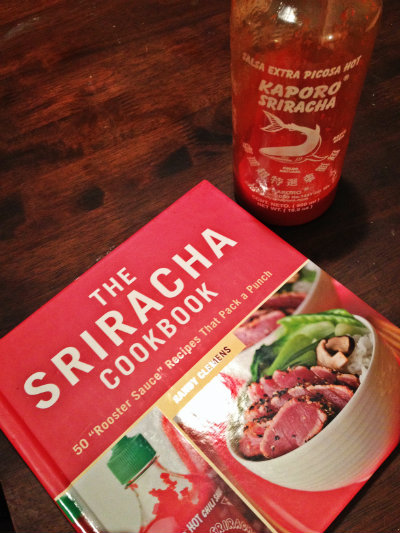
We could have lived happily ever after, just pouring our favourite hot sauce on everything. When I discovered you could buy two giant bottles of it at Costco for $6, things started to really get spicy. Then, one day, our beloved friends Dan and Dennis were in Puerto Vallarta and couldn’t find the sriracha they needed (most of our friends are similarly sriracha-dependent). It was then that they happened upon Shark Sauce, the Mexican version of sriracha (pictured below), which turned out to be kind of amazing, and then they bought some for us too. Dan and Dennis improve our lives in many ways, but Shark Sauce has been perhaps the greatest of their gifts to us.

sriracha

Mexican sriracha is everything that regular American sriracha is, but with more garlic flavour. So, it takes one thing we love and can’t stop eating (sriracha) and improves upon it with the other thing we love and can’t stop eating (garlic) to make a thing that is so wonderful we have to ration it because we’re never sure when we’re going to get more of it. You can only get it in Mexico. We are not likely to get to Mexico anytime soon. Dan and Dennis, recently returned from Mexico, confirmed via Facebook that they have Shark Sauce for us and I think I saw a tear of gratitude form in Nick’s left eye.

If you go to Mexico, get Shark Sauce. If someone you know is going to Mexico, get them to get you Shark Sauce. You can get it in Mexican Walmarts, apparently. I’m sure there are other places.

If you love sriracha like we love sriracha and put it on and in all the things, get The Sriracha Cookbook. Endorsed by David Chang (of Momofuku fame), The Sriracha Cookbook will help you incorporate more sriracha into your diet with recipes for every meal. (Maybe you already have sriracha with/on every meal. This will help you use sriracha in fancier, possibly more socially acceptable ways.) It’s not a long book, but the recipes are solid and the photos are nice; it would be a good gift for a bridal shower or a Secret Santa exchange.

I figure a cookbook is worthwhile when it contains at least three recipes that produce reliable results and that I’d make again and again. I’ve made at least three recipes from the book, and have made them multiple times, and people have not gagged when served the food I made from the book so I figure it’s a hit. It’s a fun book.

My favourite recipe from The Sriracha Cookbook is the tropical fruit salad. I think papayas taste like decaying bodies, and Nick thinks he’s allergic to pineapple, and we don’t eat bananas for complicated banana-hating reasons, so I use watermelon and a couple of avocados and it works very well. I also add more soy sauce because 1/4 teaspoon is much too conservative for my liking; adjust the seasonings to your taste. This dish is great for brunch, or as a side-dish for a summer meal; it also keeps well in the fridge (up to three days) so it’s kind of nice to make ahead for weekday lunches.

Tropical Fruit Salad with Sriracha-Sesame Vinaigrette

(Serves 8.)

  • 1/4 cup toasted sesame oil
  • 1/4 cup seasoned rice vinegar
  • 1/2 cup honey
  • 2 tbsp. sriracha
  • 2 tbsp. toasted white sesame seeds
  • 1/4 tsp. soy sauce
  • 1 medium pineapple, peeled, cored and cubed
  • 2 mangoes, peeled, cored and cubed
  • 1 papaya, peeled and cubed
  • 2 kiwi fruits, peeled, halved lengthwise, and sliced
  • 1 pint strawberries, hulled and quartered
  • 1/2 cup sweetened flaked coconut, for garnish
  • Fresh mint, cut into ribbons, for garnish

In a medium bowl, combine sesame oil, rice vinegar, honey, sriracha, sesame seeds, and soy sauce. Whisk everything together. Taste it. Does it need more of anything? Adjust seasonings to taste.

Put the fruit into a large mixing bowl. Pour the dressing over top, and toss gently, using your (clean) hands.

Serve with a garnish of flaked coconut and mint chiffonade.

And seriously. Get someone to get you Shark Sauce. It will change your life. I’m probably not exaggerating.

Something to Read: Steingarten Double-Header

30days

My plan was to write every single day in April, but yesterday I came up short. It was Birthday Eve, and I just sort of melted into the couch with a bowl of pho and season four of Parks & Rec. It had been a long week; my boss has been away, so I’ve been using this bit of down-time to cross a million little things off my to-do list. I have been sweatily productive, even on painkillers. It wears a person out, you know?

So, anyway, though I had every intention of remaining committed to this arbitrary goal I’ve set for myself, I vegged out instead and am probably better for it.

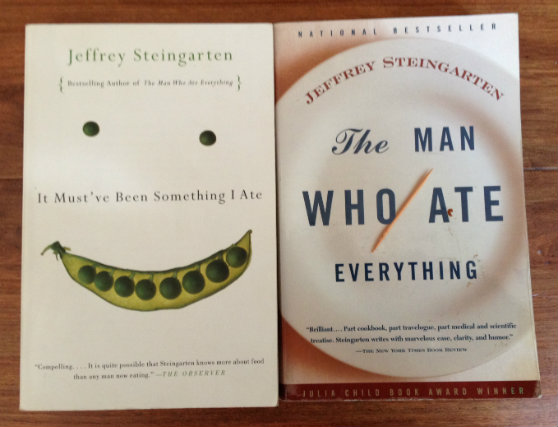
Fortunately, I have two books to tell you about today! Two books I read in one weekend, back when I had no small person demanding a lot of my time and attention. I read the first book (The Man Who Ate Everything), and liked it so much I went out and bought the sequel (It Must’ve Been Something I Ate) and finished it the next day.

steingarten

Jeffrey Steingarten, the author of both, is a writer and a curmudgeon. He has been a columnist for Vogue since 1989, and frequently appears as a judge on Iron Chef. He is obsessive, and so funny that even years after I first read the books, when I flip through them again I find myself in tears, laughing until I can barely breathe.

From The Man Who Ate Everything:

“For weeks I had been preoccupied with horses. Every time I saw a horse dragging tourists across the snow in Central Park, or standing under a policeman on the cobblestones of SoHo, I began to salivate. In truth, it was the fat of the horses, the fat around their kidneys, that excited me.” (Page 401.)

“Someday soon, I was sure, I would cook my own French fries in the fat of a horse. When and how this would be accomplished were questions that made the future seem alive with prospects and possibilities.” (Page 402.)

From It Must’ve Been Something I Ate:

“As soon as I arrive at the Chinos’, a 20-minute drive north of San Diego plus ten minutes to the east, I nearly always enter their farm stand through a door on the left, say hello to everybody on duty, and start eating. First I eat half a basket of the best strawberries in America, the smallish, irregular, incredibly sweet and perfumed Mara des bois, developed in France with a heady foretaste of the European wild strawberry. Nobody has them but the Chinos. Then I eat half a basket of the other best strawberries in America, the tiny conical Alpine variety, in your choice of red or white, hard to distinguish in aroma from the French fraises des bois. Also only at the Chinos’. As long as I pretend to take notes, nobody gawks at my behaviour.” (Page 206.)

Each chapter is its own essay, and each is darkly humourous and self-deprecating and rich with the kind of in-depth information you can only get from someone truly committed to unraveling the science and mystery of a particular dish. You get the history, you get the chemistry, you get the details of Steingarten’s step-by-step process of achieving whatever culinary goal he’s set out to achieve (and eat). The prose is spectacular, and the recipes work. In my mind, there is no other potato gratin recipe than Steingarten’s Gratin Dauphinois, from It Must’ve Been Something I Ate.

Gratin Dauphinoise

  • 1/2 cup of butter
  • 1 cup whole milk
  • 1 large garlic clove, crushed
  • 1/2 tsp. white pepper
  • 3/4 tsp. salt
  • 1/8 tsp. nutmeg
  • 1 1/2 lbs thinly-sliced potatoes (use a mandolin if you have one; if not, cut 1/8″ slices by hand)
  • 1 1/2 cups heavy cream

Using a good dollop of the butter, grease the inside of a 9″x13″ baking dish on all sides. If you have an enamelled cast iron baking dish (I don’t), that’s ideal; if not, glass or ceramic will do. Preheat oven to 425°F.

In a pan on your stove, bring the milk, salt, pepper, garlic clove, and nutmeg to a boil. Remove from heat and turn off the element.

Line your pan with potatoes. You will overlap each slice of potato a third of the way down each slice that comes before it. When you complete the first layer of potatoes, follow a similar process with the second row, this time overlapping entire rows a third of the way over the first row. Repeat with subsequent rows until potatoes are neatly layered. If none of that made sense and you’re sitting here thinking “uh, what?” then just layer the potatoes neatly and do your best. Steingarten’s instructions are detailed, but I am comfortable half-assing these things.

Put your pot of milk and spices back on the stove – bring it to a boil once more. When it’s come to a boil, pull the clove of garlic out, and pour the mixture over the potatoes. Bake, covered with a lid or aluminum foil, for 15 minutes.

Bring the cream to a boil. Remove from heat, and turn off element.

When the potatoes come out of the oven, bring the cream to a boil once again. Pour the boiled cream over the potatoes, and dot the whole thing on the top with the remaining butter.

Bake, uncovered, for 20-25 minutes. Let stand 10 minutes before serving.

I did promise a second recipe! I was tempted to phone it in and just re-share the Choucroute garnie à l’Alsacienne I posted here now several years ago …  but I did miss writing yesterday and really ought to do better. So, here’s a pretty excellent recipe for Bagna Caôda, a hot dip you should make right now and eat with a lot of bread and raw white mushrooms. It’s from The Man Who Ate Everything, page 266. It calls for Barolo, which is expensive; use a decent Shiraz. I like the Cono Sur Shiraz which costs $10. (I’m too poor to cook with really good wine.)

Cesare’s Favorite Bagna Caôda

  • 1 cup Barolo (or Shiraz)
  • 1 head garlic, cloves separated and peeled and sliced
  • 1 1/2 oz. (8 to 10) anchovy fillets
  • 1/2 cup extra virgin olive oil
  • 4 tbsp. butter

In a small saucepan, bring the wine to a boil over medium high heat. Add garlic, reduce heat to medium, and simmer for two minutes. Add anchovies and olive oil, and simmer for another two minutes. Add butter, and reduce heat to medium low, simmering gently for about 45 minutes, or until the anchovies dissolve.

If you are making this in advance, don’t refrigerate it. Just reheat when you’re ready. Serve as a dip for raw vegetables. Don’t mind your breath.